

Registered voters on the eve of the 2026 primaries | Cronin & Loevy

The Colorado Secretary of State’s Office has published the latest voter registration figures for the state and its counties as of June.
Colorado ranks among the highest states for independent, or unaffiliated, voters. Only Alaska and Massachusetts have more. New Hampshire, New Jersey, Maine and Oregon also rank highly.
So here is what the state looks like politically as Coloradans are voting in this year’s party primary elections.
Keep in mind that in recent years Coloradans have been able to register as unaffiliated and then choose on primary election day whether to vote in the Democratic primary or the Republican primary. The result has been an increase in the numbers of unaffiliated voters.
The registration data shows that there are 4,072,990 total registered voters. Of that number, 3,974,036 are registered either Democratic (25%), Republican (23%) or unaffiliated (52%).
The Democrats are only 2 percentage points ahead of the Republicans. The two parties are essentially evenly balanced (or evenly disliked) in terms of voter registration.
The majority of Colorado voters register unaffiliated.
Democrats
The most Democratic county in voter registration is thinly populated Conejos County in southern Colorado, adjacent to the New Mexico border.
It is Democratic 46%, Republican 15%, and unaffiliated 39%. Its strong support of the Democratic Party is generally attributed to its high Hispanic population. The second-most Democratic county is thickly populated Denver. Its numbers are Democratic 40%, Republican 9% and unaffiliated 51%. Second in state population only to El Paso County, Denver has historically been the greatest source of Democratic votes in Colorado.
Denver’s Republican voter registration is the lowest GOP figure in the entire state.
Boulder County is Colorado’s third most Democratic county at Democratic 39%, Republican 10% and unaffiliated 51%.
The liberal influence of the University of Colorado at Boulder, scientists at federal labs there, and a lot of what were once small startup companies probably give it its strong Democratic flavor.
The fourth- and fifth-most Democratic counties are San Miguel in southwestern Colorado and Pitkin in central Colorado. Both are resort areas with famous skiing.
Similar to most ski communities in the Colorado Rocky Mountains, these two counties lean Democratic and give little support to Republicans.
For San Miguel County (Telluride ski area), the numbers are Democrats 34%, Republicans 12% and unaffiliated 54%. For Pitkin (Aspen ski area), the numbers are Democratic 33%, Republican 12% and unaffiliated 55%.
A historically Democratic county is Pueblo County, at the southern end of the Front Range. Home to a major steel mill, Pueblo County is less Democratic than it used to be. President Donald Trump, for example, has had considerable support there.
Pueblo County’s registration numbers are Democratic 30%, Republican 23% and unaffiliated 47%.
Republicans
The three most Republican counties in terms of vote production are located on the Front Range and have large populations. They are El Paso County, Republicans at 29%, Democrats at 17% and unaffiliated 54%.
Douglas County (Castle Rock) is Republican at 32%, Democratic at 17% and unaffiliated at 51%.
Weld County (Greeley) is Republican at 32%, Democratic at 18% and unaffiliated 51%.
Note, however, that these “stronghold Repubican counties” only have a third or so registered Republicans. That’s a change.
These three counties are urbanized but are basically suburban in character. They have been the center of Republican strength in Colorado for about the past 30 years.
Another source of Republican voting power in Colorado are the many rural and agricultural counties located on the Eastern Plains and the non-skiing counties on the Western Slope.
Although these counties cast exceptionally high Republican percentages of the vote, they are too small in population to have much impact on Colorado elections.
Gathered together, however, they become an imortant part of Republican voting power.
Two examples of these many rural and agricultural Republican counties are located on the Eastern Plains. They are Cheyenne County, Republican at 60%, Democratic at only 6% and unaffiliated 34%, and Kiowa County, at Republican 59%, Democratic 6%, unaffiliated 35%. It must be hard to be a Democrat out there.
Of special note is Mesa County (Grand Junction) on the Western Slope. It has a significant population and has historically voted Republican. Its numbers are Republican 36%, Democratic 13% and unaffiliated 51%.
Unaffiliated
The registration figures for unaffiliated voters as of June 1 make it clear that the increase in unaffiliated voters that has occurred in Colorado in the past decade is widespread.
The lowest unaffiliated percentage is 31% in Washington County, a rural agricultural county on the Eastern Plains.
The highest unaffiliated percentage is 57% in Eagle County, a skiing county, (Vail) in the high Rockies. The steady increase in unaffiliated voters is occurring in every county.
Washington County’s low percentage of 31% compares to the two major political parties, the Republicans and the Democrats, both of which have counties in which their percentage of the registered vote is in single digits.
But the most notable thing about the unaffiliated numbers is the high percentages of unaffiliated voters found in the ski counties in the mountains.
In addition to Eagle County at unaffiliated 57%, there are Summit County (Breckenridge) at 57% and Pitkin at 54%.
Studies show that those who are affiliated with one the two parties are much more likely to vote in primaries and general elections. Yet, candidates nowadays definitely need the support of unaffiliated voters. But they must also simultaneously turn out their base while reaching out to those frustrated with the parties.
For a number of reasons, including Trump, Republican Party discord and affordability issues, we expect more unaffiliateds this month will vote a Democratic ballot. We’ll soon see.
News columnists Tom Cronin and Bob Loevy write about Colorado and national politics.

Fifty years later, women reflect on first coed class at the Air Force Academy, struggle for equality
Mary Shinn
mary-shinn@coloradopolitics.com
Updated 2 days ago
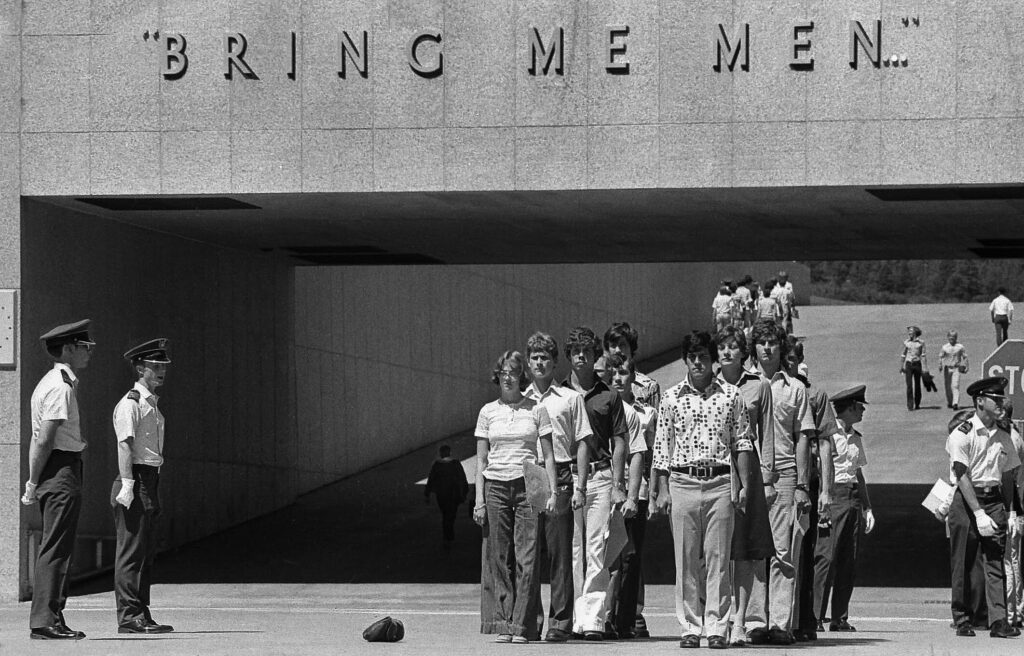
When the first female Air Force Academy cadets arrived 50 years ago this summer, they stood in front of an enormous sign on campus that read “Bring me men.” In the shadow of that sign, Kathleen Utley Kornahrens, one of...

A new day? Colorado’s troubled guardianship office pursues ‘cultural reset’
Marianne Goodland
marianne.goodland@coloradopolitics.com
Updated 4 days ago
Colorado’s guardianship program, long criticized for mismanagement and high staff attrition, is undergoing a “cultural reset,” as its new director works to repair partnerships and prepare for a major expansion under recent legislation. Created by lawmakers in 2017, the Office...

Democratic group aims Spanish-language TV ad at Gabe Evans in Colorado’s battleground 8th CD
Ernest Luning
ernest.luning@coloradopolitics.com
Updated 2 days ago
A national group tied to House Democratic leadership launched a six-figure Spanish-language TV ad in Colorado this week targeting Republican U.S. Rep. Gabe Evans and the GOP’s signature budget legislation. The 30-second spot is part of $15 million in new...
Colorado School of Mines lands major share in Trump’s $100M mining-education plan
Thelma Grimes
thelma.grimes@coloradopolitics.com
Updated 2 days ago
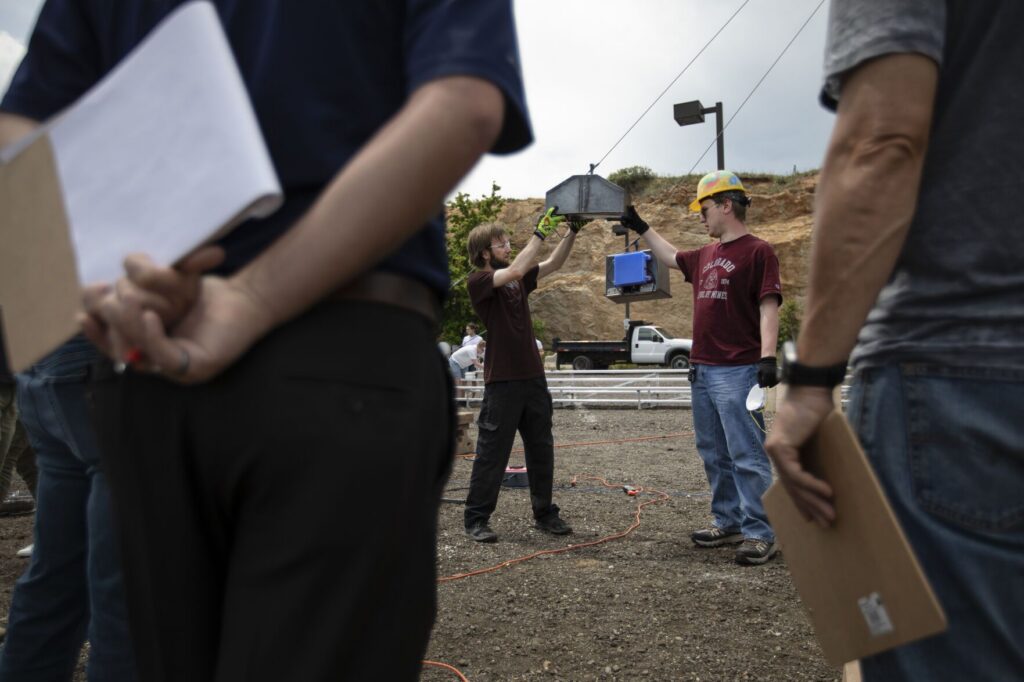
President Donald Trump on Friday named the Colorado School of Mines among roughly a dozen institutions that will share in a $100 million commitment “to train the next generation of American miners.” Paul Johnson, the university’s president, said he is...
Judge dismisses lawsuit seeking records from Colorado Democratic group
Marianne Goodland
marianne.goodland@coloradopolitics.com
Updated 2 days ago
A lawsuit seeking to obtain records from Democratic lawmakers affiliated with a caucus has been thrown out by a Denver District Court judge. On July 17, Judge Ericka Englert dismissed the April lawsuit filed by progressive activist Derrick Blanton, who...
DOJ official decries ‘nonsense’ in Jeffco schools at fundraising gala
Matt Kyle
matt.kyle@denvergazette.com
Updated 2 days ago
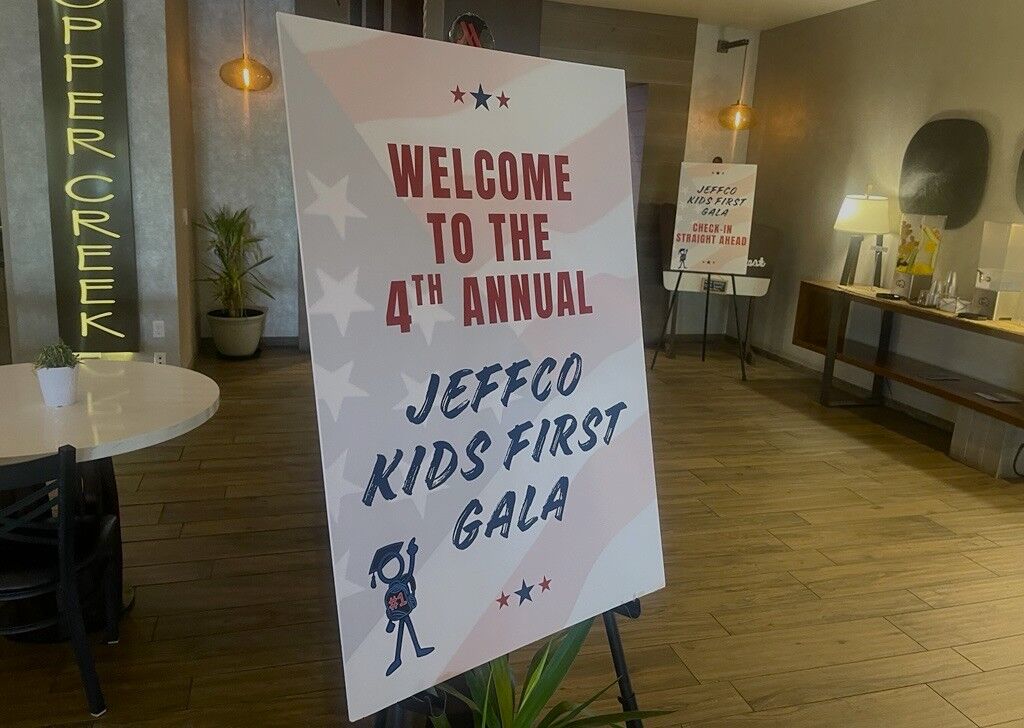
Amid a legal battle between Jeffco Public Schools and the federal government, a Department of Justice official spoke at a fundraising gala and decried “crazy stuff” and “nonsense” in the school district. The gala was for Jeffco Kids First, an...
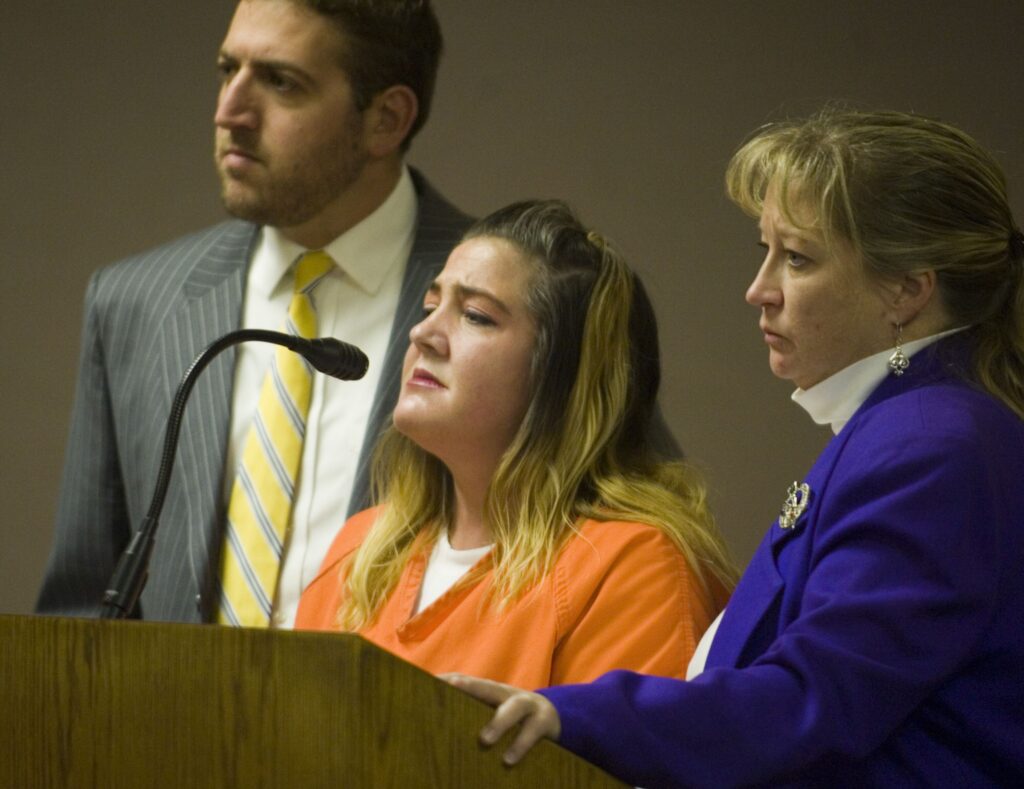
Colorado Springs mother Deborah Nicholls’ murder conviction overturned
Nick Smith
nick-smith@coloradopolitics.com
Updated 3 days ago
A Colorado Springs mother convicted in 2008 of murdering her three children in a house fire might get a new trial after a judge ruled that prosecutors withheld key evidence that could have impacted the jury’s verdict. Deborah Nicholls, whose...

Aurora Community College student journalist accuses college of ‘unconstitutional gag order’
Kyla Pearce
kyla.pearce@gazette.com
Updated 3 days ago
An Aurora Community College student is accusing the college of putting an “unconstitutional gag order” on his student-run publication, saying the college banned it from publishing until students jumped through “countless bureaucratic hoops.” A college spokesperson said the college is...
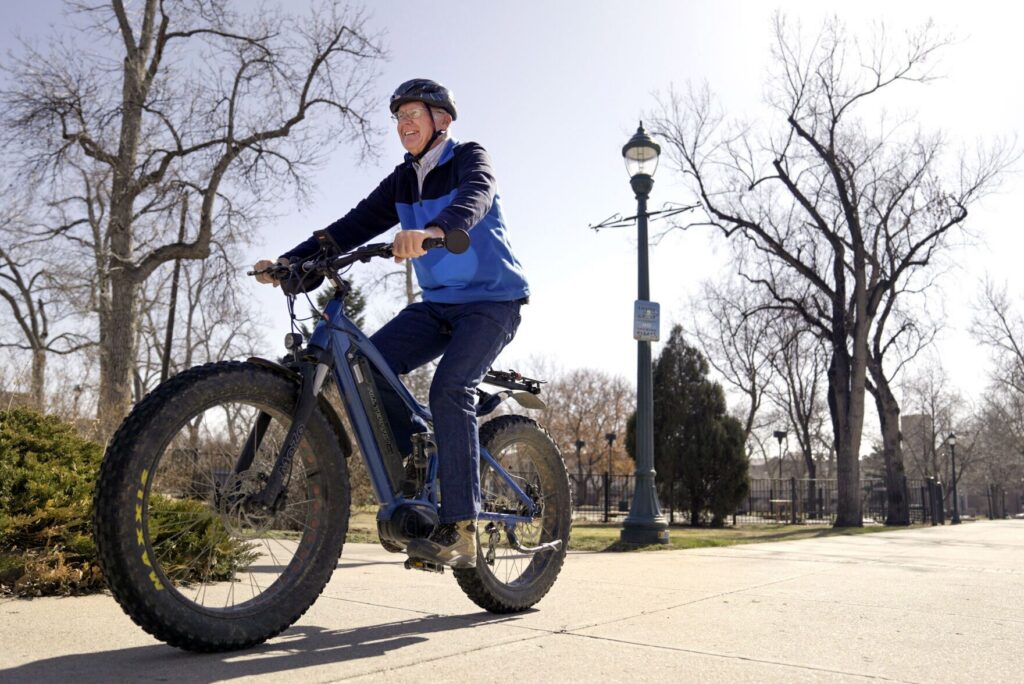
Polis administration relaunches Colorado e-bike rebates with $3 million
Scott Weiser
scott.weiser@gazette.com
Updated 2 days ago
Gov. Jared Polis and the Colorado Energy Office announced Thursday the return of the state’s popular e-bike rebate program, with registration set to open later this month. The office plans to provide point-of-sale rebates totaling $3 million from the Community...
Appeals court rejects former DougCo commissioner’s legal fee claim
Nicholas Fogleman
nicholas.fogleman@denvergazette.com
Updated 3 days ago
The Colorado Court of Appeals rejected a former Douglas County commissioner’s bid for reimbursement of attorney fees she incurred while responding to multiple investigations into her conduct. The dispute stemmed from a 2019 anonymous letter sent to county officials alleging...
PREV
PREVIOUS

A room for Sundance, a reality check for big-government Boulder | Jon Caldara
There are few things more satisfying to watch than socialists getting mugged by reality. The Sundance Film Festival is invading my hometown of Boulder early next year. Sundance drew 85,000 attendees last year in Park City, Utah. Boulder’s hotel room inventory is about 2,900. If you’ve ever wondered what happens when Hollywood’s anti-capitalist elite collide […]

Pigs engineered to fight alpha-gal syndrome | Rachel Gabel
If I were an evil genius trying to hamstring animal agriculture, I would create a fly that eats livestock alive and a tick whose bite and spit causes some people to have an allergic reaction to meat. (Insert evil laugh here) However, it appears someone beat me to it. Just when I think headlines in agriculture can’t […]