

Colorado justices confirm leaving-the-scene prosecutions require no proof of driver’s knowledge
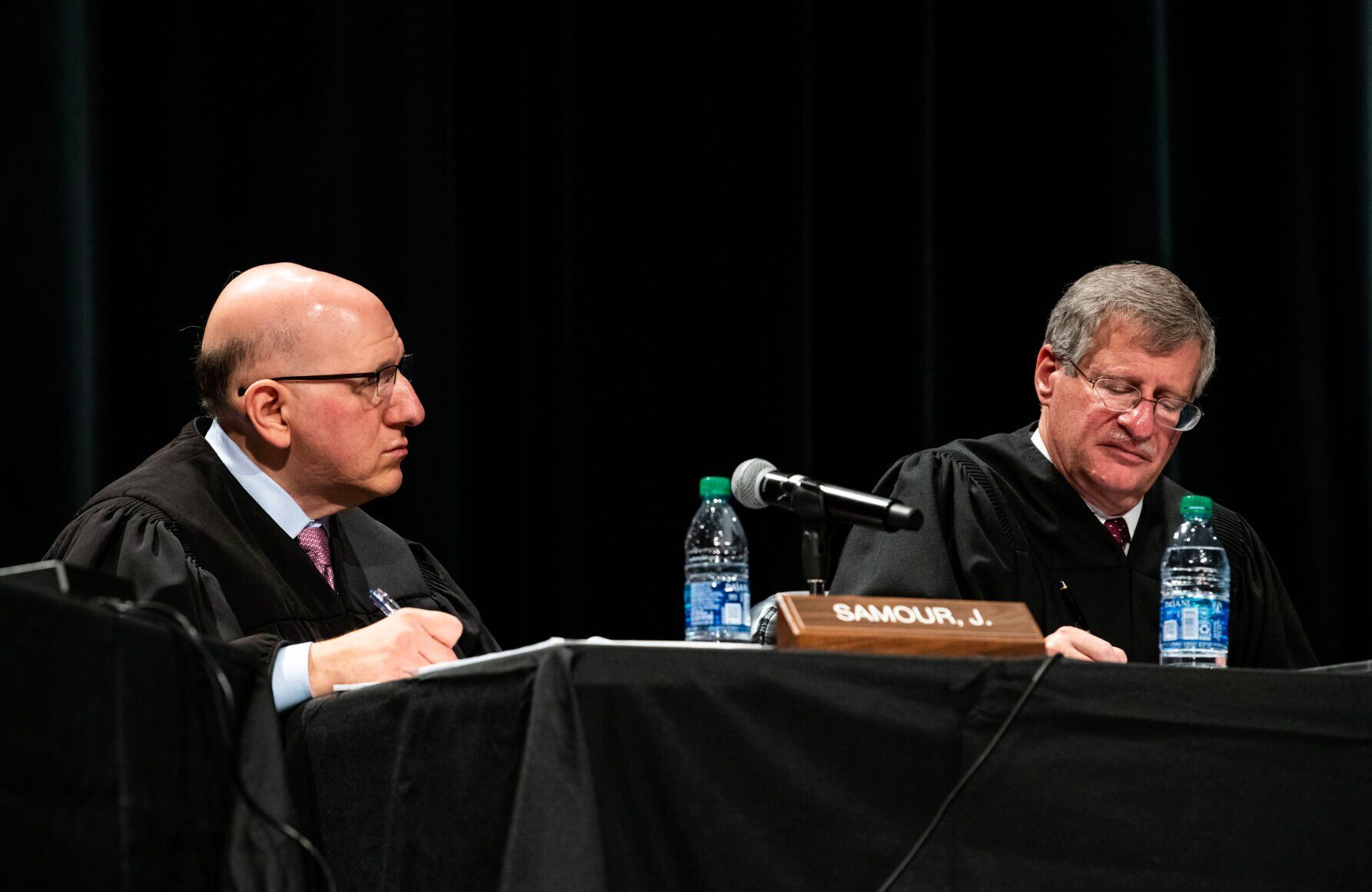
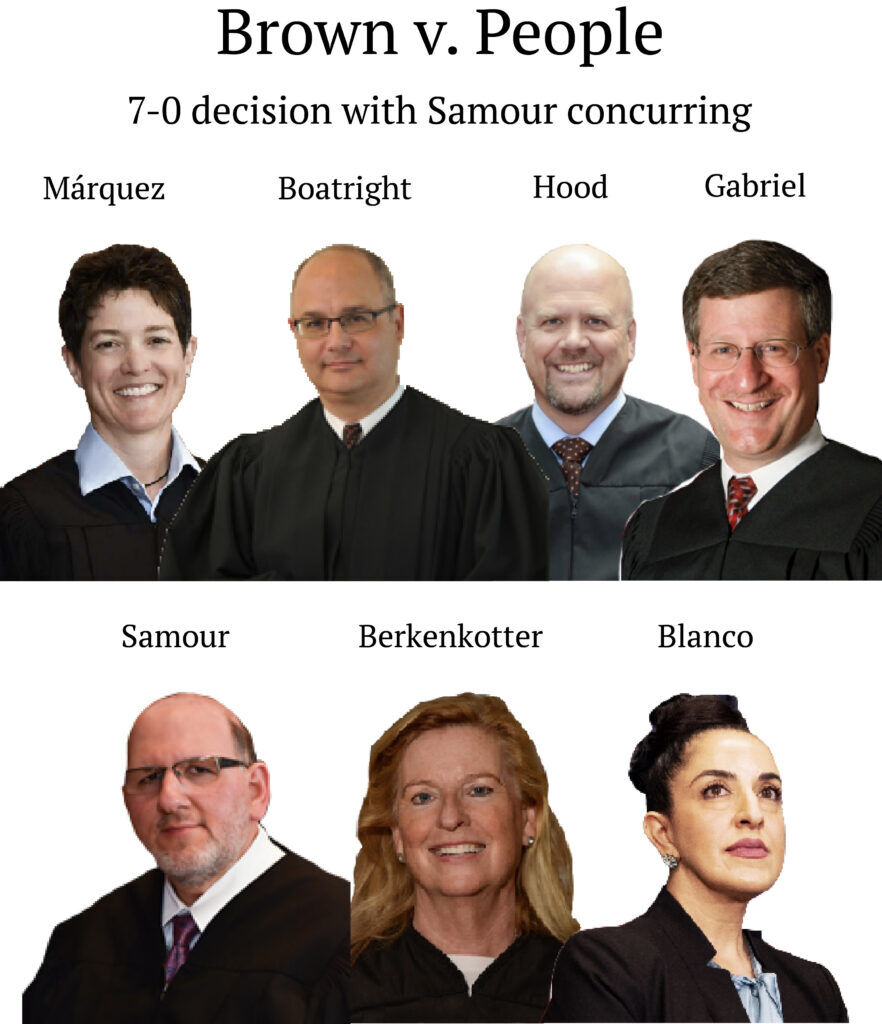
The Colorado Supreme Court confirmed on Tuesday that its 20-year-old decision involving drivers who leave the scene of an accident remains good law and prosecutors do not have to prove that such defendants knew they were involved in an accident.
In 2006, the Supreme Court ruled that leaving the scene of an accident resulting in serious injury is a “strict liability” offense, meaning a person is guilty solely through their conduct, without the need for prosecutors to prove the defendant’s mental state.
Decades later, defendant Jason P. Brown argued that no other felony offenses in Colorado permit a conviction absent any proof of a defendant’s knowledge.
But the Supreme Court upheld Brown’s convictions, while acknowledging the contention that drivers who lack knowledge of an accident will necessarily fail to stop as required by law.
“Although we are not unsympathetic to this argument and acknowledge that some states with LTS statutes similar to ours have concluded that knowledge is required as to the accident element of the offense, we are constrained to follow the plain language,” wrote Justice Richard L. Gabriel in the June 23 opinion. “Any effort to remedy perceived inequity that might result from the application of the statute’s plain language is more appropriately directed to our General Assembly.”
Justice Carlos A. Samour Jr. wrote separately to agree that the evidence of Brown’s guilt was “overwhelming,” but he could not support the majority’s reasoning.
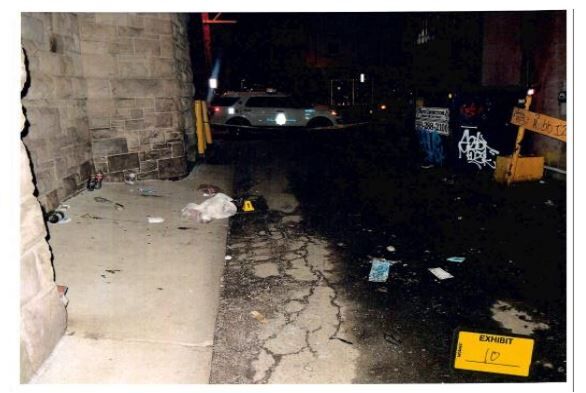
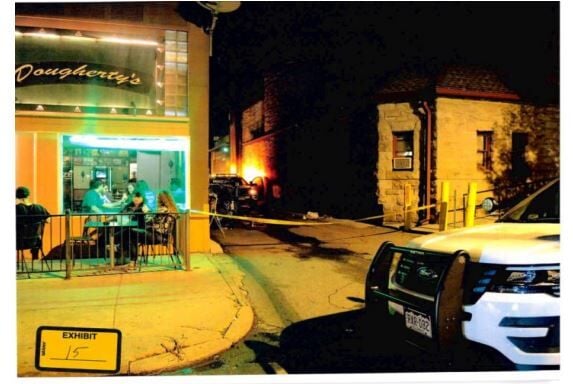
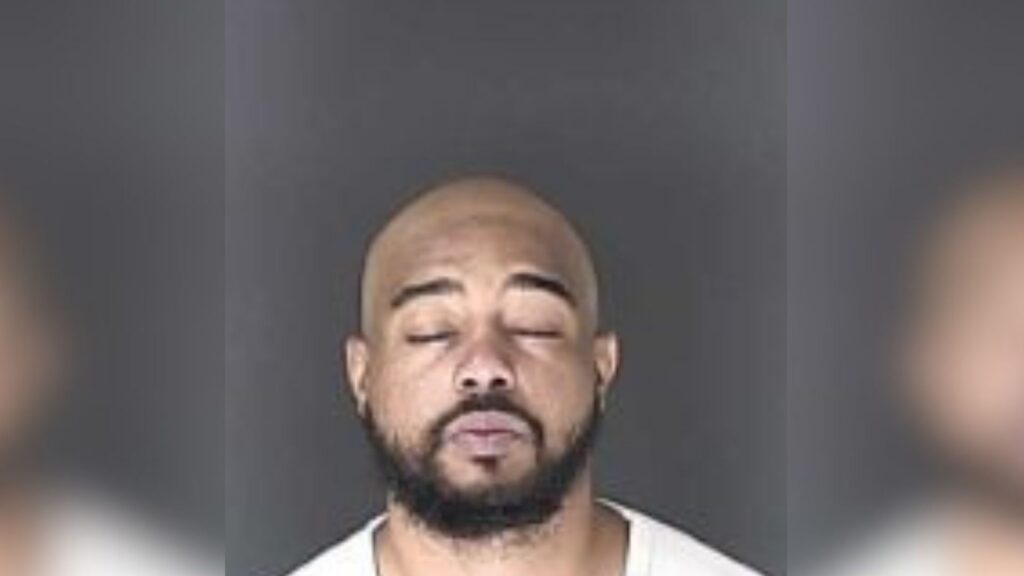
One night in June 2017, Brown drove his pickup truck — which witnesses described as “monster,” with “humongous” tires — into an alley between Broadway and Lincoln Street in Denver. He ran over two people who were sleeping in an alcove adjacent to a church. Brown paused, then drove over the victims again with his rear tires.
People nearby attempted to assist the victims and one person confronted Brown at the end of the alleyway. Seeing that Brown appeared drunk, she told Brown he “just ran these people over.” Brown denied it, then drove off.
One of the victims, Kimberly Macey, died. The other was seriously injured.
Jurors convicted Brown of a misdemeanor DUI, reckless vehicular homicide, reckless vehicular assault and leaving the scene of an accident resulting in death and serious injury. After a judge found Brown had prior felony convictions, he received a sentence of 60 years in prison.
Colorado law criminalizes the act of leaving the scene of an accident that results in injury or death, without rendering aid. On appeal, Brown argued his leaving-the-scene convictions could not stand because jurors were not required to find that he had knowledge of the accident.
A three-judge Court of Appeals panel concluded it was bound by a 2006 Supreme Court decision, People v. Manzo, which held that the legislature intended the offense to be strict liability. Moreover, convicting a defendant without proving his knowledge does not violate his right to due process, wrote then-Justice Nancy E. Rice, because leaving the scene is a “public welfare offense.”
During oral arguments to the Supreme Court, the discussion turned to the problem of convicting a driver who genuinely is unaware they have hit someone — and the related challenge of prosecuting a driver who lies about their lack of awareness.
“The true boogeyman in this scenario is the morally blameless driver who has been involved in an accident resulting in serious bodily injury or death and doesn’t have awareness,” said Assistant Attorney General Austin R. Johnston. “There’s no evidence it has ever happened, let alone at the rate where it would start to give us pause.”
“It would seem to me,” responded Gabriel, “the fact that this happens so rarely would suggest it would not be an extreme burden of having to prove ‘knowingly’ in these cases.”
Ultimately, the Supreme Court stuck by its Manzo decision. Gabriel noted that the legislature had taken no steps to overturn the ruling in the 20 years since and had, instead, increased the penalties to parallel other serious crimes involving vehicles.
Requiring proof of a defendant’s knowledge “would incentivize drivers to flee the scene of an accident, contrary to the General Assembly’s expressed intent,” Gabriel wrote.
Samour, in a concurring opinion that was twice the length of the majority opinion, slammed the Manzo decision as wrong and criticized the majority for upholding it. He believed the law contains a requirement that defendants have knowledge of their involvement in an accident, and prosecuting a driver who lacks that knowledge poses a “risk of grave injustice.”
“The prospect of an innocent driver being swept into the gears of the criminal justice machine — even if rare — cannot be written off as an unfortunate but tolerable cost of doing business,” Samour wrote.
He added that Colorado is seemingly the only state that lacks a proof-of-knowledge requirement. He listed other state court decisions, including a 2015 Florida Supreme Court ruling, that all required proof of a driver’s awareness of being involved in an accident.
The court “cannot sidestep constitutional questions simply by pointing to the legislature. Those issues fall squarely within our domain, and we should not shirk our responsibility,” Samour wrote. “And even if such situations arise infrequently, I cannot accept the risk they create. Even a single morally blameless driver being falsely accused, convicted and punished … is one too many.”
The case is Brown v. People.

Local party leaders, incoming judge among members of judicial performance commission that violated law
Michael Karlik
michael.karlik@coloradopolitics.com
Updated 13 hours ago
A local Democratic leader and 2024 presidential elector. A legislative aide and leader in the Young Republicans. An incoming county court judge freshly appointed by the governor. They are among the eight members of the northeastern Colorado judicial performance commission...
Judge dismisses lawsuit seeking records from Colorado Democratic group
Marianne Goodland
marianne.goodland@coloradopolitics.com
Updated 1 day ago
A lawsuit seeking to obtain records from Democratic lawmakers affiliated with a caucus has been thrown out by a Denver District Court judge. On July 17, Judge Ericka Englert dismissed the April lawsuit filed by progressive activist Derrick Blanton, who...
Colorado Springs mother Deborah Nicholls’ murder conviction overturned
Nick Smith
nick-smith@coloradopolitics.com
Updated 2 days ago
A Colorado Springs mother convicted in 2008 of murdering her three children in a house fire might get a new trial after a judge ruled that prosecutors withheld key evidence that could have impacted the jury’s verdict. Deborah Nicholls, whose...
Colorado court overturns illegal $7,000 restitution order
Michael Karlik
michael.karlik@coloradopolitics.com
Updated 1 day ago
Colorado’s second-highest court overturned a Weld County defendant’s obligation to pay more than $7,000 in crime victim restitution on Thursday because a trial judge failed to issue a legally compliant restitution order at the time of sentencing. In Colorado, as...
Appeals court rejects former DougCo commissioner’s legal fee claim
Nicholas Fogleman
nicholas.fogleman@denvergazette.com
Updated 2 days ago
The Colorado Court of Appeals rejected a former Douglas County commissioner’s bid for reimbursement of attorney fees she incurred while responding to multiple investigations into her conduct. The dispute stemmed from a 2019 anonymous letter sent to county officials alleging...
Appeals court orders second look at Denver Water’s immunity for cyclist’s injury
Michael Karlik
michael.karlik@coloradopolitics.com
Updated 2 days ago
Colorado’s second-highest court ordered another look at a bicyclist’s negligence lawsuit against Denver Water on Thursday, concluding that a trial judge needed to evaluate the utility’s potential immunity using the state Supreme Court’s new guidance. Joseph A. “Joey” Scott alleged...
Labels, duration not definitive proof of ‘intimate relationship,’ Colorado court rules in domestic violence case
Michael Karlik
michael.karlik@coloradopolitics.com
Updated 1 day ago
Colorado’s second-highest court clarified on Thursday that the length of a couple’s relationship and the labels they attach to it are not conclusive evidence of whether it is an “intimate relationship” that can give rise to a domestic violence prosecution....

Colorado AG urges Supreme Court to let Boulder climate lawsuit proceed
Marissa Ventrelli
marissa.ventrelli@coloradopolitics.com
Updated 2 days ago
Colorado Attorney General Phil Weiser has filed a court brief with the U.S. Supreme Court in a lawsuit brought by Boulder city officials seeking to hold oil companies liable for their environmental impact. The case began in 2018, when the...
10th Circuit says landowner cannot sue ex-Routt County judge for statements in decision
Michael Karlik
michael.karlik@coloradopolitics.com
Updated 3 days ago
A Routt County landowner cannot sue a former judge for his allegedly inaccurate statements in a case where the landowner was not a party, the Denver-based federal appeals court decided on Wednesday. Anne Fitzsimmons, who lives in Germany, owns a...
Defendant’s competency in question in El Paso County case involving slain Army police officer
Nick Smith
nick-smith@coloradopolitics.com
Updated 3 days ago
It will be another 60 days before a 4th Judicial District court determines if a man charged in the shooting death of an Army police officer is competent to proceed in his case. Judge Erin Sokol granted a request Wednesday...
PREV
PREVIOUS

Aurora sales tax increases will be on November ballot
Aurora voters will decide in November whether to raise sales taxes for the first time since 1993 to help pay for infrastructure, transportation and public safety improvements. The City Council cast a final vote Monday night to put three measures on the ballot. Several members of the public spoke to the council in opposition, specifically […]
Colorado’s primary turnout tops 10% as election officials warn it’s too late to mail ballots
Colorado election officials cautioned on Tuesday that it’s too late to mail ballots for the June 30 primary and urged voters to use drop boxes and their county’s voting centers instead. Secretary of State Jena Griswold said in a release that 437 secure drop boxes and 137 in-person voter centers are open throughout the state. […]