

Colorado Supreme Court considers new requirement for leaving-the-scene convictions
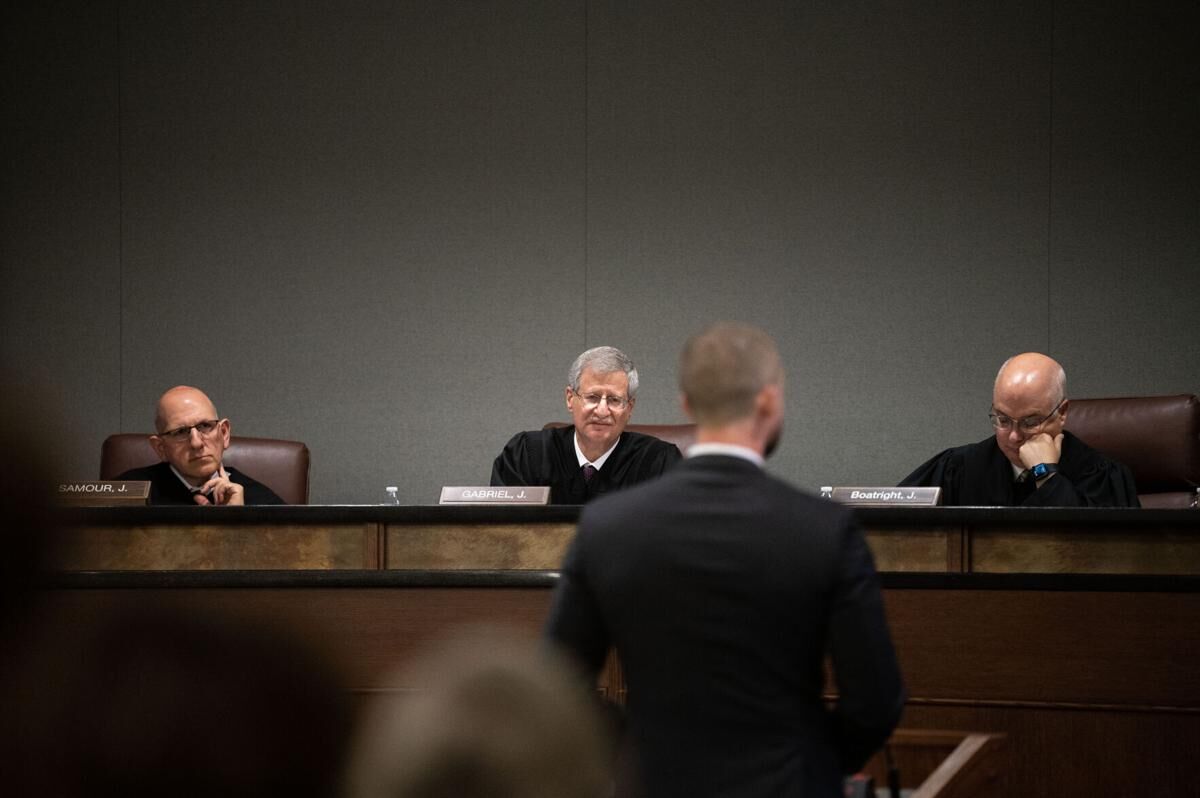
In 2006, the Colorado Supreme Court ruled that leaving the scene of an accident resulting in serious injury is a “strict liability” offense, meaning a person is guilty solely through their conduct, without the need for prosecutors to prove the defendant’s mental state.
Now, 20 years later, one defendant is asking the Supreme Court to change course. During oral arguments on Tuesday, the attorney for defendant Jason P. Brown argued that no other felony offenses in Colorado permit a conviction absent any proof of a defendant’s knowledge.
“In this sense, the leaving-the-scene stands alone,” said Justice William W. Hood III.
“I believe it to be a total anomaly,” responded public defender Emily Hessler.
Colorado law criminalizes the act of leaving the scene of an accident that results in injury or death, without rendering aid. Hessler argued that prosecutors should have to prove a defendant knew that there was an accident and that, at a minimum, someone was injured.
“I think the state has kind of invented this convenient boogeyman of what I would call the ‘ostrich driver,’ who was willfully ignorant of the accident,” she said. “That is still prosecutable under the statute as long as the driver has awareness.”
“The true boogeyman in this scenario is the morally blameless driver who has been involved in an accident resulting in serious bodily injury or death and doesn’t have awareness,” responded Assistant Attorney General Austin R. Johnston. “There’s no evidence it has ever happened, let alone at the rate where it would start to give us pause.”
“It would seem to me,” said Justice Richard L. Gabriel, “the fact that this happens so rarely would suggest it would not be an extreme burden of having to prove ‘knowingly’ in these cases.”
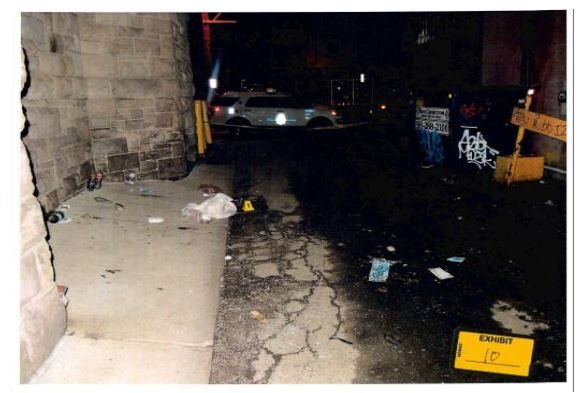
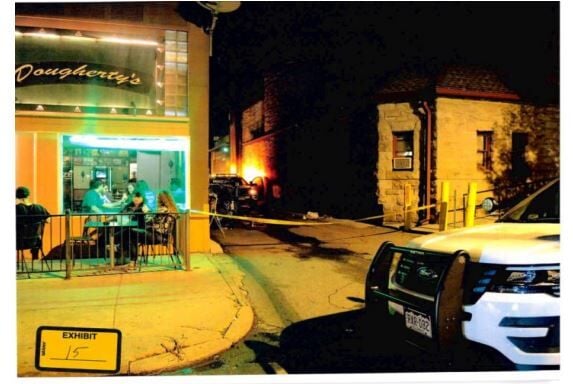
One night in June 2017, Brown drove his pickup truck — which witnesses described as “monster,” with “humongous” tires — into an alley between Broadway and Lincoln Street in Denver. He ran over two people who were sleeping in an alcove adjacent to a church. Brown paused, then drove over the victims again with his rear tires.
People nearby attempted to assist the victims and one person confronted Brown at the end of the alleyway. Seeing that Brown appeared drunk, she told Brown he “just ran these people over.” Brown denied it, then drove off.
One of the victims, Kimberly Macey, died. The other was seriously injured.
Jurors convicted Brown of a misdemeanor DUI, reckless vehicular homicide, reckless vehicular assault, and leaving the scene of an accident resulting in death and serious injury. After a judge found Brown had prior felony convictions, he received a sentence of 60 years in prison.
Brown made several arguments on appeal, including that his leaving-the-scene conviction could not stand because jurors were not required to find that he knew he was involved in an accident that caused serious injury or death.
A three-judge Court of Appeals panel concluded it was bound by a 2006 Supreme Court decision, People v. Manzo, which held that the legislature intended the offense to be strict liability. Moreover, convicting the defendant without proving his knowledge does not violate his right to due process, wrote then-Justice Nancy E. Rice, because leaving the scene is a “public welfare offense.”
“Effective regulation of driving depends on the state’s ability to penalize drivers who do not stop at accident scenes,” she wrote. “By requiring a driver who is involved in an accident to render reasonable assistance and provide information, the prohibition against Leaving the Scene of an Accident with Serious Injury is designed to guard the social order.”
Hessler, in appealing Brown’s convictions, argued the Manzo decision was “gravely misguided,” and, since then, the legislature increased the severity of the punishment to the point where it would be unreasonable to convict someone for their conduct alone.
However, the justices pointed out the problem with requiring prosecutors to prove a defendant’s mental state: The person who left the scene of an accident could always deny any knowledge of it.
“Even being involved in something where you don’t know for sure whether you hit someone or something, you’re going to have an incentive to err on the side of just taking off, right?” asked Justice Carlos A. Samour Jr.
“Then the defense is, ‘I had no idea,'” said Chief Justice Monica M. Márquez.
“And that’s for a jury to decide. A jury determines credibility,” responded Hessler.
Johnston noted that legislators had amended the leaving-the-scene law multiple times since Manzo, without addressing or overturning the Supreme Court’s holding on the lack of mental state. He argued that lawmakers likely assumed people who injure someone in an accident would have an awareness that something had happened.
“Certainly, a skilled prosecutor might convince a jury” of a defendant’s knowledge, he said. But “I think Ms. Hessler is vastly overstating the ease with which a prosecutor can go to a jury and say, ‘Look at what happened. Clearly, they knew.’”
Yet, if other states require proof of knowledge for the same offense, wondered Samour, “why can’t that work in Colorado?”
The case is Brown v. People.


10th Circuit partially revives lawsuit over 2020 Denver protest injuries
Michael Karlik
michael.karlik@coloradopolitics.com
Updated 3 hours ago
The Colorado-based federal appeals court revived a man’s claims against Denver on Friday after concluding a trial judge resolved the case in the city’s favor without analyzing two of the three instances of alleged excessive force and other constitutional violations....

Federal judges find Colorado immigration judge violated several orders
Michael Karlik
michael.karlik@coloradopolitics.com
Updated 1 day ago
Multiple federal judges in Colorado have freed people from immigration custody after determining that one immigration judge violated their directives for properly conducting bond hearings. For nearly a year, Colorado’s U.S. District Court has faced a flood of habeas corpus petitions...

Misconduct complaints from ex-Colorado judicial discipline director dismissed against federal judges
Michael Karlik
michael.karlik@coloradopolitics.com
Updated 3 days ago
The administrative body for the Denver-based federal appeals court upheld a finding last week that misconduct complaints against Colorado’s chief federal trial judge and the chief appeals judge warranted dismissal and appeared to be a “litigation tactic” by the complaining...

First-ever Red Rocks naturalization ceremony draws most diverse group of new citizens
Michael Karlik
michael.karlik@coloradopolitics.com
Updated 22 hours ago
Colorado’s federal trial court held its first-ever naturalization ceremony for nearly 300 new citizens on Thursday at Red Rocks Park and Amphitheatre. “We’re doing it to commemorate the 250th anniversary of the Declaration of Independence and the United States. Red...
Jeffco taxpayers could be on the hook for a possible child sex assault settlement
Matt Kyle
matt.kyle@denvergazette.com
Updated 2 days ago
Taxpayers may end up on the hook for a child sexual assault settlement, possibly worth up to $15 million, after Jeffco Public Schools failed to notify its insurance company in a timely manner about the case. The incident stems from...
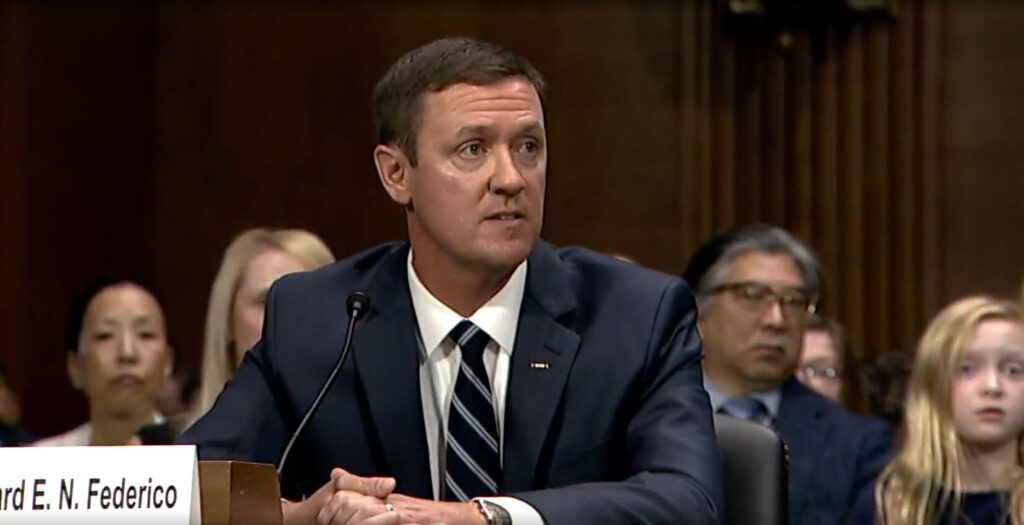
10th Circuit finds no fair housing violation by Littleton landlord for worker’s alleged rape of tenant
Michael Karlik
michael.karlik@coloradopolitics.com
Updated 1 day ago
The Denver-based federal appeals court concluded on Monday that Littleton’s housing authority could not be held liable for a maintenance worker’s alleged rape of a tenant, as the worker’s employment did not provide any special access to the victim. A...

Jeffco Public Schools sues Trump administration to protect funding after alleged transgender policies violation
Matt Kyle
matt.kyle@denvergazette.com
Updated 3 days ago
In the wake of several threats by the Trump administration to revoke federal funding, Jeffco Public Schools filed a lawsuit against the Department of Education seeking to protect that badly needed money. Jeffco has been under investigation by the DOE’s...
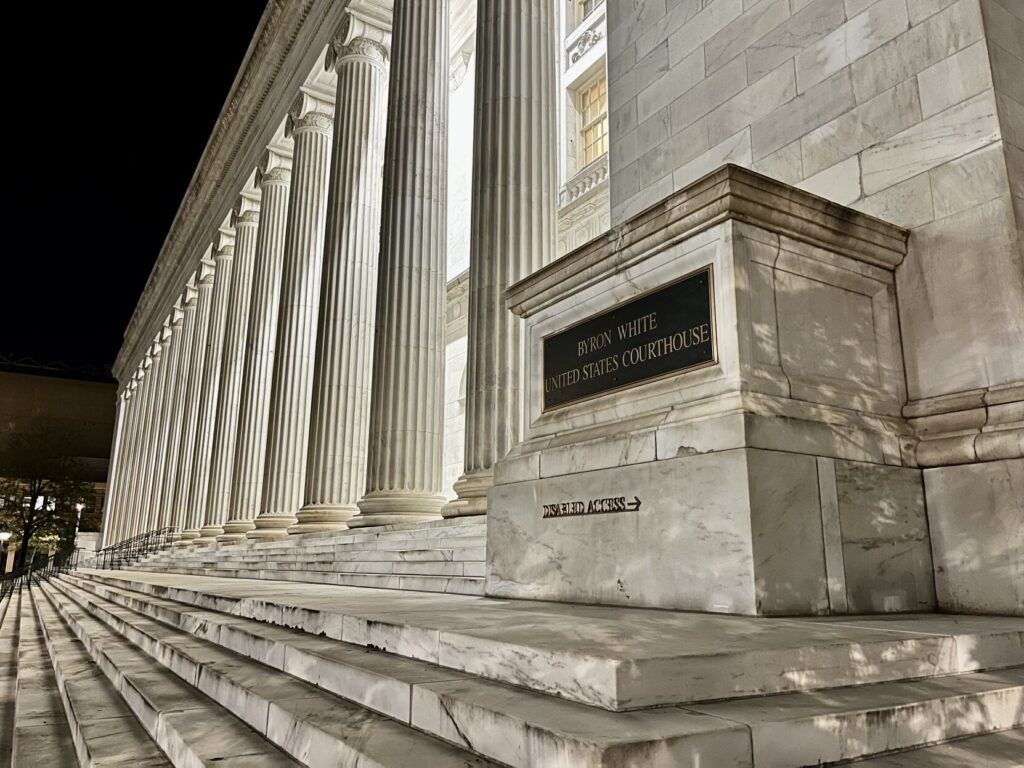
Denver detox center did not violate man’s rights with 10-hour hold, 10th Circuit says
Michael Karlik
michael.karlik@coloradopolitics.com
Updated 5 days ago
The Colorado-based federal appeals court concluded on Tuesday that Denver’s detoxification facility did not violate a man’s rights by holding him against his will for 10 hours until his blood alcohol content was projected to reach zero. Unusually, Brian Garrett’s...
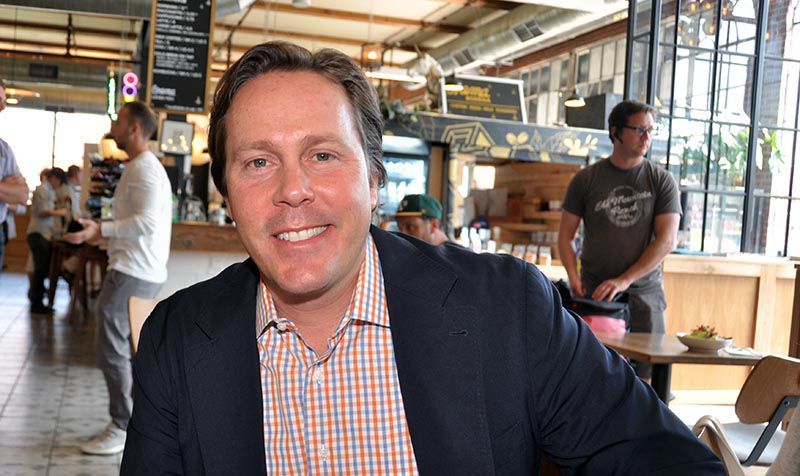
Federal judge clarifies ex-GOP treasurer candidate’s burden to prove defamation claims
Michael Karlik
michael.karlik@coloradopolitics.com
Updated 5 days ago
A federal judge clarified last week that businessman and former Republican statewide candidate Brian Watson will need to surmount a higher hurdle in proving his claim that a party guest’s alleged description of him as a “criminal” amounted to defamation....
Colorado board permits state to appeal injunction against arthritis drug price cap
Marissa Ventrelli
marissa.ventrelli@coloradopolitics.com
Updated 5 days ago
A Colorado board voted Friday to allow the Attorney General’s Office to fight an injunction against a price cap on a drug that treats arthritis. A U.S. district court judge had granted the company Amgen a preliminary injunction, temporarily blocking...
PREV
PREVIOUS

Democratic lawmakers target Colorado's stalled prison population plan
Colorado’s prison population plan was designed to prevent overcrowding. Instead, eight months after it was triggered, the system remains strained and largely ineffective, prompting two Democratic lawmakers to push for changes through new legislation. According to its sponsors, Senate Bill 036 would raise the vacancy‑rate threshold that triggers the plan from 3% to 4% and […]

Boebert working on bill to strip Swalwell of $22,000 annual taxpayer-funded pension
EXCLUSIVE — Rep. Lauren Boebert (R-CO) is working on legislation to strip disgraced former Rep. Eric Swalwell of his $22,000 annual taxpayer-funded congressional pension. Swalwell resigned from the House on Tuesday after allegations of sexual assault by multiple women, including a former congressional staffer. Despite his exit under an ethical cloud, the California Democrat is […]