

Democratic lawmakers target Colorado’s stalled prison population plan

Colorado’s prison population plan was designed to prevent overcrowding.
Instead, eight months after it was triggered, the system remains strained and largely ineffective, prompting two Democratic lawmakers to push for changes through new legislation.
According to its sponsors, Senate Bill 036 would raise the vacancy‑rate threshold that triggers the plan from 3% to 4% and require the Department of Corrections to provide more detailed reports
The House Judiciary Committee narrowly passed the measure on a 4-3 vote, with both Republican committee members and Sen. Dylan Roberts, D-Frisco, voting against it.
The bill will now be heard by the Senate Appropriations Committee.
Adrienne Sanchez, who represents the Colorado Department of Corrections, said the state agency could not support the bill in its current form but is “committed to refining it” to “ensure appropriate trigger percentages and clean processes that support efficient population management without sacrificing public safety.”
Effective prison population management relies on more than just percentages, Sanchez said. Individuals who are eligible for release must demonstrate that they are ready to reenter society and have resources to support their transition.
Sanchez added, “Successful reentry requires a stable handoff: verifying housing, securing treatment beds, and coordinating with parole officers.”
The prison population management plan, created by lawmakers in 2018, sets procedures for when the statewide prison vacancy rate drops below 3% for 30 consecutive days. That threshold was reached for the first time last August, prompting Gov. Jared Polis to activate the plan, which includes the early release of certain eligible inmates.
Overcrowding in Colorado’s state prisons has been a mounting concern for months. County sheriffs first raised alarms in May about the shortage of available prison beds, which has pushed more people into already strained local jails.
The measures triggered under the population management plan have had little to no effect on the state’s overall prison population over the last year.
Sen. Mike Weissman, an Aurora Democrat and one of the bill’s authors, said that of the roughly 15,000 people in Colorado’s correctional facilities, just over 200 have appeared before the parole board, noting that only about 12% of them were granted parole. The bill’s other sponsor is Sen. Julie Gonzales.
The prison population management measures, according to Weissman, are about “looking really, really, really hard at the DOC population to see who maybe has shown some indicia of change and can go to the parole board, and are they going to decide that they can release people, or perhaps not.”
By introducing Senate Bill 036, Weissman and Gonzales, a Denver Democrat, said it will help increase the vacancy rate threshold from 3% to 4% and expand reporting requirements for the corrections agency.
Additionally, the bill requires the agency to submit monthly population updates and to include estimates of the population reduction needed to increase the vacancy rate to 5% or higher.
If passed, sponsors said SB 036 would set new requirements for community corrections facilities, or halfway houses. These include reviewing the eligibility of certain inmates for intensive supervision programs and evaluating whether to expand the number of available transition beds.
If the prison vacancy rate doesn’t exceed 5% within 120 days of the plan’s activation, the bill requires the DOC to submit to the governor and parole board a list of inmates who are eligible for parole and recommend either transferring them to community corrections or another form of release, such as commutation of their sentence.

Tom Raynes of the Colorado District Attorneys Council argued that part of the reason the state is seeing such a high prison population is a lack of facilities — the state has closed seven prisons in the last decade, he said.
He objected to a provision of the bill that was ultimately amended out, but would have allowed certain inmates to be released up to 90 days before their parole eligibility date if the prison population management plan was in effect.
“It seems kind of like, if nothing else works, then let’s just take this category and get them out early,” Raynes said.
Supporters say it’s a step forward
Colorado is at a “turning point” with how it manages its prison system, said Kyle Giddings of the Colorado Criminal Justice Reform Coalition.
While the governor’s office and DOC are asking for funding for a new prison, the system currently in place “lacks clear planning and transparency around how those resources are used,” Giddings said. “This bill starts to address that gap.”
Because the original law establishing the prison population management plan didn’t include certain transparency requirements, it is not entirely clear why the plan hasn’t significantly reduced the state’s prison population, Giddings said.
Senate Bill 036 makes that 2018 law work as it was originally intended, he said.
“Without tools like this, the default becomes expansion, and expansion is the most expensive option available to the state,” he said. “It locks us into long-term costs without addressing the underlying issues: how we manage the population we already have.”
Devon Lee, a parole case manager with the DOC and a member of the state employees’ union, said prison overcrowding puts the safety of both inmates and staff at risk.
Lee said he’s seen many people who should be released on parole “caught in the bottleneck.” He and his colleagues have been forced to cover vacant positions, such as security, meaning they have less time to do their assigned jobs, all while the case load increases due to high population numbers.
“The programs that make rehabilitation possible have been drastically reduced, and that makes it very difficult for the dozens of individuals who have passed their parole eligibility date to be approved for release,” Lee said. “Passing this into law will bring more transparency and more accountability around what the DOC is doing to reduce the incarcerated population.”
Others, such as District Attorney George Brauchler of the 23rd Judicial District, have countered that prison overcrowding is an artificial crisis, manufactured by what he described as a “Democrat-led prison-closing frenzy.
In an opinion piece, he said it’s the result of the “predictable, deliberate and unnecessary outcome of Democrat political decision-making that has long prioritized offenders over public safety and victims.”
As for parolees, Colorado now has 50% more as of 2024 compared to 2003.
Brauchler said the Democrat-majority in the legislature has made it “harder to incarcerate felons, easier to reduce prison sentences for committing felonies (including murder), and have made it harder to return felons to prison for violating the terms of their parole.”


Colorado can’t forget the lessons of COVID | Jon Caldara
Jon Caldara
jon-caldara@coloradopolitics.com
Updated 3 days ago
We are finally getting a clearer picture of what happened during COVID. Not because the people who locked us up, masked our faces and forced unproven chemicals into our bodies have suddenly become transparent, but because Anthony Fauci’s COVID-era diary...

Historic preservation supporters organize to oppose Trump changes | Bob Loevy
Tom Cronin
tom-cronin@coloradopolitics.com
Updated 2 days ago
Historic preservation organizations in Colorado Springs, the remainder of Colorado and across the nation are organizing to resist a recent effort to relax and weaken historic preservation laws in the United States. In Washington, D.C., the Advisory Council on Historic...

At conservative summit, Colorado Republican leaders concede Democrats’ election edge
Marissa Ventrelli
marissa.ventrelli@coloradopolitics.com
Updated 1 day ago
Four Republican state lawmakers told attendees at a gathering of conservative leaders on Friday they doubt their party can win statewide races, noting that Colorado’s electorate has been shifting toward Democrats but adding they see an opening in several pockets....
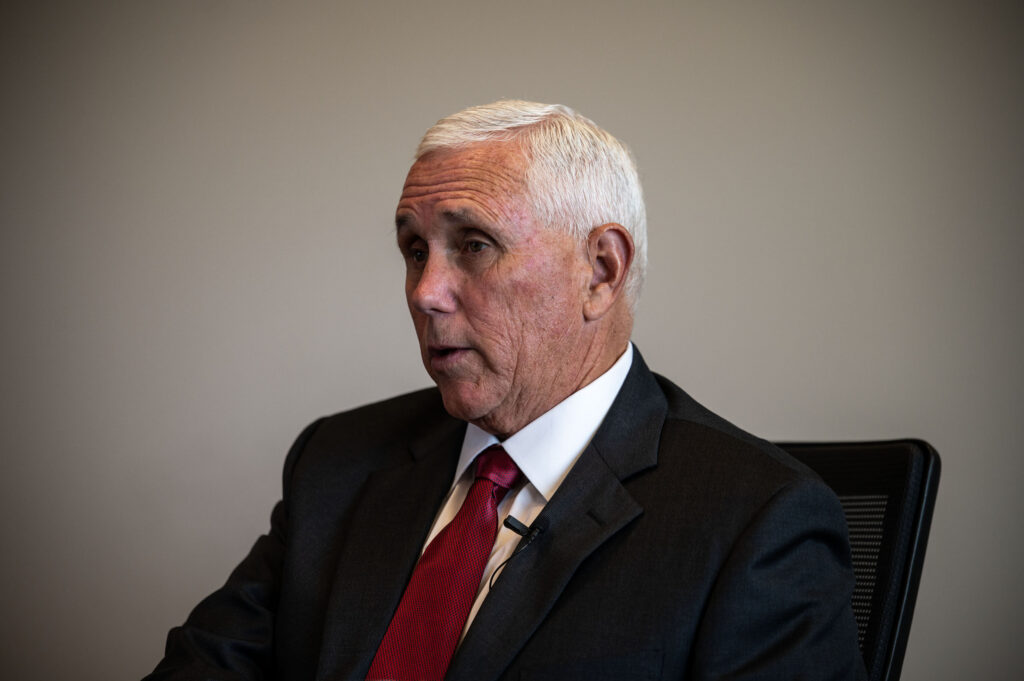
Q&A with Mike Pence | Former vice president says GOP’s populist turn from conservatism isn’t permanent
Ernest Luning
ernest.luning@coloradopolitics.com
Updated 1 day ago
Former Vice President Mike Pence says he’s concerned that the Republican Party has taken a populist turn away from bedrock conservative principles during President Donald Trump’s second term, but he believes the party will return to its roots when Trump...

Republican Victor Marx taps George Markert as his lieutenant governor pick in Colorado’s gubernatorial race
Ernest Luning
ernest.luning@coloradopolitics.com
Updated 2 days ago
Colorado Republican gubernatorial nominee Victor Marx named George Markert, a retired Marine colonel, as his running mate for lieutenant governor Friday morning, saying the former U.S. Senate candidate will bring “exceptional character, proven leadership and a lifetime of serving others”...
Pueblo mayor, council concoct Trumpian Texas Two-Step | Dennis Maes
Dennis Maes
dennis-maes@coloradopolitics.com
Updated 3 days ago
Several weeks ago, an article was published positing Pueblo Mayor Heather Graham is a disciple of the calamitous Donald Trump school of governance — specifically as it related to questionable ethical practices and the misuse of public funds. Recently, Graham...

Colorado can’t afford to turn its back on proven public safety technology | GUEST COLUMN
Colorado Politics
colorado-politics@coloradopolitics.com
Updated 3 days ago
By Samuel G. Michael I recently saw a report that said Colorado is leading the way in artificial intelligence adoption for businesses. Across our state, more business owners and employees than ever before use AI for their everyday functions —...
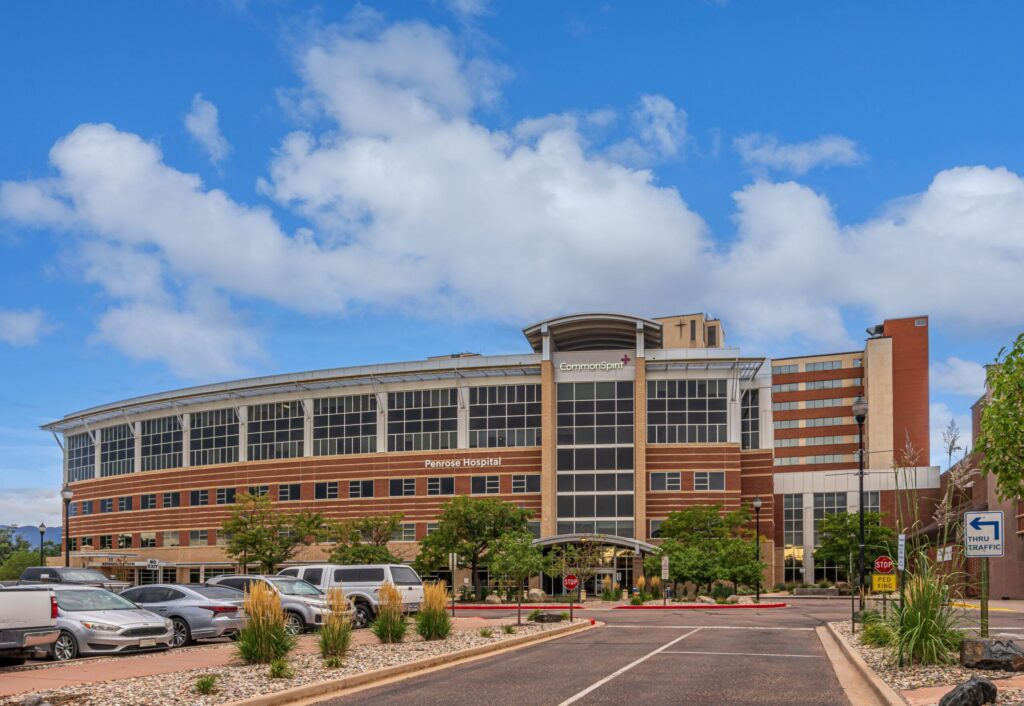
Colorado lawmakers start crafting strategy to manage $200 million in federal rural health funds
Marissa Ventrelli
marissa.ventrelli@coloradopolitics.com
Updated 1 hour ago
Members of the Colorado legislature’s new Commission on Medicaid raised concerns Wednesday about the federal Rural Health Transformation Program created under H.R. 1. The bipartisan, bicameral commission, created in the last legislative session to guide implementation of Medicaid changes under...

Democrat Jessica Killin’s internal poll shows dead heat with U.S. Rep. Jeff Crank in Colorado’s 5th CD
Ernest Luning
ernest.luning@coloradopolitics.com
Updated 3 days ago
Jessica Killin, the Democratic nominee in Colorado’s 5th Congressional District, is in a statistical tie with Republican U.S. Rep. Jeff Crank, according to an internal poll released this week by Killin’s campaign. The poll of likely general election voters, conducted...

Colorado’s 72-hour social media warrant law takes effect Aug. 12
Marissa Ventrelli
marissa.ventrelli@coloradopolitics.com
Updated 3 days ago
A law requiring social media platforms to respond to search warrants within 72 hours goes into effect on Aug. 12. Senate Bill 011 also requires platforms to create a staffed hotline for Colorado law enforcement agencies to contact regarding pending...
PREV
PREVIOUS

After internal strategy sessions, Colorado Senate to take up $46B budget debate
Tax Day carries added weight at the state Capitol this year, as the Senate prepares to take up the 2026‑27 budget on Wednesday following a day of preparations by both Republican and Democratic caucuses. Senators are expected to raise some of the House amendments from last week’s debate, as well as their own ideas. On […]

Colorado Supreme Court considers new requirement for leaving-the-scene convictions
In 2006, the Colorado Supreme Court ruled that leaving the scene of an accident resulting in serious injury is a “strict liability” offense, meaning a person is guilty solely through their conduct, without the need for prosecutors to prove the defendant’s mental state. Now, 20 years later, one defendant is asking the Supreme Court to […]