

After internal strategy sessions, Colorado Senate to take up $46B budget debate
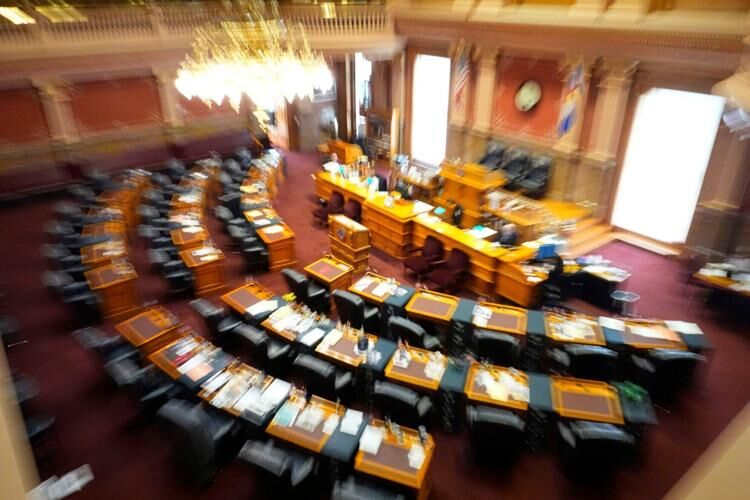
Tax Day carries added weight at the state Capitol this year, as the Senate prepares to take up the 2026‑27 budget on Wednesday following a day of preparations by both Republican and Democratic caucuses.
Senators are expected to raise some of the House amendments from last week’s debate, as well as their own ideas.
On Tuesday, the Senate Appropriations Committee stripped all the amendments from House Bill 1410, the long appropriations bill. They also removed amendments from the “orbitals,” which are the bills that change state law to balance the budget.
That included what’s likely to be one of the most intense debates on Wednesday: House Bill 1411, the Cover All Coloradans bill that, as introduced, capped enrollment and spending on the program that provides health care to children and pregnant women living in the U.S. illegally.
The program, however, has spent more than four times its original estimate and is driving up health care costs in the state budget, since it is mostly funded by general fund money.
While Democrats talked strategy opening at the Capitol, Republicans held its budget caucus at the Independence Institute on Tuesday, a meeting not announced on the page provided for the minority caucus on the General Assembly’s website, nor is a recording of that meeting available for the public, raising concerns that the meeting may have violated the state’s open‑meetings law.
“We didn’t resolve the structural deficit, but we did address overspending,” said Sen. Barbara Kirkmeyer, R‑Brighton, who represents the caucus on the Joint Budget Committee.
She said she isn’t happy with the budget but that she co-sponsored the bill because it was the only way to balance it.
The general fund portion of the budget grew by about $300 million, from $18.3 million to $18.6 million, she said, and that’s driven primarily by Medicaid increases.
One issue Kirkmeyer highlighted is the proposal to reduce the state’s general fund reserve from 15% to 13%, as outlined in one of the orbitals. She linked the concern to Colorado’s historic drought and record-low snowpack, noting that the last time conditions were this severe, a recession soon followed. She said that’s exactly why the reserve exists — to help the state cover expenses during an economic downturn.
“It’s not an if but a when,” Kirkmeyer told the caucus, and it’s not going to get any easier next year, she added.
One of her passions, K-12 education, prompted concerns about the state education fund, which receives the tax money levied from Amendment 23, passed in 2000. That measure requires one-third of 1% of all taxable income to be deposited in the fund, but Kirkmeyer said the fund will likely be depleted in two years.
That pays for total program funding and categoricals, small attendance centers, services and instruction for English-language learners, special education, gifted and talented education, vocational education, and school transportation, according to the Colorado School Finance Project.
The JBC worked to protect K-12 funding, Kirkmery explained, but that meant the budget is being “balanced on the backs of the poorest among us and the medically fragile,” rather than on students’ backs, as was the case during the Great Recession of 2008.
Caucus members noted they’ve received emails from families who care for disabled relatives and whose funding for that care is being cut.
The Teacher Recruitment Education and Preparation program, which saw its final year of funding cut, may get a lifeline in Wednesday’s action, based on comments in the House last week. An amendment from Sens. Byron Pelton, R-Sterling and Janice Marchman, D-Loveland, will cover the final year for high school seniors enrolled in the program, which helps those students receive college credit in teacher education during high school with tuition paid for by the state.
The money, according to Pelton, will come from funds left over in an electric school bus grant program.
Another amendment from Sens. John Carson, R-Highlands Ranch and Marc Snyder, D-Colorado Springs, would put $3 million into the Colorado Auto Theft Prevention Authority. An amendment in the House funded that program with $ 1.5 million each in general funds from the Department of Corrections superintendent program and from the Colorado Department of Public Health and Environment’s disease control and public health response division.
The Snyder/Carson amendment, according to the Colorado Municipal League, will take the $3 million from a discretionary account within the Department of Corrections.
The full Senate is expected to dive into the budget debate on Wednesday.


Denver police reopen 13 sex assault cases after retesting Missy Woods’ CBI work
Jenny Deam
jenny.deam@gazette.com
Updated 11 hours ago
Thirteen previously closed Denver sexual assault cases have been reopened after the city’s crime lab retested DNA evidence once analyzed by former Colorado Bureau of Investigation forensic analyst Yvonne Woods. A police spokesperson told The Denver Gazette the once-closed cases...

Ballot measure aims to shift Colorado sporting goods tax revenue to land, water and wildfire projects
Marissa Ventrelli
marissa.ventrelli@coloradopolitics.com
Updated 1 day ago
Colorado voters this November will decide whether to direct a share of sales tax revenue from sporting goods — including bicycles and skiing equipment — toward land and water conservation, wildfire prevention and expanding outdoor recreation. Supporters say the measure...

‘The smell of jet fuel lingered for years’: Colorado veterans recall 9/11
Deborah Grigsby
deborah.smith@denvergazette.com
Updated 3 days ago
For many years after the Sept. 11 attacks in Washington, D.C., Mark Schoenrock said he could still smell the burning jet fuel from American Airlines Flight 77. “It was just such an overpowering sensation,” Schoenrock, a former Lone Tree resident...
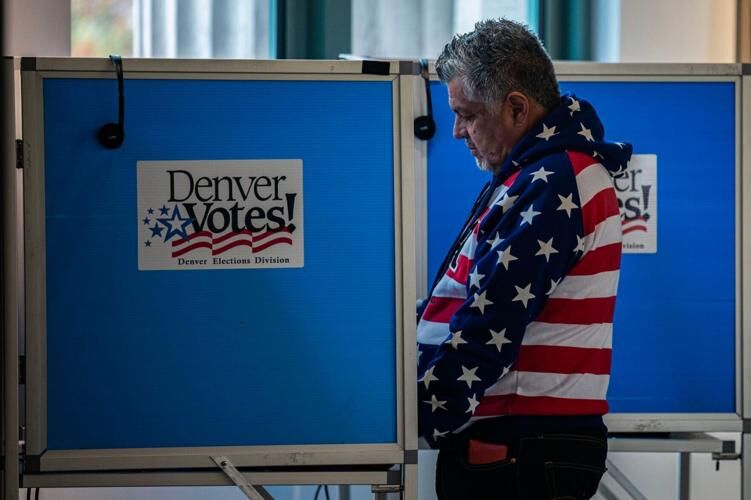
Denver sues Trump to block armed ICE agents from polling sites
Deborah Grigsby
deborah.smith@denvergazette.com
Updated 3 days ago
The city of Denver, along with several groups, sued the Trump administration Thursday, seeking to block U.S. Immigration and Customs Enforcement officers who are armed from polling sites during the upcoming midterm elections. In fact, there are no official orders...

Colorado Parks & Wildlife staff kill third wolf in 3 days
Marianne Goodland
marianne.goodland@coloradopolitics.com
Updated 1 day ago
Colorado’s wildlife division on Thursday said that staff and contracted agents killed an uncollared female yearling wolf a pack after confirming she had been killing livestock in Grand County. Three wolves from three separate packs have been killed in the...
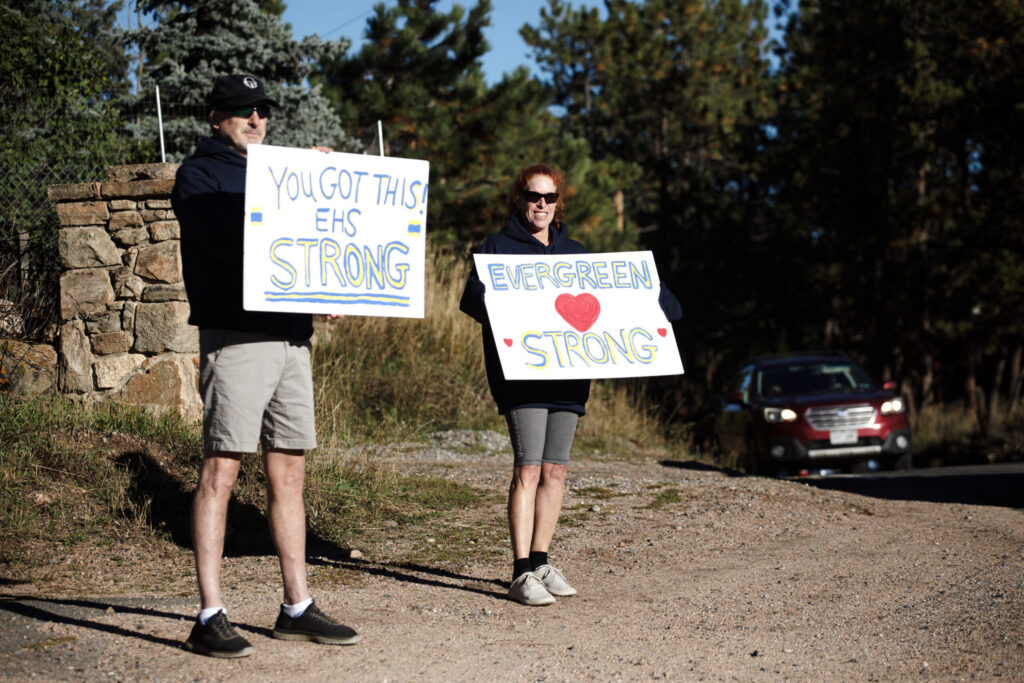
Evergreen High School marks one year since shooting on campus
Kyla Pearce
kyla.pearce@gazette.com
Updated 3 days ago
Thursday marks one year since the Evergreen High School shooting that injured two students and left the shooter dead. On Sept. 10, 2025, Desmond Holly, 16, entered the school armed with a Smith & Wesson .38 revolver and opened fire...
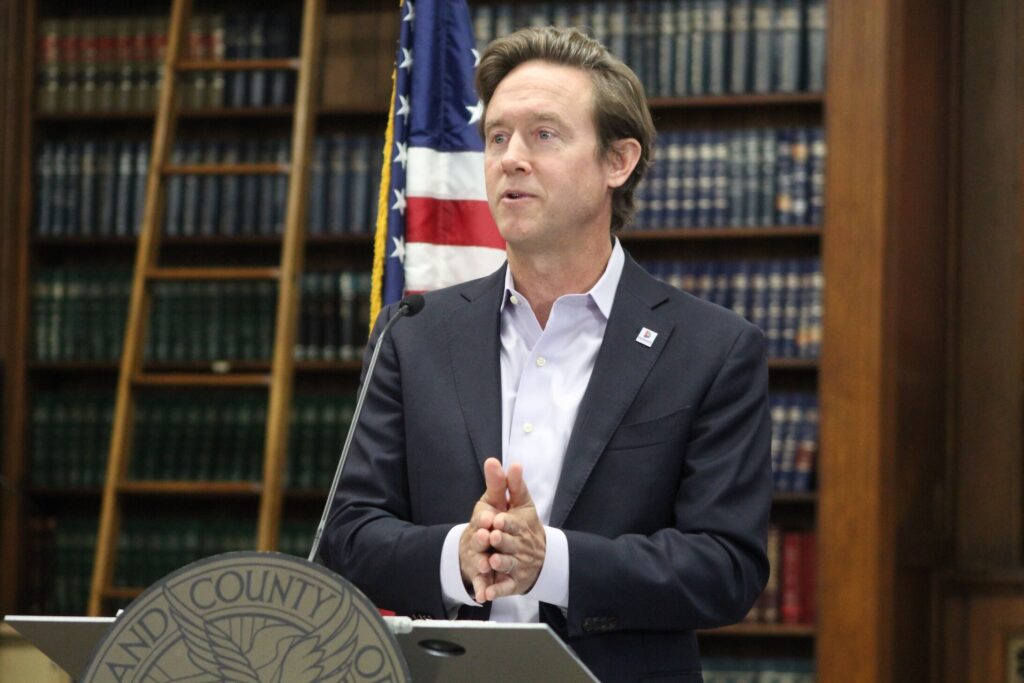
Denver mayor unveils 2027 budget after weeks of warning of tough choices
Nico Brambila
nico.brambila@denvergazette.com
Updated 3 days ago
Denver Mayor Mike Johnston unveiled his proposed 2027 budget Thursday after weeks of warning that the city is entering a tighter financial era despite stronger-than-expected revenue collections this year. The projected general fund revenue for 2027 is $1.684 billion, the...

Lawsuit challenges Douglas County commissioners’ ballot actions
Nicholas Fogleman
nicholas.fogleman@denvergazette.com
Updated 3 days ago
A new lawsuit against Douglas County commissioners seeks to invalidate the board’s intervention in efforts to expand the commission from three members to five and restore the original ballot language approved by more than 20,000 petition signers. The suit marks...

United abruptly cancels flyover marking 9/11 anniversary after ‘concerns in the community’
Mark Samuelson Special to The Denver Gazette
mark.samuelson@denvergazette.com
Updated 2 days ago
United Airlines had planned a dramatic flyover in Denver on Friday to mark the 25th anniversary of the 9/11 attacks, when it lost two of the four U.S. passenger jetliners hijacked by terrorists. But the airline abruptly cancelled plans late...

Denver Water proposes 6% rate increase for 2027
Nico Brambila
nico.brambila@denvergazette.com
Updated 3 days ago
Water could be more expensive for Denver residents next year. Denver Water commissioners received a staff proposal for rate increases Wednesday expected to generate about 6% more revenue in 2027. What individual customers pay would depend on where they live...
PREV
PREVIOUS

Douglas County approves AI system for sheriff’s investigations
Douglas County commissioners unanimously approved the purchase of an artificial intelligence system to assist the Sheriff’s Office with investigative analysis. The system is designed to help investigators process large volumes of data more efficiently and turn it into usable investigative leads, officials said. “This system dramatically improves how we process large and complex databases, turning […]

Democratic lawmakers target Colorado's stalled prison population plan
Colorado’s prison population plan was designed to prevent overcrowding. Instead, eight months after it was triggered, the system remains strained and largely ineffective, prompting two Democratic lawmakers to push for changes through new legislation. According to its sponsors, Senate Bill 036 would raise the vacancy‑rate threshold that triggers the plan from 3% to 4% and […]