

Douglas County approves AI system for sheriff’s investigations

Douglas County commissioners unanimously approved the purchase of an artificial intelligence system to assist the Sheriff’s Office with investigative analysis.
The system is designed to help investigators process large volumes of data more efficiently and turn it into usable investigative leads, officials said.
“This system dramatically improves how we process large and complex databases, turning them into clear, actionable intelligence that supports faster and more accurate decision making,” Brian Murphy with the sheriff’s office told commissioners.
The program, called TimePilot, was designed by TranquilityAI and integrates case files into an AI platform capable of producing timelines, analyzing data and reports. Officials said the $100,000 plan is expected to save investigators hours of time and increase closure speeds.
“It’s taking months of work and distilling it down to an hour or two,” Murphy said.
The sheriff’s office used the program for the past year under a trial agreement. During that period, investigators uploaded 30 major cases including homicides, attempted homicides, cold case homicides, several missing persons cases, a high-profile kidnapping and other complex cases.
“Law enforcement investigations often involve thousands of documents, videos, reports, and digital records that would take detectives and analysts weeks or months to review,” Michele Kennedy, a crime analysis supervisor at the sheriff’s office, said.
Officials said the system has been used to organize files, generate case summaries, produce victimology reports and analyze data, which has increased efficiency.
Murphy emphasized that the system is used as an investigative tool and does not replace human judgment. He said the software only analyzes information uploaded by investigators and does not independently identify suspects.
“This is a tool that gives us leads. This is not something that is rogue and will tell us, this is your suspect. It gives us leads, and then it is the human that has to follow up on those leads,” Murphy said.
Murphy cited an example in which a suspect provided multiple versions of events. Investigators used the system to identify inconsistencies with previous accounts and confront the suspect in real time.
“It would have taken several people having to monitor transcripts, maybe find the information,” Murphy said. “We are multiplying what we are able to do, hundreds, if not thousandsfold, by the use of this program.”


Two more wolves killed by Colorado wildlife staff
Marianne Goodland
marianne.goodland@coloradopolitics.com
Updated 13 hours ago
Two yearling wolves from the Copper Creek and Three Creeks packs in Pitkin and Rio Blanco counties, respectively, were killed by Colorado Parks and Wildlife staff on Monday. That brings to 19 the number of wolves that have died under...

Parenting from prison: Inmates hope to be present in their children’s lives, while physically absent
Marianne Goodland
marianne.goodland@coloradopolitics.com
Updated 18 hours ago
The room was decorated with balloons, the tables sparking bright with colors as the smell of pizza and cake wafted through the air. As did music. This was, after all, a father-daughter dance. Except this was not a typical father-daughter...

Colorado House ethics committee issues ‘stern letter’ to Democrat over caucus funds mismanagement
Marianne Goodland
marianne.goodland@coloradopolitics.com
Updated 14 hours ago
The Colorado House ethics committee on Friday voted unanimously to issue a “stern letter” to Rep. Mandy Lindsay, D-Aurora, regarding her mismanagement of House Democratic caucus funds. The committee further voted to request that Lindsay resign as Democratic Caucus co-chair...

Secretary of Energy, congressmen push for reliable power over renewable outside CSU coal power plant
Brennen Kauffman
brennen-kauffman@coloradopolitics.com
Updated 20 hours ago
U.S. Secretary of Energy Chris Wright said Friday that the Trump administration would continue to fight against state efforts to close coal power plants, including the Ray Nixon Power Plant outside of Colorado Springs. Wright was joined by Colorado Republican...

State seeks $50K penalty against GOP candidate Victor Marx over alleged campaign finance violations
Deborah Grigsby
deborah.smith@denvergazette.com
Updated 13 hours ago
Republican gubernatorial candidate Victor Marx is looking at more than $50,000 in fines in what the Elections Division of the Office of the Secretary of State calls “unprecedented” campaign finance violations. The state has not imposed that fine yet, and...

Favorability rating of Mayor Mike Johnston, Denver City Council slides
Nico Brambila
nico.brambila@denvergazette.com
Updated 5 days ago
Denver Mayor Mike Johnston’s favorability rating fell 7 percentage points over the past year, while the City Council’s favorability rating dropped 3 percentage points, a new poll has found. A little more than a year after taking office, Johnston had...

Denver plans to spend $50M on improvements to Sloan’s Lake
Nicole C. Brambila
nicole-c-brambila@coloradopolitics.com
Updated 7 days ago
Denver plans to spend $50 million for Sloan’s Lake improvements. Mayor Mike Johnston and Councilmembers Amanda P. Sandoval and Jamie Torres announced the project’s launch steps from the lake’s shore near the jetty in the park on Wednesday morning. “After...
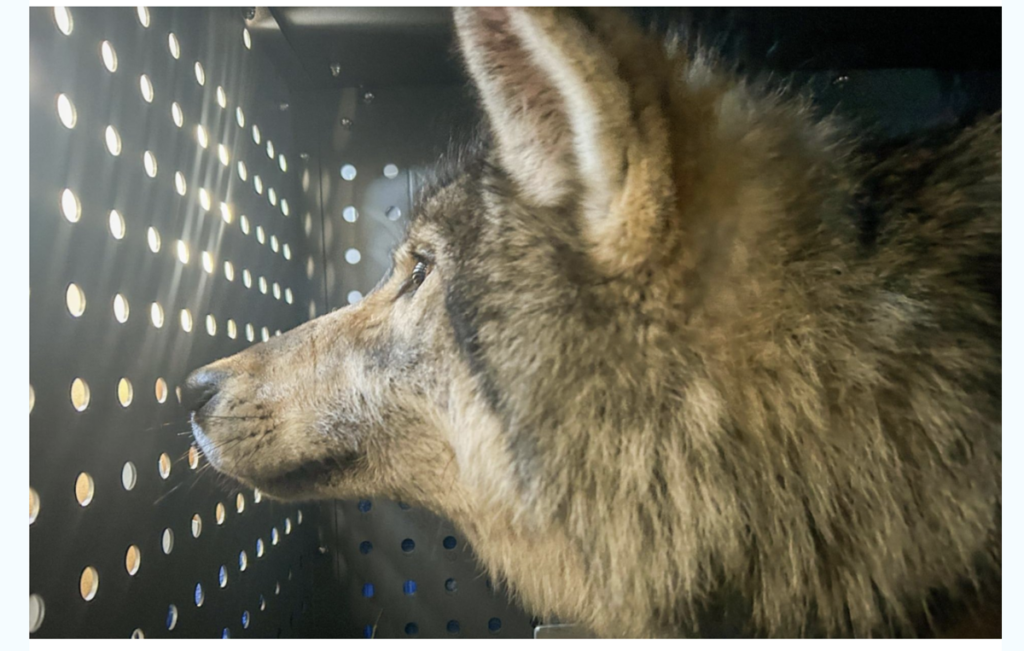
Wildlife commissioner pushes for tougher penalties after hunter accidentally kills Colorado wolf
Marianne Goodland
marianne.goodland@coloradopolitics.com
Updated 6 days ago
Colorado wildlife officials on Wednesday revisited the agency’s handling of violations involving protected species, prompting renewed debate over whether current penalties are sufficient. Colorado Parks and Wildlife Commissioner Rebecca Niemiec on Wednesday urged the agency to impose stronger penalties —...

Petitions seek to place noise restrictions, surveillance cameras and water limits on Colorado Springs ballot
Brennen Kauffman
brennen-kauffman@coloradopolitics.com
Updated 6 days ago
Petitioners in Colorado Springs are preparing to gather signatures to place restrictions on noise levels, developments that use a large volume of water and surveillance cameras that use automatic tracking technology. The City Clerk’s office on Monday gave final approval...

Colorado’s Parks and Wildlife chair’s decision to limit public comments sparks backlash from fellow commissioners
Marianne Goodland
marianne.goodland@coloradopolitics.com
Updated 7 days ago
Last week, the chairman of Colorado’s wildlife commission unilaterally decided to limit public comments, complaining, in particular, that elected officials often “grandstand” at meetings and noting that the election season is well underway. This week, the commission overturned its chair’s...
PREV
PREVIOUS

Colorado Supreme Court weighs transgender services case involving Children’s Hospital and federal threats
Some members of the Colorado Supreme Court expressed discomfort on April 14 with having to decide whether to order Children’s Hospital Colorado to resume providing certain services to transgender children, which could trigger a “death sentence” if the federal government imposes consequences. “I’m assuming there’s no middle ground here with the federal administration, in terms […]

After internal strategy sessions, Colorado Senate to take up $46B budget debate
Tax Day carries added weight at the state Capitol this year, as the Senate prepares to take up the 2026‑27 budget on Wednesday following a day of preparations by both Republican and Democratic caucuses. Senators are expected to raise some of the House amendments from last week’s debate, as well as their own ideas. On […]