

Colorado governor vetoes union dues bill — again
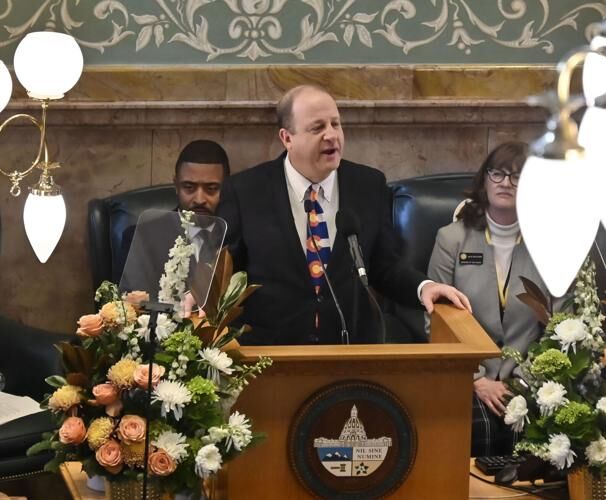
Gov. Jared Polis on Friday vetoed yet again legislation that would have made it easier for labor organizations to impose dues on non-union members, a decision long expected after the legislature approved the measure without securing the buy-in of businesses.
Polis rejected a similar proposal last year.
And like last year, he cited the same reason — that, if enacted, the bill would allow a simple majority of employees who choose to unionize to “also determine that dues could be mandatorily taken from all workers.”
This year’s outcome, he said, has “disappointed” him yet again.
“I would have hoped that both business and labor leaders could have worked to craft a long-term and durable agreement on this matter that would have served Colorado workers and businesses alike,” he wrote in his veto letter. “Unfortunately, because that did not happen, this issue will likely come up again next year and every subsequent year until it is addressed, which creates uncertainty for both workers and businesses.”
The legislation, which advanced largely along partisan lines, would have repealed a nearly century-old law governing a requirement before a unionized workplace can collect fees on all workers, regardless of whether they are union members.
Democrats argued the change would strengthen workers’ ability to organize and negotiate higher wages, while Republicans countered that eliminating the second vote would force employees to pay union representation fees without sufficient consent.
The proposal did not actually deal with a workplace’s ability to unionize, since organizing itself is governed by federal law. For that election, a labor group must receive a simple majority to unionize.
What makes Colorado’s 80-year-old law unique is that it requires another election before a unionized workplace can establish a “union security agreement,” which allows unions to collect dues or representation fees from all workers, including non-members.
That second vote requires approval from at least 75% of workers voting. The 2026 labor-backed bill would eliminate the requirement for that second election.
In his veto letter, the governor said the current law has meant labor groups are unionizing at smaller companies, where the chances of achieving the two-thirds threshold are better — and not at larger firms, where “organizing might be even more important.”
The legislature sent practically the same proposal to Polis’ desk last year, and the governor, as he had long telegraphed, vetoed it. Earlier this year, Polis said he is “disappointed” that Democratic lawmakers reintroduced the legislation.
During the debate on the legislation this year, the sponsors — Reps. Javier Mabrey, D-Denver, and Jennifer Bacon, D-Denver — said they were bringing it back to show their commitment to workers across the state, particularly at a time when, they contended, their rights are being jeopardized at the federal level.
“We’re back because the problem did not go away; it has only gotten worse,” Mabrey said. “Costs keep rising, workers are under attack like never before, and the president is gutting worker protections provided by the Department of Labor and OSHA (Occupational Safety and Health Administration).”
States like Minnesota and Washington are often named some of the best places to work in the country, Mabrey said, and both of them have high union density.
While there have been a number of bills introduced over the past few years addressing affordability, very few have addressed wages, he said.
“Yes, it is about how much we are spending for housing, for food, for health care, basic necessities and entertainment, but it is also about purchasing power and how much workers are paid, and this bill addresses that part of the affordability crisis,” he said during the debate.
Republican House members said they don’t support the measure not because they don’t support unions — but because they don’t believe the bill would achieve what sponsors said it would.
“This bill is not about affordability,” said Rep. Rebecca Keltie, R-Colorado Springs. “Give me a break. This bill is just the opposite. This bill is about trying to rip money out of people’s pockets without their consent.”
Keltie said the second election protects workers who don’t want to pay union representation fees and removing it would be a “violation of free will.”
Assistant Minority Leader Ty Winter, R-Trinidad, said the bill does nothing to make life more affordable for everyday working people.
“I think the fight for workers should center around making the dollar that is earned stretch further, instead of being stepped on over and over and over again by legislation passed in this building,” he said, adding that the state is “killing good-paying jobs” in industries like oil and gas and mining.
“We can’t cut jobs and bring a bill like this and ride in on a white horse and save it all,” he said.
In the Senate, the bill is sponsored by Sens. Jessie Danielson, D-Wheat Ridge, and Iman Jodeh, D-Aurora.
In his veto letter, Polis said he would have supported a “modernized framework” for Colorado’s union representation laws.
“Most important to achieving a modernized framework, though, is a broad-based agreement among business and labor leaders,” he said.
Last year, labor and business leaders, who negotiated but failed to find a deal, had framed the issue in stark terms.
Dennis Dougherty, co-chair of the Colorado Worker Rights United and the Colorado AFL-CIO executive director, said vetoing the 2025 bill was tantamount to “siding with billionaire CEOs and corporate consultants trying to maintain the status quo that hurts working Coloradans.”
The coalition of businesses opposed to the measure, which included Colorado Concern and the state and metro Denver chambers, countered that workers “should not be compelled to reduce their paychecks to pay union officials who may not even work at their company and who may support political causes with which they disagree.”
Reporters Marissa Ventrelli and Luige del Puerto contributed to this article.

Details emerge after teen motorcycle parental consent bill is set to become law in Colorado
Marianne Goodland
marianne.goodland@coloradopolitics.com
Updated 2 hours ago
Gov. Jared Polis this year signed a bill that requires minors to obtain parental consent for a motorcycle instruction permit — legislation inspired by a young man who almost died in a crash last year. The measure, House Bill 26-1079,...

What to know before Colorado’s new law on semiautomatic firearms goes into effect
Marissa Ventrelli
marissa.ventrelli@coloradopolitics.com
Updated 2 days ago
A Colorado law passed in 2025 established new requirements for individuals planning to purchase semiautomatic weapons. Here’s what residents should know before Senate Bill 003 goes into effect on Aug. 1. From a ban to a training course For decades,...
Will Colorado Gov. Jared Polis’ independent streak define his legacy?
Marissa Ventrelli
marissa.ventrelli@coloradopolitics.com
Updated 4 days ago
Sometimes aligned with his party and at other times apart from it, Colorado Gov. Jared Polis has spent much of his tenure charting his own course. That independent streak carried through fights over labor policy, rural anger over wolf reintroduction...

Campaign launched to redirect $1 billion in TABOR refunds to education
Marissa Ventrelli
marissa.ventrelli@coloradopolitics.com
Updated 2 days ago
A coalition that includes the state teachers’ union on Tuesday launched a campaign for a ballot proposal that would reduce more than $1 billion in taxpayer refunds and spend the money on education. The measure is among several campaigns taking...

Turnout surges and winning margins stretch as final returns post in Colorado’s 2026 primary
Ernest Luning
ernest.luning@coloradopolitics.com
Updated 2 weeks ago
County clerks finished posting unofficial results in Colorado’s primary election on Friday, drawing a line under a series of nominating contests that witnessed upsets, surprises and outright shockers by the time the votes were tallied. While the outcome changed in...
Victor Marx defeats Barb Kirkmeyer as Colorado’s Republican gubernatorial primary crosses finish line
Ernest Luning
ernest.luning@coloradopolitics.com
Updated 2 weeks ago
Republican Victor Marx won Colorado’s Republican gubernatorial nomination on Thursday after maintaining a razor-thin lead over state Sen. Barb Kirkmeyer for more than a week as county clerks finished reporting final, unofficial vote totals. Marx, a missionary leader and first-time...

Rate reductions force Jefferson Center to close key recovery program as Colorado reimbursement rates change
Marianne Goodland
marianne.goodland@coloradopolitics.com
Updated 1 week ago
A second Front Range community mental health center is eliminating services due to new reimbursement rates set by the Colorado Department of Health Care Policy and Financing that will go into effect on Oct. 1. The Jefferson Center for Mental...
Republican Victor Marx maintains slim lead over Barb Kirkmeyer in Colorado gubernatorial primary
Ernest Luning
ernest.luning@coloradopolitics.com
Updated 2 weeks ago
Republican Victor Marx held on to a narrow lead Monday over state Sen. Barb Kirkmeyer as county clerks continued to count ballots in Colorado’s gubernatorial primary. Following an update posted at 3:30 p.m. by the Colorado Secretary of State’s Office,...
Progressive Democrats, traditional Republicans secure state House victories in Colorado
Marianne Goodland
marianne.goodland@coloradopolitics.com
Updated 3 weeks ago
With ballots still being counted, results from Tuesday’s primary election remained up in the air for several candidates for the Colorado General Assembly. Still, the preliminary results as of Wednesday morning showed progressive Democrats had a good night, as did...

Manny Rutinel defeats Shannon Bird in Colorado’s 8th CD Democratic primary, will face Gabe Evans
Ernest Luning
ernest.luning@coloradopolitics.com
Updated 3 weeks ago
State Rep. Manny Rutinel ran away with the Democratic nomination in Colorado’s most competitive congressional district on Tuesday, defeating former state Rep. Shannon Bird in the primary in Colorado’s 8th CD, where he will face Republican U.S. Rep. Gabe Evans...
PREV
PREVIOUS

Colorado Democratic attorney general candidates clash over experience and Trump lawsuits
Colorado’s four Democratic candidates for attorney general clashed sharply Thursday night in a debate that repeatedly returned to one theme — whether the state’s top lawyer should be a courtroom veteran or a political fighter. The contenders additionally sparred over Trump lawsuits, water battles and the commutation of Tina Peters’ sentence, with fundraising frontrunner Secretary […]

Gov. Jared Polis blocks Colorado Lottery's move to allow credit card sales
Gov. Jared Polis on Friday signed legislation to block the Colorado Lottery’s move to allow the purchase of tickets with credit cards, effectively reversing his earlier position. Last November, Polis had said that he supported the decision of the Colorado Lottery commission to allow that change. “The governor is supportive of increasing consumer convenience, and […]