

As street camera use surges, Colorado legislators grapple with law enforcement, privacy implications

In Boulder, the Flock camera system helped authorities locate the car of the suspect in the firebombing that killed a woman and injured 29 others in June last year. The car had contained explosives, authorities said.
In Columbine Valley, authorities used Flock to track down a porch pirate — only, it turned out, the woman was innocent.
Over the past few years, two narratives have emerged over the use of street cameras. On the one hand, it has proven indispensable to law enforcement departments, which characterize the street cameras as force multipliers and credit them for reducing crime.
On the other hand, some policymakers and advocates worry about their implication for privacy rights, even as others charge that data from the cameras have been shared with federal authorities. The latter charge is happening against the backdrop of elected officials and their allies saying the data should not be used for immigration enforcement.
Meanwhile, state lawmakers from both parties said they have heard the same worry from their constituents — they want to know who’s watching them, what information is being gathered and how it is being used.
Automatic license plate readers like Flock’s have been at the center of controversy in Colorado for the past several years, notably in Denver. The city ended its contract with Flock earlier this year after some quarters raised charges of mass surveillance and accusations that the database would be used for immigration enforcement. The city has since approved a one-year contract with Flock competitor Axon for 50 new cameras.
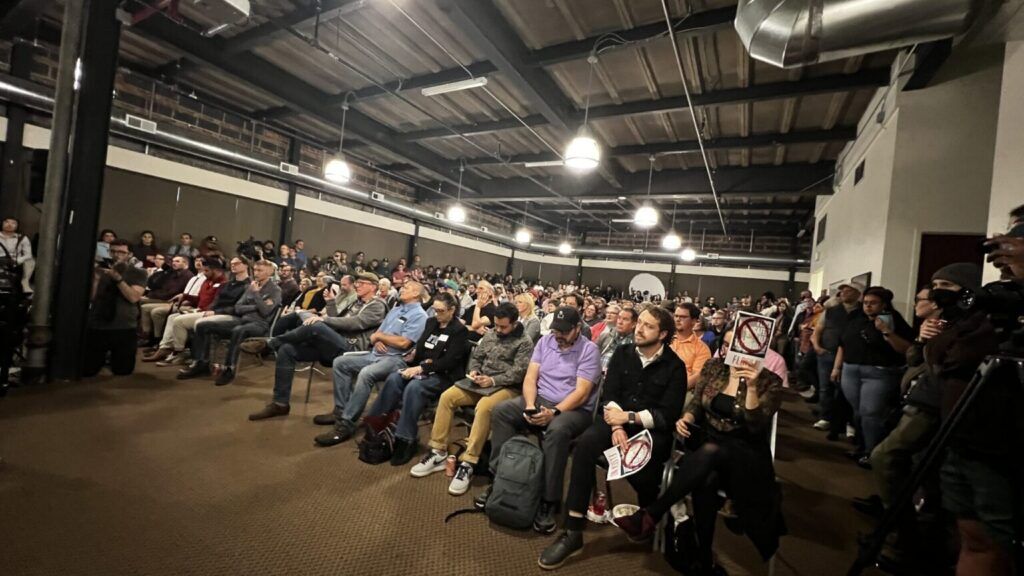
Flock itself had insisted it does not work with immigration authorities and the data its cameras collect is controlled by the client — be it a city, school or a private organization.
On its website, Flock said its license plate reader cameras provide real-time alerts to law enforcement, including license plate numbers and other identifying characteristics, through a central server.
The servers then log that information into a searchable database and compare results with the National Crime Information Center, state, and local police watchlists and alert law enforcement if there is a match.
Jessica Dotter of the Colorado District Attorneys’ Council said automatic license plate readers have been used in Colorado to solve crimes, such as motor vehicle theft, human trafficking, vehicular homicide, and hit-and-run cases.
“The reality is that they use these cameras to keep more law enforcement off the street,” Dotter said, referring to a proposal. “If we take away the ability to have the cameras, we need to have people on the street to witness or see this or be ready to respond, and I don’t think that aligns with what a lot of the proponents of the bill would want, and it would cost a lot more money.”
A ‘delicate dance’
The debate over cameras in the public square has reached the state Capitol, where Sen. Lynda Zamora Wilson, R-Colorado Springs, sponsored a pair of bills on surveillance technology.
One of them, Senate Bill 070, which she authored alongside Sen. Judy Amabile, D-Boulder, would have prohibited law enforcement from accessing databases containing vehicles’ “historical location information,” like Flock and Axon.
Sen. Dylan Roberts, D-Frisco, voted against SB 070 in the Senate Judiciary Committee, saying he didn’t want to take away law enforcement’s ability to solve and prevent crimes through surveillance technology.
“I think there may be a more targeted way to protect against any misuse of personal data while not sacrificing the ability to quickly respond to crime and keep people safe,” he said. “I look forward to seeing how those conversations evolve over the legislative interim period.”
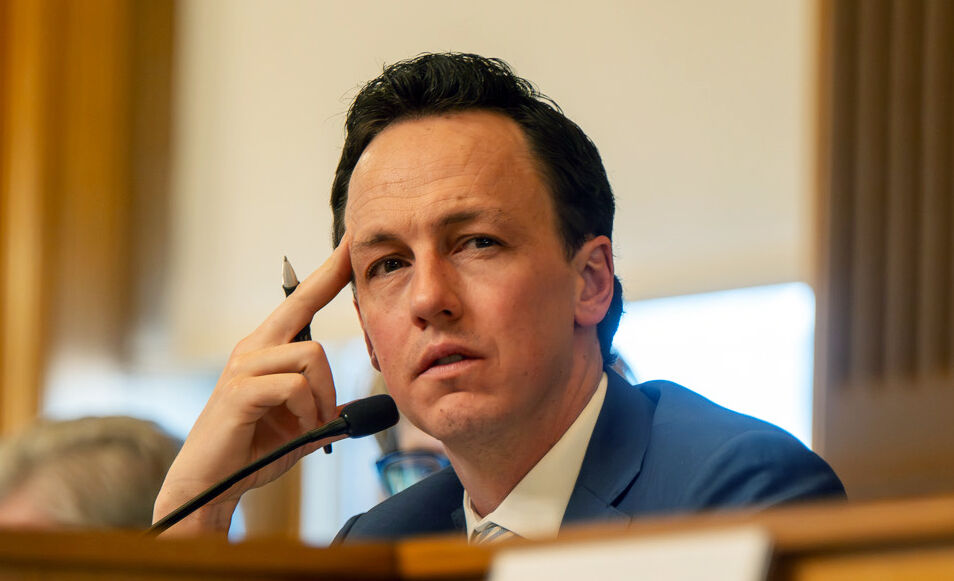
The bill failed in the 2026 session.
While they have different political views, Zamora Wilson and Amabile said they — and their constituents — are extremely concerned about what law enforcement might be doing with surveillance data.
“The technology does help solve crimes very quickly, and we want them to use it for public safety, but we want to protect citizens’ privacy,” said Zamora Wilson. “It’s this delicate dance of putting up guardrails that, No. 1, optimizes law enforcement to do their job, but also optimizes for the citizens.”
Amabile noted that U.S. Rep. Lauren Boebert, too, is leading an effort in Congress to require that all government-initiated searches and surveillance activities be supported by a warrant.
“People in Colorado and the United States do not want us to be setting up this mass surveillance state, and that’s what we’re doing,” said Amabile. “The rate at which this is growing is scary — every time you look around, there are more cameras.”
She noted a recent incident in Columbine Valley, in which a woman was accused of stealing a package from someone’s porch based on Flock camera footage.
Chrisanna Eller said the police showed up at her door and told her they had video of her car stealing the package, according to a report from CBS News. In the CBS report, Eller said that, when she asked to see the video, the officer replied, “If you’re going to deny it, I’m not going to extend you any courtesy.”
Eller ultimately found the video footage on Nextdoor, which showed a woman much younger than her, according to the news report. Ironically, she ultimately proved her innocence using video footage from her vehicle, which showed she was nowhere near the home when the theft occurred, the report said.
“I think most people think, ‘Well, I’m not doing anything anybody cares about. I haven’t done anything wrong, I have an uninteresting life,” said Amabile. “I’m sure that’s what that woman with the porch pirate thing thought, but she doesn’t think that anymore.”
On the other hand, Boulder law enforcement said Flock cameras have helped to solve cases, including high-profile ones.
“Flock was one of the ways we were able to very quickly — exceedingly more quickly than without Flock — locate the car of the suspect in the June 1 antisemitic terror attack on the Pearl Street Mall,” Jennifer Ciplet, a city spokesperson, told Boulder Reporting Lab. “The car did have other explosives in it, and Flock was also able to help us see if there were any additional cars involved, and to see if the suspect’s car had been casing other locations to potentially attack additional sites.”
The suspect pleaded guilty to more than 100 state charges and was sentenced to life in prison, plus 2,128 years last month.
In a social media post last November, the Boulder said the Flock system helped in the arrest of a “repeat offender” with an “extensive criminal history” that “included nearly 80 prior arrests related to crimes ranging from driving under the influence to drug possession to domestic violence, motor vehicle theft and burglary.”
The state’s 23 district attorneys opposed Senate Bill 070, arguing it would inhibit law enforcement’s ability to solve crimes.
The Colorado District Attorneys’ Council said that “limited-use technology,” such as automatic license plate readers and police observation devices, has resulted in a 40% reduction in auto theft in Castle Rock and more than 350 arrests in Denver.
A few years ago, Colorado’s car theft was among the highest in the country, and the public pressure forced the state legislature to modify its laws, which previously tied the penalties to the value of the car. Under pressure from Gov. Jared Polis, legislators changed the law to make all car thefts a felony. Many have attributed the drop in car thefts to that statutory change.
Meanwhile, the Aurora Police Department said its Real Time Information Center, which deploys Flock license plate readers and drones to provide real-time historical data and information and “enhance officer response” to in-progress emergencies and ongoing investigations, has helped reduce crime in the city by nearly 25% compared to the same time last year.
“This progress reflects first and foremost the dedication and commitment of our officers, who work every day to protect those we serve,” said Aurora Police Chief Todd Chamberlain. “But technology has also been a critical force multiplier in our public safety efforts, and we will continue using every available tool to strengthen community safety and protect the people of Aurora.”
An expectation of privacy
At the center of the debate over surveillance technology is the Fourth Amendment, which protects citizens against unreasonable searches and seizures and requires warrants supported by probable cause.
Case law already holds that the Fourth Amendment does not apply when there is no reasonable expectation of privacy. The debate centers on what constitutes a reasonable expectation.
Reps. Ken DeGraaf, R-Colorado Springs, and Assistant Majority Leader Jennifer Bacon, D-Denver, argued that law enforcement should not be allowed to purchase certain personal data from a third party. They introduced a measure on the matter, House Bill 1037, which morphed into a ballot proposal before ultimately being shut down in the House Judiciary Committee.
This is where interpretations of “reasonable expectation” vary.
Bacon and DeGraaf said the information that consumers provide to a company — whether through an app, a magazine subscription, or a cellphone carrier — should not be publicly accessible.
“They don’t think consumers have an expectation of privacy,” Bacon told Colorado Politics. “They believe all of my information that I gave to Black Girl Hair Magazine could be considered public information, and if that’s the case, then what we’re saying is that you do, in the state of Colorado, have an expectation of privacy.”
Dotter said law enforcement often pays for subscriptions to online databases to conduct research, not to look into specific individuals.
“To think that that’s how law enforcement is spending their time and that we have enough police officers to just sit there and stake out in front of cameras to watch people to see if they do bad things is shortsighted in understanding the strapped resources we have for law enforcement and what they do,” Dotter said. “They don’t just sit around looking for crime. They get cases, and then they seek to solve them.”
The district attorneys’ group opposed both HB 1037. Amabile and Zamora Wilson later asked their Senate colleagues to kill the measure before final votes were taken.
“On the one hand, we could’ve put together a watered-down bill, but many of my colleagues rejected that,” Amabile said. “We could’ve had a more robust bill, but that also was rejected. At the end of the day, we decided that we need to come back and live to fight another day, and that is what we intend to do.”
Amabile told Colorado Politics she plans to introduce a similar bill next session, arguing companies like Flock should also want guardrails in place so they can earn the public’s trust.
‘Responsible safeguards that preserve the investigative tools’
The Colorado Association of Chiefs of Police, which also opposed the bills introduced by state lawmakers, said it supports strong privacy protections and accountability measures, but emphasized that public safety depends on giving law enforcement access to practical, lawful tools that help solve crimes. That extends to recovering stolen vehicles, locating missing people, and identifying suspects before violence escalates.
“We appreciate lawmakers’ decision not to advance Senate Bill 26‑070 this session,” the group said. “As written, the bill would have imposed rigid timelines that could have prevented officers from accessing critical leads. In many investigations — especially those involving violent crime, sexual assault, organized theft, and missing persons — leads develop over days or weeks, not just hours.”
The chiefs added that concerns about privacy, data security, and public trust are real and deserve thoughtful debate. They said Colorado police leaders remain committed to working with lawmakers on solutions that protect both privacy and public safety.
“Coloradans should not have to choose between the two,” the chiefs said. “The goal must be responsible safeguards that preserve the investigative tools that help keep communities safe.”

Run for the Ring has a participation level for everyone | NONPROFIT REGISTER
Joanne Davidson Special to Colorado Politics
joanne-davidson-special-to-colorado-politics@coloradopolitics.com
Updated 23 hours ago
CHILDREN’S DIABETES FOUNDATION Aurora News: The 12th annual Run for the Ring takes place on Aug. 1 and it has several participation levels. You can either walk or run a 5K course that begins and ends at the Barbara Davis Center for Diabetes on...

Record utility rate requests hit $9.2 billion nationwide in second quarter
Scott Weiser
scott.weiser@gazette.com
Updated 3 days ago
Colorado had no requests last quarter Electric and gas utilities sought a record $9.2 billion in rate increases nationwide during the second quarter, according to a new analysis by the consumer advocacy organization PowerLines, as utilities continue seeking billions for...

Colorado GDP trails direct competitor states, though slightly ahead of U.S. average
Mark Samuelson Special to The Denver Gazette
mark.samuelson@denvergazette.com
Updated 3 days ago
Colorado’s economy is marginally outperforming the national average but lags behind those of direct competitor states, such as Arizona, Texas and Utah, according to a report by a nonpartisan policy group. And while some indicators for the Centennial State appear...

Artemis II crew to speak at Red Rocks Amphitheatre
Dan Boniface
dan.boniface@denvergazette.com
Updated 4 days ago
An out-of-this-world event is landing in Colorado next month. The crew of Artemis II will be at Red Rocks Amphitheatre on Aug. 3 for an event that will celebrate the Rocky Mountain region’s contribution to their mission around the dark...

Colorado extends filing deadlines for taxpayers affected by wildfires
Marissa Ventrelli
marissa.ventrelli@coloradopolitics.com
Updated 5 days ago
The Colorado Department of Revenue is offering an extension on tax filing deadlines to taxpayers affected by the wildfires raging throughout the state. The agency said all residents and businesses in Dolores, Montezuma, Lake, Mesa, Pueblo, Custer, Ouray, Las Animas,...

Colorado Springs’ Auria showcases BORG training software meant to defend American space interests
alex-edwards
alex.edwards@gazette.com
Updated 4 days ago
Auria, a major space and defense company headquartered in Colorado Springs, showcased a flagship tool it has developed to keep satellite operators well trained. The tool fills a gap identified by a congressional committee as critical as the U.S. contends...
DIA seeks more feedback on Peña Boulevard study
Deborah Grigsby
deborah.smith@denvergazette.com
Updated 4 days ago
Denver International Airport has already received more than 14,000 comments on its National Environmental Protection Act Peña Boulevard study aimed at tackling traffic snarls along Peña Boulevard between I-70 and E-470. But airport officials are looking for more — a...

Colorado joins multistate antitrust lawsuit to block Paramount-Warner Bros. merger
David Zimmermann
david-zimmermann@coloradopolitics.com
Updated 5 days ago
California Attorney General Rob Bonta filed a multistate antitrust lawsuit on Monday — with Colorado joining — to block the proposed merger between Paramount Skydance and Warner Bros. Discovery. The Colorado Attorney General’s Office said it joined the suit because...

Tickets are selling fast for the annual Food, Faith & Love Gala | NONPROFIT REGISTER
Joanne Davidson Special to Colorado Politics
joanne-davidson-special-to-colorado-politics@coloradopolitics.com
Updated 23 hours ago
AURORA INTERFAITH COMMUNITY SERVICES Aurora News: A capacity crowd is once again anticipated for Aurora Interfaith Community Services’ annual Food, Faith & Love Gala. The Aug. 5 dinner and auction will be held at the Franciscan Event Center, 6553 Revere Parkway, Centennial. Organizers...

Job leads in Denver show comparative strength, but salary offers run low
Mark Samuelson Special to The Denver Gazette
mark.samuelson@denvergazette.com
Updated 1 week ago
‘One of the most active hiring markets in the Mountain West,’ study shows At a moment when job growth will likely be a political issue in fall elections, a European-based job referral service has released a study showing employers have...
PREV
PREVIOUS

Colorado is too wealthy to keep cutting basic services | GUEST COLUMN
By Kathy White and Lydia McCoy Colorado is a wealthy state. It may be hard to believe right now because so many of us are feeling the strain. Costs are high. Many families are struggling to keep up. There is a growing sense of uncertainty about where the economy is headed. But zoom out, and […]

Retired Colorado appeals judge speaks about civic advocacy, SCOTUS
Retired state Court of Appeals Judge Russell Carparelli offered mild critiques of the U.S. Supreme Court earlier this month as he spoke about the rule of law, and urged lawyers to “get in the game” by advocating in the political arena. “I stayed out of politics completely. I never even signed up with one of […]