

Colorado Cost of Living: Moving closer to downtown Denver

As the mid-morning sun spills through a small window in Elizabeth Nagle’s small Denver apartment, her 12-year-old dog, Freya, gnaws intently on a small toy rabbit.
On her table sits a retro, portable record player and a plate of small French pastries.
Plastic moving boxes tucked in various corners of her living room quietly hint that a move is in her future.

Nagle, a Maryland native who works as a senior financial analyst for a large flour milling company, is planning to move closer to her downtown Denver office after her company mandated last year that employees return to in-office work by June 1.
Nagle has worked almost exclusively from home since the COVID-19 pandemic. She said her first reaction to the back-to-office directive was “not the greatest.”
“I think, I feel like I work better from home,” the self-proclaimed introvert said. “I do a lot of data analytics, so I like to be in a quiet space. However, it’s nice when I do go into the office and get back to socializing with coworkers and can see them face-to-face. So, I’ve warmed up to it.”
With a stable job, no significant debt and an annual salary close to $100,000, the tall, 38-year-old brunette is better positioned than most to land a new apartment.
Affordability, however, remains a concern.
“I live alone, I’m single, and I don’t have a dual-income household, so it’s a little harder when most of my paycheck is going to my rent,” she said. “So, I have to be frugal.”
Nagel currently pays $1,800 per month for her one-bedroom, one-bath efficiency apartment.
Should she ever lose her job, her stable financial situation could shift dramatically.
Ideally, she would like to purchase a home. But she said the current market conditions are “just not single-friendly.”
A recent study by GOBankingRates ranked Denver among the most expensive big cities in the nation to live in, noting that those choosing to live in the Mile High City will need an annual salary of $129,528.
The study, published in 2025, based its findings on the 50/30/20 rule, a budgeting guide that divides after-tax income into three categories: 50% for essential living needs such as rent, groceries and transportation; 30% for lifestyle choices like entertainment, shopping and dining out; and 20% for savings, retirement contributions and personal debt.
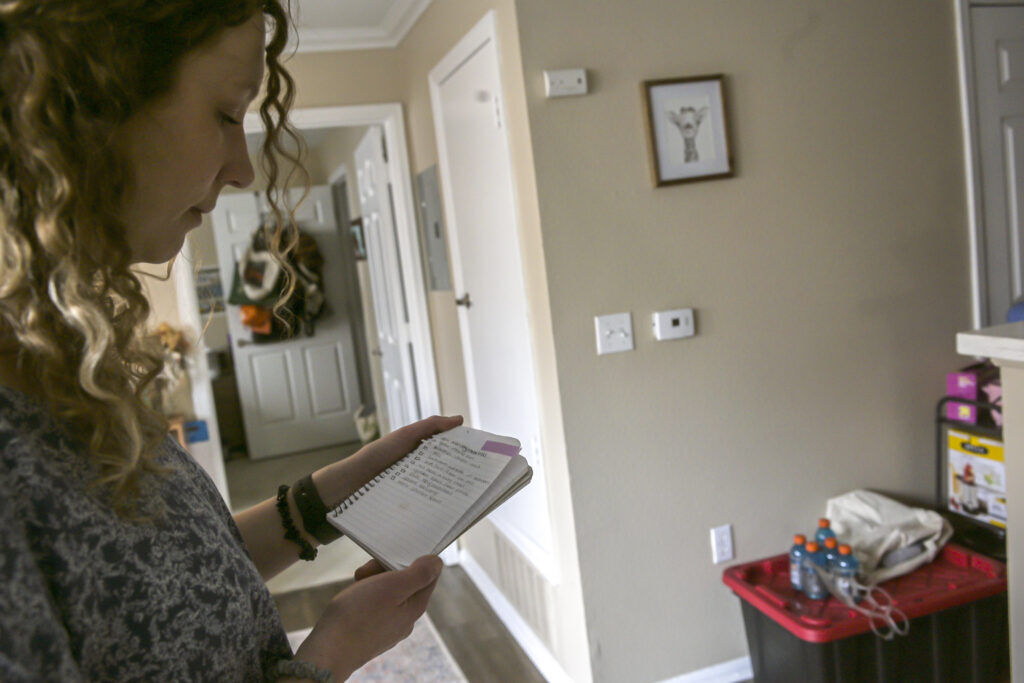
Nagle plans to stay in the next apartment she rents no longer than five years, using the time to stash away cash for a larger down payment on a home.
“So, I’m hoping interest rates and inflation will go down by then, and that there will be enough inventory on the market that it’s a competitive market for buyers,” she said.
Meanwhile, the search for Nagle’s new apartment continues, and she notes it can be tiring.
“It can be exciting to see new places, especially in areas that I’m not as familiar with. But it also can be exhausting,” she said.
Online search apps and recommendations from friends have helped.
However, after looking at multiple properties “there’s almost a decision paralysis,” triggered by the number of decisions involved, she said.
Nagle has a firm list of “non-negotiables” she uses to help narrow down the list of possibilities. Among them are close access to public transportation, storage, pet-friendly and open spaces for Freya to frolic.
Although she has a car, Nagle wants to reduce the expense of downtown parking and fuel by using the light rail.
Search expenses can quickly add up, too, with each apartment application costing between $25 and $45.
That shorter, less hectic commute to the office will come with trade-offs such as smaller space and less storage, and most likely, in Denver, a higher price.


Colorado business confidence improves but still pessimistic
Bernadette Berdychowski
bernadette.berdychowski@denvergazette.com
Updated 1 day ago
Halfway into the year, business confidence across Colorado has improved but is still negative, a new report found. The Leeds Business Confidence Index, a measurement of how business leaders across Colorado feel about the future of the national and state...

Xcel franchise renewal clears first Denver City Council committee hurdle
Scott Weiser
scott.weiser@gazette.com
Updated 2 days ago
More than $180 million a year in franchise fees, infrastructure relocation savings and undergrounding funds would continue flowing to Denver under a proposed 20-year franchise agreement with Xcel Energy. It cleared a major City Council hurdle Tuesday, while adding new...

Nomination deadline announced for National Philanthropy Day awards | NONPROFIT REGISTER
Joanne Davidson Special to Colorado Politics
joanne-davidson-special-to-colorado-politics@coloradopolitics.com
Updated 4 days ago
ASSOCIATION OF FUNDRAISING PROFESSIONALS Denver News: Colorado chapter of the Association of Fundraising Professionals has set 5 p.m. July 17 as the deadline for submitting nominations for the 2026 National Philanthropy Day Awards. The nomination process is simple, assures DeAnn Acosta, the association’s executive director, with forms and...

When sushi meets schools in rural Colorado, everyone wins | NONPROFIT REGISTER
Joanne Davidson Special to Colorado Politics
joanne-davidson-special-to-colorado-politics@coloradopolitics.com
Updated 6 hours ago
NATHAN YIP FOUNDATION Greenwood Village By JOANNE DAVIDSON SPECIAL TO COLORADO POLITICS News: Sushi-lovers from Denver and beyond know that they’re in for a treat when the Nathan Yip Foundation hosts its annual Sushi Party. The rush to purchase tickets begins months in advance...
Elbert County takes transmission dispute with Xcel to court
Scott Weiser
scott.weiser@gazette.com
Updated 2 days ago
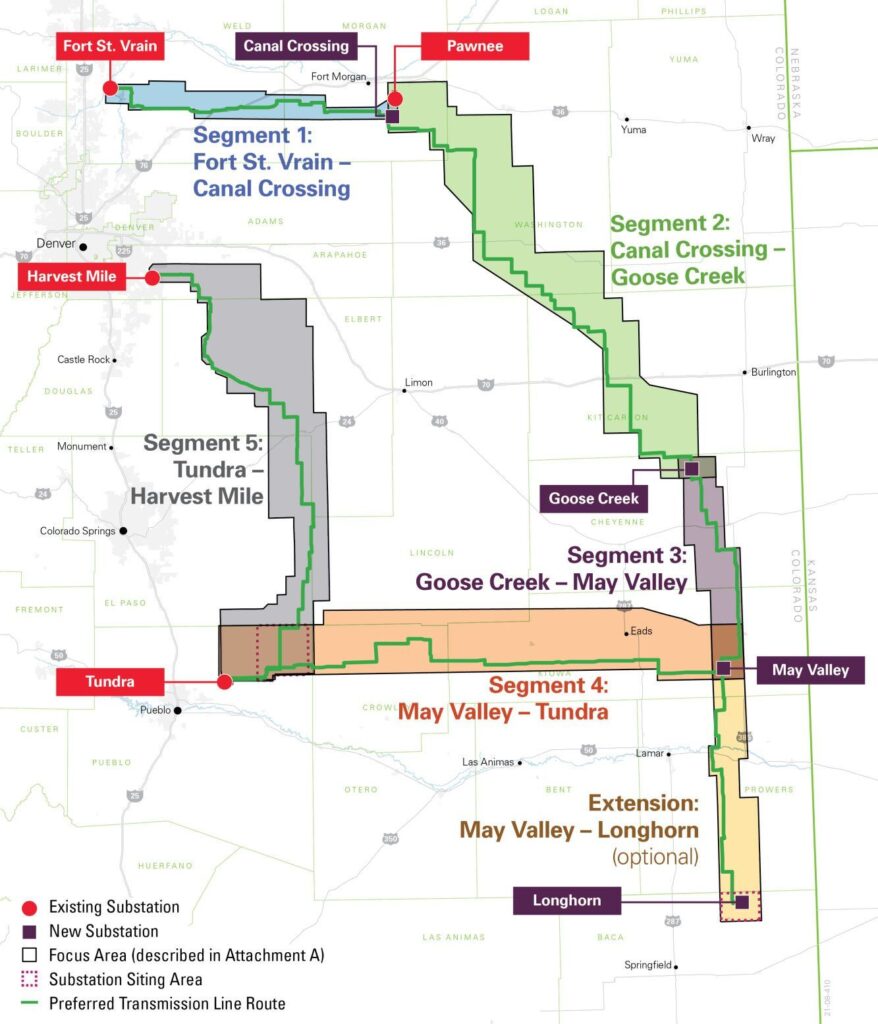
Elbert County filed a lawsuit in Elbert County District Court to challenge the state’s approval of Xcel Energy’s preferred route for a major transmission line, marking the latest escalation in a dispute over how much weight local land-use decisions should...

Court snuffs out challenge to Denver’s flavored tobacco ban
Deborah Grigsby
deborah.smith@denvergazette.com
Updated 1 week ago
The smoke finally cleared in Denver’s battle over a citywide ban on flavored tobacco products when a Denver court dismissed a challenge from local vape shop owners seeking to declare the ordinance unconstitutional and block its enforcement. On Wednesday, Denver...
Homeless recruits of ‘The Program’ say they were told to sign NDAs amid investigations in Colorado
David Migoya
david.migoya@gazette.com
Updated 1 week ago
Several formerly homeless people — each drawn into an Aurora-based enterprise known as “The Program” that promised free housing and cash in return for letting a home-health business administer prescriptions they were given — said they were pressed into signing...
Homeless recruits of ‘The Program’ say they were told to sign NDAs amid investigations in Colorado
David Migoya
david.migoya@gazette.com
Updated 1 week ago
Several formerly homeless people — each drawn into an Aurora-based enterprise known as “The Program” that promised free housing and cash in return for letting a home-health business administer prescriptions they were given — said they were pressed into signing...

Colorado’s haze lawsuit tests coal plant closure | ANALYSIS
Scott Weiser
scott.weiser@gazette.com
Updated 6 hours ago
Colorado is asking a federal appeals court to overturn the U.S. Environmental Protection Agency’s decision to reject the state’s plan to reduce haze at national parks and wilderness areas. At the center of the fight is a straightforward but difficult...

Colorado’s ‘right to natural gas’ measure submits signatures to qualify for November ballot
Marissa Ventrelli
marissa.ventrelli@coloradopolitics.com
Updated 1 week ago
A natural-gas rights initiative backed by Advance Colorado is likely headed to the November ballot, triggering a parallel campaign by environmental groups seeking to impose new liabilities on oil and gas operators. Petitions for Initiative No. 177 were turned in...
PREV
PREVIOUS

Development fees not limited to brand new construction, Colorado court rules
Colorado’s second-highest court ruled last month that local governments’ ability to impose fees on “new development” is not limited solely to construction projects that occur on empty land. Under state law, local governments that issue development permits are empowered to impose an impact fee that reflects governmental spending on “capital facilities needed to serve new […]

Colorado Cost of Living: State is now 4th most expensive in U.S., and residents feel the strain
Think of Colorado and what comes to mind? Majestic mountain views; skiing, sledding, rafting, hiking and more in the Great Outdoors; alpine forests and golden plains; ample sunshine, craft beer and breathtaking sunsets. Just to scratch the surface. But the cost of living and housing affordability in Colorado has drastically increased in recent years, gradually […]