

Colorado is too wealthy to keep cutting basic services | GUEST COLUMN

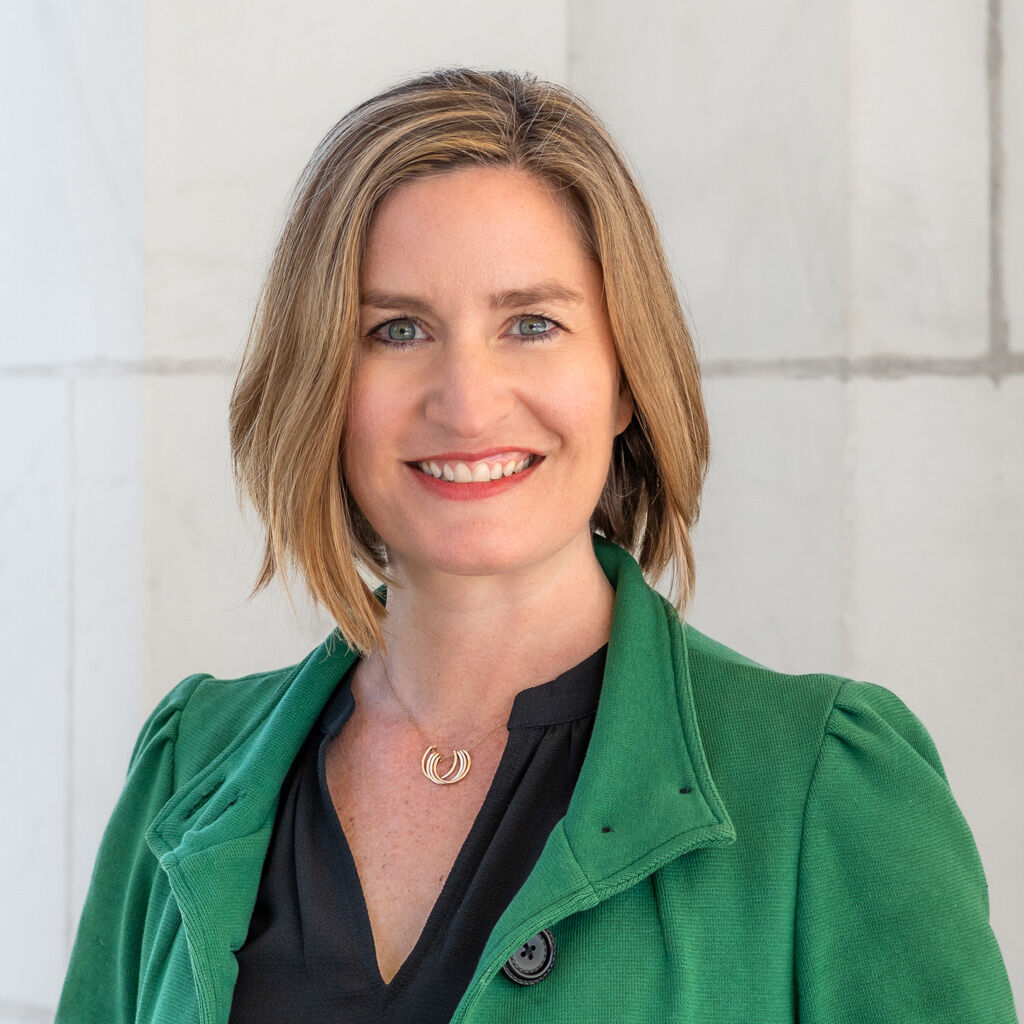
By Kathy White and Lydia McCoy
Colorado is a wealthy state.
It may be hard to believe right now because so many of us are feeling the strain. Costs are high. Many families are struggling to keep up. There is a growing sense of uncertainty about where the economy is headed.
But zoom out, and the bigger picture is clear. Colorado has enjoyed years of economic growth. Incomes here are higher than the national average. Our workforce is among the most educated in the country. By many measures, this is a state with strong fundamentals and significant resources.
So why does our state budget tell a completely different story?
The 2026 legislative session just ended, but the painful choices lawmakers made this year are a warning of what Colorado will continue to face unless we change course.
Lawmakers cut health care, education and other services families rely on, not because the need has disappeared, but because Colorado’s fiscal system makes it increasingly difficult to keep up with the basics.
We are often told this is inevitable, that the state’s budget challenges are the result of overspending and that the responsible response is for the government to tighten its belt.
But that is not the truth.
Colorado is experiencing a crisis of artificial scarcity. Our needs are growing. Costs are rising. But our ability to invest in those needs is locked behind the constraints of the Taxpayer’s Bill of Rights, or TABOR.
TABOR forces the state to refund revenue even when that revenue is needed to keep up with the basics. The growth formula built into the amendment fails to account for the true cost of the things we count on a functioning state to provide. And it cannot adapt to sudden expenses like the Medicaid cost shift to states built into last year’s disastrous H.R. 1.
We face a structural deficit, not because Colorado lacks resources, but because our system prevents us from using them. Simply keeping up with current services costs more than the state is allowed to keep.
And we are already seeing the consequences.
Colorado spends thousands of dollars less per student than the national average and ranks in the middle or bottom half of states for education funding. At the same time, we are one of the most educated states in the country.
Think about that contradiction.
We are benefiting from a highly educated population while failing to invest in the next generation.
Education is just one example. Across the board, Colorado is underinvesting in the foundations of a strong economy: Affordable housing; Accessible health care; Childcare that allows parents to participate in the workforce.
Each legislative session, lawmakers are forced into the same impossible exercise. Cut here. Delay there. Stretch resources thinner and thinner.
No matter what is lost, the narrative persists this is about wasteful spending.
Let’s be clear.
Helping a child see a dentist is not wasteful. Keeping class sizes manageable is not wasteful. Making childcare affordable so parents can work is not wasteful.
These are basic investments in a functioning society.
Coloradans deserve better than a system that manufactures scarcity and then calls suffering responsibility.
We need an honest conversation about the role TABOR plays in limiting our future. We need to consider solutions that allow our tax system to grow with our state and reflect our values.
A graduated income tax would allow most Coloradans to pay less while asking those who have benefitted most from our strong economy to contribute a bit more. More importantly, it would give Colorado the flexibility to invest in its people instead of cutting its way through every budget cycle.
This goes beyond partisan politics. None of us should accept a system that forces Colorado to fall further and further behind.
Colorado is a great state. But right now, we are settling. We do not have to.
Kathy White is executive director of the Colorado Fiscal Institute. Lydia McCoy is the chief executive officer of the Colorado Center on Law and Policy.


One Republican can save the First Congressional | Jon Caldara
Jon Caldara
jon-caldara@coloradopolitics.com
Updated 3 days ago
Colorado Republicans once again nominated a statewide candidate who has no chance of winning but has a lock on being a national laughingstock. But though the governor’s race is already over, Republicans in Colorado’s First Congressional District have one last...

What the regionality of Marx’s Republican primary win reveals about Colorado conservatives | Cronin & Loevy
Tom Cronin Bob Loevy
tom-cronin-bob-loevy@coloradopolitics.com
Updated 2 days ago
Running for governor of Colorado, controversial outsider Victor Marx, 61, a self-proclaimed exorcist and a friendly ally to the late Charlie Kirk, pulled out a 39.9% Republican primary victory. State Sen. and Republican establishment candidate Barbara Kirkmeyer came in a...

Will Colorado Gov. Jared Polis’ independent streak define his legacy?
Marissa Ventrelli
marissa.ventrelli@coloradopolitics.com
Updated 2 days ago
Sometimes aligned with his party and at other times apart from it, Colorado Gov. Jared Polis has spent much of his tenure charting his own course. That independent streak carried through fights over labor policy, rural anger over wolf reintroduction...

Democrat John Hickenlooper hauls in $1.3 million in 2nd quarter in Colorado’s U.S. Senate race
Ernest Luning
ernest.luning@coloradopolitics.com
Updated 1 day ago
U.S. Sen. John Hickenlooper’s reelection campaign raised just over $1.3 million in the year’s second quarter and finished the period with $2 million in the bank, leaving the first-term Democrat with nearly 80 times as much cash on hand as...

What to know before Colorado’s new law on semiautomatic firearms goes into effect
Marissa Ventrelli
marissa.ventrelli@coloradopolitics.com
Updated 2 days ago
A Colorado law passed in 2025 established new requirements for individuals planning to purchase semiautomatic weapons. Here’s what residents should know before Senate Bill 003 goes into effect on Aug. 1. From a ban to a training course For decades,...

Campaign launched to redirect $1 billion in TABOR refunds to education
Marissa Ventrelli
marissa.ventrelli@coloradopolitics.com
Updated 1 day ago
A coalition that includes the state teachers’ union on Tuesday launched a campaign for a ballot proposal that would reduce more than $1 billion in taxpayer refunds and spend the money on education. The measure is among several campaigns taking...

Energy security starts at home | GUEST COLUMN
Colorado Politics
colorado-politics@coloradopolitics.com
Updated 3 days ago
By Carly West With Colorado’s legislative session behind us and a new group of lawmakers preparing to take office next year, now is a good time to step back and consider a broader question: What role should Colorado play in...

The fight should be against corporate power, not local news | GUEST COLUMN
Colorado Politics
colorado-politics@coloradopolitics.com
Updated 3 days ago
By Sara Almerri Having practised competition and antitrust law for much of my professional career, I have litigated these issues, studied the doctrine, and watched competition policy evolve across two legal systems. It is from that perspective I offer a...

Signatures submitted to cap Colorado’s income tax rate
Marissa Ventrelli
marissa.ventrelli@coloradopolitics.com
Updated 1 day ago
The group behind a ballot measure aiming to cap the state’s income tax at the current rate has submitted signatures from voters to election officials for review, part of the tug and pull in Colorado between opposing political forces fighting...
Colorado’s primary proved in this political climate money doesn’t buy electoral happiness | Paula Noonan
Paula Noonan
paula-noonan@coloradopolitics.com
Updated 4 days ago
To catch you up, campaign committees from this 2026 election cycle already collected and shoveled out a lot of cash: $102.64 million. That’s contributions in all forms — dollars, in kind, loans, etc. — from December 2024 to now. Total...
PREV
PREVIOUS

Denver, Boulder prosecutors call congressional immigration probe 'political theater'
Elected officials in Denver and Boulder are pushing back after the U.S. House Judiciary Committee opened an investigation into their immigration policies, as part of a broader probe targeting “sanctuary” jurisdictions nationwide. On May 20, U.S. Rep. Jim Jordan, R-Ohio, who chairs the House Judiciary Committee, issued letters to the district attorneys, sheriffs and police […]

As street camera use surges, Colorado legislators grapple with law enforcement, privacy implications
In Boulder, the Flock camera system helped authorities locate the car of the suspect in the firebombing that killed a woman and injured 29 others in June last year. The car had contained explosives, authorities said. In Columbine Valley, authorities used Flock to track down a porch pirate — only, it turned out, the woman […]