

Colorado’s prisons are underfunded, not overcrowded | PODIUM
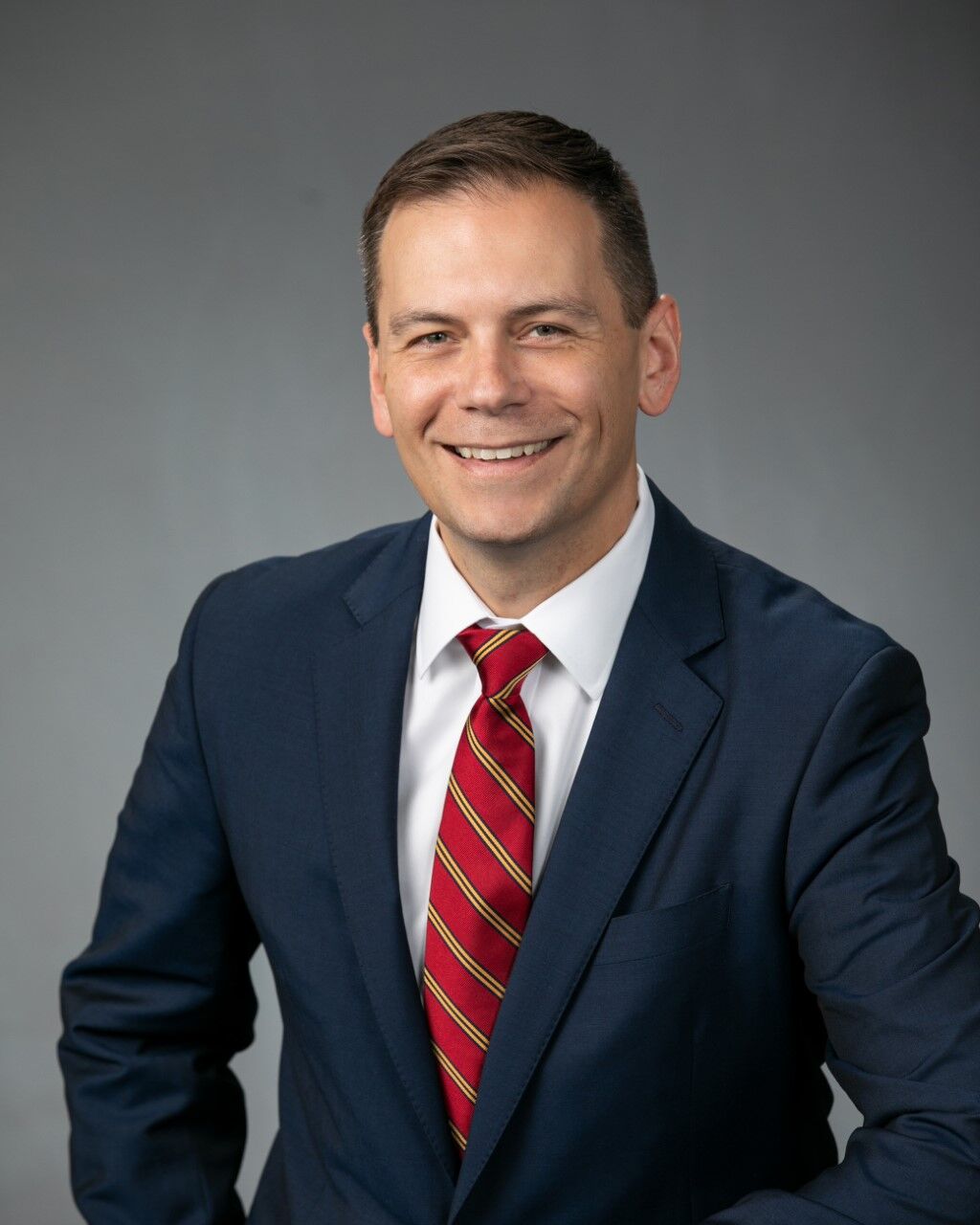
By John Kellner
The state does not have a “prison crowding” problem. It has a prison under-capacity problem. This is a crucial distinction for lawmakers and the public to understand. If it is not properly understood, the state risks falling into the same kind of criminal justice system spiral that mistakes leniency for clemency. This is as much an economic and budgetary issue as a social one. Colorado’s crime spike of the early 2020s had severe economic consequences. In 2022 alone, crime drained $27.2 billion from the state’s economy. This era of slowing growth is not the moment to risk future economic prospects.
Colorado’s prisons are not “overcrowded” so much as they are underutilized.
Through the entire decade of the 2010s, Colorado’s total prison and jail population hovered stably around 20,000 inmates. As of January 2026, there were just more than 18,300 inmates in Colorado prisons and jails. To characterize Colorado’s corrections facilities as “overcrowded” when they hold roughly 2,000 fewer inmates than 10 years ago is misleading. In fact, Colorado today incarcerates fewer people per capita than it did a decade ago, even as population growth has continued.
It is also misleading to say Colorado’s inmate population is “growing.” A more accurate term would be “recovering.”
The timeline of Colorado’s inmate population matters. Even at current levels, prisons are only regaining population after a historic dip in incarceration during the early 2020s. That decline coincided with policy changes, altered enforcement patterns, and disruptions to the justice system that reduced admissions and accelerated releases. What we are seeing now is not unchecked growth, but a partial reversion toward prior norms.
This kind of loose protocol regarding criminal incarceration is directly tied to crime rates. This was established by a landmark study from the Common Sense Institute.
The study identified a clear association between recidivism, prison population and crime rates. There is a negative correlation coefficient between prison population and crime rates. Simply put, as Colorado’s prison population increases, crime rates tend to decrease. Though this does not prove a direct causal mechanism in every instance, it is consistent with longstanding criminological findings that deterrence and incapacitation play meaningful roles in public safety outcomes.
This matters. The late 2010s and early 2020s were characterized by a series of criminal justice policies that prioritized leniency rather than incarceration. These included lighter penalty guidelines for low-level drug offenses, expanded diversion programs, and reforms to the definition and tracking of recidivism. As noble as it may seem to pursue rehabilitation alongside punishment, the public bears the cost when sentencing guidelines fail to sufficiently deter repeat offenses or remove chronic offenders from the streets.
If you shrink the room, the party seems more crowded. That, bluntly, is what happened during the last decade with prisons.

Several prisons and correctional facilities in Colorado have closed or been deactivated between 2016 and 2026, largely driven by declining inmate populations and policy decisions to reduce reliance on certain facilities. The Cheyenne Mountain Re-Entry Center, a private medium-security prison, closed in 2020. Burlington’s Kit Carson Correctional Center, which housed approximately 1,500 inmates, closed in 2016. The minimum-security Colorado Correctional Center Camp West in Golden closed in 2023. Those are only the most recent. Since 2010, Colorado has shuttered the Huerfano County Correctional Center, the High Plains Correctional Facility, the Fort Lyon Correctional Facility, Colorado State Penitentiary II Cañon City and Hudson Correctional Facility.
The result is a system with less physical capacity, not an overstuffed prison complex brought on by overly strict criminal laws.
It is critical that lawmakers understand clearly what happened in the past decade of Colorado’s criminal justice management.
Claims of systemic “overcrowding” obscure the underlying reality. Colorado’s crime rates rose during the same period in which incarceration levels fell sharply. Now that incarceration levels are stabilizing and partially rebounding, policymakers should be cautious about repeating the assumptions that contributed to that divergence.
This tension between policies that reduce inmate populations and investments that expand capacity underscores the importance of accurately diagnosing the problem. Without that clarity, the state risks pursuing strategies that neither improve public safety nor create a stable, sustainable corrections system.
John Kellner, a former 18th Judicial District attorney, is the managing partner at the Dan Caplis Law firm and Owens Early Criminal Justice Fellow for the Common Sense Institute.

Democrat running in Colorado’s 4th Congressional District urges long-term water planning and support for rural communities
Marianne Goodland
marianne.goodland@coloradopolitics.com
Updated 6 hours ago
Eileen Laubacher hopes to become the next representative of Colorado’s 4th Congressional District, and on Thursday she made her case on the final day of Colorado Water Congress in Steamboat Springs. Laubacher, a Democrat, spent 34 years in the U.S....

Proposal to cap Colorado income tax rate qualifies for November ballot
Thelma Grimes
thelma.grimes@coloradopolitics.com
Updated 2 hours ago
Election officials on Thursday confirmed that the proposal to cap the state’s income tax at the current rate submitted signatures and voters will consequently decide its fate this November. The fight over tax rates is part of the tug and...

Democratic gubernatorial candidate Phil Weiser promises to appoint rural outreach director, water adviser
Marianne Goodland
marianne.goodland@coloradopolitics.com
Updated 10 hours ago
Democratic gubernatorial candidate and current Attorney General Phil Weiser told the Colorado Water Congress Thursday he intends to appoint a rural outreach director and a water policy adviser should he win the election in November. Weiser’s speech at the Steamboat...
Attorney General candidates present priorities at Colorado Water Congress
Marianne Goodland
marianne.goodland@coloradopolitics.com
Updated 4 hours ago
The two major-party candidates for attorney general — Republican Michael Allen, the district attorney for Teller and El Paso counties, and Democratic Secretary of State Jena Griswold — on Thursday outlined their priorities at the Colorado Water Congress. Griswold attended...
State money diversion scheme the unsurprising downfall of ERBOCES scam | Paula Noonan
Paula Noonan
paula-noonan@coloradopolitics.com
Updated 1 day ago
Falcon School District 49, aka El Paso County School District 49, has finally cut bait, thrown the fishing pole into the lake and sunk the canoe. The longtime enabler of the Education Reenvisioned BOCES’ (ERBOCES) schemes to fund private Christian...
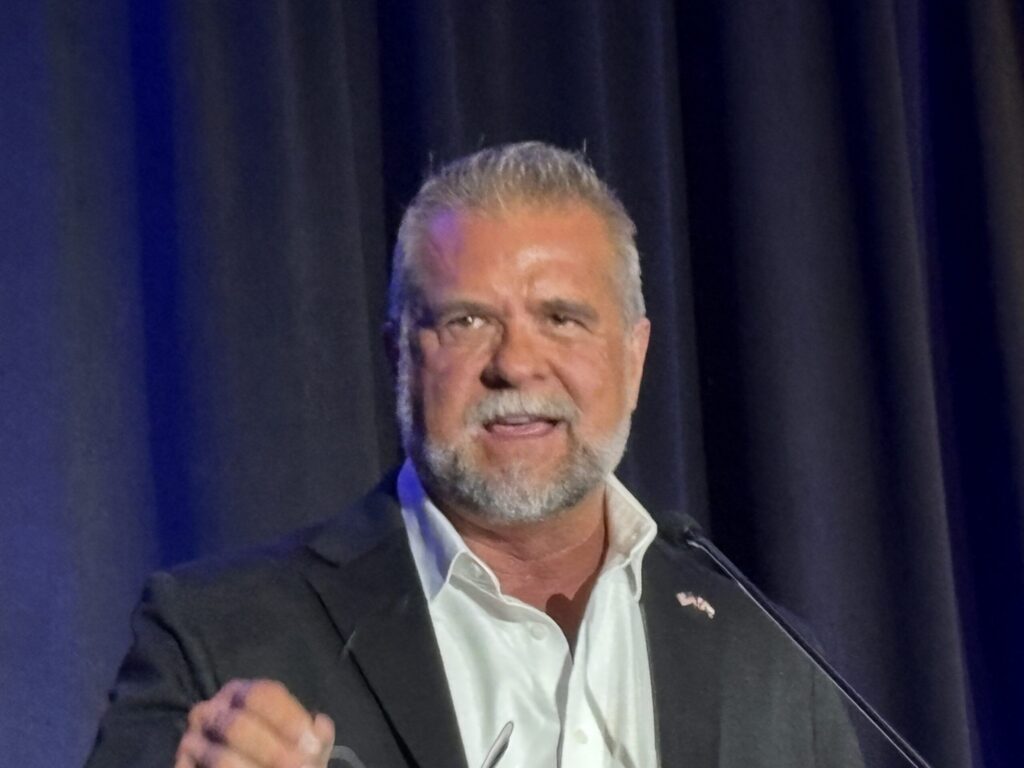
GOP gubernatorial candidate Victor Marx pushes aggressive water-storage expansion at Colorado Water Congress
Marianne Goodland
marianne.goodland@coloradopolitics.com
Updated 1 day ago
Victor Marx, the Republican nominee for governor, took the spotlight Wednesday during the opening day of the Colorado Water Congress, laying out how he says the state should approach its water future. Marx told the standing-room-only audience in Steamboat Springs...

U.S. Rep. Lauren Boebert stresses storage, forest health and Upper Basin rights at Colorado Water Congress
Marianne Goodland
marianne.goodland@coloradopolitics.com
Updated 1 day ago
Republican U.S. Rep. Lauren Boebert used her brief Wednesday appearance at Colorado Water Congress to tout her record on delivering water projects for the state and her district. Boebert, who is running for her second term representing the 4th Congressional...

Steve Schuck on the ‘magic’ of school choice | The OpEdge Podcast
Tony Olivero
tony.olivero@gazette.com
Updated 2 days ago
Parents Challenge co-founder and longtime school choice advocate Steve Schuck joins The OpEdge to discuss expanding educational opportunities and ensuring parents are in charge of their kids’ education. Schuck tells investigative columnist and host Jimmy Sengenberger why he believes Colorado...

Do lobbyists add value to policymaking? | PODIUM
Colorado Politics
colorado-politics@coloradopolitics.com
Updated 2 days ago
By Corky Kyle I was recently asked a straightforward question: are lobbyists a valuable component in the development of public policy? After more than four decades working with the Colorado General Assembly, state agencies, local governments, associations and businesses, my...
Ain’t Polis’ Peters commutation a pity? | Hal Bidlack
Hal Bidlack
hal-bidlack@coloradopolitics.com
Updated 4 days ago
I am hoping that, yet again, my long-suffering and very forgiving editor will pardon my rambling thoughts today, as there are too many open tabs on my computer that deal with issues I want to talk about (Ed: pretty used...
PREV
PREVIOUS

Business leaders see 'cracks' in Colorado, while governor insists state is 'competitive'
How does Colorado get back to the climate in the early 2000s, when there was collaboration between state government, companies and colleges and universities? That was the question posed to Gov. Jared Polis and a panel convened Tuesday by the Metro Denver Chamber of Commerce as part of its annual state of the state luncheon […]

Congressional panel probes Denver, Boulder over ICE cooperation limits
A congressional panel is reviewing Denver and Boulder’s policies, alleging that these cities, along with other “sanctuary” jurisdictions, are declining to cooperate with federal immigration authorities, the body announced Wednesday. Rep. Jim Jordan, R-Ohio, who chairs the U.S. House Judiciary Committee, issued letters to the district attorneys, sheriffs and police chiefs of Denver and Boulder, […]