

Colorado Democrats launch petition to censure Gov. Jared Polis for releasing Tina Peters
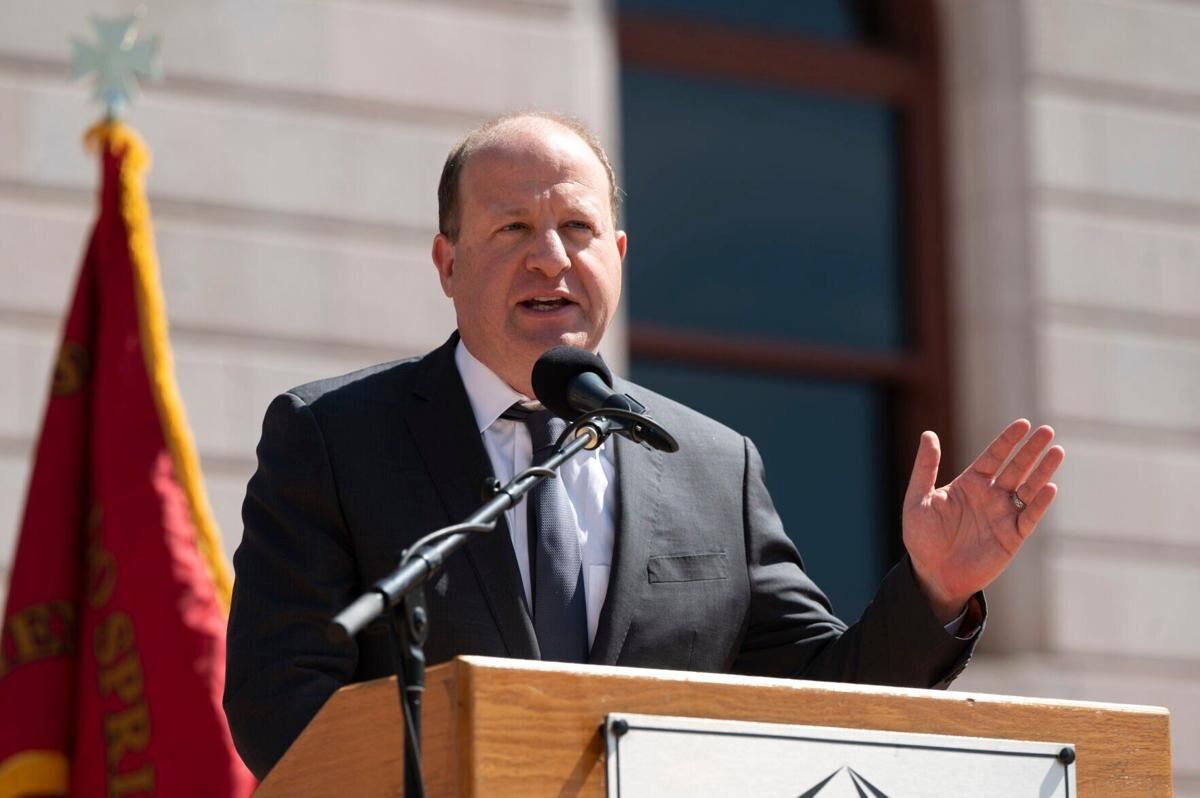
Hundreds of Democrats, including party officials and current and former legislators, have signed a petition urging their party to formally censure Gov. Jared Polis over his decision to grant clemency to Tina Peters.
The governor’s decision means Peters, the former Mesa County clerk and recorder who was sentenced to nine years’ incarceration for tampering with election equipment in 2021, is eligible for parole in just a few weeks.
The Colorado Democratic Party’s central committee, which is meeting on Wednesday, plans to address the petition submitted Monday, according to party chair Shad Murib.
Peters was convicted in October 2024 of three counts of attempting to influence a public servant, conspiracy to commit criminal impersonation and failure to comply with Secretary of State requirements.
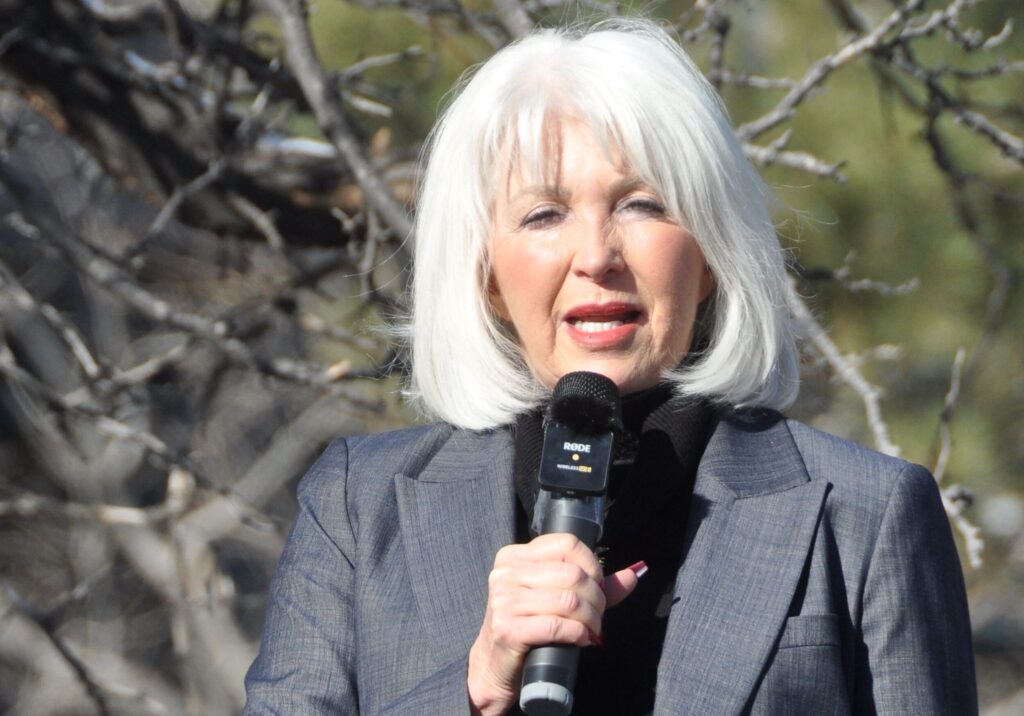
Peters’ parole eligibility date is 2028 with a mandatory release in 2033.
With Polis’ decision to grant her clemency, the sentence was commuted to 4 years and 4.5 months, making her eligible for parole on June 1.
The signatories to the petition included six members of the state party’s central committee, and dozens of current and former elected officials, including state lawmakers and local government officials. The petition was signed by President Pro Tem Sen. Cathy Kipp of Fort Collins and Sen. Lisa Cutter of Littleton, the assistant majority leader of the Senate.
The deadline for signing the petition is Friday, May 22.
The petition to censure the governor was submitted by Ian Coggins, a captain in House District 7B within the Denver Democratic Party.
In a Facebook post on Monday, Coggins said the petition will request a formal finding that the clemency decision constituted “conduct detrimental to the interests of the Party,” along with a formal censure and condemnation by the Colorado Democratic Party.
Coggins said he does not dispute the governor’s authority to grant clemency.
The issue, he wrote, is “whether granting clemency to one of the country’s most prominent election denial figures is consistent with the values and institutional interests the Democratic Party claims to stand for.”
The petition said Democrats have a substantial interest in maintaining public confidence in election administration, protecting election workers, and rejecting efforts to undermine democratic legitimacy, adding that Polis’ decision conflicts with the party’s interests and principles.
In addition to formally censuring Polis’ clemency decision, the petition also wants the state party to consider “appropriate temporary organizational sanctions,” such as suspending Polis’ participation as an honored guest, or being a featured speaker or officially recognized participant at Colorado Democratic Party-sponsored events and functions.
Additionally, the petition seeks a formal statement saying the governor’s clemency decision “does not reflect the values or institutional positions” of the Colorado Democratic Party
Murib, the state party chair, had weighed in last week on Polis’ decision.
“Reducing her sentence now, under pressure from Donald Trump, is not justice. It sends a message to future bad actors that election tampering has consequences, unless you’re friends with the president. That’s a dangerous and disappointing precedent to set,” he said on May 15.
In granting Peters clemency, Polis said Peters is a “non-violent first time offender” who “got a nine year sentence.”
“The crimes you were convicted of are very serious and you deserve to spend time in prison for these offenses,” Polis said in a clemency letter addressed to Peters. “However, this is an extremely unusual and lengthy sentence for a first time offender who committed nonviolent crimes.”
In early March, the governor had ignited speculation that he was considering granting clemency to Peters when he mused in an online post that Peters’ and a former Democratic state lawmaker had received widely disparate sentences for violating the same state statute.
The party’s action could be the only opportunity for Democrats to put their disapproval of Polis’ decision on the record.
Polis’ clemency action issued two days after the end of the 2026 session means there is no formal opportunity for lawmakers to respond. Polis is term-limited and a new governor will be sworn in next year.
Lawmakers may call themselves into a special session if two‑thirds of all members sign a written request and deliver it to the presiding officers of both chambers. But that power has never been used in Colorado — every special session in state history has been convened by the governor.


Judge grants partial injunction to GEO in fight against state health inspection law
Kyla Pearce
kyla.pearce@gazette.com
Updated 7 hours ago
A judge ruled Thursday that The GEO Group does not have to follow parts of a new state law requiring more frequent health and safety inspections at the U.S. Immigration and Customs Enforcement processing center in Aurora. Under the order...

Parker man faces 20 years to life for serial sexual assaults
Nicholas Fogleman
nicholas.fogleman@denvergazette.com
Updated 9 hours ago
A 25-year-old Parker man who sexually assaulted three women in 2025 pleaded guilty Wednesday and will serve 20 years to life in prison. Javier Rodriguez-Andrade pleaded guilty to charges stemming from three sexual assaults involving women ages 19 to 24. ...

Douglas County moves to Stage 1 fire restrictions following recent rain
Nicholas Fogleman
nicholas.fogleman@denvergazette.com
Updated 9 hours ago
Douglas County has downgraded its fire restrictions from Stage 2 to Stage 1 on Thursday following recent rainfall and moderate fire conditions, according to the Douglas County Sheriff’s Office. The change applies to unincorporated Douglas County, as well as the...

Democratic gubernatorial candidate Phil Weiser promises to appoint rural outreach director, water adviser
Marianne Goodland
marianne.goodland@coloradopolitics.com
Updated 8 hours ago
Democratic gubernatorial candidate and current Attorney General Phil Weiser told the Colorado Water Congress Thursday he intends to appoint a rural outreach director and a water policy adviser should he win the election in November. Weiser’s speech at the Steamboat...
Man charged in Northglenn homicide of wife
Matt Kyle
matt.kyle@denvergazette.com
Updated 9 hours ago
A man has been formally charged with murder and burglary relating to a homicide last week in Northglenn. Alexei Munive-Rodriguez, 48, was arrested Sunday after he was at large following the homicide, which occurred Friday. Police were dispatched around 10:30...

Attorney General candidates present priorities at Colorado Water Congress
Marianne Goodland
marianne.goodland@coloradopolitics.com
Updated 8 hours ago
The two major-party candidates for attorney general — Republican Michael Allen, the district attorney for Teller and El Paso counties, and Democratic Secretary of State Jena Griswold — on Thursday outlined their priorities at the Colorado Water Congress. Griswold attended...

Denver named finalist for 2028 Democratic Convention site
Thelma Grimes
thelma.grimes@coloradopolitics.com
Updated 7 hours ago
The Mile High City competes with Boston and Philadelphia The list of cities being considered to host the 2028 Democratic National Convention has narrowed even further, with Denver making the cut as one of the final three, along with Boston...

District 49 dissolves longtime provider of special services
Eric Young
eric.young@gazette.com
Updated 15 hours ago
A longtime education service provider that has been subject to recent public and government scrutiny is shutting down. School District 49’s Board of Education approved the dissolution of the Education ReEnvisioned Board of Cooperative Education Services (ERBOCES) during a special...
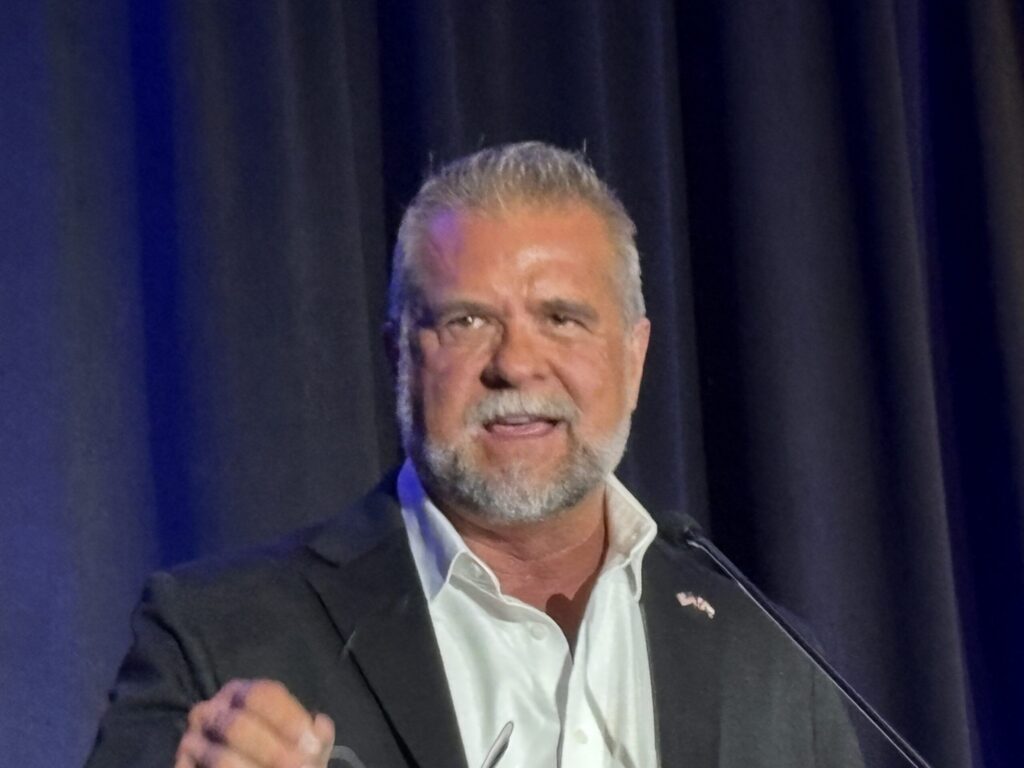
GOP gubernatorial candidate Victor Marx pushes aggressive water-storage expansion at Colorado Water Congress
Marianne Goodland
marianne.goodland@coloradopolitics.com
Updated 16 hours ago
Victor Marx, the Republican nominee for governor, took the spotlight Wednesday during the opening day of the Colorado Water Congress, laying out how he says the state should approach its water future. Marx told the standing-room-only audience in Steamboat Springs...
Colorado AG sues GEO Group over noncompliance with tuberculosis investigation
Kyla Pearce
kyla.pearce@gazette.com
Updated 1 day ago
The Colorado Attorney General’s Office on Wednesday filed a lawsuit against GEO Group, which operates the Aurora ICE Processing Center, alleging the company failed to comply with a state tuberculosis investigation. Weiser’s lawsuit demands that GEO provide “critical information” needed...
PREV
PREVIOUS

Democrat John Hickenlooper launches 1st ad in Colorado's US Senate primary
U.S. Sen. John Hickenlooper hits screens Tuesday with his reelection campaign’s first statewide ad, recounting highlights of the Colorado Democrat’s business and political career. The 30-second spot, set to air on digital and streaming platforms, lands six weeks before the June 30 primary election, where Hickenlooper faces a challenge from state Sen. Julie Gonzales, D-Denver. […]

Appeals court overturns convictions after judge improperly accepted facts as undisputed
Colorado’s second-highest court reversed a defendant’s convictions and 12-year prison sentence earlier this month after an El Paso County judge did not require prosecutors to prove key facts that were subject to dispute after all. Prosecutors charged Noel Lavertt King Jr. with numerous offenses after he entered the victim’s home and assaulted her. Among the […]