

Colorado’s proposed battery regulations target fire risks, raise enforcement, cost questions
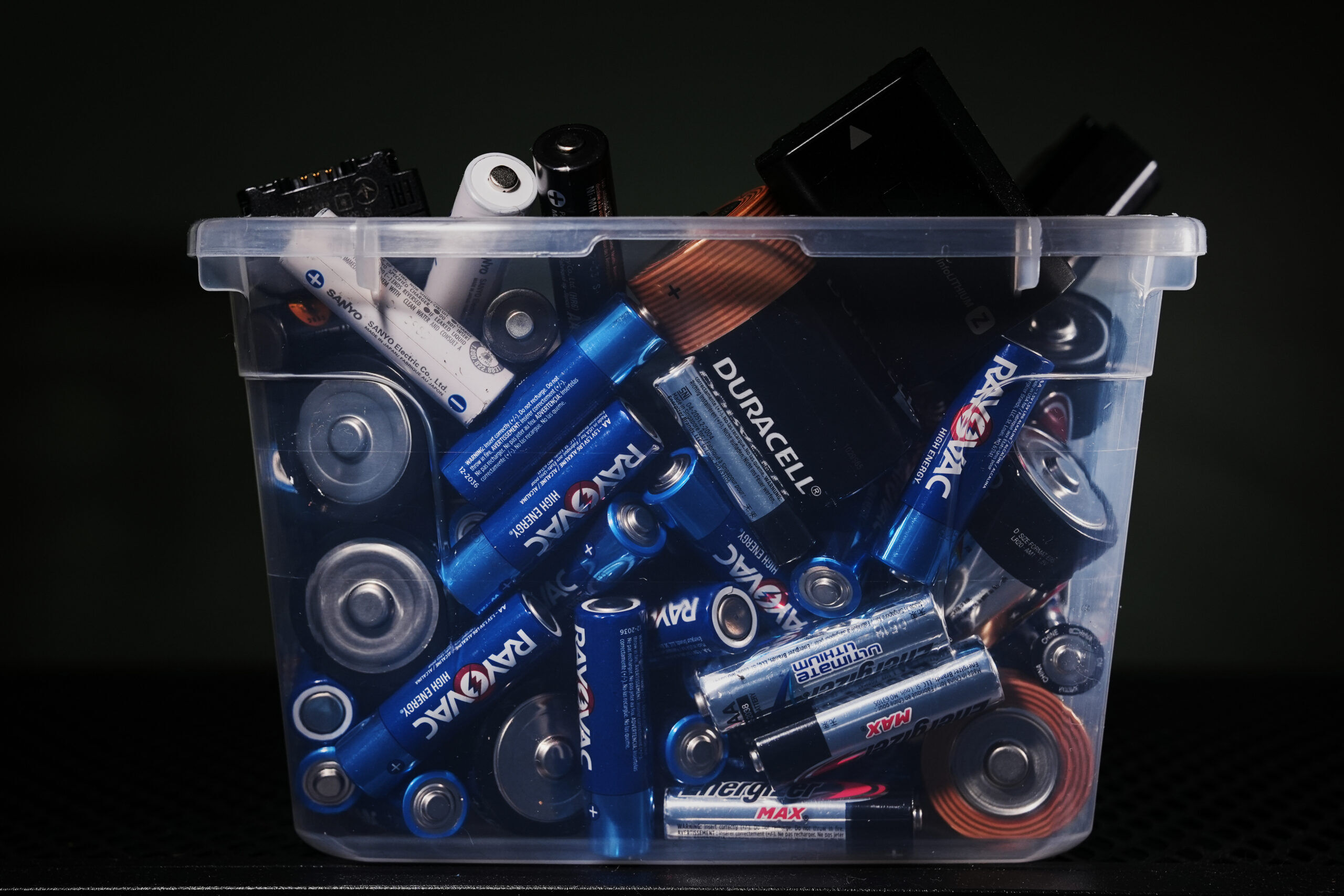
Some worry consumers would face civil or administrative fines under the legislation
Lawmakers have passed new regulations mandating sellers of lithium-powered batteries to register with the state and produce outreach plans before they can engage in business in Colorado.
Under the proposal, providers must also collect “unwanted” propulsion batteries, ensure their “responsible managements,” and produce annual reports to the state.
The goal, supporters said, said is to ensure devices and vehicles powered by such batters don’t turn garbage trucks and landfills into fire hazards.
Some worry that the bill’s other provisions dealing with consumers would result in residents facing civil or administrative fines.
The bill, Senate Bill 26-003, which awaits Gov. Jared Polis’ signature, establishes rules for large propulsion batteries used in electric and hybrid vehicles. The law requires battery providers — primarily automakers — to register with the Colorado Department of Public Health and Environment, finance collection and recycling programs, and develop plans for safe reuse, repurposing and final recycling.
A landfill ban for these high-energy batteries takes effect Oct. 1, 2028.
A companion law passed in 2025, Senate Bill 25-163, applies the rules to the millions of smaller consumer batteries already in circulation — from AA cells to laptop and power tool packs.
Its consumer-side prohibition on throwing even small batteries in the trash goes into effect Jan. 1, 2030.
Both measures are driven by a public safety concern, according to backers.
“Batteries can cause fires if not handled properly, especially at recycling facilities and in garbage trucks,” the state health agency states on its page on batteries. “They should not be discarded in the trash or recycling.”
Lithium-ion batteries, in particular, can enter thermal runaway when crushed or short-circuited during compaction in waste trucks or sorting at material recovery facilities. National reports document hundreds of such fires annually, with millions of dollars in damage and some worker injuries.
In Colorado, battery-related fires have increased by 41% in the last five years, according to materials supporting SB 25-163. In Larimer County, lithium-ion batteries ignite three to five fires per month at solid waste facilities, according to a U.S. Environmental Protection Agency case study and reports from the Larimer County Solid Waste Department.
On May 14, the Automotive Recyclers Association praised SB 26-003: “The passage of SB26-003 is an important step forward in that it guarantees that the positive environmental benefits of vehicle electrification are not undermined by unsafe and irresponsible end-of-life battery management.”
Under the new framework, producers would fund collection sites. Plans must make drop-offs accessible, with a goal of most residents living within 15 miles of a permanent site for portable batteries once fully implemented in 2028. No point-of-sale fees are allowed.
The laws also leave room for fee-based household collection services as part of approved plans, prompting questions about whether some costs could still reach consumers.
Jack R. Luellen of Buchalter raised worries about enforcement once the consumer prohibitions take effect.
“Will a person’s public trash be subject to inspection, and, if so, where at the collection point or at the municipal waste facility and by whom?” Luellen said.
A U.S. Supreme Court ruling in the 1988 case California v. Greenwood, holds that once trash is set out for collection, individuals have no reasonable expectation of privacy in its contents under the Fourth Amendment. This means anyone, including police or government agents, can search trash left on the curb.
Enforcement falls under the state health department’s hazardous waste authority, with administrative penalties up to $15,000 per day or $25,000 per day through civil action by the state attorney general.
Although enforcement against individual households is not expected to be a priority, it remains possible for consumers to face civil or administrative fines under the legislation.
California has required rechargeable battery collection since 2006 and updated its rules in 2022. Colorado’s paired laws create a more centralized producer-funded system with phased consumer obligations timed to program readiness.
Both SB26-003 and SB25-163 emphasize reuse and repurposing where possible, safety training, labeling, education campaigns and minimum recovery rates for critical minerals. Funding comes through provider fees scaled to market share, with the state collecting administrative costs.
Until full rollout, residents can use existing drop-off locations via The Battery Network and local household hazardous waste facilities.


Two Denver companies shine in Vail festival’s ‘Colorado Dances’ | NONPROFIT REGISTER
Joanne Davidson Special to Colorado Politics
joanne-davidson-special-to-colorado-politics@coloradopolitics.com
Updated 8 hours ago
COLORADO BALLET CLEO PARKER ROBINSON DANCE Denver News: The 2026 Vail Dance Festival, an 11-day “Celebration of creativity, collaboration and world-class artistry,” closed on Aug. 10 with a program of world premieres and new works created for the festival. But on Aug. 9...
Denver City Council committee looks to ease affordable housing metrics
Deborah Grigsby
deborah.smith@denvergazette.com
Updated 1 day ago
Denver’s Department of Housing Stability is asking the city to rewrite some of the key performance metrics in the city’s agreement with the Denver Housing Authority to deliver affordable housing. HOST is asking the city to amend parts of a...
Denver City Council committee looks to ease affordable housing metrics
Deborah Grigsby
deborah.smith@denvergazette.com
Updated 1 day ago
Denver’s Department of Housing Stability is asking the city to rewrite some of the key performance metrics in the city’s agreement with the Denver Housing Authority to deliver affordable housing. HOST is asking the city to amend parts of a...

Signals mixed for Colorado economy halfway through 2026
Bernadette Berdychowski
bernadette.berdychowski@denvergazette.com
Updated 6 hours ago
Colorado’s economy faced a mix of headwinds and tailwinds through the first half of the year. Inflation is up again, job growth is slowing and geopolitical turmoil has added the effects of high oil prices to the state’s economy. Yet,...

Colorado students push AI task force as schools navigate new tech era
Marissa Ventrelli
marissa.ventrelli@coloradopolitics.com
Updated 1 day ago
A group of students is urging lawmakers to establish a task force on artificial intelligence in education to advise districts on how to ensure that pupils and educators use the technology effectively without becoming overly reliant on it. The students...

Colorado audit finds $175K wasted on unused state-issued cellphones
Marissa Ventrelli
marissa.ventrelli@coloradopolitics.com
Updated 1 day ago
Colorado spent nearly $175,000 on government issued cellphones for employees of various departments that went unused last year, according to a recent state audit. About 400 of the 6,688 cellphones issued to state employees received no calls or texts and...

Polis administration relaunches Colorado e-bike rebates with $3 million
Scott Weiser
scott.weiser@gazette.com
Updated 5 days ago
Gov. Jared Polis and the Colorado Energy Office announced Thursday the return of the state’s popular e-bike rebate program, with registration set to open later this month. The office plans to provide point-of-sale rebates totaling $3 million from the Community...

Right-to-natural-gas proposal in Colorado qualifies for ballot
Marissa Ventrelli
marissa.ventrelli@coloradopolitics.com
Updated 6 days ago
A citizen initiative that seeks to enshrine the right to natural gas has qualified for the November ballot, Colorado’s election office confirmed on Thursday. Petitions containing signatures for Initiative No. 177 were turned in to the Secretary of State’s Office for review...

Colorado AG urges Supreme Court to let Boulder climate lawsuit proceed
Marissa Ventrelli
marissa.ventrelli@coloradopolitics.com
Updated 6 days ago
Colorado Attorney General Phil Weiser has filed a court brief with the U.S. Supreme Court in a lawsuit brought by Boulder city officials seeking to hold oil companies liable for their environmental impact. The case began in 2018, when the...

New Colorado laws going into effect cover AI disclosures, medical marijuana access and gambling limits
Marissa Ventrelli
marissa.ventrelli@coloradopolitics.com
Updated 7 days ago
More than 100 new Colorado laws take effect Aug. 12, bringing changes to chatbot safety rules, psychedelic research, campus wellness checks and sports betting restrictions. Here is a look at some of those laws set to take effect. The law:...
PREV
PREVIOUS

Daniel Domenico nominated for 10th Circuit, state Supreme Court hears arguments | COURT CRAWL
Welcome to Court Crawl, Colorado Politics’ roundup of news from the third branch of government. Colorado’s chief federal trial judge is the choice for an upcoming vacancy on the Denver-based federal appeals court, plus the state Supreme Court heard oral arguments in three cases. Domenico picked for elevation • U.S. District Court Chief Judge Daniel D. […]

Jeffco murder conviction overturned due to improper evidence
Colorado’s second-highest court reversed a defendant’s convictions for murder and aggravated robbery earlier this month, finding that a Jefferson County judge allowed evidence that improperly suggested the man had “bad character” for possessing guns generally. Under the rules for criminal cases, evidence cannot be used to prove a defendant has bad character, and they acted […]