Gov. Polis signs prison bill targeting Colorado’s overcrowding crisis
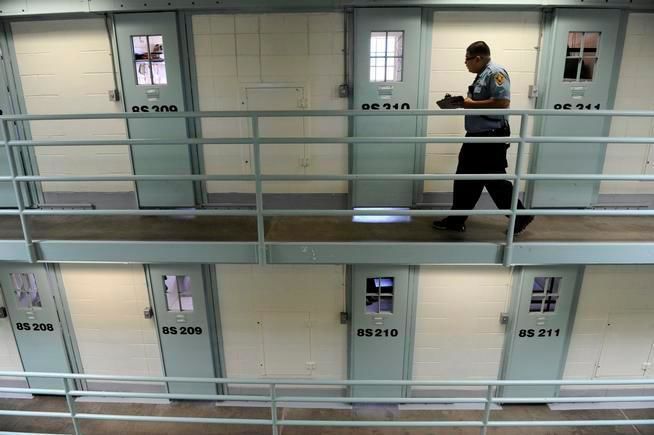
Colorado Gov. Jared Polis on Tuesday signed a corrections bill that seeks to ease chronic overcrowding in state prisons by expanding earned‑time credits and launching a new working group to overhaul population management.
Senate Bill 159 establishes a working group to make recommendations for how the Department of Corrections can reduce overcrowding in its facilities.
As previously reported by Colorado Politics, the system is under strain largely because — some advocates argued — nearly 5,000 inmates approved for parole remain incarcerated due to a lack of parole officers, available beds in community corrections, and required transition programs.
Others, such as District Attorney George Brauchler of the 23rd Judicial District, have countered that prison overcrowding is an artificial crisis, manufactured by what he described as a “Democrat-led prison-closing frenzy. In an opinion piece, he said it’s the result of the “predictable, deliberate and unnecessary outcome of Democrat political decision-making that has long prioritized offenders over public safety and victims.”
Polis activated the state’s prison population management measures for the first time last August after the state’s prisons reached a vacancy rate below 3% for 30 consecutive days. However, almost a year later, the measures have not made a significant impact on the state’s prison population.
In the 2026-27 budget, lawmakers authorized the Department of Corrections to add 941 beds for male inmates, but the locations for those beds are still undecided.
Polis requested funding for two new prisons, a proposal the legislature’s Joint Budget Committee rejected.
Instead, the JBC approved a budget placeholder that would allow the department to contract for beds at two previously closed private prisons in Trinidad and Burlington.
The bill is sponsored by Sens. Mike Weissman, D-Aurora, and Julie Gonzales, D-Denver, and Reps. Javier Mabrey, D-Denver, and Matthew Martinbez, D-Monte Vista.
Sens. Mike Weissman, D-Aurora, and Julie Gonzales, D-Denver — who sponsored the bill alongside Reps. Javier Mabrey, D-Denver, and Matthew Martinbez, D-Monte Vista — are also behind another measure passed this legislative session that adjusts the prison population management measures, raising the vacancy rate threshold that triggers the plan and expanding the list of agencies that the corrections agency must notify when vacancy rates meet that threshold.
Senate Bill 159 also changes the state’s earned time formula by increasing the number of days certain inmates can have reduced from their sentence per month — from 12 days to 14 days for inmates convicted of low-level crimes and from 10 days to 12 days for inmates convicted of certain higher-level offenses.
Additionally, the bill allows inmates who complete a milestone or phase of a behavioral health program to receive up to 150 days of earned time if their behavioral health condition contributed to their offense.
Weissman explained to colleagues that the corrections system “has to encompass two realities at once. One is that people sometimes do bad things, and they need to be punished for it. And that’s why they’re in the first place.”
The other, he said, is that people can change, and the bill wants to incentivize that behavior through earned time.
“Any correctional administrator will tell you they need an incentive for good behavior inside,” Weissman said.
The earned time component will help people become eligible sooner, but Weissman noted the inmates still have to convince the parole board they’re ready for release.
Republicans opposed the measure, arguing it’s at odds with a ballot measure passed in 2024 that required inmates who commit violent crimes to serve at least 85% of their sentence. Supporters pushed back on that allegation, saying the bill does not apply to violent offenders.
Rep. Rebecca Keltie, R-Colorado Springs, argued that the bill would reward inmates “like a five-year-old” for doing what they should be doing anyway.
“If they’re grown adults and you want them to make decisions on their own, then let them make decisions on their own,” she said.
The bill passed on a 22-12 vote in the Senate and a 40-23 vote in the House.
Marianne Goodland contributed to this story.

SPONSORED: What you’re missing about housing — an open letter to all of Colorado’s candidates for governor
Colorado Politics
colorado-politics@coloradopolitics.com
Updated 8 hours ago
By Colorado Homes For All You say affordable housing, we say housing we can actually afford. As working-class people from across the state who are renters, we are struggling to keep up with our housing costs and we are being...

Congressional panel probes Denver, Boulder over ICE cooperation limits
Marissa Ventrelli
marissa.ventrelli@coloradopolitics.com
Updated 51 minutes ago
A congressional panel is reviewing Denver and Boulder’s policies, alleging that these cities, along with other “sanctuary” jurisdictions, are declining to cooperate with federal immigration authorities, the body announced Wednesday. Rep. Jim Jordan, R-Ohio, who chairs the U.S. House Judiciary...

Colorado’s prisons are underfunded, not overcrowded | PODIUM
Colorado Politics
colorado-politics@coloradopolitics.com
Updated 2 hours ago
By John Kellner The state does not have a “prison crowding” problem. It has a prison under-capacity problem. This is a crucial distinction for lawmakers and the public to understand. If it is not properly understood, the state risks falling...

Business leaders see ‘cracks’ in Colorado, while governor insists state is ‘competitive’
Marianne Goodland
marianne.goodland@coloradopolitics.com
Updated 1 day ago
How does Colorado get back to the climate in the early 2000s, when there was collaboration between state government, companies and colleges and universities? That was the question posed to Gov. Jared Polis and a panel convened Tuesday by the...

DJ Summers dives into the costlier state of Colorado | The OpEdge Podcast
Tony Olivero
tony.olivero@gazette.com
Updated 1 day ago
Common Sense Institute’s Director of Communications & Research Operations DJ Summers dives deep with The OpEdge Podcast host and investigative columnist Jimmy Sengenberger regarding Colorado’s drop in the institute’s Free Enterprise Competitive Index. Summers shares shrewd insights regarding Colorado’s curious,...

Colorado Democrats launch petition to censure Gov. Jared Polis for releasing Tina Peters
Marianne Goodland
marianne.goodland@coloradopolitics.com
Updated 1 day ago
Hundreds of Democrats, including party officials and current and former legislators, have signed a petition urging their party to formally censure Gov. Jared Polis over his decision to grant clemency to Tina Peters. The governor’s decision means Peters, the former...
Sorry, Governor — you are wrong on this one | Hal Bidlack
Hal Bidlack
hal-bidlack@coloradopolitics.com
Updated 2 days ago
If you have read even a handful of my several hundred columns during the past few years, you likely ran across me saying nice things about Gov. Jared Polis. I genuinely like the guy, whom I met during our mutual...

Trump threatens to withdraw support for Lauren Boebert over Thomas Massie dispute
Thelma Grimes
thelma.grimes@coloradopolitics.com
Updated 2 days ago
President Donald Trump on Saturday threatened to withdraw his endorsement for U.S. Rep. Lauren Boebert, who is seeking reelection in Colorado’s 4th Congressional District, over the latter’s support for a Kentucky Republican facing a primary challenge. “Is anyone interested in...

Colorado GOP plays with fire as primary approaches | Dick Wadhams
Dick Wadhams
dick-wadhams@coloradopolitics.com
Updated 2 hours ago
Over the next several weeks, the Colorado Republican Party will make consequential decisions that will determine just how relevant it will be in 2026 and beyond. The 600-member Colorado Republican State Central Committee will meet on May 30 to elect...

Public Lands Rule rescinding keeps public lands in public hands | Rachel Gabel
Rachel Gabel
rachel-gabel@coloradopolitics.com
Updated 5 days ago
The Public Lands Rule has been rescinded. The rule, first proposed in 2023, would have complicated the balanced partnership between federal agencies and all multiple uses on those public lands. In 2024, the Bureau of Land Management made the rule...