

Congressional panel probes Denver, Boulder over ICE cooperation limits

A congressional panel is reviewing Denver and Boulder’s policies, alleging that these cities, along with other “sanctuary” jurisdictions, are declining to cooperate with federal immigration authorities, the body announced Wednesday.
Rep. Jim Jordan, R-Ohio, who chairs the U.S. House Judiciary Committee, issued letters to the district attorneys, sheriffs and police chiefs of Denver and Boulder, accusing the local officials of prioritizing “illegal and criminal aliens over American citizens,” undermining public safety and hindering “the efficient enforcement of federal law.”
Rep. Tom McClintock, R-California, chairman of the Subcommittee on Immigration Integrity, Security and Environment, also signed the letters. Rep. Gabe Evans, the Republican representative for Colorado’s 8th Congressional District, also signed the letters to Denver officials.
Denver and Boulder are among the “sanctuary cities” across the country with policies limiting or prohibiting local law enforcement’s cooperation with federal immigration agents. Colorado’s laws also expressly prohibit cooperation with federal authorities on immigration matters, with exemptions for criminal investigations.
In letters to Denver and Boulder District Attorneys John Walsh and Michael Dougherty, Jordan accused the officials of giving “preferential treatment” to individuals living in the country illegally.
“Under your office’s pro-crime, pro-illegal immigration policies, illegal alien criminals are allowed to freely operate, terrorize local communities, and reoffend without consequences,” the Ohio congressman said.
The letters noted the cities’ policies against sharing certain information with federal immigration officials and cited Dougherty’s comments suggesting that Colorado law enforcement officers restrict access by U.S. Immigration and Customs Enforcement to license plate reader technology.
The City of Boulder had shared its automatic license plate reader data with ICE for three years but limited the practice last June after criticism from some quarters, according to the Boulder Reporting Lab.
Meanwhile, Denver Mayor Mike Johnston signed an executive order in February prohibiting city agencies from sharing databases or technology use agreements with the Department of Homeland Security without a subpoena, judicial warrant, court order, or except as required by law.
The mayor’s order also bars city agencies from allowing immigration enforcement agents to stage on city property for civil immigration enforcement purposes, except when they have a judicial warrant or a court order or as otherwise required by law.
Separate letters from the U.S. House Judiciary Committee to the Denver and Boulder police chiefs and county sheriffs alleged that the departments’ policies against holding individuals on immigration detainers have endangered their communities.
State law expressly prohibits local law enforcement from holding individuals solely on the basis of federal immigration detainer requests.
An immigration “detainer” is a notice issued to federal, state and local law enforcement agencies informing the latter that ICE intends to assume custody of an individual who is no longer subject to the former’s detention.
ICE has said a detainer serves several functions, including requesting information from a local enforcement agency about a person’s impending release and asking the local enforcement agency to maintain custody of the person for a period not to exceed 48 hours — excluding Saturdays, Sundays, and holidays — to provide the federal agency time to assume custody.
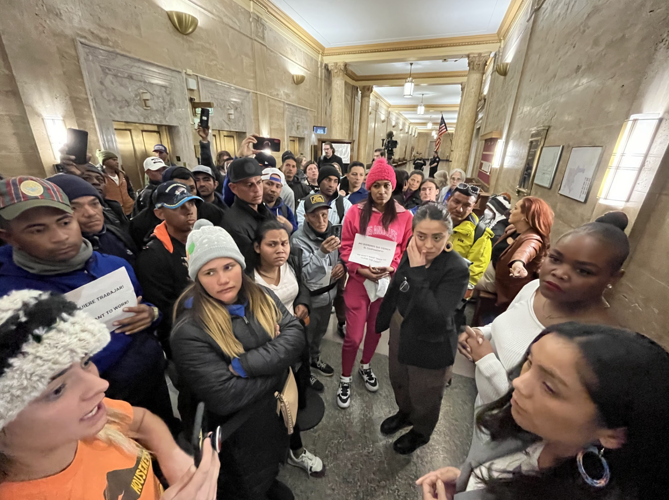
The issue of immigration detainers arose during a congressional hearing into “sanctuary” jurisdictions in March last year, when a tense exchange occurred between Jordan and Johnston about the release of an alleged Venezuelan gang member into “the streets” and how federal immigration agents scrambled to take him into custody.
“Mr. Congressman,” Johnston replied to Jordan during the U.S. House Committee on Oversight and Accountability hearing, “we notified them of the release. There were six ICE agents present when he was released so they had enough time to respond and to be present.”
“Respond where?” Jordan pressed the mayor.
“To the jail we released him from,” Johnston said, adding Denver authorities notified ICE of the release time.
When Jordan categorically asked where Denver released the suspect “to the streets” or “to ICE,” Johnston didn’t directly answer the question.
“What we do, sir, is we released him from our county jail and we coordinate with ICE on that release time and release date so that ICE can come and pick him up from that location,” the mayor said.
A video released by Denver authorities showed what happened that day. The alleged gang member was released onto the streets outside the county jail, and, upon seeing federal authorities, he ran, leaving ICE agents to chase after him.
On Feb. 28, 2025, authorities with the Denver Sheriff’s Department notified ICE that they would be releasing Abraham Gonzales from jail.
Denver authorities provided ICE about an hour’s advanced notice of the release.
In the video, an ICE agent follows Gonzales, who takes off running. About six federal agents pursue Gonzales on foot. One agent in the chase draws what appears to be a weapon. At least part of the incident happens outside of the camera shot, before agents subdued Gonzales.
During the March 5 congressional hearing, Jordan said one of the ICE officers got assaulted in that parking lot.
“They had to tase the guy, didn’t they?” Jordan asked Johnston.
Tren de Aragua (TdA) is a Venezuelan prison gang with tentacles in several Latin American countries and the U.S. Authorities have said TdA gang members have been involved in a myriad of criminal activities that include drug trafficking, kidnapping, money laundering, extortion and human trafficking — particularly of immigrant women and girls.
During the hearing, Johnston — and the mayors of Chicago and Boston — defended their policies. Johnston said he believes there is a federal system with federal obligations and state and local authorities with their own responsibilities.
“We think, as (Boston) Mayor Wu said, that our officers are uniquely prepared, trained and ready to enforce local law and to keep our city safe,” Johnston said. “We want to focus on that. We do not have the capacity for our law enforcement to be doing federal immigration enforcement, but we are wanting to be partners in making sure we’re pulling violent criminals off the street.”
Johnston also framed the illegal immigration crisis that hit his city in moral terms.
In its letters issued Wednesday, the federal judiciary committee is requesting a number of documents related to immigration policies, including the following:
- Any communications related to officials’ interactions with ICE since Jan. 1, 2025
- Documents relating to the prosecution of noncitizens since Jan. 1, 2025
- The number of ICE detainers each law enforcement agency has declined
- Documents and communications related to employee trainings on the role of ICE
- Documents and communications between the district attorneys’ offices and law enforcement officials relating to immigration enforcement
The House Judiciary Committee gave the Colorado officials until June 3 to submit all relevant documents.
The Trump administration and Colorado officials, including the authorities in Denver, have perennially clashed on the issue of illegal immigration.
The U.S. Department of Justice has sued both Denver and Colorado over their immigration policies. A federal judge dismissed the lawsuit in March, ruling that the federal government cannot compel state or local officials to enforce immigration laws.
Back in 2017, the Denver City Council passed an ordinance that prohibits “city employees from collecting information on immigration or citizenship status; prohibits the sharing of any other information about individuals for purposes of immigration enforcement; and memorializes predominant practices by prohibiting use of city resources or city cooperation with civil immigration enforcement.”
That same year, Boulder voted to declare itself a “sanctuary” city.
Colorado legislators have since expanded the state’s “sanctuary” laws. They passed legislation to bar law enforcement from providing personally identifying information about someone’s immigration status to immigration authorities.
Last year, a new law extended those prohibitions to political subdivisions, including local governments, school districts, special districts, the judicial and legislative branches and higher education institutions.
A violation could earn a $50,000 civil penalty, according to the law signed by Gov. Jared Polis on May 23. Already, Attorney General Phil Weiser filed a lawsuit against a Mesa County Sheriff’s Department deputy for providing a woman’s personal information to federal officials during a traffic stop, though the Democratic official did not pursue any monetary penalties.
Reporters Deborah Grigsby and Nico Brambila contributed to this article.

Democratic candidate in Colorado’s 4th CD urges long-term water planning
Marianne Goodland
marianne.goodland@coloradopolitics.com
Updated 2 hours ago
The Democrat hoping to become the next representative of Colorado’s 4th Congressional District on Thursday made her case on the final day of Colorado Water Congress in Steamboat Springs. Eileen Laubacher, who spent 34 years in the U.S. Navy and...

Proposal to cap Colorado income tax rate qualifies for November ballot
Thelma Grimes
thelma.grimes@coloradopolitics.com
Updated 1 day ago
Election officials on Thursday confirmed that the proposal to cap the state’s income tax at the current rate submitted signatures and voters will consequently decide its fate this November. The fight over tax rates is part of the tug and...
Democratic gubernatorial candidate Phil Weiser promises to appoint rural outreach director, water adviser
Marianne Goodland
marianne.goodland@coloradopolitics.com
Updated 2 days ago
Democratic gubernatorial candidate and current Attorney General Phil Weiser told the Colorado Water Congress Thursday he intends to appoint a rural outreach director and a water policy adviser should he win the election in November. Weiser’s speech at the Steamboat...
Attorney general candidates present priorities at Colorado Water Congress
Marianne Goodland
marianne.goodland@coloradopolitics.com
Updated 1 day ago
The two major-party candidates for attorney general — Republican Michael Allen, the district attorney for Teller and El Paso counties, and Democratic Secretary of State Jena Griswold — on Thursday outlined their priorities at the Colorado Water Congress. Griswold attended...
State money diversion scheme the unsurprising downfall of ERBOCES scam | Paula Noonan
Paula Noonan
paula-noonan@coloradopolitics.com
Updated 2 days ago
Falcon School District 49, aka El Paso County School District 49, has finally cut bait, thrown the fishing pole into the lake and sunk the canoe. The longtime enabler of the Education Reenvisioned BOCES’ (ERBOCES) schemes to fund private Christian...
GOP gubernatorial candidate Victor Marx pushes aggressive water-storage expansion at Colorado Water Congress
Marianne Goodland
marianne.goodland@coloradopolitics.com
Updated 3 days ago
Victor Marx, the Republican nominee for governor, took the spotlight Wednesday during the opening day of the Colorado Water Congress, laying out how he says the state should approach its water future. Marx told the standing-room-only audience in Steamboat Springs...
U.S. Rep. Lauren Boebert stresses storage, forest health and Upper Basin rights at Colorado Water Congress
Marianne Goodland
marianne.goodland@coloradopolitics.com
Updated 2 days ago
Republican U.S. Rep. Lauren Boebert used her brief Wednesday appearance at Colorado Water Congress to tout her record on delivering water projects for the state and her district. Boebert, who is running for her second term representing the 4th Congressional...

Steve Schuck on the ‘magic’ of school choice | The OpEdge Podcast
Tony Olivero
tony.olivero@gazette.com
Updated 3 days ago
Parents Challenge co-founder and longtime school choice advocate Steve Schuck joins The OpEdge to discuss expanding educational opportunities and ensuring parents are in charge of their kids’ education. Schuck tells investigative columnist and host Jimmy Sengenberger why he believes Colorado...

Do lobbyists add value to policymaking? | PODIUM
Colorado Politics
colorado-politics@coloradopolitics.com
Updated 3 days ago
By Corky Kyle I was recently asked a straightforward question: are lobbyists a valuable component in the development of public policy? After more than four decades working with the Colorado General Assembly, state agencies, local governments, associations and businesses, my...
Ain’t Polis’ Peters commutation a pity? | Hal Bidlack
Hal Bidlack
hal-bidlack@coloradopolitics.com
Updated 5 days ago
I am hoping that, yet again, my long-suffering and very forgiving editor will pardon my rambling thoughts today, as there are too many open tabs on my computer that deal with issues I want to talk about (Ed: pretty used...
PREV
PREVIOUS

Appeals court revives disability discrimination claim against Colorado attorney regulators
Colorado’s second-highest court reinstated a lawyer’s discrimination claim earlier this month against Colorado’s attorney regulation office, based upon its alleged failure to accommodate his disability during the bar exam. Michael Ozborn, a University of Denver law graduate, sued the Office of Attorney Regulation Counsel in June 2024. He alleged that he had multiple diagnoses that […]

Colorado federal judge speaks about judicial innovation, leadership
U.S. Magistrate Judge Maritza Dominguez Braswell spoke on a virtual panel of judges last week about innovation and leadership in the judiciary, touching on her experiences before and during her time on the bench. “When I was at the (attorney general’s) office leading a litigation team, of course the litigation team is very focused on […]