

Colorado Cost of Living: State is now 4th most expensive in U.S., and residents feel the strain
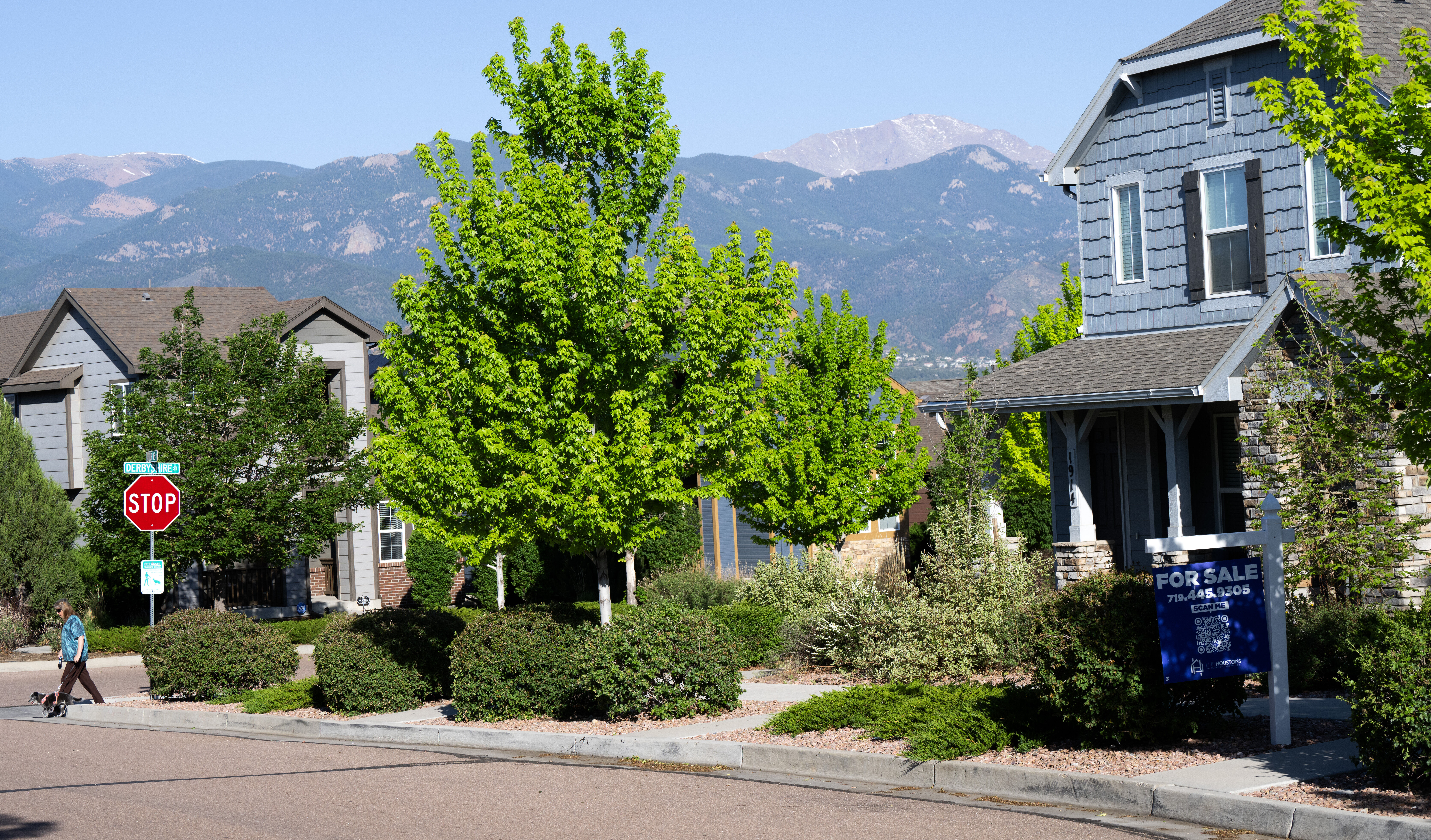
Think of Colorado and what comes to mind?
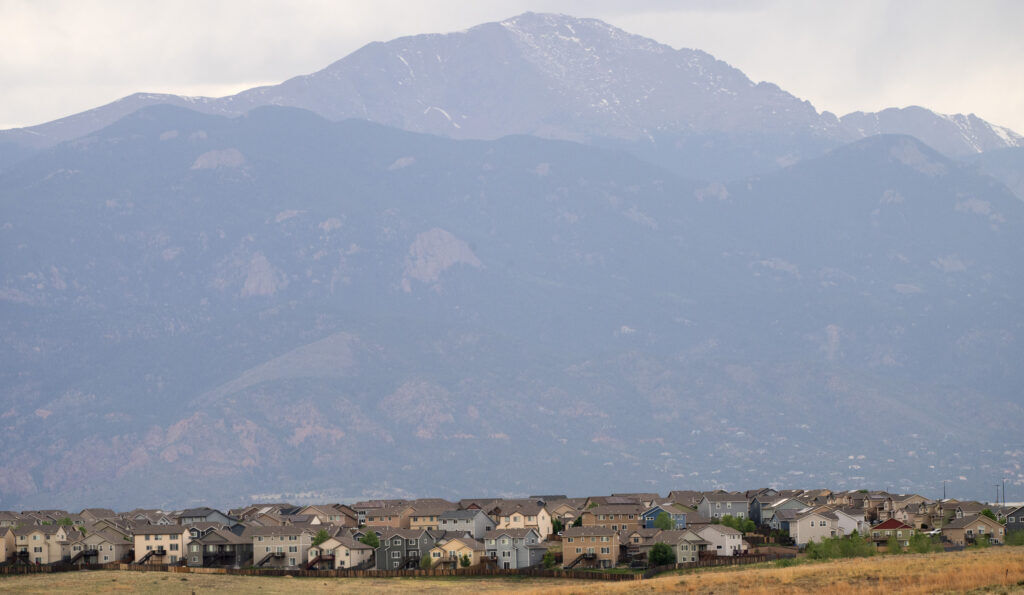
Majestic mountain views; skiing, sledding, rafting, hiking and more in the Great Outdoors; alpine forests and golden plains; ample sunshine, craft beer and breathtaking sunsets. Just to scratch the surface.

But the cost of living and housing affordability in Colorado has drastically increased in recent years, gradually diminishing or even pushing these simple joys out of reach for the average person.
At the end of 2025 the Colorado Scorecard, a report released by the Colorado Chamber of Commerce, found that while the state is improving or leading in key sectors such as business friendliness, health and wellness and gross domestic product, Colorado continues struggling with housing affordability and its overall cost of living.
Colorado is now the fourth-most expensive state in the country to live in, ranking 47th in affordability in 2025. Colorado ranked 46th for cost of living in 2024, and four years ago in 2022 had the 34th-highest cost of living nationally, a ranking that has dropped every year since, according to the chamber’s scorecard.
Housing affordability has worsened. Colorado ranks 48th in the country for housing affordability, down from 47th in 2024 and 41st in 2021, the scorecard shows.
A novel report from the Metro Denver Homelessness Initiative that aimed to provide a more thorough understanding of homelessness in Colorado, released in April 2025, found 52,806 people across the state sought housing and homelessness-related services in 2024.
The median listing price of a single-family home was over $600,000 in Boulder, Broomfield, Douglas, Elbert and Jefferson counties at the end of February, according to a Gazette analysis of data from Realtor.com across 10 Front Range counties. Area median incomes in these counties are between $140,100 and $150,600 a year for a family of four, data from the U.S. Department of Housing and Urban Development show.

Median listing prices for homes in Denver County in February were $535,000, with annual area median incomes at $140,100; $497,950 in Adams County, with area median incomes at $140,100; $485,000 in El Paso County, with area median incomes at $112,500; $465,000 in Arapahoe County, with area median incomes at $140,100; and $349,900 in Pueblo County, with area median incomes at $102,000.
Coloradans are also contending with increasing homeowners’ insurance rates and annual child care costs, the scorecard found. Coupled with the rising cost of living nationally — driven by persistent inflation, rising mortgage rates, newly imposed tariffs, federal policy and global conflict that are increasing costs for fuel, groceries and other necessities — Coloradans say they’re losing purchasing power and are feeling the strain.
“The cost of living is horrible,” said Allison Hunter, 62, a real estate agent who has lived in El Paso County for more than 40 years. “Ever since the pandemic, prices have risen and won’t come down.”
The price of groceries and health care, for which she pays out of pocket, are her biggest pain points, Hunter said. To save and stretch her dollars, Hunter has cut back significantly on discretionary spending, such as on entertainment and dining out.
She’s considered moving out of state to an area with a lower cost of living and has contemplated traveling to Mexico to receive certain health services, such as dental care, because it’s less expensive than in the U.S., she said.
“Am I optimistic? Yes. Do I think we can make it through this madness? I think we’re strong enough to stand. But it’s not sustainable,” Hunter said.
Yevgeniya “Yev” Tsyganok, the food pantry manager at Solid Rock Community Development Corp. and the leader of the Southeast Food Coalition in Colorado Springs, said she sees about 40 new families a week who are seeking supplemental food resources in the community.
Her organization serves an average of 600 families every week, mostly working-class. That’s up from roughly 500 families a week before H.R. 1, the “One Big Beautiful Bill Act,” was signed into law last summer. The law implemented extensive cuts to certain federal programs, including $187 billion in reductions to the Supplemental Nutrition Assistance Program through 2034.
When Tsyganok first joined Solid Rock five years ago, its community food center served a much smaller population of 50 families each week.
“People come in and tell us that their car broke down and their income isn’t going up. Gas is so high, utilities are so high,” Tsyganok said. “I’m faith-driven and community-driven, so I’m hopeful, but it breaks my heart to see families coming in more and more. It (hurts most) when families come in and they’re ashamed to ask for help.”
Gov. Jared Polis, the legislature and other state departments and agencies have taken steps to make it more affordable to live here, officials said.
Among other actions in recent years, state leaders have implemented property tax reductions to counter soaring property values; announced a strategy to address high homeowners’ insurance rates with the goal of reducing the average cost by $800; and have passed laws to jump-start starter home condominium construction, eliminate discriminatory occupancy limits and parking requirements, and to make it easier for residents to build accessory dwelling units on their properties, Polis said in a recent video interview.
He was joined by Eve Lieberman, executive director of the Colorado Office of Economic Development and International Trade, and Maria de Cambra, executive director of the Department of Local Affairs.
Colorado’s Proposition 123 affordable housing fund, managed by OEDIT and administered by the Colorado Housing and Finance Authority, has awarded about $408 million to support 9,074 housing units across Colorado, Polis spokesman Eric Maruyama said in an email. As of early May, more than half of the supported rental units will serve lower-income residents who make 60% or less of the median incomes in their areas.
Through 2024, Colorado built 17,725 new homes “through direct support from state initiatives, expanding access to homes Coloradans can afford,” Maruyama said. In fiscal year 2025, OEDIT supported the creation of about 7,274 housing units, he said.
The state has also focused on making transportation more affordable and accessible through initiatives that aim to lower auto insurance costs, compel Front Range cities to increase zoning density near transit hubs, supporting a new Front Range Passenger Rail train service envisioned to connect cities along the Interstate 25 corridor, and funding the expansion of the state-run interregional Bustang transit service. However, the Bustang program is facing a roughly $25 million deficit in fiscal year 2027 as temporary state and federal funding expires.
The Office of Economic Development and International Trade is working with World Trade Center Denver through the Colorado Tariff Navigation Program that provides regular updates on tariffs, one-on-one advising and consulting to help businesses reduce their costs and strengthen resiliency, Lieberman said.
As of late January, OEDIT’s Opportunity Now grant program, launched in late 2022, has awarded $89.5 million in grants to 96 recipients, training residents in in-demand skills to help them access good-paying jobs, Maruyama said. Top sectors served include health care, education, infrastructure and construction. The program also supports the state’s growing leadership in quantum, semiconductors, clean tech, advanced manufacturing and other sectors.
State policy is only a partial solution to affordability across Colorado, Polis said, but it does help.
Housing, for example, is more expensive in part because of higher mortgage rates, which the state does not control, he said. The average 30-year fixed-rate mortgage on May 7 was 6.37%, more than double the rate of 2.67% on Dec. 31, 2020, but down from 6.76% a year ago, data from mortgage buyer Freddie Mac show.
“We can increase quantity, we can decrease your homeowners’ insurance, but … interest rates have gone up and mortgages are at a higher rate than they were a few years ago. Even if, for instance, we can succeed in bringing $350,000 houses online whereas they used to only be available at around $450,000, a $350,000 house can cost more in monthly payments if your mortgage rate is 1.5% higher. It all ties into the national (climate) but again, we’re still much better off than if we didn’t (implement state policy),” the governor said.
Colorado Chamber of Commerce President and Chief Executive Officer Loren Furman said the state needs to take more action, other than policy, to address the affordability crisis. Increased costs are impacting the state’s ability to attract new residents and top talent, she said.
The State Demographer’s Office reported in January that while Colorado’s population reached 6 million people in 2025, for the first time in 20 years more residents left for other states than moved here from other places. National demographic shifts, high housing costs, high costs of living and increases in congestion were cited as contributing factors.
“Something other than policy needs to happen. You need to have investors in different regions of the state who are willing to invest in those areas,” Furman said.
For example, community nonprofit WeFortify is working with Harrison School District 2 on its Wendy’s Village partnership, providing 20 duplexes to house teachers working for the district. Through Widefield School District 3’s housing for educators initiative, construction students in El Paso County are building more than 40 affordable housing units, with at least 14 of them reserved for District 3 staff members and their families. Meat processor Cargill has also built workforce housing in Fort Morgan, on the Eastern Plains, to support its employees, among other examples.
While factors like persistent inflation, tariffs and other federal actions have helped drive up costs, Colorado’s high cost of living has been largely influenced by state policies requiring more environmental, energy, labor and employment regulations, many of which place “unfunded mandates” on businesses, Furman said.
“The top issue continues to be our regulatory environment,” she said. “ … It’s the number (of regulations), it’s how complex they are, it’s that they continue to change. Small businesses can’t keep up and even the larger and mid-sized businesses are having the same problem. And sometimes they can’t afford the unfunded mandates passed along.”
The Colorado Chamber’s 2025 Regulatory Landscape Update found there were more than 205,000 state-level business restrictions affecting Colorado businesses last year, a 2.4% increase from 2024. This is in addition to about 1.5 million federal regulations, the report found.
Colorado businesses also face an estimated 60,000 total environmental restrictions, or 75% more than the U.S. state average.
Modeling suggests that every 10% increase in state regulations equals a direct loss of 36,000 jobs due to increased compliance costs, lost sales and other intended consequences, according to the report.
Additionally, compliance costs and market restrictions resulting from more regulation are reflected in consumer prices. This impacts people differently across income groups, often pushing the burden onto residents who can least afford to pay it, the report found. Regulations increased costs by 2.4% for higher-income residents and 3.01% for lower-income residents in 2025.
Despite its increasing cost of living, Colorado remains a top place to live, work and visit.
“There’s a lot of great attributes about Colorado and … it’s a wonderful state to live in. It has plenty of benefits, like a great quality of life and booming tourism, technology, manufacturing and research and development industries. Our hope is we find ways to continue to attract these businesses and continue to work on improving the challenges we have right now,” Furman said.
Editor’s note: This article has been updated to reflect more precisely Colorado’s national ranking for cost of living.


Colorado’s 72-hour social media warrant law takes effect Aug. 12
Marissa Ventrelli
marissa.ventrelli@coloradopolitics.com
Updated 15 minutes ago
A law requiring social media platforms to respond to search warrants within 72 hours goes into effect on Aug. 12. Senate Bill 011 also requires platforms to create a staffed hotline for Colorado law enforcement agencies to contact regarding pending...

El Paso County rejects multi-family zoning request near Monument Academy
Savannah Eller
savannah-eller@coloradopolitics.com
Updated 23 hours ago
The El Paso County Board of Commissioners narrowly rejected a developer’s bid to convert land from low- to high-density residential zoning. The request, made by MA Infrastructure, LLC, would have allowed 12 units per acre on half of a 14-acre...

Denver City Council sends Xcel franchise deal to voters
Deborah Grigsby
deborah.smith@denvergazette.com
Updated 2 days ago
This November, Denver voters will decide whether to renew the city’s longstanding franchise agreement with Xcel Energy. Members of the Denver City Council approved on Monday sending a proposed 20-year franchise agreement with Xcel that would deliver more than $180...

Chamber names its Top 25 Most Powerful Women in Business | NONPROFIT REGISTER
Joanne Davidson Special to Colorado Politics
joanne-davidson-special-to-colorado-politics@coloradopolitics.com
Updated 3 days ago
COLORADO WOMEN’S CHAMBER OF COMMERCE Denver News: Marielena DeSanctis, chancellor of the Colorado Community College System; Terri Jackson, executive director and co-founder of the African American Trade Association and Emily Trujillo, chief operating officer at HCA HealthONE Centennial, are among the 2026 Top 25 Most Powerful Women...

Colorado produce not tied to nationwide cyclospora outbreak, agriculture officials say
Marissa Ventrelli
marissa.ventrelli@coloradopolitics.com
Updated 5 days ago
There is no indication that the recent outbreak of cyclospora, a fecal parasite that has contaminated food and water across nearly every state, can be linked to produce grown in Colorado, according to the state’s Department of Agriculture. “Colorado growers...

Planning Commission rejects resident appeals to stop proposed data center
alex-edwards
alex.edwards@gazette.com
Updated 3 days ago
Editor’s note: This story has been updated to reflect comment from District 11 clarifying that it has not conducted a financial review of Project Taurus. The Colorado Springs Planning Commission rejected appeals Thursday night against a proposed artificial-intelligence data center...

Inspiration for film ‘Safety’ is tourney’s special guest | NONPROFIT REGISTER
Joanne Davidson Special to Colorado Politics
joanne-davidson-special-to-colorado-politics@coloradopolitics.com
Updated 6 days ago
VOLUNTEERS OF AMERICA COLORADO Denver News: Ray McElrathbey, a former Clemson University football player whose story of fighting to keep his brother out of foster care inspired the Disney+ movie “Safety,” will be the special guest when Volunteers of America Colorado hosts...

2026 Legends of Agriculture to be honored at fundraising dinner | NONPROFIT REGISTER
Joanne Davidson
joanne-davidson@coloradopolitics.com
Updated 6 days ago
COLORADO AGRICULTURAL LEADERSHIP FOUNDATION Castle Rock News: Mark and Teri Moore have been selected as the 2026 Legends of Agriculture and will be honored at a Sept. 18 dinner benefiting the Colorado Agricultural Leadership Foundation (CALF). The event begins at 5 p.m. at CALF’s...

Denver approves new downtown pedestrian bridge connecting LoDo, Ball Arena
Deborah Grigsby
deborah.smith@denvergazette.com
Updated 6 days ago
Denver has approved a no-cost intergovernmental agreement with two metropolitan districts for a new pedestrian and bicycle bridge over Speer Boulevard. The Denver City Council resolution, approved Monday, allows Kroenke Sports and Entertainment Metropolitan Districts No. 2 and No. 3...
Colorado housing laws take effect, expanding tools for affordable and workforce housing
Marissa Ventrelli
marissa.ventrelli@coloradopolitics.com
Updated 4 days ago
New housing laws taking effect on Aug. 12 in Colorado aim to boost affordability, improve homelessness response and ensure safer water systems for mobile‑home communities. The first bill, Senate Bill 001, allows municipalities to sell county- or town-owned property to...
PREV
PREVIOUS

Colorado Cost of Living: Moving closer to downtown Denver
As the mid-morning sun spills through a small window in Elizabeth Nagle’s small Denver apartment, her 12-year-old dog, Freya, gnaws intently on a small toy rabbit. On her table sits a retro, portable record player and a plate of small French pastries. Plastic moving boxes tucked in various corners of her living room quietly hint […]

Hard-fought Dem primary could put GOP's Kirkmeyer in governor’s chair | Cronin & Loevy
Colorado state Sen. Barbara Kirkmeyer has the most political and governmental experience of the many candidates running for the 2026 Republican nomination for governor of Colorado. If she wins the Republican primary, she will have a decent chance of winning the governorship in the general election in November, even though Colorado is a decidedly blue […]