

Founding documents reconnect us to our shared American roots – and rebelliousness | Vince Bzdek
When you first lay eyes on the actual founding documents of our country that, for the first time in history, have traveled together from their gilded cages in Washington to visit us out here in the hinterlands, you’re struck not by their brilliance but their humanness.
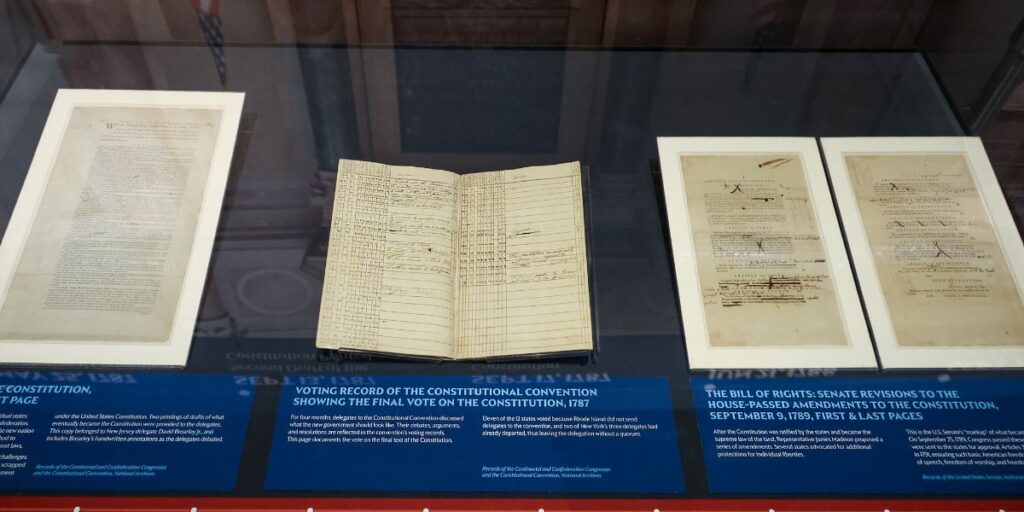
The original copy of the Bill of Rights brought to Colorado aboard the Freedom Plane and on display at the History Colorado Center right now is full of giant Xs, where members of the Senate crossed out House amendments they didn’t like. It’s a work in progress, not a thing etched forever in marble.
“I am most touched by the evidence of humanity found within the documents that you will see — the handwriting, suggestions, and imperfections of their creators,” History Colorado President and CEO Dawn DiPrince said in remarks at the opening of the exhibit.
The Articles of Association, penned in 1774, truly capture just how p—ed off Americans were about being treated like second-class citizens.
“The present unhappy situation of our affairs,” reads the document, “is occasioned by a ruinous system of colony administration, adopted by the British ministry … evidently calculated for enslaving these colonies, and, with them, the British Empire.”
The articles are the colonists’ first collective effort to slap an economic boycott on Britain.
“Back then, 250 years ago, the best way to fight back was hit them in their pocketbooks. And nothing has changed,” Jessie Kratz, National Archives historian and Freedom Plane lead curator, told me.
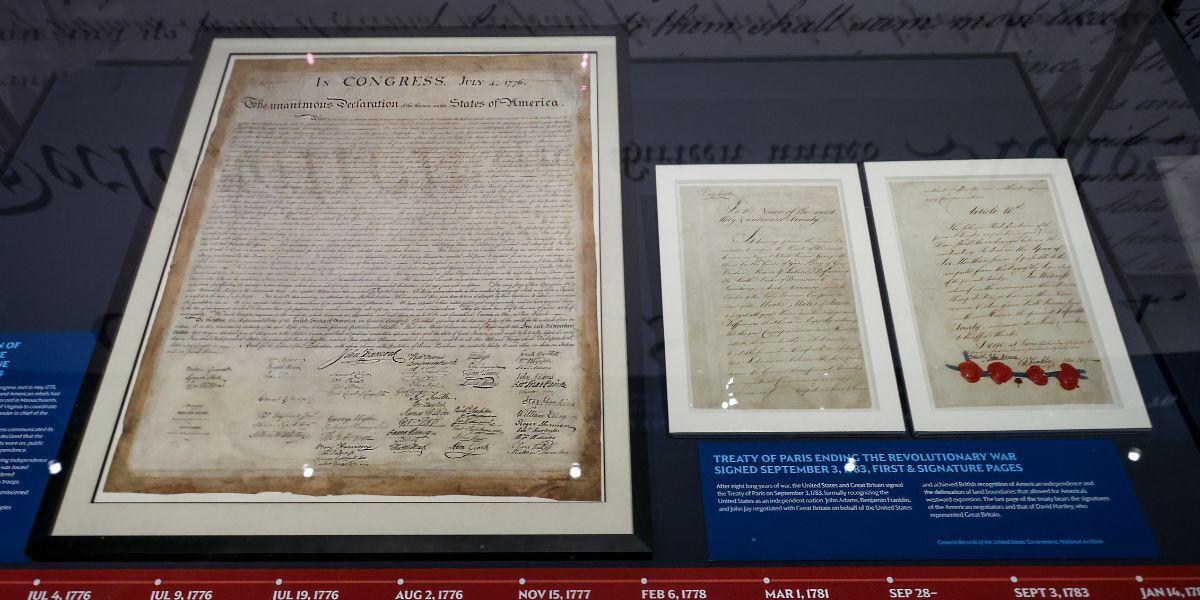
When you actually read the Declaration of Independence — the Denver display features one of the only known engraved copies, printed from a copperplate of the original — it’s mostly a list of grievances about how oppressed Americans felt.
“It was very much calculated to be a propaganda piece,” said Kratz. “It’s mainly grievances” meant to persuade people to go to war.
I learned that dozens of small declarations from around the states preceded Jefferson’s declaration, that the Declaration of Independence is really a distillation of a grassroots swelling of popular opinion against the British. It was written by Jefferson, yes, but it perfectly expressed the sentiments of “the people.”
Coming to the people
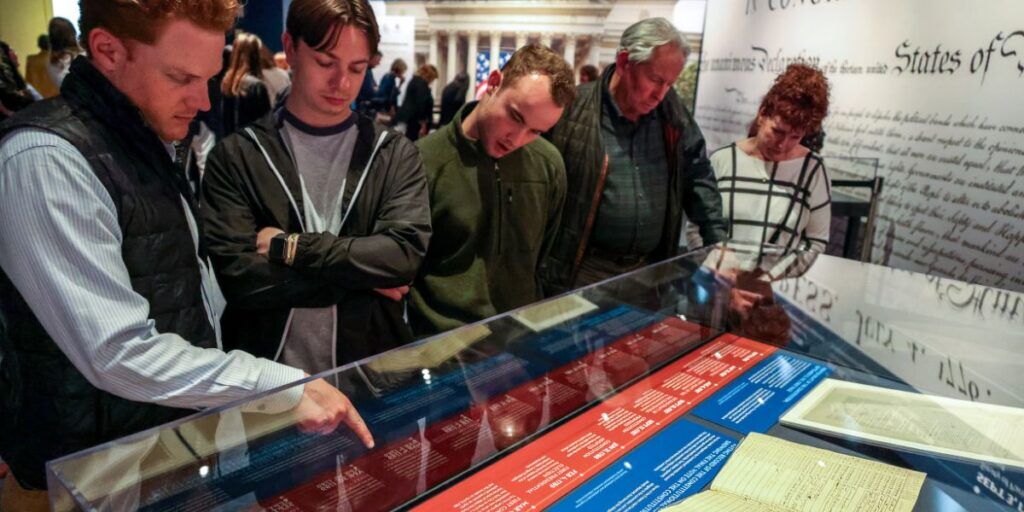
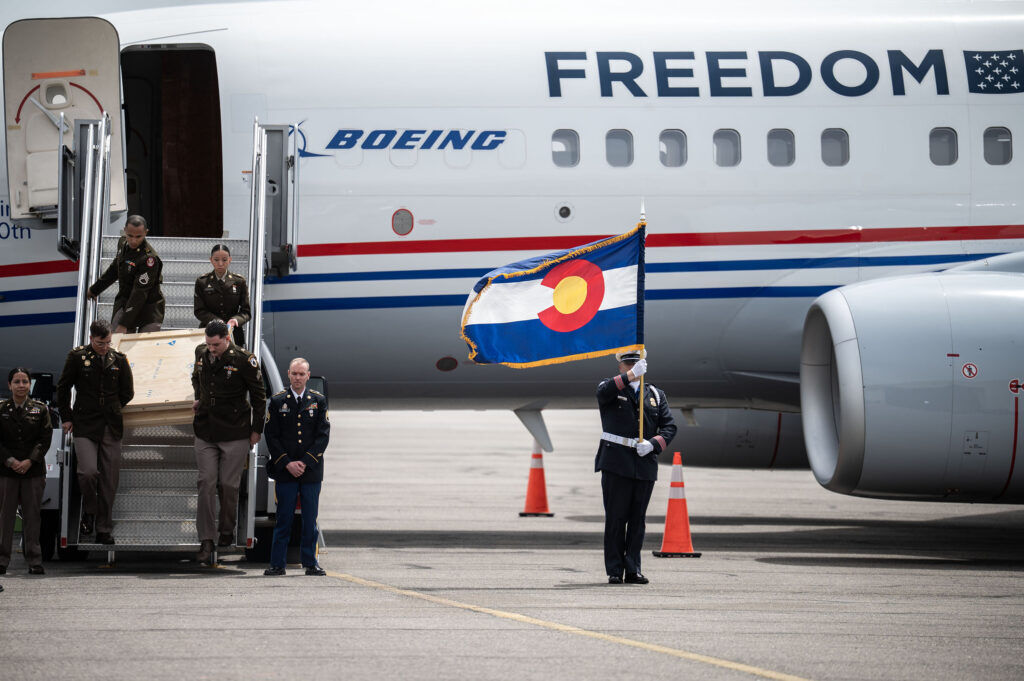
Denver is the fourth stop on a tour of eight cities picked to host the Freedom Plane and its documents as part of the country’s celebration of its 250th birthday. The venues are geographically dispersed, but Kratz said the sites picked were ones that could accommodate security and the expected crowds. “So, it limited the kind of venues we could go to,” and fortunately for Colorado, Denver’s History Colorado museum filled the bill. The ticketed exhibit runs through June 14.
“We realize that not everyone can come to Washington, D.C., for the 250th anniversary of our country,” Kratz said. “So we decided that we were gonna take the national archives to the people.”
Documents on display at History Colorado:
- Original engraving of the Declaration of Independence, 1823.
- Articles of Association, 1774.
- George Washington’s, Alexander Hamilton’s, and Aaron Burr’s Oaths of Allegiance, 1778.
- Treaty of Paris, 1783.
- Secret printing of the Constitution in draft form, 1787.
- Tally of votes approving the Constitution, 1787.
- Markup in the U.S. Senate of what would become the Bill of Rights.
Though the documents on display are originals, “these are not the final documents,” in most cases, Kratz said. The Constitution on display, for example, is a first draft that was secretly printed. “These show a process. The Constitution just didn’t come to us. It was a series of compromises. As was the Bill of Rights. When the Bill of Rights was first proposed in the House, they had 17 amendments.”
The final Bill of Rights had 10 amendments, of course, but Kratz pointed out that it took 203 years to get one of the proposed original amendments ratified.
And therein lies a tale. In 1982, a sophomore at the University of Texas, Gregory Watson, wrote a paper for a government class arguing that a proposed amendment from 1789 — one of the original 12 amendments submitted alongside the Bill of Rights — had never actually been ratified and was still technically pending. The amendment prohibited Congress from giving itself a pay raise that would take effect before the next election.
“So the student got a C on the assignment,” said Kratz. Apparently his professor didn’t believe that the amendment could still be ratified. “And the student was so mad he lobbied all the state legislatures that hadn’t ratified it yet,” said Kratz.
He wrote dozens of letters largely on his own time, with his own money, over the course of nearly a decade. He faced enormous skepticism — constitutional scholars debated whether an amendment proposed in 1789 could still be valid after so many years without ratification.
But states started acting. Maine ratified it in 1983. Then others followed. By May 1992 — 10 years after Watson wrote his C paper — Michigan became the 38th state to ratify, hitting the three-quarters threshold required. The 27th Amendment was officially certified as part of the Constitution on May 18, 1992.
Decades later, in 2017, the professor who gave Watson that C grade tracked him down and asked the University of Texas to retroactively change his grade to an A-plus. The university agreed.
The moral of the story for Kratz? “One person does make a difference.”
Independence month
This July, Kratz thinks we should really be celebrating independence month, not independence day.
“It wasn’t just one day. To me, the true Independence Day is July 2. That is the day we heard independence. They agreed on a plan on independence. And then July Fourth, they agreed to the text of this, but not really, because New York couldn’t vote yet. So this unanimous declaration didn’t come until July 9th.”
The declaration wasn’t ordered to be “engrossed,” or handwritten, until July 19th, and then finally on Aug. 2, most delegates signed it.
That’s why, Kratz insists, “July 2 to Aug. 2 should be Independence month.”
But even on Aug. 2 it wasn’t finished — some of the signers didn’t sign until months later. Thomas McKean of Delaware was the last delegate to sign, in January 1777.
The still extraordinary thing about these documents, even after 250 years, is that ordinary people back then saw them as truly theirs, as a true expression of their collective voice. You hear something echoingly familiar in the language, a kind of stubborn rebelliousness still coded into our DNA that was enough to cause these young Americans to somehow agree — when no other colonists in the British Empire had ever done so — to break from the motherland and form their own country.
“The revolution should remind us that at that time, people were unhappy with how they were being oppressed, and they did something about it,” sums up Kratz.
“I think it’s very much like, everyone has a role,” said Kratz. “You can do something. Because I think the government, people think of it as being separate, but I think we’re all the government.”
If you’re hard-pressed for reminders of what’s good about our country, what we have in common, the defiance built into our national character, what we can do when we put our minds to it, go see the docs.
“We all have this collective past,” Kratz points out. “All Americans came from this period. We all share this.”
DiPrince echoed that idea. “We are commemorating America’s 250th and Colorado’s 150th anniversaries while living through times that can often feel corrosive, divisive and untethered. You may find that it is easy to become hard and cynical,” she said.
“When you feel untethered, the best antidote is to reconnect to the fundamentals — to reach for our roots. The documents … in their authenticity, they help us to reflect on the originating ethos of this nation, to re-anchor to our formational ideals and to remind us who we are, who we could be and should be as a nation.”
Vince Bzdek, executive editor of The Gazette, Denver Gazette and Colorado Politics, writes a weekly news column that appears on Sundays.

Democrat John Hickenlooper hauls in $1.3 million in 2nd quarter in Colorado’s U.S. Senate race
Ernest Luning
ernest.luning@coloradopolitics.com
Updated 1 day ago
U.S. Sen. John Hickenlooper’s reelection campaign raised just over $1.3 million in the year’s second quarter and finished the period with $2 million in the bank, leaving the first-term Democrat with nearly 80 times as much cash on hand as...
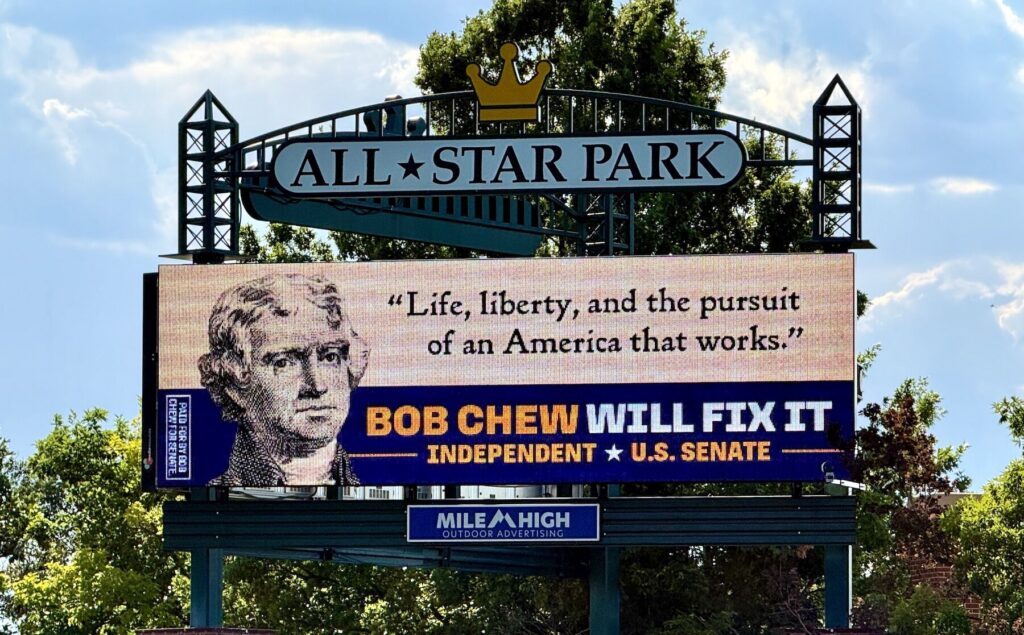
Forward Party nominee for Colorado’s U.S. Senate seat puts $1.1 million into his campaign
Ernest Luning
ernest.luning@coloradopolitics.com
Updated 4 days ago
Bob Chew, the Colorado Forward Party nominee for the seat held by Democratic U.S. Sen. John Hickenlooper, plans to report donating $1.1 million to his campaign and raising an additional $20,000 in the most recent quarter, his campaign told Colorado...

Turnout surges and winning margins stretch as final returns post in Colorado’s 2026 primary
Ernest Luning
ernest.luning@coloradopolitics.com
Updated 1 week ago
County clerks finished posting unofficial results in Colorado’s primary election on Friday, drawing a line under a series of nominating contests that witnessed upsets, surprises and outright shockers by the time the votes were tallied. While the outcome changed in...
Gabe Evans challenger Manny Rutinel makes House Democrats’ ‘Red to Blue’ program in Colorado’s 8th CD
Ernest Luning
ernest.luning@coloradopolitics.com
Updated 5 days ago
The House Democrats’ main campaign arm on July 9 added state Rep. Manny Rutinel to its “Red to Blue” program, saying the party’s freshly minted nominee in Colorado’s battleground 8th Congressional District is primed to flip the seat held by...
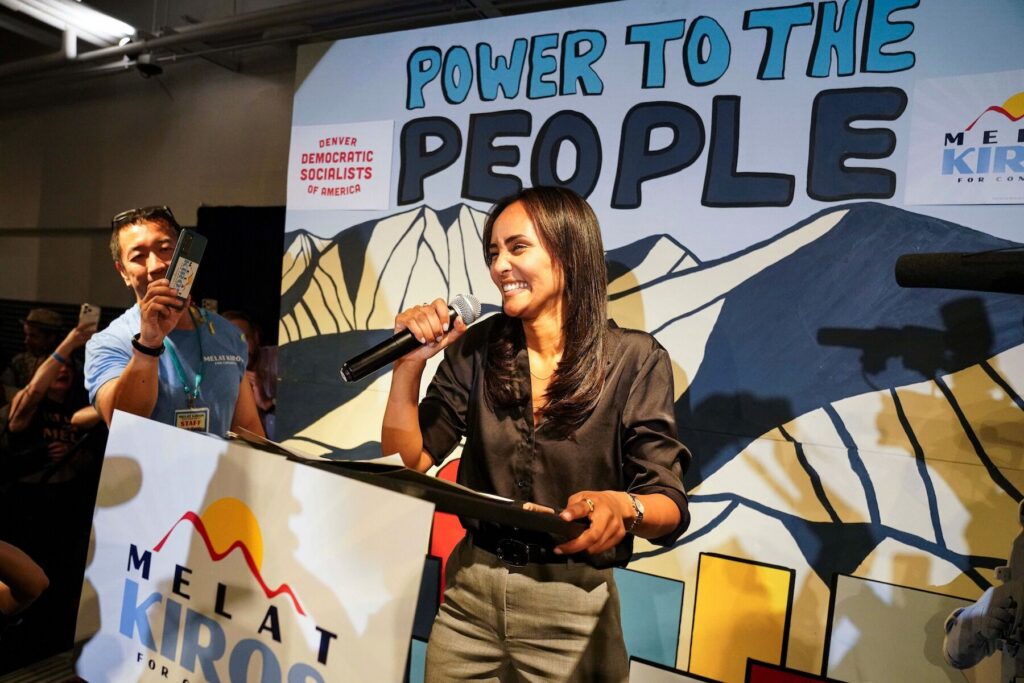
How Melat Kiros pulled Democratic Party left in upset win over Diana DeGette
Ernest Luning
ernest.luning@coloradopolitics.com
Updated 2 weeks ago
“It’s time for change,” Democratic congressional candidate Melat Kiros, a political newcomer and self-described democratic socialist, said in her campaign’s TV ad. On Tuesday night, primary voters in Denver agreed, giving the nomination to the 29-year-old, while at the same...

Melat Kiros shocks 15-term incumbent Diana DeGette, winning Colorado’s 1st CD Democratic primary
Ernest Luning
ernest.luning@coloradopolitics.com
Updated 3 weeks ago
In the equivalent of a political earthquake, 29-year-old Democratic socialist Melat Kiros defeated 15-term U.S. Rep. Diana DeGette in Colorado’s Denver-based 1st Congressional District primary, according to unofficial election results Tuesday night. The Associated Press called the race at 10:03...

Dwayne Romero wins Democratic primary, will face Republican Jeff Hurd in Colorado’s 3rd CD
Ernest Luning
ernest.luning@coloradopolitics.com
Updated 3 weeks ago
Democrat Dwayne Romero has defeated challenger Alex Kelloff in the primary in Colorado’s 3rd Congressional District, where Republican U.S. Rep. Jeff Hurd fended off a challenge from a former state lawmaker, according to The Associated Press. In returns posted at...

Democrat Jessica Killin claims victory in Colorado’s 5th Congressional District primary
Ernest Luning
ernest.luning@coloradopolitics.com
Updated 3 weeks ago
Jessica Killin walked out to the song American Girl in a bright red dress to claim victory in the democratic primary race for Congressional District 5 at a hotel in downtown Colorado Springs on Election Day. She beat her fellow...
Phil Weiser defeats Michael Bennet in Colorado’s Democratic gubernatorial primary
Ernest Luning
ernest.luning@coloradopolitics.com
Updated 3 weeks ago
Attorney General Phil Weiser took an early lead over three-term U.S. Sen. Michael Bennet in Colorado’s Democratic gubernatorial primary and held onto it, defeating the state’s longest-serving senator in more than 50 years to win a nomination that’s likely to...
Crank challenger Jessica Killin signs on to new centrist Democratic group’s ‘Promise to America’
Ernest Luning
ernest.luning@coloradopolitics.com
Updated 3 weeks ago
Jessica Killin, one of the Democrats running in Tuesday’s primary for the chance to challenge U.S. Rep. Jeff Crank in Colorado’s 5th Congressional District, joined with more than a dozen incumbent Democratic lawmakers and candidates this week signing on to...
PREV
PREVIOUS

Colorado General Assembly Dems kill early effort to protect children from online content | A LOOK BACK
Twenty-Five Years Ago This Week: Legislation sponsored by state Rep. Tim Fritz, R-Loveland, sought to use software to prevent children from violent, pornographic, or hateful materials. But after the Senate Judiciary Committee attached an “unfriendly” amendment, House Bill 01-1376 died during further consideration in Appropriations. In its original form, the bill would have required public […]

Attorney General Phil Weiser's underdog campaign for Colorado governor | Cronin and Loevy
Phil Weiser, 58, Colorado’s attorney general, is in a heated race against U.S. Sen. Michael Bennet, 61, for the Democratic nomination for governor. They are friends and share mostly similar progressive, Democratic policy views. Primary election day is June 30. Weiser first came to Colorado in 1994 and was a longtime professor and dean of […]