

Colorado General Assembly Dems kill early effort to protect children from online content | A LOOK BACK

Twenty-Five Years Ago This Week: Legislation sponsored by state Rep. Tim Fritz, R-Loveland, sought to use software to prevent children from violent, pornographic, or hateful materials. But after the Senate Judiciary Committee attached an “unfriendly” amendment, House Bill 01-1376 died during further consideration in Appropriations.
In its original form, the bill would have required public schools and libraries to use filtering software on any computers where minors could access the internet. But the funding requirement attached by the Senate Judiciary Committee made it a tougher sell for the Senate Appropriations Committee, according to Fritz.
“It was clear that the Judiciary Committee members were setting the bill up to be killed,” Fritz said. “The funding requirement was unnecessary because some qualifying filtering software is relatively inexpensive, costing less than 1% of the cost of the computer. I think I could have gotten this to pass in the full Senate. But opponents of the bill tacked on a baseless price tag … it was a very cynical move, and the result is that Colorado children are still exposed to this filth on their taxpayer funded computers.”
Supporters on the Senate Appropriations Committee offered amendments that would delay implementation for one year, eliminated the requirement that public libraries use filters and allowed smaller schools to use Amendment 23 funds to pay for filters, but all six Democrats on the Appropriations Committee voted against the measures.
“I knew I would face opposition in committee, especially since the American Library Association lobbied strongly against filtering measures,” Fritz said. “We even had a Channel 9 investigation, which we hoped would sway Democrat lawmakers into supporting this bill.”
Channel9, KUSA, reporter Paula Woodward conducted a months long study of the internet usage logs at several metro area public schools and found that on computers without filtering software minors were able to access wholly inappropriate and illegal material. Woodward noted that she found few problems with inappropriate material in schools where filters were present.
Gov. Bill Owens, a strong supporter of HB 1376, said, “I am very disappointed that Senate Democrats don’t want to protect children from pornography and violence on the internet. Rep. Fritz successfully passed this important bill in the House only to see it killed by a partisan vote in the Senate.”
Across the state, many libraries and schools had already implemented filtering software, but other jurisdictions had resisted.
“We don’t willingly make hateful or pornographic material available to our children,” Fritz said. “I see no reason why anyone would want to continue a situation where it is easily available to them at some schools and libraries.”
Twenty Years Ago: “We could be facing the perfect storm of condition for devastating fires this summer in Colorado,” said U.S. Senator Ken Salazar.
A continuing drought and high spring winds were threatening the eastern plains, the southern region and the Front Range earlier than the normal. Also contributing to the fire dangers was the infestation of mountain pine and bark beetles that had already destroyed more than 7.4 million trees across the state, making them very susceptible to fire. In addition 6.3 million acres of hazardous fuel had accumulated in Colorado and over half of the 14.5 million acres of national forest were at risk for catastrophic wildfire.
Sen. Salazar’s had introduced the Rocky Mountain FIRES Act to establish requirements for the National and State Forest Services and the Interior Department for a better and swifter response to the “increased risk of severe wildfires.”
The FIRES Act would require that at least 70% of the $20 million of funds allocated for hazardous fuel reduction projects in the Rocky Mountain Region be used for projects in the wild land-urban interface, those forests closest to communities.
“If we allocate the proper funds and resources now,” Salazar said, “we will be able to save priceless amounts of personal and public infrastructure as well as healthy stands of forest.”
Rachael Wright is the author of several novels including The Twins of Strathnaver, with degrees in Political Science and History from Colorado Mesa University, and is a contributing columnist to Colorado Politics, the Colorado Springs Gazette and the Denver Gazette.


Victor Marx says he’ll only debate Phil Weiser once in Colorado governor’s race — without a moderator
Ernest Luning
ernest.luning@coloradopolitics.com
Updated 16 hours ago
Colorado Republican gubernatorial nominee Victor Marx said on Tuesday that he will participate in only one debate with Attorney General Phil Weiser before the November election — and he challenged the Democratic nominee to hold the event without a moderator....

Denver seeks to move more than $18 million to cover George Floyd protest claims
Deborah Grigsby
deborah.smith@denvergazette.com
Updated 48 minutes ago
City officials want to move millions from Denver’s General Fund contingency account to the City Attorney’s Liability Claims Fund to cover legal settlements and claims stemming from the 2020 George Floyd protests. The hefty shift of cash, proposed in Council...
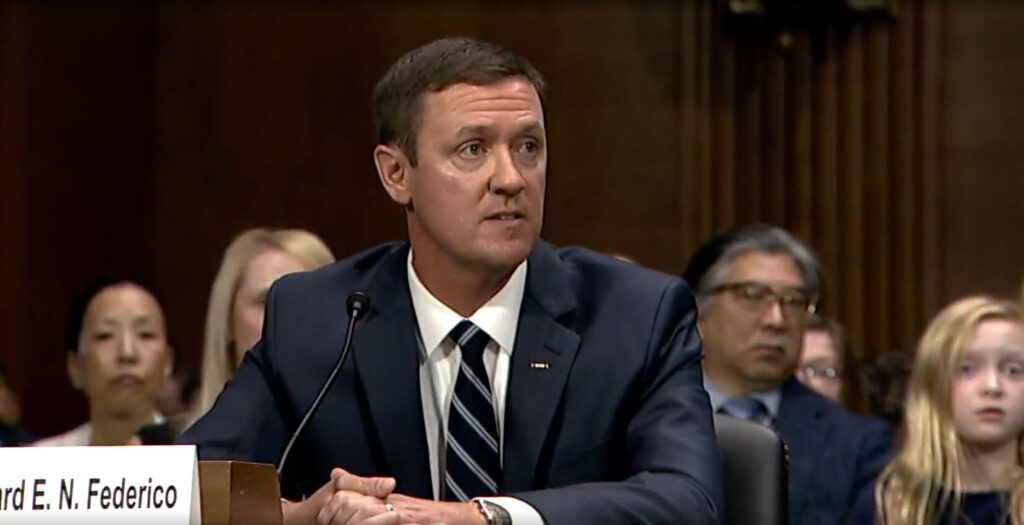
10th Circuit finds no fair housing violation by Littleton landlord for worker’s alleged rape of tenant
Michael Karlik
michael.karlik@coloradopolitics.com
Updated 18 hours ago
The Denver-based federal appeals court concluded on Monday that Littleton’s housing authority could not be held liable for a maintenance worker’s alleged rape of a tenant, as the worker’s employment did not provide any special access to the victim. A...
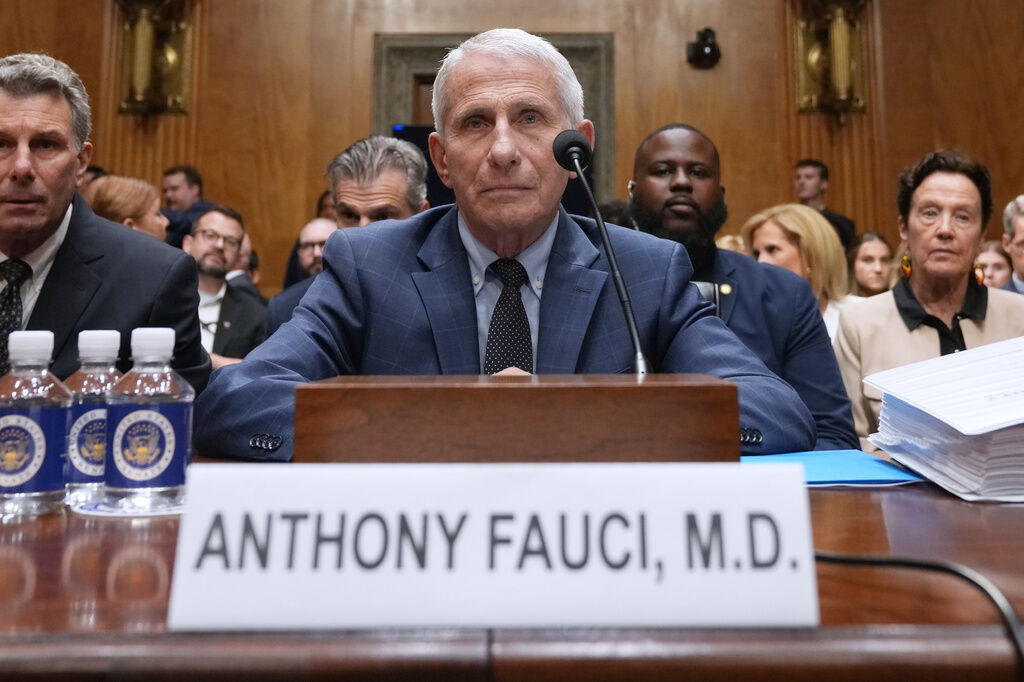
Fauci’s Fifth Amendment answers may test Biden pardon as GOP eyes contempt
Kaelan Deese
kaelan-deese@coloradopolitics.com
Updated 17 hours ago
Dr. Anthony Fauci invoked his Fifth Amendment right against self-incrimination more than 100 times on Wednesday, a move legal experts described as strategically sound despite the politically damaging optics. Sen. Rand Paul (R-KY), chairman of the U.S. Senate Committee on...

Democrats must win 57 out of 77 competitive House seats to take majority: Cook Political Report
Hailey Bullis
hailey-bullis@coloradopolitics.com
Updated 20 hours ago
Democrats’ path to retaking the House in November has significantly slimmed as a result of the mid-decade redistricting war this cycle, a new analysis found. The nonpartisan Cook Political Report found that under the newly drawn maps across 10 states,...

Small Colorado town grapples with ICE detention center opening
Nico Brambila
nico.brambila@denvergazette.com
Updated 14 minutes ago
Thirty miles northeast of downtown Denver — where the Front Range loosens its grip, subdivisions give way to open fields and pickups outnumber Teslas — is the town of Hudson. Population 1,652. Hudson still feels like the kind of place...

Jeffco Public Schools sues Trump administration to protect funding after alleged transgender policies violation
Matt Kyle
matt.kyle@denvergazette.com
Updated 15 minutes ago
In the wake of several threats by the Trump administration to revoke federal funding, Jeffco Public Schools filed a lawsuit against the Department of Education seeking to protect that badly needed money. Jeffco has been under investigation by the DOE’s...
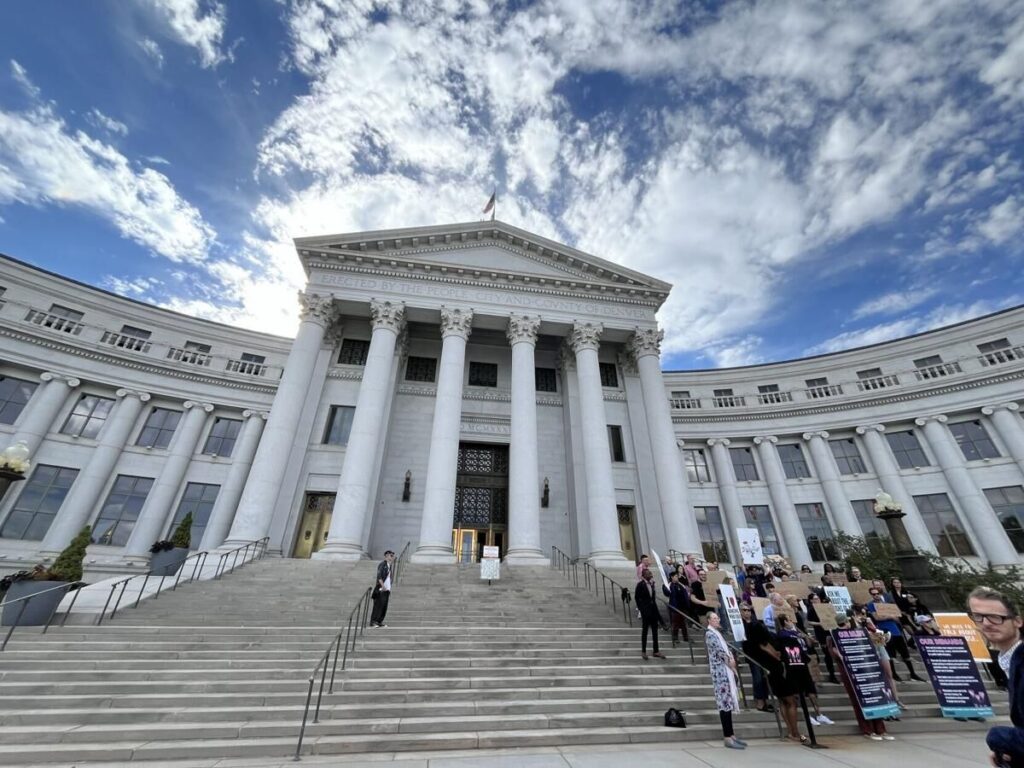
Denver labor acknowledgment proposal faces council committee questions
Deborah Grigsby
deborah.smith@denvergazette.com
Updated 24 hours ago
A proposal to add a labor acknowledgment to Denver City Council proceedings has been delayed by the Finance and Business Committee after members raised questions about its wording, intentions and place in the council’s opening proceedings. The proposal, put forth...
Fauci invokes the Fifth Amendment and declines to testify in GOP-led Senate panel’s COVID-19 hearing
The Associated Press
the-associated-press@coloradopolitics.com
Updated 1 day ago
WASHINGTON (AP) — Dr. Anthony Fauci on Wednesday invoked the Fifth Amendment and declined to answer questions from senators in a Republican-led committee hearing about his handling of the COVID-19 pandemic. The move injects new drama into the lingering tensions...

Colorado residents rush to buy guns ahead of new restrictions, breaking sales records for several stores
By Debbie Kelley
by-debbie-kelley@coloradopolitics.com
Updated 24 hours ago
Colorado residents are lining up to buy guns ahead of the latest weapons restrictions set to take effect this Saturday. The new law mandates individuals seeking to purchase semiautomatic firearms with detachable magazines to first complete a firearm safety course...
PREV
PREVIOUS

Colorado Politics Calendar June 1-7
CoPo’s weekly political calendar will help you find political and public-policy events throughout Colorado. It includes candidate and issue campaign events, public policy meetings, court hearings, state and local party conventions, assemblies, debates, rallies, parades, speaking engagements, traveling dignitary appearances, water meetings, book signings, county commission hearings, city council meetings and more. As a subscriber, […]
Founding documents reconnect us to our shared American roots - and rebelliousness | Vince Bzdek
When you first lay eyes on the actual founding documents of our country that, for the first time in history, have traveled together from their gilded cages in Washington to visit us out here in the hinterlands, you’re struck not by their brilliance but their humanness. The original copy of the Bill of Rights brought […]