

Republicans race to confirm Trump DNI pick Jay Clayton to break spy program gridlock
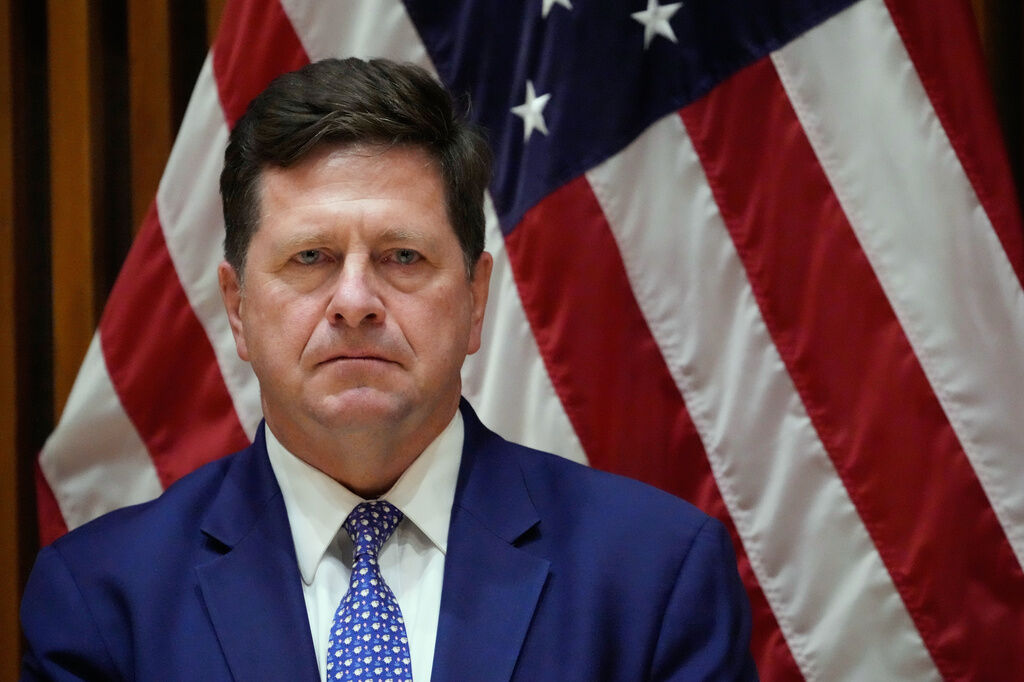
Senate Republicans are moving quickly to vote on President Donald Trump’s pick to run the country’s intelligence agencies, underscoring the level of anxiety in Washington over a temporary lapse in the federal government’s spy powers.
The Senate Intelligence Committee scheduled a confirmation hearing for Jay Clayton the same day the president announced his nomination to be the next director of national intelligence on Thursday. The hearing will take place on Wednesday, June 17, meaning Clayton, currently a U.S. attorney for the Southern District of New York, could be sworn into the post later this month.
His appointment is seen as the key to extending Section 702 of the Foreign Intelligence Surveillance Act after Democrats backed out of a deal for its renewal. The impasse is centered on Trump’s decision to name Bill Pulte, a top housing official with no national security experience, to the post on an interim basis, and Republicans are hoping to overcome Democrats’ opposition by getting Clayton in place.
Senate Majority Leader John Thune (R-SD) told reporters that the Senate will try to get Clayton confirmed “as quickly as possible,” noting he was previously approved by the Senate to chair the Securities and Exchange Commission during the first Trump administration.
Still, Thune acknowledged Clayton’s confirmation by the Senate is unlikely to happen before June 19, which is when Pulte replaces the outgoing director, Tulsi Gabbard.
“I don’t know what ‘realistic’ is, but we’re gonna probe the limits of it,” Thune said.
Democrats appear receptive to Clayton’s nomination, with Sen. Mark Warner (D-VA), the ranking member of the Senate Intelligence Committee, saying he believes Clayton is a “capable public servant.” Rep. Jim Himes (D-CT), his Democratic counterpart on the House Intelligence Committee, similarly voiced confidence in Clayton on Thursday.
Trump’s announcement nonetheless came too late to avert an expiration of Section 702, which allows for the surveillance of foreign nationals abroad without a warrant, on Friday at midnight. A three-week patch to keep the program from going “dark” failed in the House on Thursday morning and then was blocked by Democrats in the Senate later the same day.
Now, House lawmakers are gone for a one-week recess, and Democrats are still objecting to a renewal in the Senate since the interim appointment for Pulte has not been withdrawn.
“Pulte has got to go,” Minority Leader Chuck Schumer (D-NY) told reporters as the Senate headed out of town Thursday. “The DNI role is too important. He cannot be there, no ands, ifs, or buts. No matter what else they do.”
Warner said in a statement that the “timing” of the announcement raised an obvious question: “If the president intended to nominate Mr. Clayton, why spend the last ten days insisting that the Intelligence Community be led by an acting director who lacks the extensive national security experience required by statute and whose appointment raises serious concerns about the politicization of intelligence?”
Warner continued, “The president could have put forward a qualified nominee from the beginning. Instead, he waited until the House of Representatives went out of town, choosing a path that raises the risk of an entirely avoidable lapse in a critical national security tool.”
Republicans, in turn, accused Democrats of using the surveillance program as a “political hostage” and pointed the finger at Senate Democrats for the upper chamber’s inability to pass a three-year deal.
Earlier on Thursday, when asked if he would consider bringing the House back for another renewal vote, Speaker Mike Johnson (R-LA) posed, “What would be the point?” He referred to a similar three-year extension the House passed back in April that has stalled out in the Senate and Democrats’ opposition to the shorter patch on Thursday.
“What would be the point of me going through this exercise over and over?” the speaker asked. “The House has done every single thing.”
A smaller group of Republicans has opposed an extension as well, with 19 House Republicans voting against the three-week patch over concerns related to privacy and warrant requirements.
Rep. Randy Fine (R-FL), one of the Republicans to vote against the short-term extension, told the Washington Examiner that it was “highly irresponsible for the Democrats to vote this down because they don’t like an interim presidential appointment.”


Trump honors the fallen of the 9/11 terrorist attacks during Pentagon speech
Mabinty Quarshie
mabinty-quarshie@coloradopolitics.com
Updated 2 days ago
President Donald Trump and first lady Melania Trump honored the roughly 3,000 Americans killed during the Sept. 11, 2001, terrorist attacks during a ceremony at the Pentagon. The event marking the 25th anniversary of the deadliest attack on American soil...
Vance strikes back at concern $5,000 Trump dividend will stoke debt: ‘Wealth will go back to the people’
Emily Hallas
emily-hallas@coloradopolitics.com
Updated 3 days ago
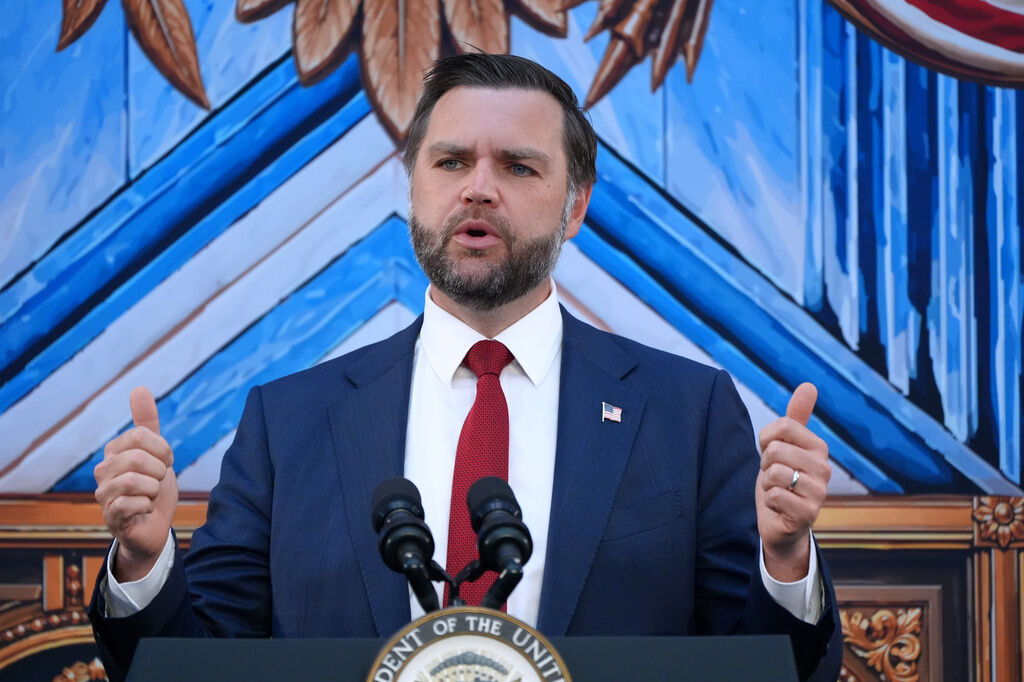
Vice President JD Vance on Wednesday sought to deflect criticism that President Donald Trump’s newly proposed $5,000 dividend would further bankrupt the United States, arguing the handout would be offset by tariff revenue. Trump promised “every adult citizen” would receive...
Utah governor renews call for ‘civility’ one year after Charlie Kirk assassination
David Sivak
david-sivak@coloradopolitics.com
Updated 3 days ago
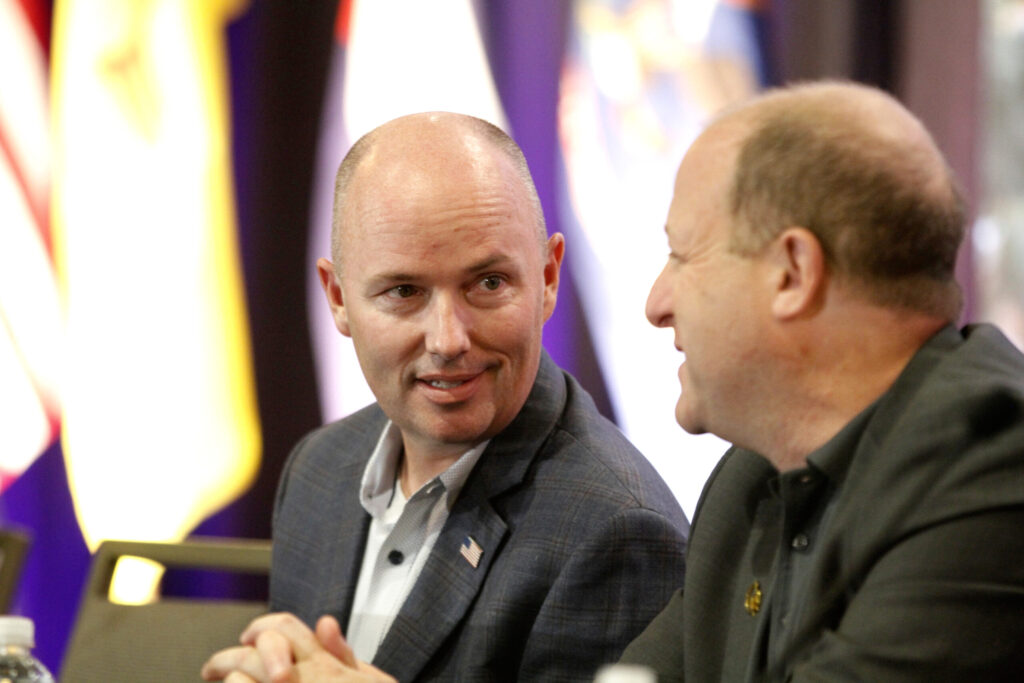
PHILADELPHIA — Spencer Cox, R-UT, the Utah governor who rose to national prominence with his calls for civility in the wake of Charlie Kirk’s assassination, used a stage in Philadelphia to argue that his message is just as salient one...
JD Vance faces big primetime moment at GOP midterm convention as Ted Cruz waits in the wings
Christian Datoc
christian-datoc@coloradopolitics.com
Updated 3 days ago
Vice President JD Vance will take center stage on the final night of the Republican midterm convention on Thursday, giving him another opportunity to cement his standing as the early favorite to inherit President Donald Trump’s political movement in 2028....

How Charlie Kirk’s murder drove Trump’s crackdown on ‘radical-left lunatics’
Hudson Crozier
hudson.crozier@washingtonexaminer.com
Updated 3 days ago
When Turning Point USA founder Charlie Kirk was gunned down in Utah a year ago, some leftists warned the killing could backfire for them. Far-left blogs and forums discussed how President Donald Trump would escalate law enforcement “repression” in the...
Five takeaways from opening night of first-ever GOP midterm convention
Emily Hallas
emily-hallas@coloradopolitics.com
Updated 3 days ago
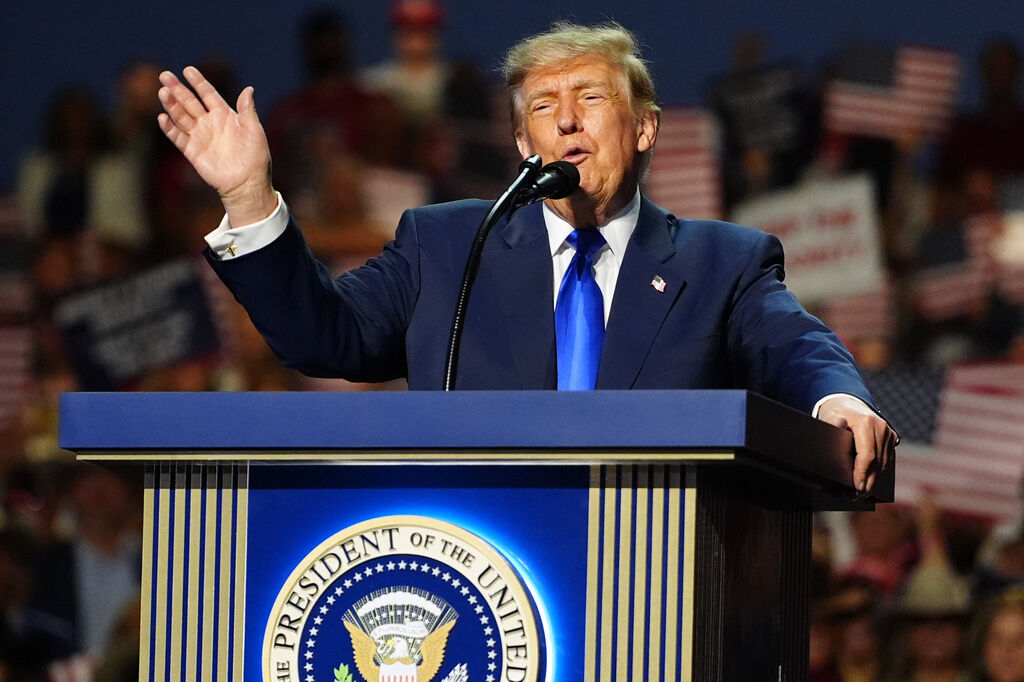
The first night of the Republican Party’s unprecedented midterm convention on Wednesday evening featured an unexpected appearance from a Democratic senator, a rousing speech from President Donald Trump, and boos for one of the GOP’s top leaders. The two-day event...

United abruptly cancels flyover marking 9/11 anniversary after ‘concerns in the community’
Mark Samuelson Special to The Denver Gazette
mark.samuelson@denvergazette.com
Updated 2 days ago
United Airlines had planned a dramatic flyover in Denver on Friday to mark the 25th anniversary of the 9/11 attacks, when it lost two of the four U.S. passenger jetliners hijacked by terrorists. But the airline abruptly cancelled plans late...

General election season is here. Where does mail-in voting stand?
David Zimmermann
david-zimmermann@coloradopolitics.com
Updated 4 days ago
As the general election season approaches, the legal question surrounding the new U.S. Postal Service mail-in ballot requirements remains up in the air. With the case playing out in the courts, mail-in voting has not been changed substantially despite President...
Lindsay Clancy’s attorney makes plea for pardon from Trump
Emily Hallas
emily-hallas@coloradopolitics.com
Updated 5 days ago
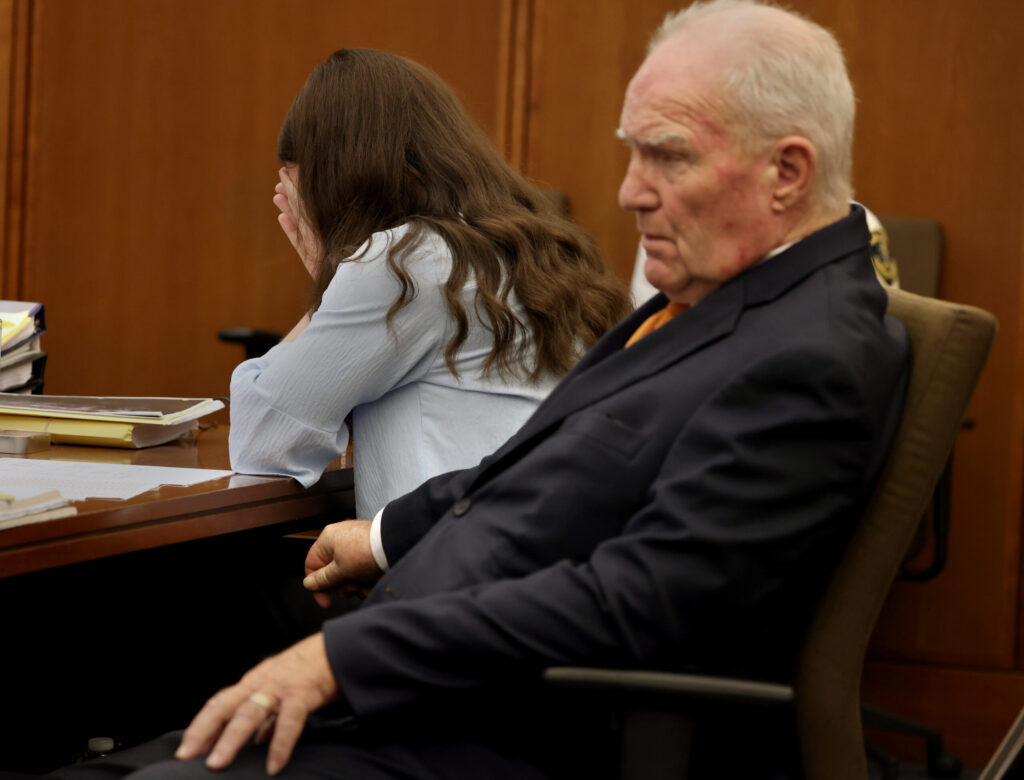
Lindsay Clancy’s attorney urged President Donald Trump on Tuesday to give her a pardon before her murder case could head for another trial. Clancy is a Massachusetts woman who admitted to strangling her three young children in 2023 but argued...

Russia launches massive, deadly, and ‘complex’ attack against Ukraine
Washington Examiner Staff
washington-examiner-staff@coloradopolitics.com
Updated 5 days ago
Fighting between Ukraine and Russia commenced after a 72-hour pause for diplomatic visits to both countries by U.S. officials. Russia launched a massive attack on Ukraine on Tuesday, firing dozens of cruise missiles and over 140 drones as the war...
PREV
PREVIOUS

DOJ targets disparate impact hiring practices at odds with ‘color-blind Constitution’
The Department of Justice declared this week that the Equal Employment Opportunity Commission’s “disparate impact” policies are unconstitutional, tossing aside a rule, long criticized by conservatives, that saw racial discrimination whenever a policy resulted in outcomes that differed among people of different races — regardless of whether the policy had anything to do with race. […]

Trump fumes over ‘fake’ peace deal terms leaked by Iran
President Donald Trump claimed that the ceasefire terms reported by Iranian state media on Friday were “fake news” and denied offering any monetary compensation to Tehran to secure their cooperation in ending the war. Iranian state media began circulating a 14-point ceasefire agreement Friday morning, which included more than $300 billion being paid out to […]