

With jails overcrowding, Gov. Jared Polis asks for new prisons as lawmakers face budget shortfall
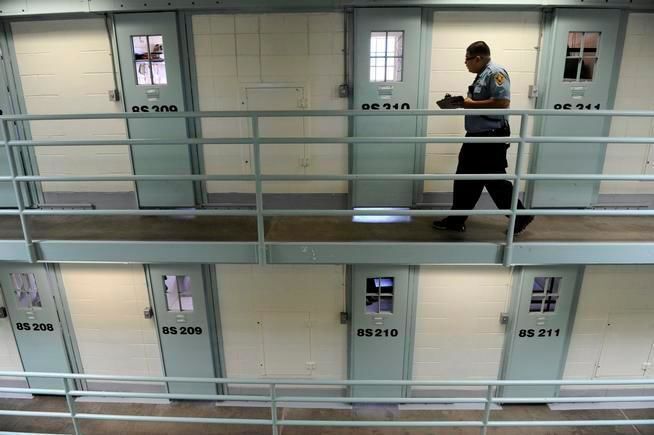
The Polis administration is asking for hundreds of millions of dollars to expand the state’s prison system, just as Colorado’s legislators are bracing for a worsening fiscal outlook.
The request sets up a clash over priorities at a time when the state faces a nearly $1.5 billion general fund shortfall, according to the latest revenue estimate from the Legislative Council.
The governor’s office has maintained that its budget proposal for next year is balanced, given all the mechanisms it is proposing for the legislature to adopt, such as an infusion of cash from the privatization of Pinnacol Assurance, the state’s workers compensation system of last resort. That move is expected to generate about $400 million for the state.
The administration is seeking to add prison beds amid overcrowding, though advocates on both sides of the spectrum disagree over its cause. Some advocates have argued that the crisis is partly the result of a backlog of inmates awaiting parole placement. Others maintained that the “crisis” resulted from Democrats’ policies that ultimately seek to release offenders back into communities.
On Wednesday, the governor asked budget writers for money to fund one or possibly two new prisons to address the prison bed crisis.
In a March 18 letter, the Office of State Planning and Budgeting said the Department of Corrections will need a minimum five-year contract for additional prison beds, potentially using closed private prison facilities.
It would cost a minimum of $150 million to $200 million to buy and renovate one of those shuttered prisons, some of which have been mothballed for years, according to estimates.
As previously reported by Colorado Politics, the system is under strain largely because — some advocates argued — more than 5,000 inmates approved for parole remain incarcerated due to a lack of parole officers, available beds in community corrections, and required transition programs.
Others, such as District Attorney George Brauchler of the 23rd Judicial District, have countered that prison overcrowding is an artificial crisis, manufactured by what he described as a “Democrat-led prison-closing frenzy. In an opinion piece, he said it’s the result of the “predictable, deliberate and unnecessary outcome of Democrat political decision-making that has long prioritized offenders over public safety and victims.”
Wednesday’s meeting was one of the Polis administration’s final opportunities to press its priorities, especially after earlier Joint Budget Committee decisions on the 2026–27 budget did not align with all of the governor’s requests.
Initially, the Polis government sought 59 full-time employees and $12 million in general fund spending for 2026–27 to manage the current prison population, including 941 beds approved but not fully funded in a February supplemental budget request.
What drew the strongest reaction from lawmakers was the administration’s requests for the 2027–28 budget.
According to the proposal, county jails holding inmates awaiting transfer to state prisons already exceed 700 people and are projected to surpass 900 soon, continuing to rise throughout the fiscal year and reaching nearly 1,300 by the end of 2026–27.
To relieve the backlog, the Office of State Planning and Budgeting suggests purchasing the Huerfano Corrections Facility in Walsenburg, which closed in 2010 and had a capacity of 752 beds, according to the proposal. It’s a private facility, currently owned by CoreCivic.
It would need somewhere between $150 million and $200 million to buy the prison and renovate it to reach the medium security level the state needs most.
To pay for it, the administration suggested tapping $100 million from the state’s emergency reserve — to be refilled with dollars from the Marijuana Tax Cash Fund. The state would issue Certificates of Participation, a type of bond, to fund the rest. As such, the impact on the state budget would be minimal, according to the governor’s office.
If the Colorado General Assembly isn’t willing to buy a prison, it could lease some of the available shuttered private prisons for a minimum of five years, beginning in the 2026-27 budget. But that would come with a higher per-day cost that exceeds statutory limits.
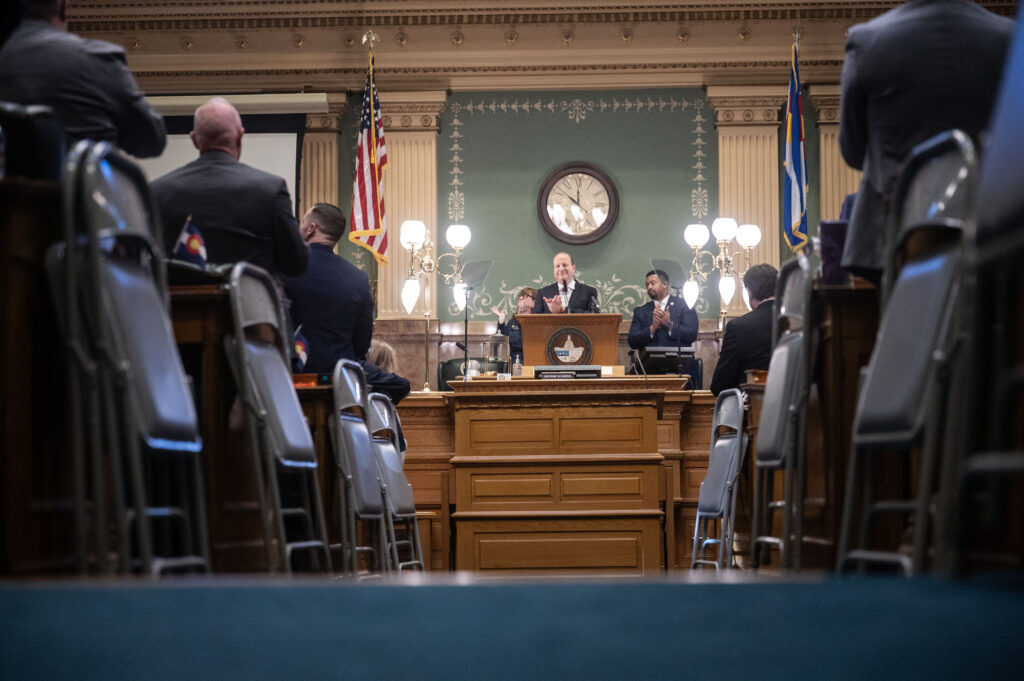
In its letter, the governor’s office said acquiring a new prison is a “consequential action” that wasn’t raised lightly.
“However, growth of prison caseload and the limited immediate effects of potential and already-realized prison population management measures leaves few alternatives that do not imperil the health and safety of inmates, DOC/local jails staff, and the public,” the office said.
The Office of State Planning and Budgeting letter said the Department of Corrections already has statutory authority to enter into contracts with the private prisons, “but the General Assembly would need to appropriate additional funding for more private prison beds” — and at a higher per diem rate that would also require authorization from the legislature.
Sen. Barbara Kirkmeyer, the Joint Budget Committee’s ranking Republican, told Colorado Politics prior to Wednesday’s meeting that the governor had pledged to work with budget writers after they initially balked at approving more beds during the revisions to the 2025-26 budget in February.
Kirkmeyer noted the four Democrats on the JBC voted against approving those additional beds, in part to force a conversation with the governor on reducing prison capacity.
Believing they had a deal in place, the JBC then voted again to approve the new beds contained in the funding for House Bill 26-1151. The bill was signed into law on Feb. 27, with $1.9 million allocated, plus an expectation that the budget panel would approve the $12 million sought for the 941 beds in the 2026-27 budget.
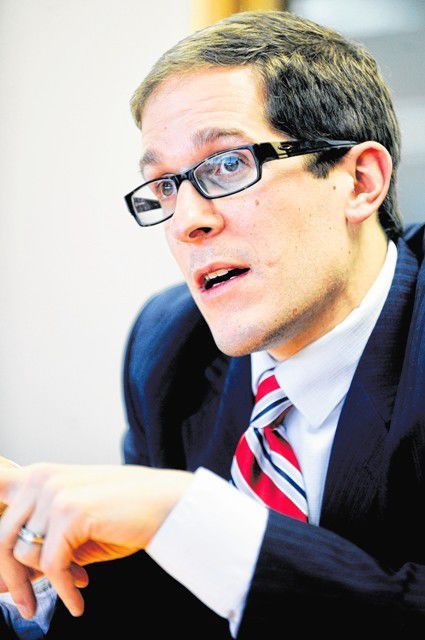
Mark Ferrandino, the director of the Office of State Planning and Budgeting, defended the administration’s efforts to reduce prison populations. He noted conversations with Sen. Mike Weissman, D-Aurora, to develop legislation on earned time and other policies related to parole eligibility, community corrections, and referral processes to break logjams and ensure people are released without risk to public safety.
He estimated that at least two bills are still waiting in the wings to deal with those issues in the 2026 session and he described conversations with lawmakers as fruitful.
Ferrandino admitted the state government knew back in September that the state might need another prison but had hoped it wouldn’t be necessary under the current administration.
The September revenue forecast changed all that, he explained, along with a higher estimate for prison beds.
“I don’t think anyone would be excited to come in front of the committee and say we need to open up a new prison,” Ferrandino told the JBC.
Then he dropped more bad news: projections show the state may need two prisons, including the Kit Carson Correctional Facility in Burlington, which, when it closed in 2016, had 400 beds, although it originally had a capacity of 1,400.
The request landed with a thud at the JBC.
Rep. Kyle Brown, D-Louisville, said the request for a new prison — or prisons — took him by surprise and questioned how the state would find enough employees to staff them, given the workforce shortfalls that already exist at prisons throughout the state.
Ferrandino acknowledged the staffing concerns but said the department considered the proximity of the shuttered private prisons to population centers, such as Pueblo.
He noted that prisons in the Canon City-Pueblo region have higher staffing ratios than some of the more remote facilities.
JBC Chair Sen. Judy Amabile, D-Boulder, called the request “obscene.”
“This is an obscene misuse of public funds” to buy and build out a prison when hundreds of people are waiting in jails to get into a hospital, or the legislature is having to cut services for Medicaid, she said.
Hundreds more are in prisons who have been approved to be released but haven’t been able to find a place to go, she said.
“We have capacity in community corrections,” Amabile said. “We have 750 people on a waitlist for treatment who cannot be released until they get it.”
One census estimate on Feb. 10 listed 466 vacant residential beds and 252 non-residential beds in community corrections, which is under the Division of Criminal Justice in the Department of Public Safety. Those beds would go to individuals who have completed the residential program and can live outside the facility, but remain under supervision.
But the big question is whether those beds are funded and staffed. Critics have noted that those facilities can choose whom they take, and some are choosy.
Amabile also pointed out that another 250 people who haven’t gotten treatment are past their parole eligibility date.
She said a better use of state resources would be to buy a nursing home so that people who are old and sick and not dangerous could get into that care, with a Medicare and Medicaid match.
“We need to build or contract with more supportive housing services,” so those who are parole eligible would have a place to go,” she said.
All of those things need to be done before the state considers spending $150 on a prison, she told Ferrandino.
Then there’s the issue of competency.
Amabile said the state is paying a $12 million annual fine over competency issues, and that fine is projected to balloon to $100 million because the state has been unable to move people off of competency waitlists.
Amabile has authored legislation to drop charges against people found to be incompetent to stand trial. Some of those suspects have reoffended, prompting the governor to ask for money to ensure those individuals have a place to go other than back in the streets.
Some law enforcement officials have blamed Amabile and the law she authored for the situation.
In his opinion piece, Brauchler, who is also a former district attorney for the 18th Judicial District, said Colorado, in fact, incarcerates 22% fewer felons today than it did in July 2009, when the state population was smaller by a million. He said Colorado’s inmate numbers have “not been this low in 23 years.”
As for parolees, Colorado now has 50% more as of 2024 compared to 2003.
Brauchler said the Democrat-majority in the legislature has made it “harder to incarcerate felons, easier to reduce prison sentences for committing felonies (including murder), and have made it harder to return felons to prison for violating the terms of their parole.”
The Department of Corrections, in a statement Friday, told Colorado Politics that it is working with the Governor’s Office and General Assembly to evaluate the impacts of all proposed ideas for the 2026-27 budget to expand capacity as needed based on projections for the prison population. The ultimate goal, the department said, is to ensure safety for prisoners and staffers alike.
“These requests are critical responses to prison population forecasts utilized by the legislature and current prison population levels, which are driving capacity constraints across the system, including the persistent local jail backlog. Unfortunately, prison population projections require adding additional capacity, and we are exploring different options to meet the state’s need, including a new state-run prison.”
The statement added that “requests for capacity management and perimeter security are not just about expansion; they are about the practical necessity of providing a safe environment for our staff, the public, and the incarcerated population.”
There are currently 19 state-run prisons and two private facilities in Colorado.
According to a spokesperson for the Colorado Department of Corrections, the state has closed two state-owned prisons over the last two decades, including the 485-bed Fort Lyon Correctional Facility in 2012 and Camp George West, also known as the Colorado Correctional Center, in 2023. Camp George had 150 inmate beds.
Private prisons closed in the same time period included Kit Carson in Burlington. The Cheyenne Mountain facility in Colorado Springs, operated by GEO, closed in 2020, with a capacity of 710 beds.
In 2010, the Huerfano Corrections facility in Walsenburg, operated by Corrections Corporation of America (CCA), closed with a capacity of 752 beds, and the Hudson facility, which closed in 2014, had a capacity of 1,250 beds.
Both of those latter two facilities are being sought by the federal Department of Homeland Security for Immigration and Customs Enforcement purposes. The Hudson facility is already under contract with DHS for a six-month, $40 million contract. It’s owned by Highlands REIT and would be operated by GEO.

Golden fire chief fired days after city manager as city investigates ‘racist incident’
Matt Kyle
matt.kyle@denvergazette.com
Updated 3 hours ago
The City of Golden has terminated its fire chief days after terminating the city manager due to a “racist incident” earlier this year at a city fire station. City officials said that in March, a “Snoop on a Stoop” doll,...

Ikon Pass company cuts jobs in Denver and beyond amid several changes
Bernadette Berdychowski
bernadette.berdychowski@denvergazette.com
Updated 2 hours ago
As the ski resort company behind the Ikon Pass and the operator of Steamboat Springs, Arapahoe Basin and Winter Park Resort is going through a phase of changes, the company based in Denver is now cutting jobs. Alterra Mountain Co....

Healthcare Freefall: Finger‑pointing intensifies as Colorado’s healthcare system strains under rising costs, shrinking coverage
Thelma Grimes
thelma.grimes@coloradopolitics.com
Updated 3 hours ago
Editor’s Note: Colorado’s healthcare system is entering a period of accelerating instability — a “tsunami,” as multiple leaders describe it — driven by collapsing hospital finances, shrinking Medicaid reimbursements, disappearing services and a political fight over who is responsible for...

DPS board sends $44 million tax increase to Denver voters
Nico Brambila
nico.brambila@denvergazette.com
Updated 6 hours ago
The Denver Public Schools board on Thursday unanimously voted to place a mill levy override on the November ballot that — if approved by voters — would raise taxes by $43.9 million annually, largely to fund employee raises. The request...

Jeff Crank, Jessica Killin set to face off in 2 debates in Colorado’s 5th Congressional District
Ernest Luning
ernest.luning@coloradopolitics.com
Updated 5 hours ago
Republican U.S. Rep. Jeff Crank and Jessica Killin, his Democratic challenger, have agreed to debate twice in the weeks leading up to the general election in Colorado’s 5th Congressional District, their campaigns have said. Crank is seeking a second term...

General charged with Golden Dome raises alarm over future funding
Mary Shinn
mary-shinn@coloradopolitics.com
Updated 2 hours ago
The general leading the efforts to develop the new Golden Dome missile defense system raised concerns this week that the next phase of funding might not come through. Gen. Mike Guetlein spoke about Golden Dome funding during the Space and...

Fort Carson garrison commander says staff cuts created ‘uncertainty and fear’
Mary Shinn
mary-shinn@coloradopolitics.com
Updated 23 hours ago
The Fort Carson garrison commander departed Wednesday after what he described as a difficult 18 months for installation and garrison staff. “I know the last 18 months has been marked by profound uncertainty and fear, but you weathered the storm...

After a snowless winter, agents say summer is luring second-home buyers to the mountains
Mark Samuelson Special to The Denver Gazette
mark.samuelson@denvergazette.com
Updated 2 hours ago
Last winter was a terrible growing season in Grand County for what arguably is its most important crop: snow. The county 60 miles west of Denver over the top of Berthoud Pass saw a record-low snowpack — poor enough that...

Aurora police officer resigns after taking narcotics found during traffic stop
Kyla Pearce
kyla.pearce@gazette.com
Updated 23 hours ago
An Aurora Police Department officer resigned after investigators found that he took narcotics that were collected as evidence during a traffic stop. Michael Gallagher violated several agency policies, including substance abuse, tampering with evidence and lying in a criminal investigation,...

Douglas County measure to expand county commission advances to November ballot
Nicholas Fogleman
nicholas.fogleman@denvergazette.com
Updated 24 hours ago
Douglas County voters will decide in November whether to expand the county’s Board of County Commissioners from three members to five after election officials certified a citizen-led petition effort Wednesday. The Douglas County Clerk and Recorder verified 20,434 petition signatures,...
PREV
PREVIOUS

Costs explode for Colorado program covering pregnant women and children living in the U.S. illegally
A state program providing health care to pregnant women and children living in the country illegally is costing far more than lawmakers expected, with expenses nearly tripling in just a year and threatening to squeeze Colorado’s budget amid a $1 billion shortfall. Cover All Coloradans, launched in 2024, now enrolls more than 30,000 people and […]
Federal judge to consider sanctioning ex-Colorado judicial discipline director
A federal judge ordered Colorado’s former head of judicial discipline on Wednesday to explain why she should not sanction him for making inaccurate statements about the defendants in his lawsuit against the Colorado Supreme Court and related entities. U.S. District Court Senior Judge Kathryn H. Vratil indicated she will hear arguments and evidence next Thursday […]