Pueblo mayor, council concoct Trumpian Texas Two-Step | Dennis Maes
Several weeks ago, an article was published positing Pueblo Mayor Heather Graham is a disciple of the calamitous Donald Trump school of governance — specifically as it related to questionable ethical practices and the misuse of public funds.
Recently, Graham confirmed her allegiance by implementing the Trump tactics of deflect and divide to continue her crusade to misuse public funds. Her intention is to attempt to infuse previously dedicated funds to a tremendously failing city budget which finds itself underwater to the tune of $10 million with no relief in sight.
In 1981, Pueblo city leaders joined together to establish the Pueblo Economic Development Corporation (PEDCO) for the purpose of spurring economic development.
In 1984, Pueblo citizens voted to tax themselves by the passage of an ordinance supporting economic development through the assessment of a half-cent sales tax for economic development incentives, funding certain capital projects and equipment purchases for new and expanding businesses.
PEDCO advertised its purpose as “primary-job creation.” Of vital importance to the use of the tax were critical foundational requirements including: (1) supporting full-time positions in private-sector employment by manufacturing, business, commercial or service industries; (2) producing, assembling or distributing products or providing services; (3) primarily or ultimately for sale, consumption or use; (4) outside of Pueblo; (5) with the intention of bringing money into Pueblo from outside Pueblo.
That is the language the voters supported in 1984.
In an attempt to subvert the will of the electorate, the mayor and Pueblo City Council exercised its version of the Texas Two Step by amending the ordinance to include what they defined as additional uses of the tax to support economic catalyst projects, retail attraction, leakage prevention and placemaking. Each of the categories is aspirational in nature but does nothing to expand on the purpose for which the ordinance was passed. For example, placemaking means the process and act of creating high-quality public spaces and amenities that encourage people to want to live, work, play and learn in the city, community or region. That definition opens the door to countless organizations which already exist within the community. More importantly, the additional amendments did not eliminate the five requirements necessary to access the tax.
Neither the mayor nor the city council can alter the initial intent of the ordinance the voters approved. The only way the intent can be changed constitutionally is by submitting the issue directly to the voters to determine if the original use is no longer feasible and the voters agree to have their tax dollars awarded as the mayor sees fit.
Mayor Graham has recently used the relevant debate concerning the legal use of the half-cent sales tax as a method to divide the community. She has criticized well-respected community members who disagree with her by accusing them of providing misinformation and describing their behavior as “repulsive.”
She has chosen to invite dissension through the recent opening of the Leonardo da Vinci Museum as her battle cry. The museum opened its doors as a nonprofit organization on June 12. It is one of the estimated 613 nonprofits in Pueblo.
Incidentally and of significance for context, the Community Services Advisory Commission is a joint city-county partnership that reviews and recommends funding grants for community nonprofits. It generally distributes about $1 million annually to qualified organizations. Though its reach is small, it offers a tremendous benefit to its recipients. It is obvious the large number of nonprofits limits the amount available, requiring many to rely on support from the community and other foundations.
The da Vinci museum, despite being operational for less than three months, is requesting the city subsidize its operation through a grant of $1.8 million from the half-cent sales tax based on the newly established mayor-council amendments to the original intent of the voters. Recently, the museum updated their request to $885,000 claiming “placemaking” as the only criteria needed to receive the funds. The original request to subsidize the museum’s request to subsidize the museum’s operations remains.
A legitimate concern has been raised challenging the use of the sales tax to subsidize the museum because it does not meet the definition of primary job creation as approved by the voters. There are numerous other museums in the city and county which do not receive financial support through the half-cent sales tax.
Graham points out the support the city has provided to the Sangre de Cristo Art Center as validation for her support of the da Vinci request. What Graham fails to mention is the Sangre de Cristo Art Center and other museums have not received financial support from the half-cent sales tax but instead are sustained through other funding sources.
Pitting her detractors as nonsupporters of the Leonardo da Vinci Museum is divisive and could not be further from the truth. The vast majority, if not all, who have or will visit the museum will attest to the beauty, genius and creativity bestowed on humanity by Leonardo da Vinci and marvel in the museum’s splendor.
However, the museum cannot and should not be used as the catalyst to flaunt the original intent of the half-cent sales tax at the behest of Mayor Graham. To suggest other museums and nonprofits should submit similar proposals is ludicrous because to do so would eventually deplete the corpus of the fund without bringing in new businesses as proposed but instead financially enrich self-supporting amenities, such as the zoo, which have been staples of the community prior to the introduction of the half-cent sales tax.
Dennis Maes served 24 years as a 10th Judicial District judge in Pueblo and was chief judge for 17 of those years. He previously served as director of Pueblo County Legal Services, Inc.; as a public defender and as an attorney in private practice.
Note: The views expressed are his own and not those of the Pueblo Urban Renewal Authority or the Pueblo School District 60 Board of Education.


Colorado can’t afford to turn its back on proven public safety technology | GUEST COLUMN
Colorado Politics
colorado-politics@coloradopolitics.com
Updated 8 hours ago
By Samuel G. Michael I recently saw a report that said Colorado is leading the way in artificial intelligence adoption for businesses. Across our state, more business owners and employees than ever before use AI for their everyday functions —...

Colorado lawmakers start crafting strategy to manage $200 million in federal rural health funds
Marissa Ventrelli
marissa.ventrelli@coloradopolitics.com
Updated 10 hours ago
Members of the Colorado legislature’s new Commission on Medicaid raised concerns Wednesday about the federal Rural Health Transformation Program created under H.R. 1. The bipartisan, bicameral commission, created in the last legislative session to guide implementation of Medicaid changes under...
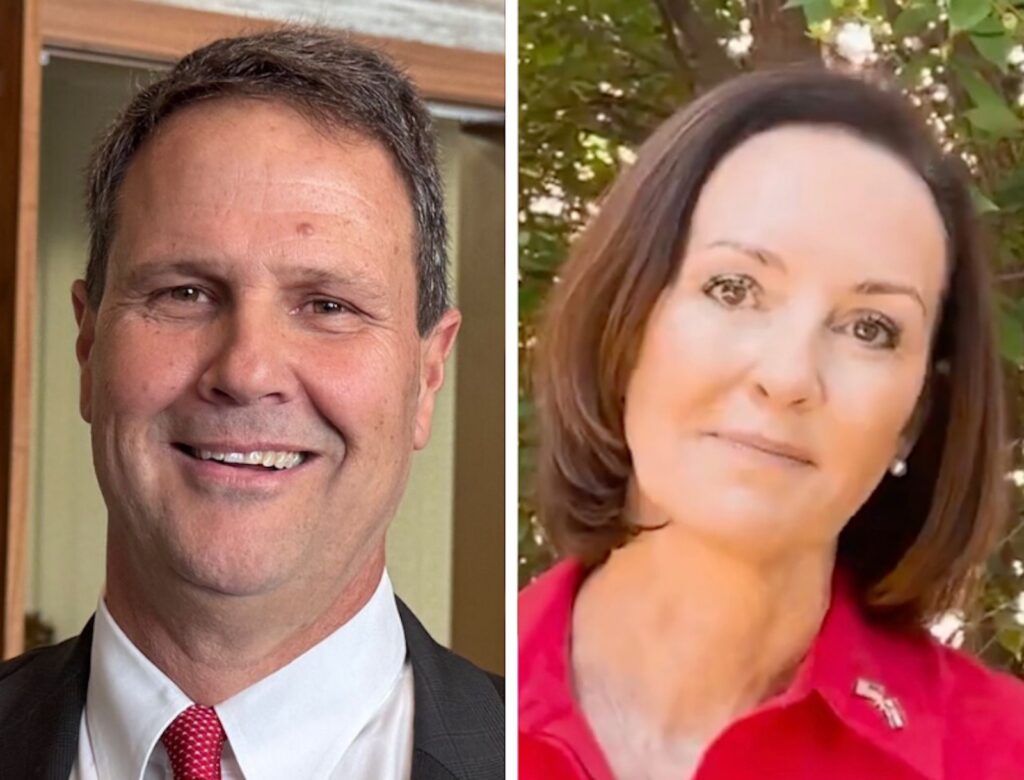
Democrat Jessica Killin’s internal poll shows dead heat with U.S. Rep. Jeff Crank in Colorado’s 5th CD
Ernest Luning
ernest.luning@coloradopolitics.com
Updated 7 hours ago
Jessica Killin, the Democratic nominee in Colorado’s 5th Congressional District, is in a statistical tie with Republican U.S. Rep. Jeff Crank, according to an internal poll released this week by Killin’s campaign. The poll of likely general election voters, conducted...

Colorado’s 72-hour social media warrant law takes effect Aug. 12
Marissa Ventrelli
marissa.ventrelli@coloradopolitics.com
Updated 17 hours ago
A law requiring social media platforms to respond to search warrants within 72 hours goes into effect on Aug. 12. Senate Bill 011 also requires platforms to create a staffed hotline for Colorado law enforcement agencies to contact regarding pending...
As education conflicts abound across Colorado, who puts the kids first? | Paula Noonan
Paula Noonan
paula-noonan@coloradopolitics.com
Updated 1 day ago
Elected school boards and the Colorado Department of Education (CDE) have hit the headlines with fired superintendents, superintendent resignations, failures of oversight, and misdirected dollars. Cherry Creek School District’s superintendent was fired. Jefferson County Schools’ superintendent found a less stressful...
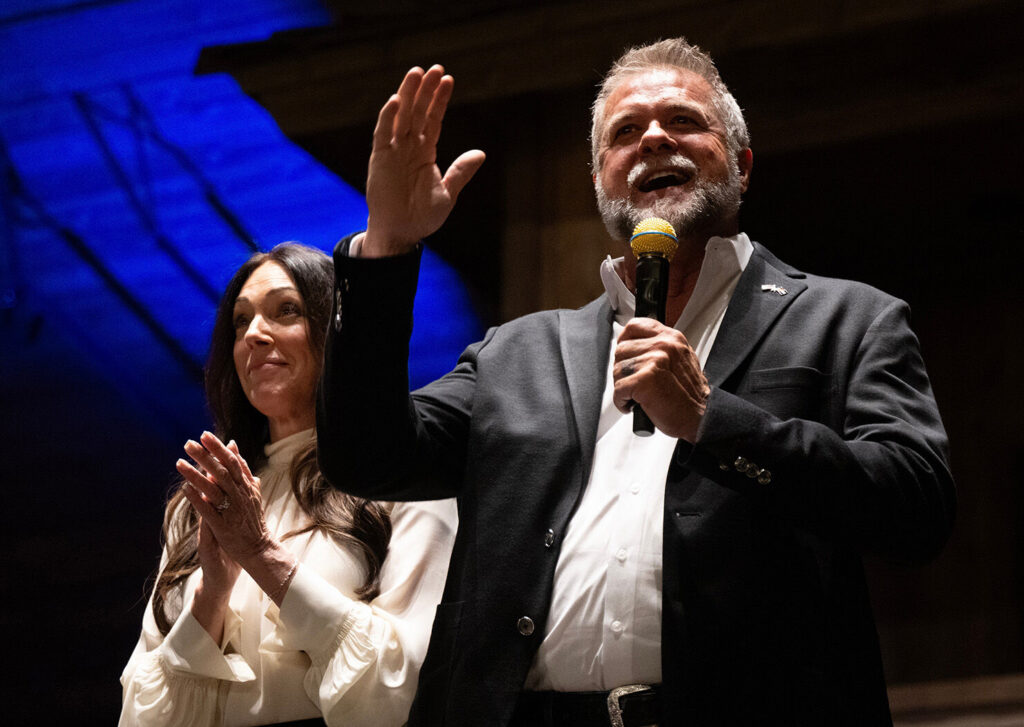
Victor Marx says he’ll only debate Phil Weiser once in Colorado governor’s race — without a moderator
Ernest Luning
ernest.luning@coloradopolitics.com
Updated 10 hours ago
Colorado Republican gubernatorial nominee Victor Marx said on Tuesday that he will participate in only one debate with Attorney General Phil Weiser before the November election — and he challenged the Democratic nominee to hold the event without a moderator....

Clock is ticking on Colorado’s new AI rules | PODIUM
Colorado Politics
colorado-politics@coloradopolitics.com
Updated 1 day ago
By Aashis Luitel On Jan. 1, organizations using covered automated systems must begin complying with Senate Bill 26-189, Colorado’s new Automated Decision-Making Technology Act. They can identify those systems and start building the processes the statute clearly requires. What they...
Atop taxes, here’s how much each Colorado resident pays in fees
Marissa Ventrelli
marissa.ventrelli@coloradopolitics.com
Updated 2 days ago
Each Colorado resident paid nearly $5,000 in state-sanctioned fees last year, according to a report by a policy think tank. The report, which analyzed how fees have affected Colorado’s economy, found that fee revenue has more than tripled since 2008...

Gov. Polis celebrates Colorado’s first-place education ranking by U.S. News
Marianne Goodland
marianne.goodland@coloradopolitics.com
Updated 1 day ago
Colorado officials said they have something to celebrate this week, in addition to the state’s sesquicentennial birthday on Saturday. U.S. News & World Report on Tuesday gave Colorado its top ranking for education efforts from pre-K to postsecondary, though it...
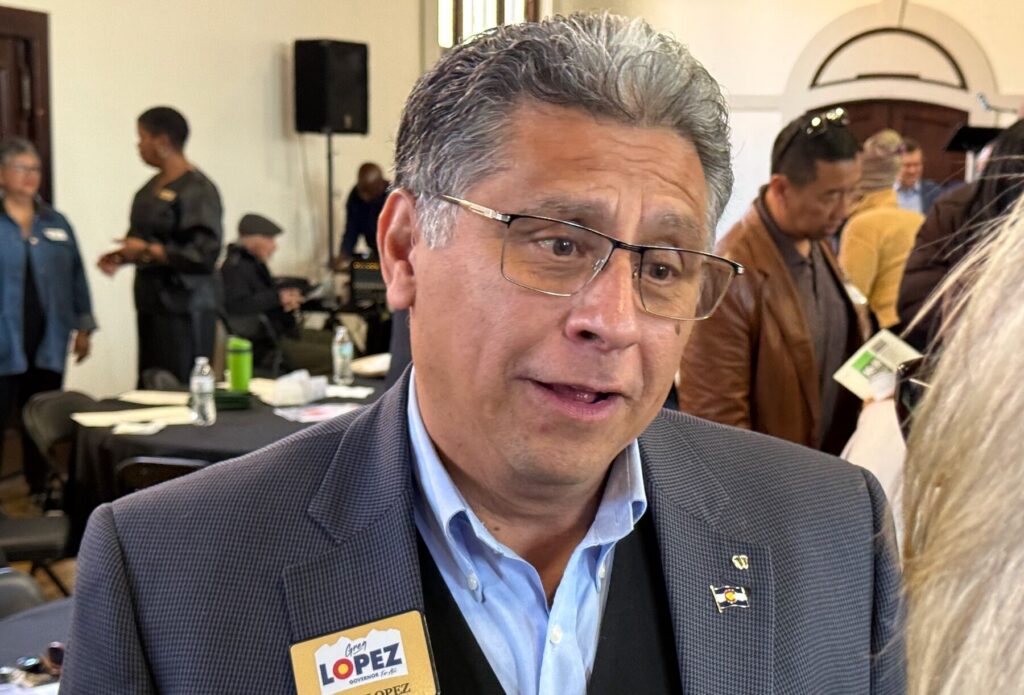
Independent gubernatorial candidate Greg Lopez, a former GOP congressman, qualifies for Colorado ballot
Ernest Luning
ernest.luning@coloradopolitics.com
Updated 2 days ago
Unaffiliated gubernatorial candidate Greg Lopez, a former Republican congressman from Elizabeth who left the GOP to run as an independent, has qualified for the ballot by submitting enough petition signatures, the Colorado Secretary of State’s Office said Tuesday. He’ll face...