

Colorado justices agree fraud claims belong in corporate dispute
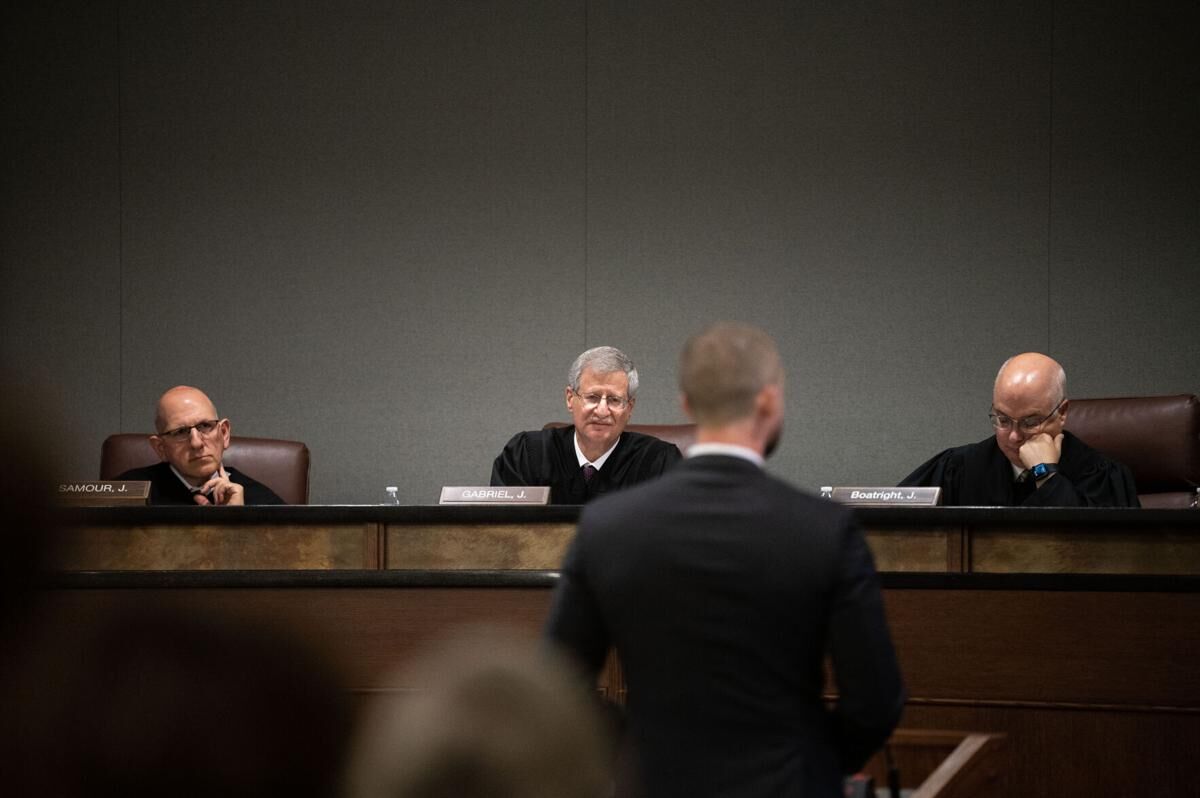
The Colorado Supreme Court decided on Tuesday that a corporate plaintiff validly pursued fraud claims over conduct that was not covered by a contract or by a set of interrelated business agreements leading up to the contract.
Previously, the Court of Appeals found that Veolia Water Technologies, Inc. had a duty, independent from any contract, to avoid misrepresenting or fraudulently concealing its ability to provide an agreed-upon wastewater project with a solid salt byproduct. Consequently, the court upheld a $215 million damages award to plaintiff Antero Resources Corp. based on Veolia’s fraud and its breach of contract.
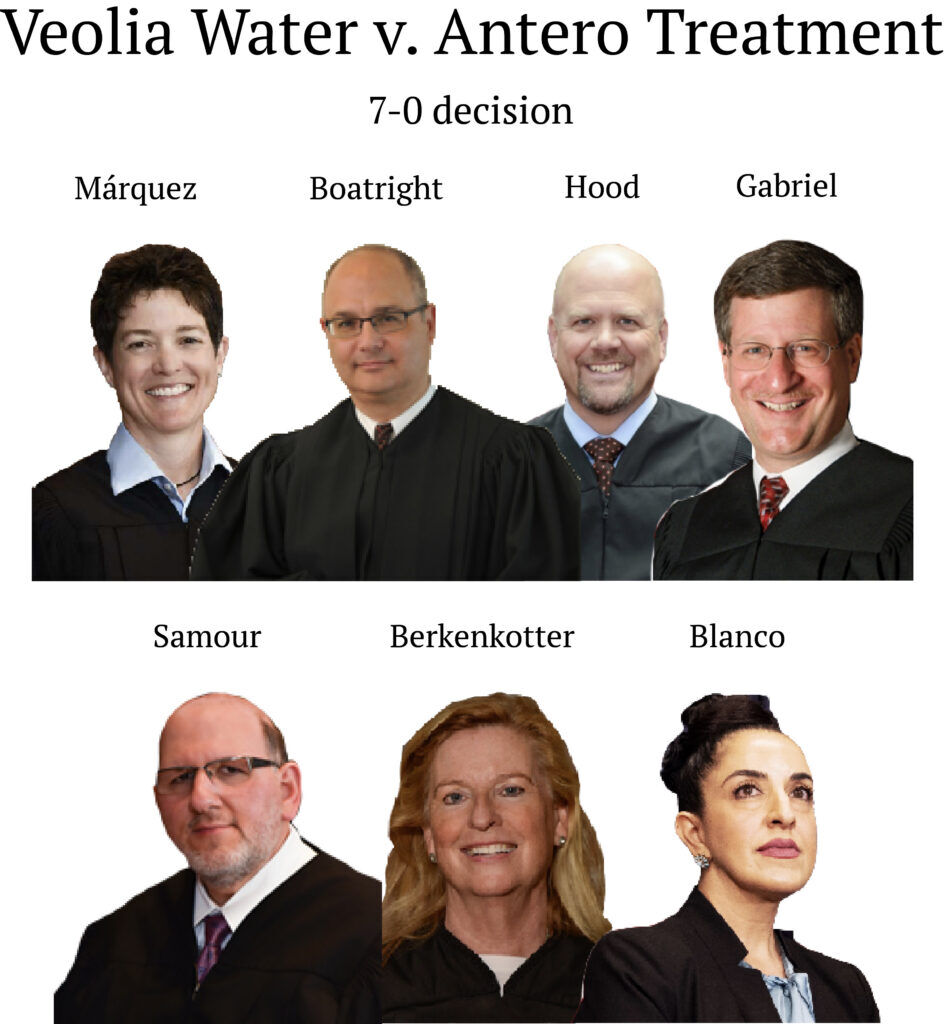
In a June 23 opinion, the Supreme Court concluded that Veolia’s misrepresentations about its capabilities induced Antero into entering the key, final contract, known as the design-build agreement.
“Specifically, Veolia failed to disclose its inability to meet Antero’s power consumption requirements prior to the execution of the DBA,” wrote Justice Richard L. Gabriel. “And as the trial court found, with ample record support, the power consumption guarantee was critical to Antero and without that guarantee, Antero would not have signed the DBA.”
Veolia entered into a contract to build a wastewater treatment facility for Antero’s hydraulic fracturing operations in West Virginia. The final product, however, fell short, and Antero canceled the contract after the treated water produced “soupy” salt rather than solid salt that could be placed in landfills.
After a three-week trial, Denver District Court Judge Marie Avery Moses found Veolia breached its contract and committed fraud. Antero received approximately $215 million in damages.
Among other things, Veolia raised the “economic loss rule,” which dictates that litigants who suffer financial losses from a breach of contract must stick to that claim and cannot sue on other grounds unless the law provides a basis for doing so.
Although there were various documents between the parties prior to the master design-build agreement, Moses did not believe they were a “network of interrelated contracts.” Therefore, she concluded Veolia’s fraudulent misrepresentations occurred before the execution of the design-build agreement, so the rule did not apply.
A three-judge Court of Appeals panel disagreed with her reasoning, concluding the various agreements were interrelated after all. However, the panel determined the rule did not block the fraud claims because Veolia’s misrepresentations pertained to things it had no discretion to alter.
Further, the contract “explicitly permitted additional damages in the event of fraud — an intentional decision bargained for by two sophisticated commercial parties that would be greatly undermined if all fraud claims were barred,” wrote Judge Terry Fox.
Veolia turned to the Supreme Court, arguing the fraudulent conduct was covered under the contract. Finding the economic loss rule did not apply would “undermine the certainty and predictability of Colorado contracts and risk turning every breach of contract case into a fraud case,” Veolia wrote.
During oral arguments, the justices seemed hesitant to agree with the Court of Appeals that all of the companies’ interactions before the design-build agreement amounted to a single contractual arrangement.
“Don’t we create an incentive for parties to intentionally defraud the opposition after the two initial, preliminary contracts have been entered into?” asked Justice Carlos A. Samour Jr. “These parties are in a contractual relationship, so there’s no more fraud in the inducement. So, at that point, your client has every incentive to defraud the other side intentionally. What do they have to lose?”
“I mean, you are talking about this as if it’s just a performance issue. The problem is, you knew you couldn’t perform, from the sound of the record, before you negotiated the contract, right?” added Justice Susan Blanco. “And so that’s the fraudulent inducement, which is really different than failure to perform.”
The Supreme Court ultimately agreed with Moses that there was no “network of interrelated contracts” that would require Veolia’s misrepresentations leading up to the design-build agreement to be litigated only as a breach of contract due to the parties’ exploratory agreements from the beginning.
“Such a rule would require contracting parties to bargain preemptively to allocate risks and costs for unknown future contracts. We have never extended the economic loss rule or the interrelated contracts doctrine that far, and we decline to do so now,” wrote Gabriel.
The case is Veolia Water Technologies, Inc. v. Antero Treatment LLC et al.


Colorado judge explores sanctions against DOJ, ICE for rearresting man 4 days after release on bond
Michael Karlik
michael.karlik@coloradopolitics.com
Updated 15 minutes ago
A federal judge in Colorado is considering sanctions against the government after immigration agents rearrested a man four days after an immigration judge found him suitable for release on bond. On July 28, U.S. Magistrate Judge N. Reid Neureiter ordered...

Divided disciplinary panel censures Montezuma County judge after agreement reached
Michael Karlik
michael.karlik@coloradopolitics.com
Updated 3 hours ago
A disciplinary panel formally imposed a public censure, suspension, and further training on Montezuma County Court Judge Ian J. MacLaren on Tuesday by a 2-1 vote. Under constitutional Amendment H, which voters adopted in November 2024, MacLaren was set to...

Colorado’s Western Slope magistrate judges describe unique role in federal judiciary
Michael Karlik
michael.karlik@coloradopolitics.com
Updated 17 hours ago
Two of Colorado’s federal judges stationed on the Western Slope spoke to lawyers on Wednesday about their unique roles, the ways their workloads differ, and the need for more criminal defense lawyers to take cases outside the Front Range. “Here...
Federal judge rules that request for bond hearing not necessary to challenge immigration detention
Michael Karlik
michael.karlik@coloradopolitics.com
Updated 17 hours ago
A federal judge in Colorado ruled last week that it is not mandatory for a person to seek a bond hearing with an immigration judge before they challenge the lawfulness of their detention in federal court. For the past year,...

Boulder Valley School District introduces new policies following antisemitism lawsuit
Marissa Ventrelli
marissa.ventrelli@coloradopolitics.com
Updated 19 hours ago
The chief of Boulder Valley School unveiled new policies for the 2026-2027 school year following a lawsuit filed on behalf of a student alleging antisemitic harassment. In June, the Anti-Defamation League filed a federal civil rights complaint against the school...

Colorado NRA chapter seeks injunction against new gun‑training requirement
Marissa Ventrelli
marissa.ventrelli@coloradopolitics.com
Updated 47 minutes ago
The Colorado chapter of the National Rifle Association is seeking an injunction to stop the state from enforcing a new law that took effect earlier this month. The new law requires anyone buying or selling certain firearms to first complete...
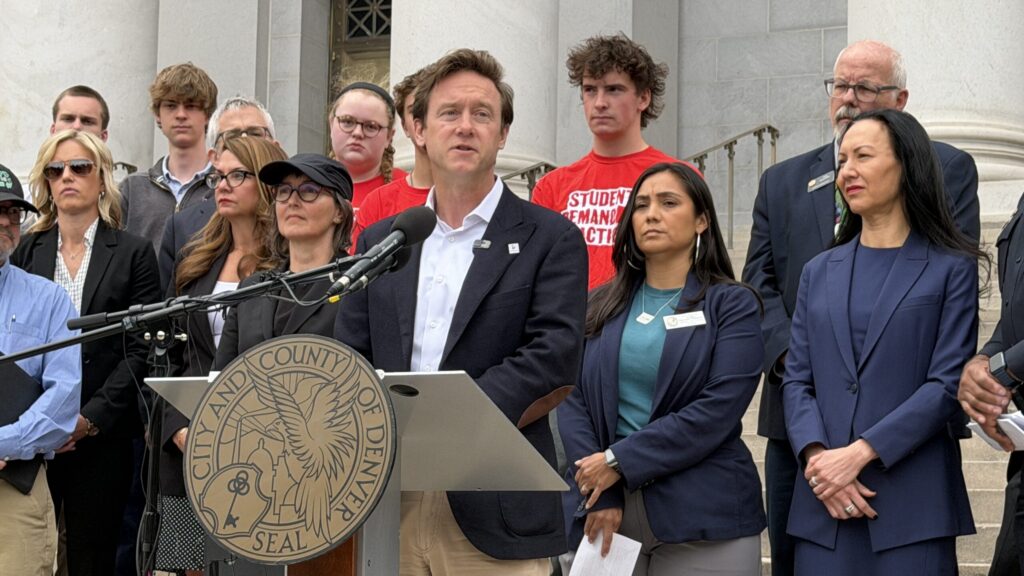
Denver moves to dismiss Trump challenge to ‘assault-style’ weapons ban
Deborah Grigsby
deborah.smith@denvergazette.com
Updated 18 hours ago
Denver has filed a motion to dismiss a lawsuit brought by the Trump administration challenging the city’s ban on “assault-style” weapons and magazines exceeding a 15-round capacity. The U.S. Department of Justice filed a suit in federal court in May,...
Federal judge dismisses ex-Colorado judicial discipline director’s conspiracy lawsuit
Michael Karlik
michael.karlik@coloradopolitics.com
Updated 2 days ago
A federal judge dismissed a lawsuit from Colorado’s former judicial discipline director on Tuesday, finding that he failed to adequately state claims for conspiracy or constitutional violations. Christopher S.P. Gregory, who served as the executive director of the Colorado Commission on Judicial...
Federal judge allows retaliation claims to proceed against prison officials
Michael Karlik
michael.karlik@coloradopolitics.com
Updated 18 hours ago
A federal judge agreed last week that a man incarcerated at Sterling Correctional Facility had credibly alleged that employees retaliated against him for filing grievances, including by taking away his disability accommodations and turning off his electricity. Louis Peoples Jr.,...

U.S. Rep. Lauren Boebert’s son arrested, faces charges of sexual exploitation of minor
Matt Kyle
matt.kyle@denvergazette.com
Updated 3 days ago
U.S. Rep. Lauren Boebert’s son Tyler Jay Boebert has been arrested and accused of recording and sharing a video depicting himself having intercourse with a minor, according to court records. The case originated in Garfield County in Western Colorado and...
PREV
PREVIOUS

Colorado Supreme Court says intimate messages irrelevant to assault case
The Colorado Supreme Court decided on June 23 that a Douglas County judge acted reasonably by blocking evidence of a defendant’s BDSM-related conversations with the victim in his trial for assault and false imprisonment. While the Court of Appeals believed that the communications between Donald Louis Gerle and the victim were relevant to proving whether […]

Court snuffs out challenge to Denver’s flavored tobacco ban
The smoke finally cleared in Denver’s battle over a citywide ban on flavored tobacco products when a Denver court dismissed a challenge from local vape shop owners seeking to declare the ordinance unconstitutional and block its enforcement. On Wednesday, Denver District Court Judge Erica F.H. Englert dismissed a lawsuit filed by the Rocky Mountain Smoke-Free […]