

Colorado Supreme Court says intimate messages irrelevant to assault case
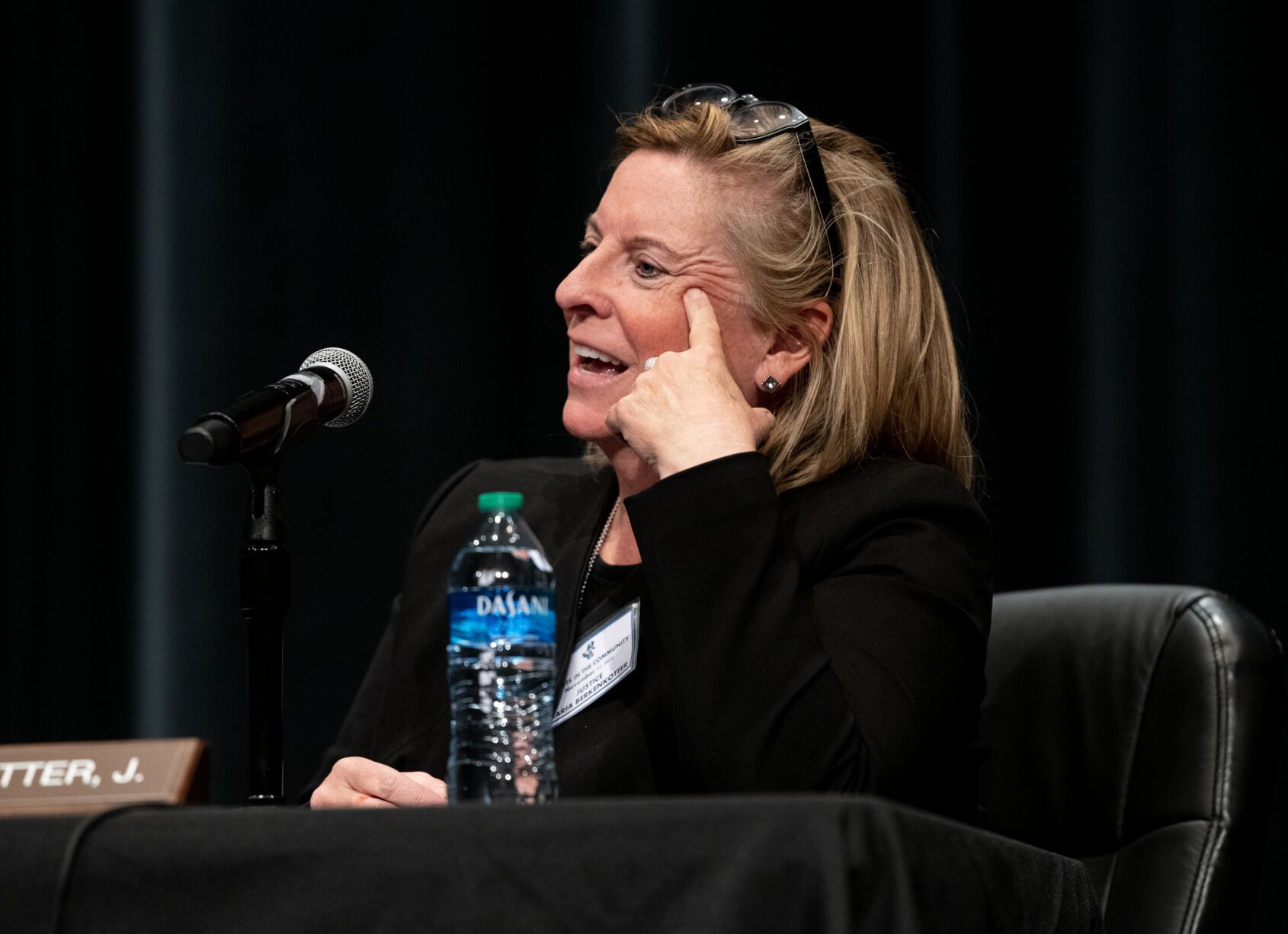
The Colorado Supreme Court decided on June 23 that a Douglas County judge acted reasonably by blocking evidence of a defendant’s BDSM-related conversations with the victim in his trial for assault and false imprisonment.
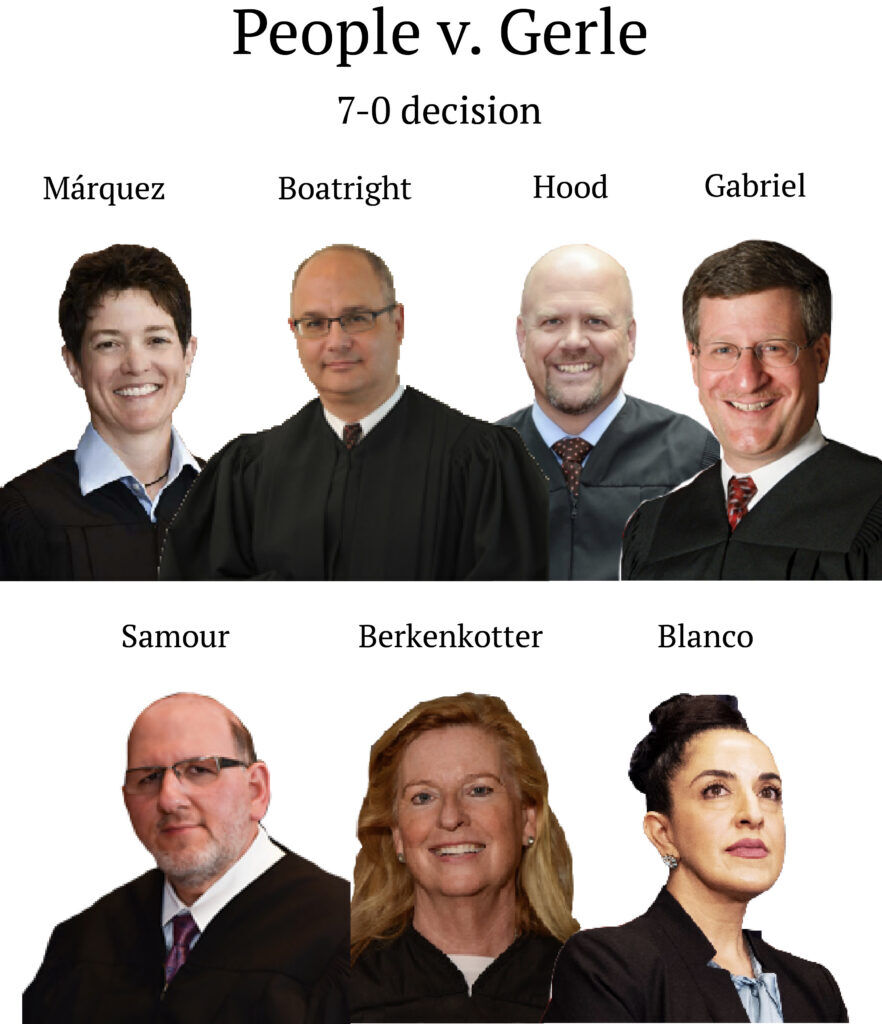
While the Court of Appeals believed that the communications between Donald Louis Gerle and the victim were relevant to proving whether he intended to inflict injuries or simply carry out the talked-about sexual encounter, the Supreme Court concluded that the discussion of BDSM bore little resemblance to the assault days later.
“Here, context matters,” wrote Justice Maria E. Berkenkotter in the June 23 opinion. “To the extent that the text messages revealed a plan for a sexual encounter, the encounter described was imminent, not something planned to begin days later.”
In the prosecution’s telling, Gerle began beating his alleged victim following an argument, confined her in a closet for over two days, forced her to use drugs, and continued to assault her. There was no dispute that the victim suffered serious injuries as a result.
However, Gerle sought to show he lacked intent to commit the crime because he and the victim had extensively talked about bondage activity in the prior days. Therefore, while Gerle may have injured the victim recklessly, he did not do so intentionally.
Gerle’s attorney told jurors during opening statements that Gerle and the victim lived “a different lifestyle” involving drug use and “ongoing and regular sexual fantasy role-playing.” The prosecution objected, citing the rape shield law — a framework that generally prohibits explorations of a victim’s sexual history at trial. Then-District Court Judge Patricia Herron agreed the rape shield law applied and told the jury to disregard the defense’s comments.
Later, Herron ruled the defense could ask the victim about her BDSM-related communications with Gerle, but only those connected to the dates of the alleged offenses. Gerle could not question the victim about prior consensual physical encounters and would be “stuck with” her answers.
In appealing his convictions, Gerle argued Herron had effectively torpedoed his ability to defend himself on the grounds that the planned BDSM encounter illustrated he did not have the required criminal intent for injuring and imprisoning the victim.
A three-judge Court of Appeals panel agreed with him, finding the rape shield law did not apply and the communications were relevant.
“Thus, evidence that the couple had previously participated in BDSM role-playing encounters and had just planned another such encounter makes it more probable that the victim consented to at least some of the conduct and makes it less likely that Gerle had the requisite intent,” wrote Judge Christina F. Gomez.
At the Supreme Court, no one disputed that Herron incorrectly applied the rape shield law. But the government maintained that the extent of the victim’s injuries could not support the defense’s claim of reckless behavior.
“This victim was covered from head to toe, plate-sized bruising all over her torso, behind her ears, the tops of her feet, two black eyes, busted lip. In addition to that, she had been complaining that she was losing consciousness, that she couldn’t breathe,” said Assistant Attorney General Jaycey DeHoyos during oral arguments.
Berkenkotter, in the court’s opinion, wrote that the evidence did not show a BDSM-like encounter between Gerle and the victim at the time of the assault. Therefore, their prior communications were irrelevant to proving Gerle’s intent.
“Most significantly, the texts, unlike the charged conduct, are overtly sexual in nature,” she wrote. “Nothing suggests that this conduct, which began on Thursday and escalated on Friday and Saturday and into the early morning hours on Sunday, had anything to do with sex.”
The case is People v. Gerle.


Divided disciplinary panel censures Montezuma County judge after agreement reached
Michael Karlik
michael.karlik@coloradopolitics.com
Updated 1 hour ago
A disciplinary panel formally imposed a public censure, suspension, and further training on Montezuma County Court Judge Ian J. MacLaren on Tuesday by a 2-1 vote. Under constitutional Amendment H, which voters adopted in November 2024, MacLaren was set to...
Colorado’s Western Slope magistrate judges describe unique role in federal judiciary
Michael Karlik
michael.karlik@coloradopolitics.com
Updated 16 hours ago
Two of Colorado’s federal judges stationed on the Western Slope spoke to lawyers on Wednesday about their unique roles, the ways their workloads differ, and the need for more criminal defense lawyers to take cases outside the Front Range. “Here...

Federal judge rules that request for bond hearing not necessary to challenge immigration detention
Michael Karlik
michael.karlik@coloradopolitics.com
Updated 16 hours ago
A federal judge in Colorado ruled last week that it is not mandatory for a person to seek a bond hearing with an immigration judge before they challenge the lawfulness of their detention in federal court. For the past year,...

Boulder Valley School District introduces new policies following antisemitism lawsuit
Marissa Ventrelli
marissa.ventrelli@coloradopolitics.com
Updated 18 hours ago
The chief of Boulder Valley School unveiled new policies for the 2026-2027 school year following a lawsuit filed on behalf of a student alleging antisemitic harassment. In June, the Anti-Defamation League filed a federal civil rights complaint against the school...

Colorado NRA chapter seeks injunction against new gun‑training requirement
Marissa Ventrelli
marissa.ventrelli@coloradopolitics.com
Updated 17 hours ago
The Colorado chapter of the National Rifle Association is seeking an injunction to stop the state from enforcing a new law that took effect earlier this month. The new law requires anyone buying or selling certain firearms to first complete...

Denver moves to dismiss Trump challenge to ‘assault-style’ weapons ban
Deborah Grigsby
deborah.smith@denvergazette.com
Updated 17 hours ago
Denver has filed a motion to dismiss a lawsuit brought by the Trump administration challenging the city’s ban on “assault-style” weapons and magazines exceeding a 15-round capacity. The U.S. Department of Justice filed a suit in federal court in May,...
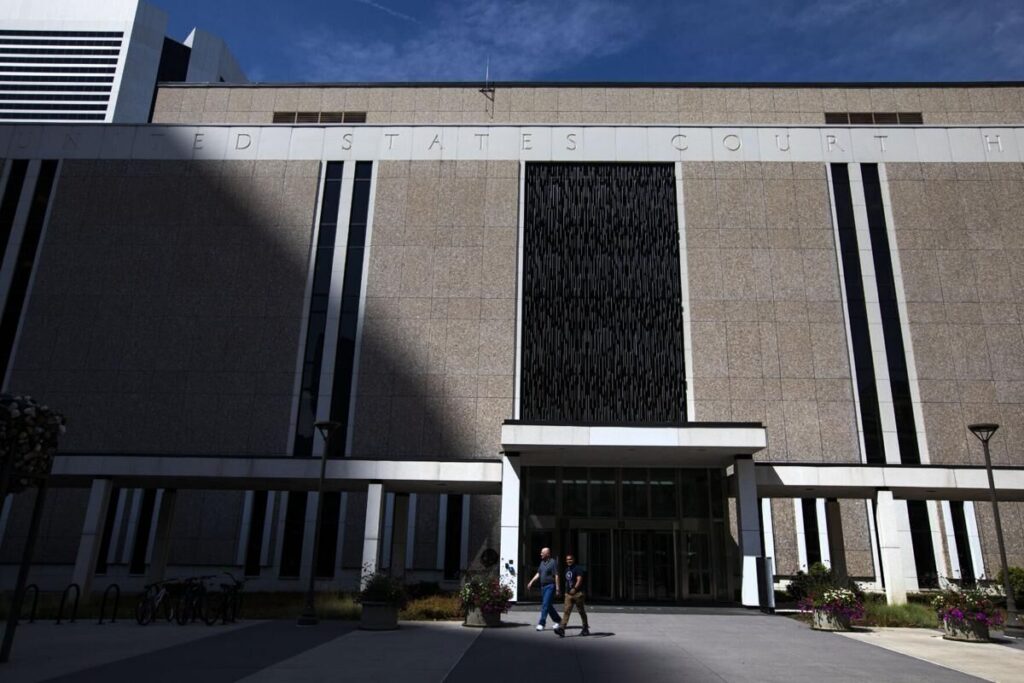
Federal judge dismisses ex-Colorado judicial discipline director’s conspiracy lawsuit
Michael Karlik
michael.karlik@coloradopolitics.com
Updated 2 days ago
A federal judge dismissed a lawsuit from Colorado’s former judicial discipline director on Tuesday, finding that he failed to adequately state claims for conspiracy or constitutional violations. Christopher S.P. Gregory, who served as the executive director of the Colorado Commission on Judicial...
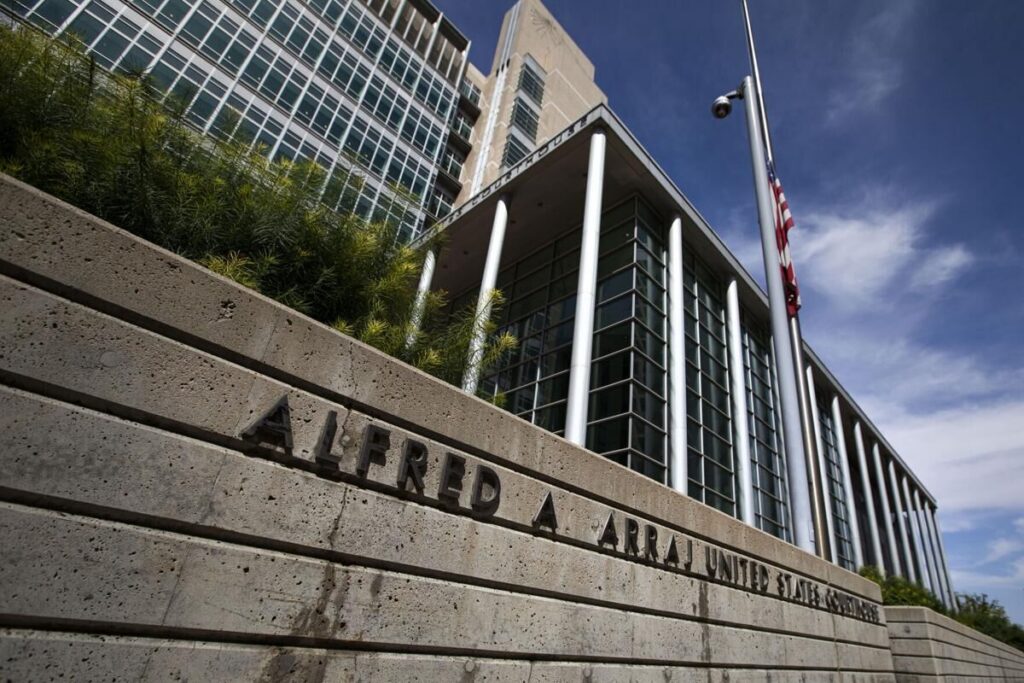
Federal judge allows retaliation claims to proceed against prison officials
Michael Karlik
michael.karlik@coloradopolitics.com
Updated 17 hours ago
A federal judge agreed last week that a man incarcerated at Sterling Correctional Facility had credibly alleged that employees retaliated against him for filing grievances, including by taking away his disability accommodations and turning off his electricity. Louis Peoples Jr.,...

U.S. Rep. Lauren Boebert’s son arrested, faces charges of sexual exploitation of minor
Matt Kyle
matt.kyle@denvergazette.com
Updated 3 days ago
U.S. Rep. Lauren Boebert’s son Tyler Jay Boebert has been arrested and accused of recording and sharing a video depicting himself having intercourse with a minor, according to court records. The case originated in Garfield County in Western Colorado and...

Adams County water district may proceed with cost-recovery lawsuit against Denver for contamination
Michael Karlik
michael.karlik@coloradopolitics.com
Updated 2 days ago
A federal judge rejected Denver’s arguments last week for pausing or dismissing a lawsuit brought by an Adams County special district seeking to recover its costs for addressing water contamination as a result of Denver firefighting activities. In January, the...
PREV
PREVIOUS
Air Force Academy Band to celebrate U.S., Colorado anniversaries in Colorado Springs
The birthday candles are stocked. Just in time for America to belly up to its 250th anniversary, and Colorado to its 150th. Amid the array of celebrations is a performance by a group from a little military institution you might have heard of — the U.S. Air Force Academy. The AFA Concert Band and its […]

Colorado justices agree fraud claims belong in corporate dispute
The Colorado Supreme Court decided on Tuesday that a corporate plaintiff validly pursued fraud claims over conduct that was not covered by a contract or by a set of interrelated business agreements leading up to the contract. Previously, the Court of Appeals found that Veolia Water Technologies, Inc. had a duty, independent from any contract, […]