

Colorado justices discuss solution to confusion from prior criminal ruling
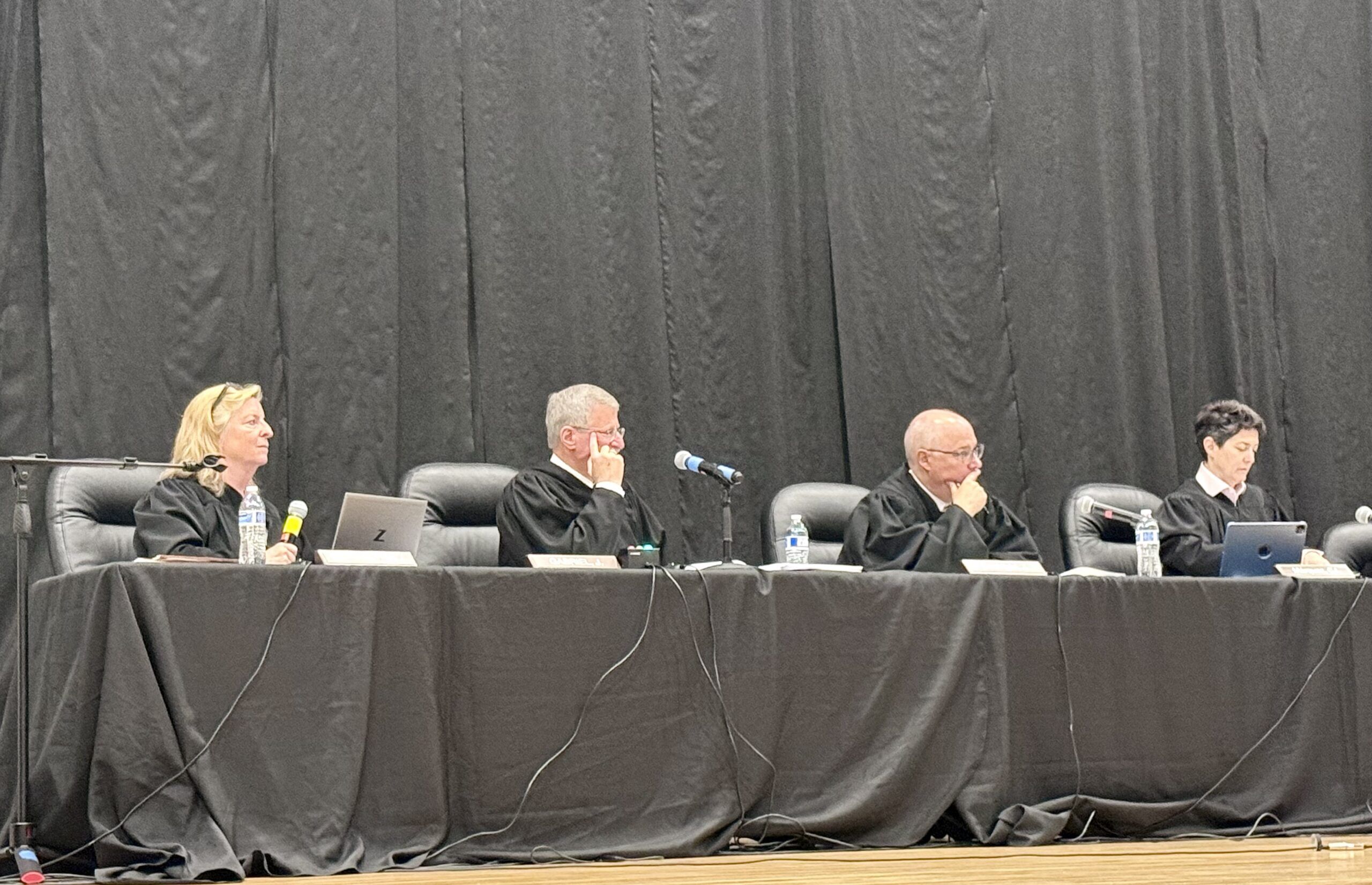
The Colorado Supreme Court pondered the fallout on Tuesday from its nearly six-year-old decision interpreting the state’s impaired driving laws, with the justices now addressing how defendants affected by the legal change must seek postconviction relief.
In contrast to other criminal appeals, there was no dispute that defendant Charles Crabtree could file a motion in the trial court seeking relief from his felony DUI conviction. Two years ago, the Supreme Court explicitly directed him down that path. However, it was unclear what process he should follow to do so, given the strict requirements and pitfalls of postconviction relief.
The sequence of events that brought Crabtree back to the Supreme Court began in November 2020. The Supreme Court interpreted Colorado’s felony DUI law to mean that a person’s prior convictions were no longer something that had to be proven to a judge alone. Rather, a jury needed to find beyond a reasonable doubt that the priors existed for a repeat offender to receive a felony conviction.
The change in legal interpretation resulted in scores of felony DUI sentences being overturned. However, in June 2024, the Supreme Court’s majority halted those automatic reversals. It concluded in Crabtree’s case that for situations where the defendant did not object at trial to having a judge weigh their prior convictions — but the law had changed by the time of appeal — the solution was not to give the benefit of the doubt to the defendant in the appeal itself.
Instead, the court advised Crabtree to take advantage of a procedural rule allowing people whose appeals are not yet final to file motions for postconviction relief when there is a “significant change in the law.”
After the Supreme Court decided Crabtree’s appeal, but before its decision became final, Crabtree attempted to do what the Supreme Court said he should do. He petitioned a Boulder County judge for postconviction relief on his felony DUI. But the judge denied his motion because the case still remained with the Supreme Court.
Worried that Crabtree could neither file a second motion later nor appeal the judge’s original order if he waited, Crabtree’s attorneys asked the Court of Appeals to review the denial. Yet another snag: The appeals court was unsure what to do with the case and ultimately dismissed the appeal.
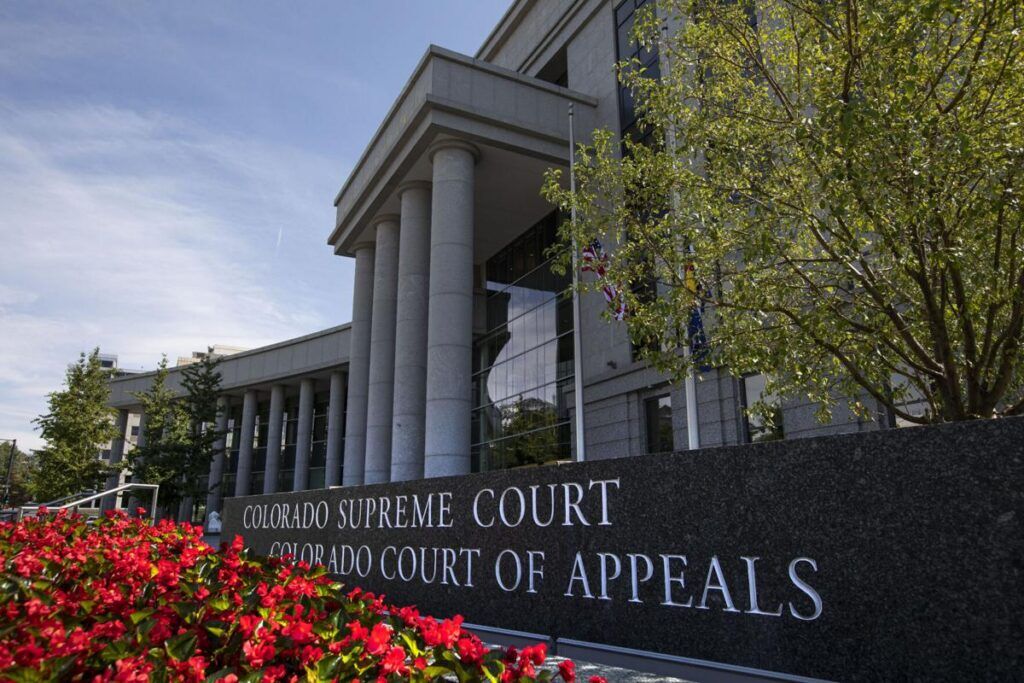
Crabtree returned to the Supreme Court once more for the justices to sort out the problem their prior decision had created.
“This court made clear that when a defendant timely invokes (the rule for postconviction relief), our courts ensure a procedure and mechanism that will preserve the claims and reach a merits ruling,” said attorney Britta Kruse during oral arguments, adding that such a decision should either happen while the appeal remains active or after an appellate decision becomes final.
“The Court of Appeals did neither of those things in this case to ensure that Mr. Crabtree could receive an authorized merits ruling,” she said.
The government advocated for allowing trial judges to address a postconviction motion after an appellate decision becomes final or the Court of Appeals gives the go-ahead to rule. Kruse took no issue with that approach, so long as the Supreme Court agreed the rules permit it to happen.
“I would, nine times out of 10, prefer a bright-line rule,” she said. “We want certainty.”
The justices questioned the viability of the various options, including the possibility that two levels of the judiciary might have authority over the case at different times.
“If you have both courts operating at the same time and the Court of Appeals is not required to do a (pause), it feels a little silly to have two courts racing for who’s going to decide the issue first,” said Justice Richard L. Gabriel.
Chief Justice Monica M. Márquez asked Kruse whether her preferred approach — letting trial judges rule on postconviction motions while the appeal remains active — would eliminate the concern that the Court of Appeals might decline to return the case to the trial court to address the postconviction motion.
In that instance, “relief becomes illusory,” said Márquez.
Correct, responded Kruse, and allowing trial judges to address a defendant’s motion automatically is “faithful to the text of the rule.”
The case is Crabtree v. People.


Judicial performance evaluations released, Montezuma County judge disciplined | COURT CRAWL
Michael Karlik
michael.karlik@coloradopolitics.com
Updated 14 hours ago
Welcome to Court Crawl, Colorado Politics’ roundup of news from the third branch of government. Colorado’s citizen-led judicial performance commissions released their voter narratives for the judges standing for retention in November, plus a disciplinary panel imposed consequences on a...
Federal judge holds off on dismissing formerly bankrupt medical contractor from Jeffco jail death lawsuit
Michael Karlik
michael.karlik@coloradopolitics.com
Updated 16 hours ago
A federal judge declined on Monday to dismiss the formerly bankrupt medical contractor from a lawsuit over a detainee’s death in Jefferson County jail, but indicated she would do so if the plaintiffs’ attorneys go through the process to ensure...
Federal judge green-lights excessive force, retaliation claims for trial against Fort Collins officers
Michael Karlik
michael.karlik@coloradopolitics.com
Updated 2 days ago
A federal judge green-lit a jury trial last week against multiple Fort Collins police officers on claims that they used excessive force on one man who was standing unarmed in his underwear, and retaliated against another man for exercising his...

10th Circuit revives wage violation lawsuit against Papa John’s operator
Michael Karlik
michael.karlik@coloradopolitics.com
Updated 3 days ago
The Denver-based federal appeals court on Tuesday reinstated a former Papa John’s delivery driver’s lawsuit alleging violations of federal and state wage law. Steve Mighell worked for one month at a Denver Papa John’s location in summer 2023. He alleged...
Colorado appeals judge’s delays in releasing opinions noted by performance commission
Michael Karlik
michael.karlik@coloradopolitics.com
Updated 3 days ago
The citizen-led performance commission that provides guidance to voters about whether to retain members of Colorado’s second-highest court raised concerns by judges and attorneys that Judge Elizabeth L. Harris sometimes struggles with releasing opinions promptly. Harris, who joined the Court...

Colorado judge explores sanctions against DOJ, ICE for rearresting man 4 days after release on bond
Michael Karlik
michael.karlik@coloradopolitics.com
Updated 4 days ago
A federal judge in Colorado is considering sanctions against the government after immigration agents rearrested a man four days after an immigration judge found him suitable for release on bond. On July 28, U.S. Magistrate Judge N. Reid Neureiter ordered...
Divided disciplinary panel censures Montezuma County judge after agreement reached
Michael Karlik
michael.karlik@coloradopolitics.com
Updated 4 days ago
A disciplinary panel formally imposed a public censure, suspension, and further training on Montezuma County Court Judge Ian J. MacLaren on Tuesday by a 2-1 vote. Under constitutional Amendment H, which voters adopted in November 2024, MacLaren was set to...
Colorado’s Western Slope magistrate judges describe unique role in federal judiciary
Michael Karlik
michael.karlik@coloradopolitics.com
Updated 5 days ago
Two of Colorado’s federal judges stationed on the Western Slope spoke to lawyers on Wednesday about their unique roles, the ways their workloads differ, and the need for more criminal defense lawyers to take cases outside the Front Range. “Here...

Denver sues Philip Morris, other tobacco companies over cigarette butt litter
Deborah Grigsby
deborah.smith@denvergazette.com
Updated 4 days ago
Denver is demanding that some of the biggest tobacco companies in the world pay for the cleanup of discarded cigarette butts on its streets, following a similar campaign that cities in other states have pursued. Denver’s lawsuit, filed this week...
Federal judge rules that request for bond hearing not necessary to challenge immigration detention
Michael Karlik
michael.karlik@coloradopolitics.com
Updated 4 days ago
A federal judge in Colorado ruled last week that it is not mandatory for a person to seek a bond hearing with an immigration judge before they challenge the lawfulness of their detention in federal court. For the past year,...
PREV
PREVIOUS

Colorado participates in Great American State Fair in Washington
Visitors to Washington, D.C. for the country’s 250th anniversary will have the opportunity to learn about Colorado’s natural beauty and culture during the Great American State Fair, a World’s Fair-style event that opened last week at the National Mall. While all 56 U.S. states and territories will be represented in the fair, at least seven […]

Tina Peters tells supporters to 'stand up and fight back' at Castle Rock event
Tina Peters, the former Mesa County clerk recently released from prison, warned supporters that what happened to her could happen to them, too, if they did not “stand up and fight back” at an event at the Douglas County Fairgrounds. Peters was one of several speakers at “Freedom Fest,” a two-day event featuring Republican politicians, […]