Ain’t Polis’ Peters commutation a pity? | Hal Bidlack

I am hoping that, yet again, my long-suffering and very forgiving editor will pardon my rambling thoughts today, as there are too many open tabs on my computer that deal with issues I want to talk about (Ed: pretty used to this, so OK).
Like a lot of journalists and columnists, I am on the email blast list for several organizations, including the governor’s office. As my regular reader (Hi, Jeff!) will recall, I continue to be of two minds regarding Gov. Jared Polis. Personally, I really like the guy. He was a very nice fellow when we campaigned for Congress together in 2008, and my brief interactions with him since then have always been lovely.
But I just can’t get past the whole Tina Peters thing. As a moderate, an increasingly endangered point of view these days, I’m pretty much in support of Polis on many things. But I’m genuinely outraged at the Peters commutation.
On the plus side, a recent press blast from his office expressed his outrage at yet another anti-environment/anti-Colorado action by the Trump administration. In this case, it was Trump’s cancellation (for no obvious reason) of a critical connector grid for electricity here in the west. One of the marvelous things about good old electricity is it can flow from places where it is generated to places it is needed with relative ease. Well, that’s true assuming there is an adequate infrastructure of wires and transformers and such. The proposed Southwestern Grid Connector Corridor would have greatly improved said infrastructure for Colorado, New Mexico and Oklahoma. But, as I mentioned, the Department of Energy, just days after announcing the need for such infrastructure investments, canceled the program out of the blue.
I’m not surprised by this president anymore, and I’m not shocked at the cancellation, though I would have thought ruby-red Oklahoma would have been protected. But, as he isn’t running again (no, he isn’t. The 22nd Amendment exists), I guess he no longer worries about ticking off his base (cough … Iran … cough). And Polis’ statement of outrage properly captures the importance of this reversal of policy.
But, dear readers, I just can’t seem to get past Tina Peters.
I know Polis is a very smart fellow, so I don’t imagine he was fooled by the fake contrition shown by Peters as she sought a commutation of her sentence in prison for trying to subvert an election — frankly, just about the most un-American thing one could do — and I can’t imagine Polis is surprised by her current re-radicalization as a vile and outrageous mouthpiece for the long-discredited view the 2020 election was stolen. It’s funny how Republicans who won that year haven’t demanded their own election results be overturned, but that’s for another column.
So, anyway, though in my heart I really want to support our governor and though one event shouldn’t undo the great work he has otherwise done, for me, it kind of does.
And that’s a pity. Candidly, the Peters clemency has left me high and dry regarding my thoughts about our governor.
And speaking of high and dry, let’s talk a bit about Lake Mead (did you see that transition? Pretty witty, eh?)
(Ed: not so much).
As reported in Colorado Politics, Lake Mead has seen the water level there dropping consistently. Recently, it was announced by the U.S. Bureau of Reclamation the lake is now at the lowest level since it was filled roughly 90 years ago, about 1,040 feet above sea level.
This matters for several reasons. Most directly and immediately, if the level of the water drops below a certain point, there will not be enough water falling onto the turbines in Hoover Dam to generate the electricity dozens of cities and others use. When full, or at least near full, the dam can generate 2,080 megawatts of power. Now, however, that output is closer to 1,300 megawatts. Even more worrisome, should the water level drop to 950 feet, the dam loses the ability to generate electricity at all. Even a drop to 1,035, just five feet below the current level, will result in a roughly 70% drop in electrical output, as 12 of the dam’s 17 turbines cannot operate below that level. Boy, an electrical grid connector system would be a good idea, right?
The potential loss of electricity alone should be enough to ensure an emergency response, but of course, the water itself is increasingly important as it becomes more scarce. Under the Colorado River Compact, more than 20 million people rely on water from Lake Mead for farming and drinking water in the southwest United States.
Honestly, we in the area need to start rethinking our own view of water use. I remember a drought a few years ago, when it was argued a brown lawn was a patriotic lawn. But though that is true, the truly massive users of Lake Mead water are largely agricultural. You know, the folks who grow our food. So, there is clearly no easy answer to water-use issues, even as the level of Lake Mead (and other reservoirs) declines to dangerous levels.
Maybe it is time to seriously think about a national water grid?
And one last open tab, the good people of Wyoming (where I was once a resident) gave pollsters a rather big surprise recently. It seems more than 90% of Wyoming voters in that deep-red state oppose the selling of federally managed public lands, and further, would be less likely to vote for any candidate who favors such land sales. That’s a rather startling result, at least to me. Only 6% of the people there support selling off the public lands — a remarkable and very encouraging result.
Well, that covers a few of my open tabs. Maybe if no other news pops up, I’ll be able to catch up.
Wait, what’s that about the U.S.S. Lincoln …?
Hal Bidlack is a retired professor of political science and a retired Air Force lieutenant colonel who taught more than 17 years at the U.S. Air Force Academy in Colorado Springs.

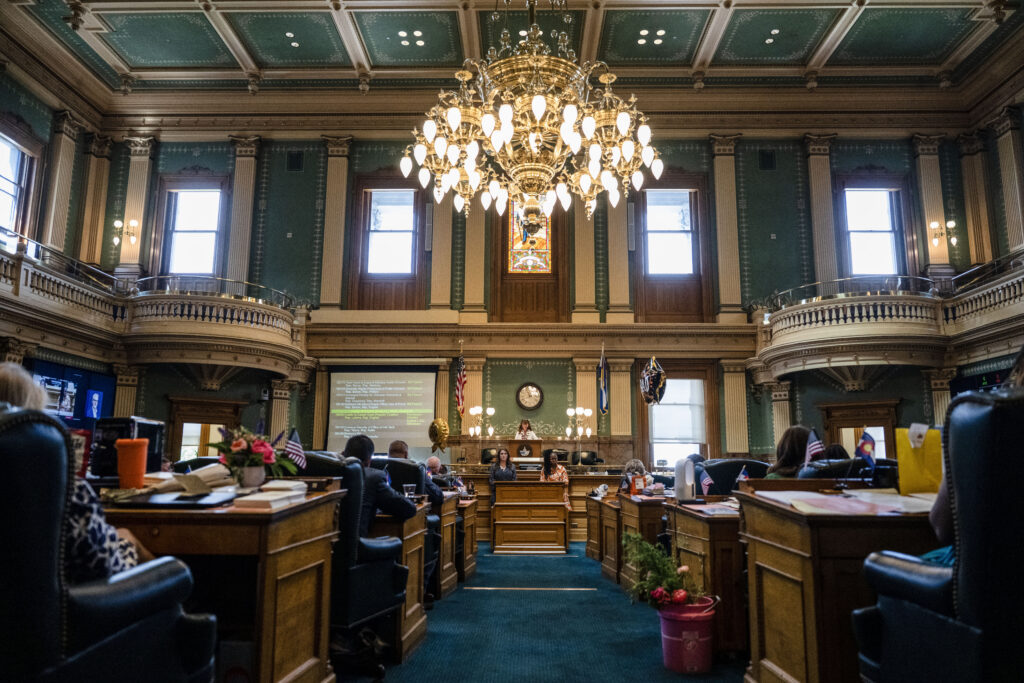
Colorado House Democrats’ caucus finances under scrutiny as ethics case against leader advances
Marianne Goodland
marianne.goodland@coloradopolitics.com
Updated 8 hours ago
Democratic lawmakers told a legislative ethics panel that a leader’s management of caucus finances left them with unanswered questions, disputed reimbursements and a breakdown in communication that ultimately triggered a formal complaint. The House Ethics Committee is examining a complaint...

Colorado River crisis: Lake Mead, Lake Powell inch closer to ‘dead pool’
Marianne Goodland
marianne.goodland@coloradopolitics.com
Updated 8 hours ago
In the past 10 days, both Lake Mead on the Arizona-Nevada border and Lake Powell roughly 300 miles northeast on the Utah-Arizona line have recorded their lowest water levels since the reservoirs were first filled. Lake Mead, the nation’s largest...

Colorado lieutenant governor candidate Markert says early discipline and key mentors set his course
Marianne Goodland
marianne.goodland@coloradopolitics.com
Updated 15 hours ago
Editor’s note: This is the first installment in a three-part series examining Colorado’s candidates for lieutenant governor. In this piece, Colorado Politics speaks with George Markert, the Republican running mate to gubernatorial candidate Victor Marx. Marx is competing against Democrat...

Colorado, like America, past due for generational change in politics | Miller Hudson
Miller Hudson
miller-hudson@coloradopolitics.com
Updated 1 day ago
I was 27 before I ever voted for president. At 19, in 1964, the Constitution had not yet been amended establishing 18-year-old voting eligibility. In 1968, I was serving overseas with the U.S. Navy at a time when there was...

Farmers and ranchers win on NIETC cancellation | Rachel Gabel
Rachel Gabel
rachel-gabel@coloradopolitics.com
Updated 1 day ago
The Department of Energy rolled into Lamar last week and Office of Electricity Assistant Secretary Katie Jereza stood in her neat, green suit in front of a room filled with farmers, ranchers and landowners. The crowd was filled with straw...

Going after the wrong butts | Jon Caldara
Jon Caldara
jon-caldara@coloradopolitics.com
Updated 4 days ago
Mayor Mike Johnston proclaimed, “It is past time Big Tobacco cleaned up the big mess it’s created.” Yep. Denver is suing tobacco companies for the cigarette butts littering the city. Because Denver’s Big Mess couldn’t possibly be the fault of...

Jeff Crank, Jessica Killin set to face off in 2 debates in Colorado’s 5th Congressional District
Ernest Luning
ernest.luning@coloradopolitics.com
Updated 3 days ago
Republican U.S. Rep. Jeff Crank and Jessica Killin, his Democratic challenger, have agreed to debate twice in the weeks leading up to the general election in Colorado’s 5th Congressional District, their campaigns have said. Crank is seeking a second term...

CSI study reviews impacts of Colorado’s mandatory sex‑trafficking sentencing measure
Marissa Ventrelli
marissa.ventrelli@coloradopolitics.com
Updated 8 hours ago
A new report by the think-tank Common Sense Institute examines what could happen if Colorado voters approve Initiative No. 108, which establishes mandatory life sentences for offenders convicted of sexual trafficking of a minor. The measure is backed by Protect...
Three districts that will answer key Colorado political questions | Paula Noonan
Paula Noonan
paula-noonan@coloradopolitics.com
Updated 5 days ago
Colorado’s legislature used to be a place where neither party was dominant. Dozens of seats were competitive and House and Senate majorities switched regularly. From 2010 to 2020, the House was predominantly Democratic with one two-year assembly under Republicans. The...
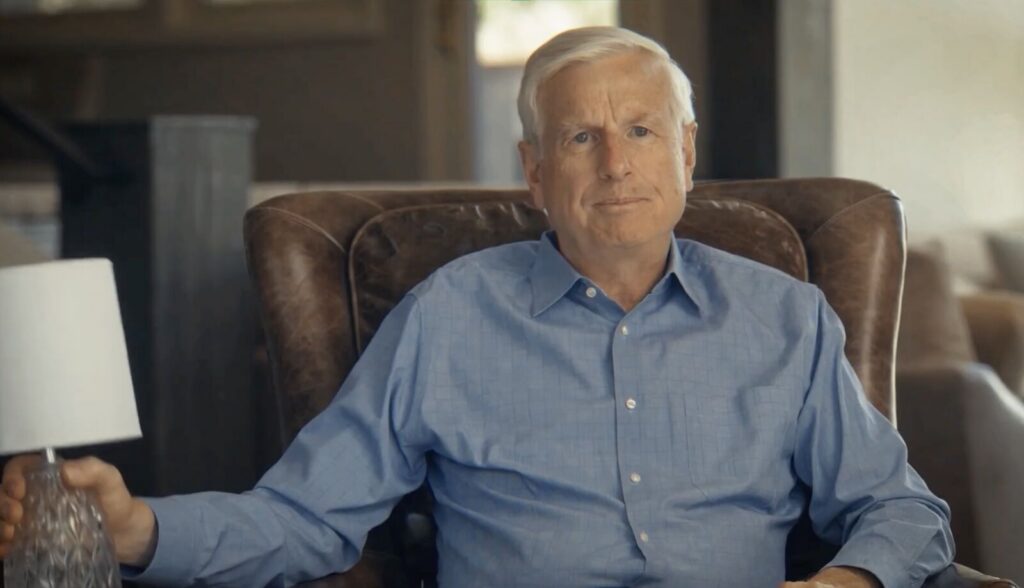
‘Ticked off’: Third-party U.S. Senate candidate in Colorado launches $1.3 million TV ad campaign
Ernest Luning
ernest.luning@coloradopolitics.com
Updated 4 days ago
Bob Chew, the Forward Party nominee for U.S. Senate in Colorado, sends household objects flying in a TV ad set to run statewide through September, backed by $1.3 million in ad reservations across multiple platforms, his campaign told Colorado Politics....