

Colorado, like America, past due for generational change in politics | Miller Hudson
I was 27 before I ever voted for president. At 19, in 1964, the Constitution had not yet been amended establishing 18-year-old voting eligibility. In 1968, I was serving overseas with the U.S. Navy at a time when there was little effort to assist sailors or soldiers in obtaining an absentee ballot. Fortunately, that’s changed for the better today. By 1972, World War II veterans, our “greatest generation”, had served in the White House for 20 years. It would take another 20 before that would change. I would be 47 when Bill Clinton, a fellow baby boomer, battled his way to the Democratic nomination, while more prominent Democrats ducked a contest against George H.W. Bush. Once Ross Perot jumped into the race as an independent, the door opened for the Arkansan governor to emerge as a plurality victor. When President Donald Trump departs in 2028, boomer presidents will have enjoyed a 36-year reign. Yes, Joe Biden was a few years older, while Barack Obama was technically a year younger than official boomerdom (1945-60), but they were essentially boomers.
Our next president is likely to have been born after 1970, as our recent experience with octogenarians has proven risky. This will leave the “silent generation” of the 1950s without ever earning a seat atop the summit of American democracy. The 1970s may also miss out, if we opt for an even younger leader. I recount this history as we are witnessing the arrival of Democratic Socialists with their full-throated assault on the party’s gerontocracy. Though often characterized as “barbarians at the gates,” they seem more intent on occupying the American throne-of-swords than razing the palace.
Whether it was the victory of AOC in 2018, the unexpected success of Zohran Mamdani in New York City or the recent nomination of Abdul El-Sayed in Michigan, the chattering class has been swift to identify each as unique generational political talents. This is likely stretching common sense. Though certainly all are gifted communicators in tune with voters, we may be mistaking simple competence for genius. Both Clinton and Obama delivered a differing sizzle to the office while Clinton is certainly deserving of his reputation as our explainer-in-chief on behalf of Obama. In fact, he makes this appear so easy one is left wondering why so few of our politicians are any good at the task. George W. Bush and Trump speak far from the realms of eloquence.
Provoked by breast-beating provocateurs like James Carville and Andrew Cuomo, perhaps even David Axelrod, some Democrats aren’t sure they can remain supporters of a Democratic Party that professes allegiance to socialist goals. The New York Times and other mainstream media have joined this caterwauling, claiming a vast schism between Democratic moderates and the party’s left/socialist insurgents. I fear they protest far too much. Pointing to the razor-thin victory of a moderate in Wisconsin’s governor’s race, just one half 1%, is to ignore the fact Ms. Hong came within 3,000 votes of winning. They didn’t seem nearly so exercised when Bernie Sanders, an independent socialist from Vermont, nearly toppled Hillary Clinton in the 2016 primaries — an election he arguably may have won as the Democratic nominee.
Today’s Democratic moderates were labeled as liberals by Republicans not so long ago. Many then embraced the title of “progressives,” as have some of the Democratic socialists. This isn’t an ideological quarrel, so much as a generational tug-of-war for power. It’s telling Alexandria Ocasio-Cortez, after eight years of experience in Congress, failed to earn an endorsement from her New York DSA chapter in 2026 — she is apparently now too moderate for their tastes. Yet she and her “Oligarchy Tour” companion Sanders have trotted across the nation supporting DSA-adjacent candidates — I’m sure to the considerable consternation of their more centrist colleagues. Though many in the party’s geriatric brigades continue to rend their garments in distress, it’s evident most of their grassroot peers, who vote heavily in primary races, have been opting for the DSA candidates.
The economist John Maynard Keynes dourly observed waiting for the promise of long-run benefits ignores the fact we are all dead by then. Democratic socialists have spent their political youth listening to promises their lives will get better soon — just one more election away. Instead, they find themselves mired in student debt, unable to afford homes and too poor to pay for healthcare or childcare. So, what’s getting better? More to the point, when will better arrive? I don’t have an answer to that question, but I know boomers need to let go of the steering wheel, hand over their keys and allow their children and grandchildren do the driving. That’s the way democracy is supposed to work.
Bill Clinton arrived at the White House in 1993 propelled at least in part by his membership role with the Democratic Leadership Council (DLC), promoting a political “Third Way”: a pro-business Democratic agenda. Some of it was a little crazy and was quietly discarded during the ensuing years. Other pieces, specifically Hillary’s attempt at reforming healthcare, collapsed under congressional realities. The DSA agenda will face similar challenges but can be admired for their aspirations. The proper role for aging boomers like myself should be a gentle and loving mentoring. Perhaps a Democratic presidency should first tackle a few structural challenges — constitutional amendments, Supreme Court reform and the proper economic positioning of health care. Most of medicine’s strides toward improved health were funded and developed through government research. Shouldn’t those benefits be available to all?
Speaking with several of my peers in Democratic politics, I’ve encountered an animosity toward Denver’s next member of Congress, Melat Kiros. When I suggested we should embrace her election and Democratic officials should extol their optimism for working with her, I encountered grumbling predictions that she will be gone in two years. “We will recruit James Coleman, current Colorado Senate president, in 2028 and chase her away,” one suggested. Appalled, I observed that might prove more difficult than he expected. I recalled New York Democrats saying the same thing about AOC after she knocked off the heir apparent to the speaker’s chair in Congress. She’s still there, more powerful and he isn’t.
Sixty million dollars and all Chuck Schumer’s horses, and all Chuck’s men and women including Michigan Gov. Gretchen Whitmer, couldn’t derail Abdul El-Sayed’s campaign. They viciously attacked his “electability,” the common complaint lodged against progressives. As Perry Bacon notes in The New Republic, if El-Sayed goes on to win the Senate race it should smooth the path for AOC as the party’s 2028 nominee for president. Bacon advises, “The real goal must be to keep Donald Trump’s candidate (Mike Rogers) from winning the seat … El-Sayed is electable. He just won an election. Now Democrats, center and left, in Michigan and beyond, need to do everything possible to get him elected in November.”
Kiros is headed to Washington. She’s bright, enthusiastic, tough and a quick study. Denver will be well represented. Considering the success of Joe Neguse, I’ll just bet our voters are the only state with two first-generation Ethiopian Americans elected to Congress. Where else but Colorado?
Miller Hudson is a public affairs consultant and a former Colorado legislator.

Ain’t Polis’ Peters commutation a pity? | Hal Bidlack
Hal Bidlack
hal-bidlack@coloradopolitics.com
Updated 8 hours ago
I am hoping that, yet again, my long-suffering and very forgiving editor will pardon my rambling thoughts today, as there are too many open tabs on my computer that deal with issues I want to talk about (Ed: pretty used...
Colorado House Democrats’ caucus finances under scrutiny as ethics case against leader advances
Marianne Goodland
marianne.goodland@coloradopolitics.com
Updated 12 hours ago
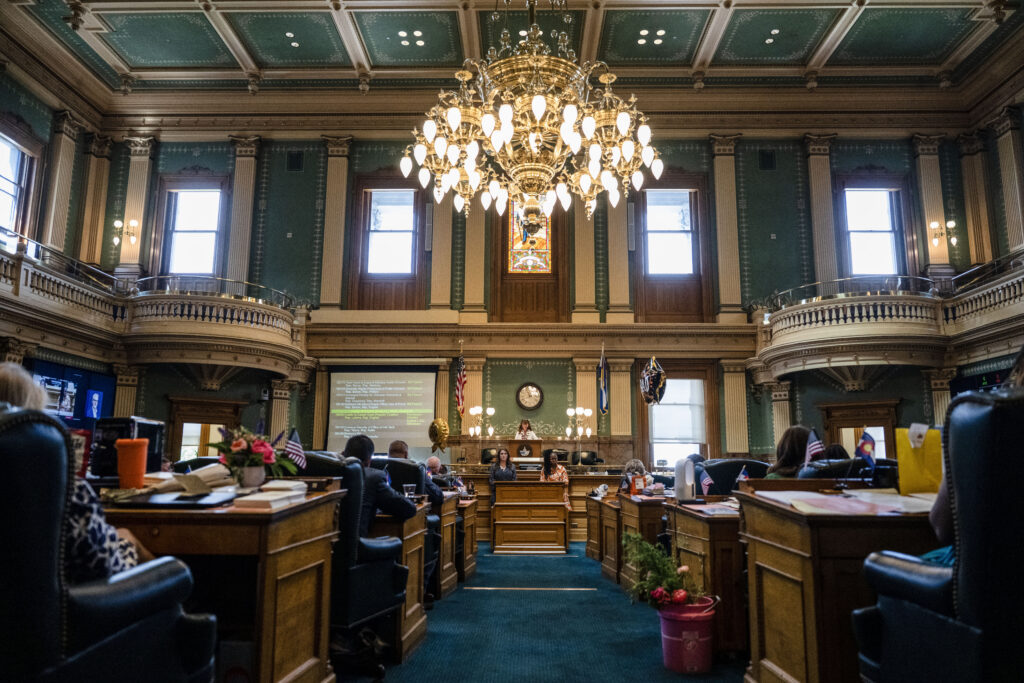
Democratic lawmakers told a legislative ethics panel that a leader’s management of caucus finances left them with unanswered questions, disputed reimbursements and a breakdown in communication that ultimately triggered a formal complaint. The House Ethics Committee is examining a complaint...

Colorado River crisis: Lake Mead, Lake Powell inch closer to ‘dead pool’
Marianne Goodland
marianne.goodland@coloradopolitics.com
Updated 12 hours ago
In the past 10 days, both Lake Mead on the Arizona-Nevada border and Lake Powell roughly 300 miles northeast on the Utah-Arizona line have recorded their lowest water levels since the reservoirs were first filled. Lake Mead, the nation’s largest...

Colorado lieutenant governor candidate Markert says early discipline and key mentors set his course
Marianne Goodland
marianne.goodland@coloradopolitics.com
Updated 19 hours ago
Editor’s note: This is the first installment in a three-part series examining Colorado’s candidates for lieutenant governor. In this piece, Colorado Politics speaks with George Markert, the Republican running mate to gubernatorial candidate Victor Marx. Marx is competing against Democrat...

Farmers and ranchers win on NIETC cancellation | Rachel Gabel
Rachel Gabel
rachel-gabel@coloradopolitics.com
Updated 2 days ago
The Department of Energy rolled into Lamar last week and Office of Electricity Assistant Secretary Katie Jereza stood in her neat, green suit in front of a room filled with farmers, ranchers and landowners. The crowd was filled with straw...

Going after the wrong butts | Jon Caldara
Jon Caldara
jon-caldara@coloradopolitics.com
Updated 4 days ago
Mayor Mike Johnston proclaimed, “It is past time Big Tobacco cleaned up the big mess it’s created.” Yep. Denver is suing tobacco companies for the cigarette butts littering the city. Because Denver’s Big Mess couldn’t possibly be the fault of...
Jeff Crank, Jessica Killin set to face off in 2 debates in Colorado’s 5th Congressional District
Ernest Luning
ernest.luning@coloradopolitics.com
Updated 4 days ago
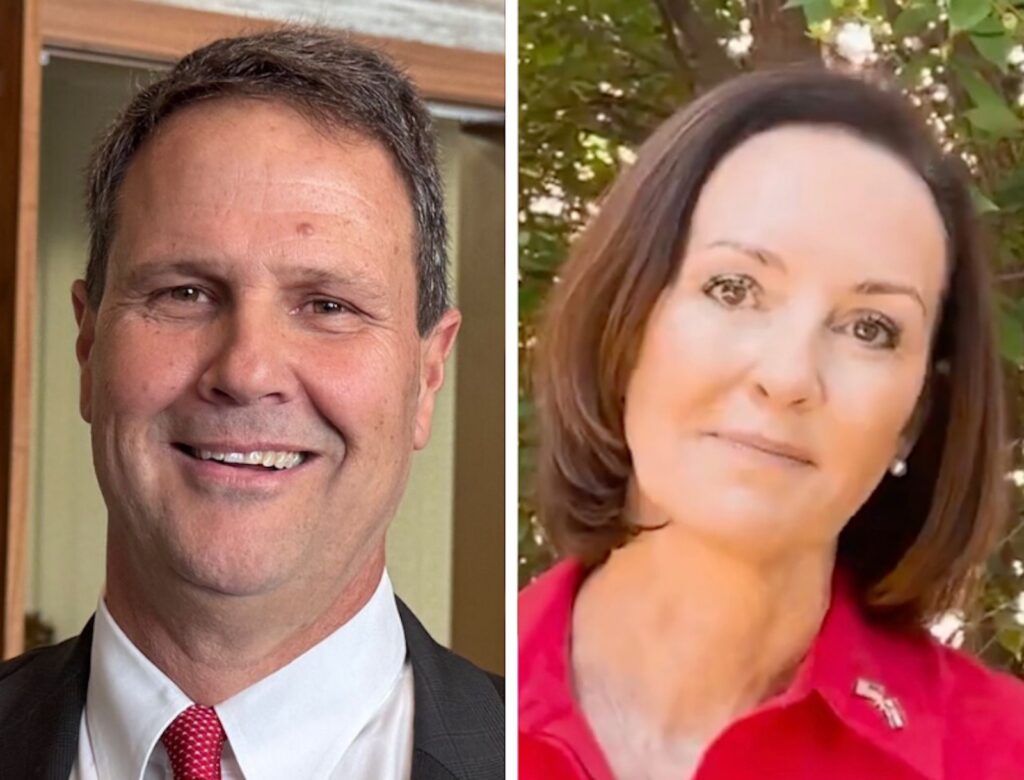
Republican U.S. Rep. Jeff Crank and Jessica Killin, his Democratic challenger, have agreed to debate twice in the weeks leading up to the general election in Colorado’s 5th Congressional District, their campaigns have said. Crank is seeking a second term...

CSI study reviews impacts of Colorado’s mandatory sex‑trafficking sentencing measure
Marissa Ventrelli
marissa.ventrelli@coloradopolitics.com
Updated 12 hours ago
A new report by the think-tank Common Sense Institute examines what could happen if Colorado voters approve Initiative No. 108, which establishes mandatory life sentences for offenders convicted of sexual trafficking of a minor. The measure is backed by Protect...
Three districts that will answer key Colorado political questions | Paula Noonan
Paula Noonan
paula-noonan@coloradopolitics.com
Updated 5 days ago
Colorado’s legislature used to be a place where neither party was dominant. Dozens of seats were competitive and House and Senate majorities switched regularly. From 2010 to 2020, the House was predominantly Democratic with one two-year assembly under Republicans. The...
‘Ticked off’: Third-party U.S. Senate candidate in Colorado launches $1.3 million TV ad campaign
Ernest Luning
ernest.luning@coloradopolitics.com
Updated 4 days ago
Bob Chew, the Forward Party nominee for U.S. Senate in Colorado, sends household objects flying in a TV ad set to run statewide through September, backed by $1.3 million in ad reservations across multiple platforms, his campaign told Colorado Politics....
PREV
PREVIOUS

Farmers and ranchers win on NIETC cancellation | Rachel Gabel
The Department of Energy rolled into Lamar last week and Office of Electricity Assistant Secretary Katie Jereza stood in her neat, green suit in front of a room filled with farmers, ranchers and landowners. The crowd was filled with straw cowboy hats, sweat-stained ball caps, tee shirts and button-down chambray shirts that had seen more […]

Colorado lieutenant governor candidate Markert says early discipline and key mentors set his course
Editor’s note: This is the first installment in a three-part series examining Colorado’s candidates for lieutenant governor. In this piece, Colorado Politics speaks with George Markert, the Republican running mate to gubernatorial candidate Victor Marx. Marx is competing against Democrat Phil Weiser and his running mate Lesley Dahlkemper, as well as independent candidate Greg Lopez […]