

Colorado House Democrats’ caucus finances under scrutiny as ethics case against leader advances
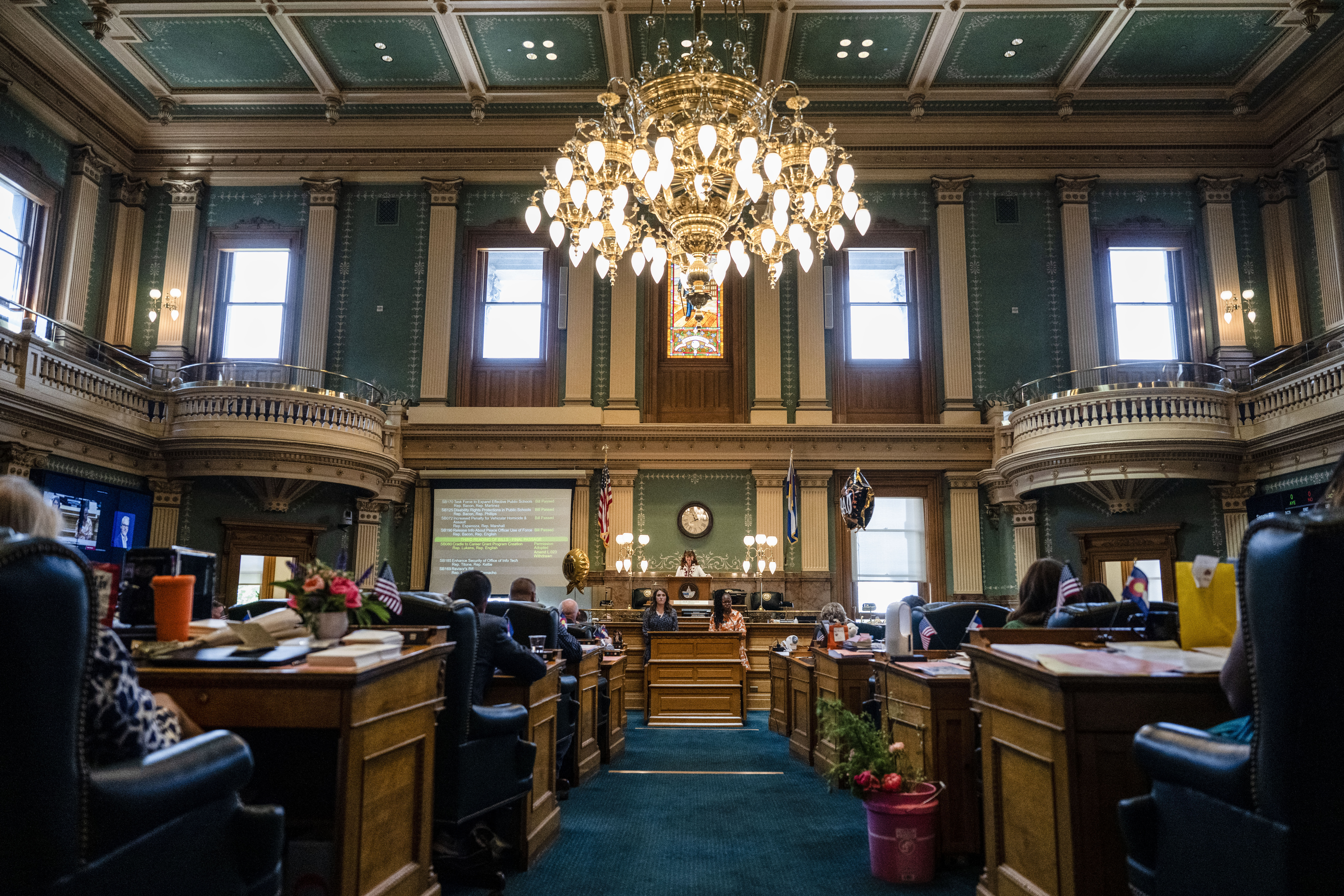
Democratic lawmakers told a legislative ethics panel that a leader’s management of caucus finances left them with unanswered questions, disputed reimbursements and a breakdown in communication that ultimately triggered a formal complaint.
The House Ethics Committee is examining a complaint from Rep. Bob Marshall, D-Highlands Ranch, alleging that Rep. Mandy Lindsay, D-Aurora, mishandled and improperly used funds for her own personal benefit in a way that, he argued, was unethical and potentially criminal.
Lindsay has served as one of the two House Democratic caucus co-chairs since November 2022. Rep. Junie Joseph of Boulder is the other co-chair.
The complaint centered on several transactions: A $2,500 “self-written check” that Lindsay deposited into her personal account in March 2025, a $6,358.68 reimbursement tied to a caucus retreat in November 2024 and two checks for less than $1,000 that had no discernible purpose.
Marshall alleged Lindsay wrote checks to herself and labeled them as caucus-related reimbursements, despite records showing she had not paid caucus dues for the 2025-26 session and had provided no receipts for the retreat expenses. Lindsay repaid the $2,500 after being confronted by Joseph, the caucus co-chair, but acknowledged during Friday’s hearing that she still has not paid dues for the current term.
The retreat’s charges drew particular scrutiny.
According to the complaint, the caucus fund made six debit card purchases totaling $6,358.68 at the Golden Courtyard Marriott between Nov. 18 and 21, 2024.
On Dec. 4, Lindsay allegedly deposited a self-written check for the same amount into her personal account, describing it as a “retreat reimbursement.”
When questioned, she said the caucus owed her thousands of dollars for other expenses and submitted sticky notes instead of receipts to support her claim.
Lindsay’s attorney, Jerome DeHerrera, opened the hearing last Thursday by acknowledging that the Democratic leader “made a few mistakes and did not use best practices” in managing the caucus’s petty cash fund.
He said Lindsay believed her personal credit card would be charged for the retreat and that she mistakenly used the caucus card for a $96 personal hotel expense in March 2025.
But he argued she did not need to reimburse the caucus for the $6,358 check because the caucus owed her roughly $7,000 for other costs. He also said Lindsay inherited a system with no controls, procedures or oversight and faced a strained working relationship with Joseph.
DeHerrera questioned whether the committee had authority to act at all, arguing that the complaint alleges violations of law, rather than House rules, and that any enforcement would amount to an unconstitutional judicial function. He said the complaint goes too far in asserting Lindsay had a “fiduciary duty” to the caucus.
House Speaker Julie McCluskie testified that she first received the complaint from Marshall in April 2025 and asked the caucus whether an audit was warranted. She said most members said no.
She said she had long believed Lindsay was not following best practices and hoped the issue would be resolved if Lindsay stepped down as co-chair.
Lindsay surrendered the checkbook and credit card that month but refused to resign.
McCluskie said she grew frustrated with the lack of communication, the use of personal funds and the absence of monthly reconciliations. She requested a “reconciliation,” not an audit, conducted by Will Quinn of the Colorado Democratic Party. Quinn is not a certified public accountant.
The caucus, McCluskie said, wanted to “move on,” rather than pursue a formal audit.
Testimony from Lindsay’s aides closed the first day of the committee hearing.
Kate Ehrlich, one of the aides, said she routinely picked up meals and other items for the caucus and turned receipts over to Lindsay, helping organize them into a spreadsheet.
Jaclyn Davison, another aide, said most of her time was spent on administrative tasks for the caucus.
Friday’s hearing focused on Joseph, Marshall and Lindsay.
Joseph, elected co-chair in November 2024, said she quickly became concerned that she and Lindsay were not communicating and felt shut out of caucus decision-making. She said Lindsay made all decisions until Feb. 1, when Lindsay told her she (Lindsay) could no longer use the caucus card for meals.
Joseph testified that Lindsay refused to share retreat receipts and that once she gained access to the bank accounts, she immediately saw discrepancies.
Joseph said she eventually asked Marshall to review the books to provide a second set of eyes. Joseph said she and Lindsay still have not met to discuss caucus expenses.
Marshall told the committee he was troubled by transactions that didn’t make sense and said the caucus fund should have about $100,000 available, yet members never received an accounting. He requested an audit after reviewing Quinn’s reconciliation, which he called “factually deficient.”
Before the hearing, he asked the committee to administer polygraphs to witnesses, a request the panel denied. He was reprimanded for contacting committee members or witnesses, which is prohibited during an active complaint.
Lindsay told the committee she has never compared Quinn’s reconciliation to her own records but believes it is “very close.” She said she kept a running tally of expenses on sticky notes in her office, sometimes with exact amounts and sometimes general estimates.
She described her relationship with Joseph as strained and said leaders, including McCluskie and Majority Leader Rep. Monica Duran, acknowledged there would be “very little working relationship” between them.
Lindsay admitted she was disorganized and at one point called herself “a hot mess” when handling the retreat checks.
DeHerrera did not deliver a closing statement, instead asking to submit one in writing.
The committee will reconvene on Sept. 4 to begin deliberations. If it finds Lindsay violated House ethics rules, it could censure or reprimand her.
Expulsion is also an option, though it would not occur until the next legislative session in January and would not apply to Lindsay since she lost her bid for a third term in June.


Colorado River crisis: Lake Mead, Lake Powell inch closer to ‘dead pool’
Marianne Goodland
marianne.goodland@coloradopolitics.com
Updated 23 minutes ago
In the past 10 days, both Lake Mead on the Arizona-Nevada border and Lake Powell roughly 300 miles northeast on the Utah-Arizona line have recorded their lowest water levels since the reservoirs were first filled. Lake Mead, the nation’s largest...

Colorado lieutenant governor candidate Markert says early discipline and key mentors set his course
Marianne Goodland
marianne.goodland@coloradopolitics.com
Updated 7 hours ago
Editor’s note: This is the first installment in a three-part series examining Colorado’s candidates for lieutenant governor. In this piece, Colorado Politics speaks with George Markert, the Republican running mate to gubernatorial candidate Victor Marx. Marx is competing against Democrat...

1 killed in flash flooding in Beulah: Pueblo County Sheriff’s Office
O'Dell Isaac
odell.isaac@gazette.com
Updated 8 hours ago
One person was killed in Beulah on Sunday after floodwaters swept him downstream, according to a news release from the Pueblo County Sheriff’s Office. The male victim, whose name was not released, was standing near Colorado 78 and Central Avenue...

‘Kind of defeats the purpose’: Denver adds more cops but not enough working cruisers
Deborah Grigsby
deborah.smith@denvergazette.com
Updated 8 hours ago
Denver’s police force has added more sworn officers as part of Mayor Mike Johnston’s promise to deliver a “vibrant” and safe city, but there aren’t always enough working patrol cars to put the new cops on the street. The shortage...

Reagan’s PATCO Showdown ignited Colorado labor backlash | A LOOK BACK
Rachael Wright, Special to Colorado Politics
rachael.wright@coloradopolitics.com
Updated 4 days ago
Forty-five years ago this week: “It’s the old Nixon reaction as far as I’m concerned. He thinks he’s the Great God Almighty and can do no wrong … in the eyes of the public,” said Zelda Bransted, spokesman of the...

State health department directs GEO to assist in tuberculosis investigation at ICE facility
Kyla Pearce
kyla.pearce@gazette.com
Updated 8 hours ago
The Colorado Department of Public Health and Environment issued a public health order directing the GEO Group to participate in the ongoing tuberculosis investigation at the Aurora ICE Processing Center. The Adams County Health Department confirmed an active case of...
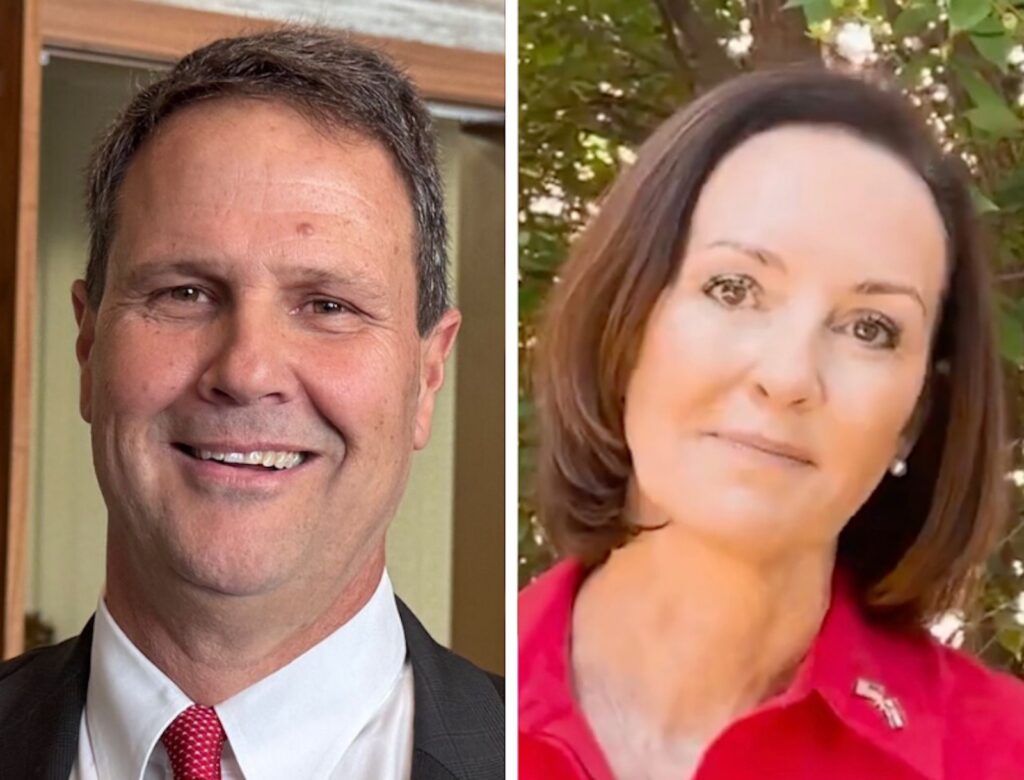
Jeff Crank, Jessica Killin set to face off in 2 debates in Colorado’s 5th Congressional District
Ernest Luning
ernest.luning@coloradopolitics.com
Updated 3 days ago
Republican U.S. Rep. Jeff Crank and Jessica Killin, his Democratic challenger, have agreed to debate twice in the weeks leading up to the general election in Colorado’s 5th Congressional District, their campaigns have said. Crank is seeking a second term...

Lakewood selects new city manager
Matt Kyle
matt.kyle@denvergazette.com
Updated 8 hours ago
After a four-month search, Lakewood has a new city manager. The city on Friday announced the selection of Jonathan Cain as its new city manager. The selection comes four months after the retirement of Kathy Hodgson, who had served as...
Lakewood selects new city manager
Matt Kyle
matt.kyle@denvergazette.com
Updated 8 hours ago
After a four-month search, Lakewood has a new city manager. The city on Friday announced the selection of Jonathan Cain as its new city manager. The selection comes four months after the retirement of Kathy Hodgson, who had served as...

Golden fire chief fired days after city manager as city investigates ‘racist incident’
Matt Kyle
matt.kyle@denvergazette.com
Updated 3 days ago
The City of Golden has terminated its fire chief days after terminating the city manager due to a “racist incident” earlier this year at a city fire station. City officials said that in March, a “Snoop on a Stoop” doll,...
PREV
PREVIOUS
Federal judge holds off on dismissing formerly bankrupt medical contractor from Jeffco jail death lawsuit
A federal judge declined on Monday to dismiss the formerly bankrupt medical contractor from a lawsuit over a detainee’s death in Jefferson County jail, but indicated she would do so if the plaintiffs’ attorneys go through the process to ensure they can collect damages for any successful claims. The surviving son and mother of Abby […]

Judicial performance evaluations released, Montezuma County judge disciplined | COURT CRAWL
Welcome to Court Crawl, Colorado Politics’ roundup of news from the third branch of government. Colorado’s citizen-led judicial performance commissions released their voter narratives for the judges standing for retention in November, plus a disciplinary panel imposed consequences on a Montezuma County judge for his misconduct. Judicial retention • There are 123 state judges standing […]