

‘Kind of defeats the purpose’: Denver adds more cops but not enough working cruisers
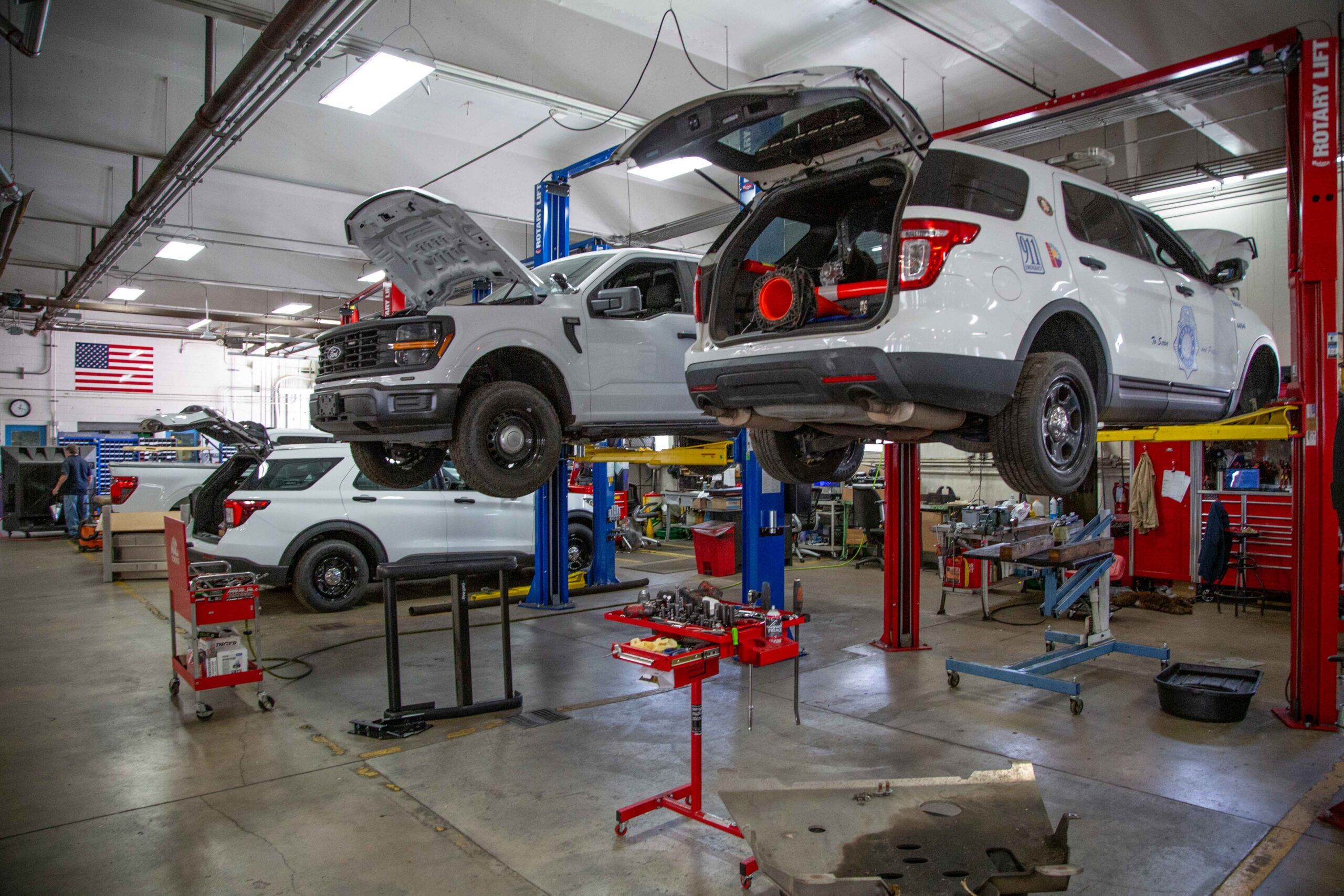
Denver’s police force has added more sworn officers as part of Mayor Mike Johnston’s promise to deliver a “vibrant” and safe city, but there aren’t always enough working patrol cars to put the new cops on the street.
The shortage spotlights the operational trade-offs Denver Police Department officials face as they and other city departments prepare for what is anticipated to be a “flat budget” in 2027.
That means Denver Police Chief Ron Thomas must maintain aging equipment, replace worn vehicles and control department overtime spending — all without expecting additional city funds to cover rising costs.
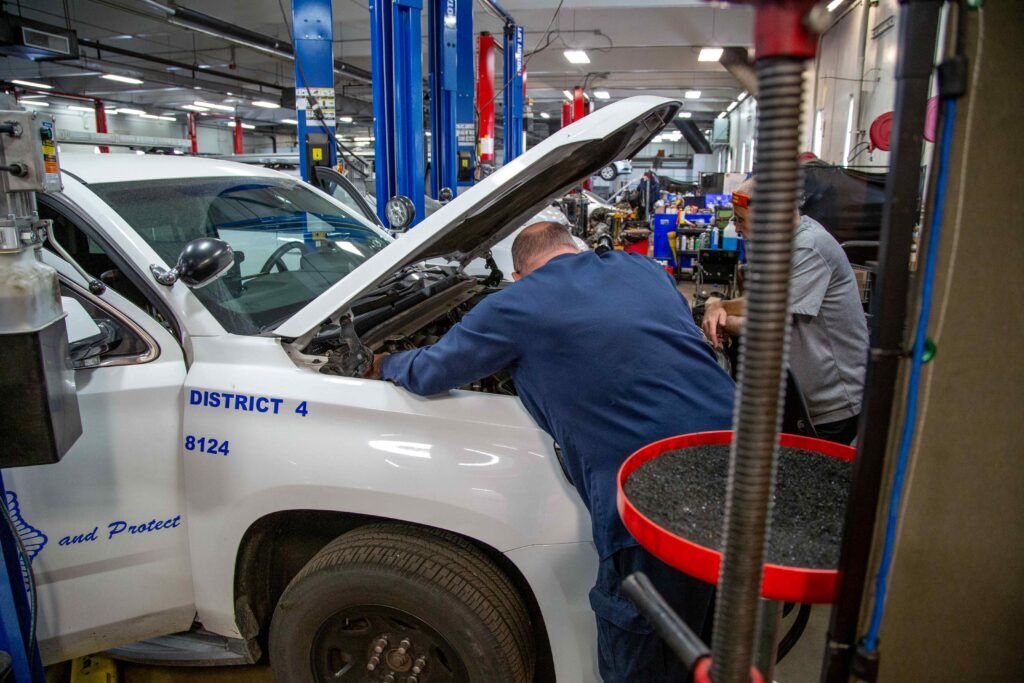
The problem stems from too many broken vehicles and not enough fleet mechanics to fix them.
Although the police department has added roughly 70 to 75 sworn officers over the last two years, Thomas said there’s not always enough serviceable vehicles for each of them to operate independently.
Vehicle shortages require placing two officers in one patrol car, which Thomas said “kind of defeats the purpose” of having more cops.
As it stands, DPD’s fleet maintenance facility is staffed at roughly 72%, about 10 people shy of its authorized level of 36, contributing to the backlog of vehicles needing attention.
“Our department has hundreds of vehicles, from patrol cars to SUVs, motorcycles, other specialized units that we use to respond to emergencies or conduct enforcement throughout the city,” Thomas told members of the city’s health and safety committee in July.
In Denver, police officers are dispatched to calls “per unit,” Thomas explained — meaning the unit or patrol car goes to the call regardless of how many officers are in it.
“So, we’re only able to cover one call with a two-officer call car” and that can impact response times, Thomas said.
“DPD is fully capable of meeting daily emergency response and public safety needs, but maintenance delays mean our operational margin is tight,” DPD spokesperson Doug Schepman told The Denver Gazette.
Currently, there are 1,236 vehicles assigned to the department. As of Aug. 14, officials said 192 of those vehicles fleetwide are out of service for mechanical repairs and another 49 are out due to collision-related repairs.
In 2021, about 120 police cars or 8% of its fleet were out of service waiting for repairs. To make matters worse, since August 2020, reports show the department lost 40% of its mechanics and body shop workers, many of whom left for higher-paying jobs.
“With current staffing levels, our technicians are working to complete as many repairs as possible within the confines of the staffing challenge and DPD’s budget,” Schepman said. “Because of the varied service and repair needs of each vehicle, it is impossible to determine with any degree of certainty how long it would take to clear the backlog.”
DPD’s fleet management is not a 24-hour operation.
When fully staffed, the city’s three facilities — the main garage, service center and body shop — operate Monday through Friday from 6 a.m. to 4:30 p.m.
However, due to limited staffing, the service center and body shop are each closed one day per workweek and, at times, have reduced hours, Schepman said.
City records show that Denver has authorized the purchase of nearly 140 replacement vehicles for the police fleet since 2025, although it is unclear how many have been delivered and put into service.
This year, the Denver City Council authorized $575,245 for 11 four-wheel-drive SUVs for the department’s operational fleet. The 2026-model vehicles are intended to replace vehicles dating from 2013 through 2019.
These purchases are part of DPD’s routine replacement plan for high-mileage or heavily worn vehicles and are not a response to maintenance backlogs.
While federal guidelines recommend replacing gasoline-powered fleet vehicles after seven years or 65,000 miles, Denver targets its patrol cars for replacement at five years or 75,000 miles.
The average mileage for the marked patrol fleet assigned to DPD’s districts is 54,904 miles, Schepman said, adding that there are 117 district patrol vehicles with 80,000 miles or more.

“Given current budget challenges, our primary focus isn’t on expanding our fleet size,” Schepman said. “Instead, the focus is maximizing our current capacity — specifically by hiring technicians to get out-of-service vehicles into safe working order and back on the road.”
The department is also exploring creative ways to add new vehicles to the fleet, such as electric vehicles for nonpatrol assignments through partnership with other city agencies.
But fleet spending is just one of several financial pressures DPD is facing.
Last year, Thomas asked Denver to pick up the tab for unplanned and unfunded overtime tied to numerous protests and shootings involving officers this year.
The request also covered shortfalls in DPD separation payouts.
Last year, Mayor Johnston characterized the 2026 budget as cut “to the bone.”
But if there is nothing left to cut without affecting core services, as he warned the Denver City Council, what exactly changes in 2027?
Not much, according to city officials, who say next year’s budget will likely look a lot like this year, with Johnston’s office already cautioning city departments that feats of fiscal improvisation may be needed heading into the new year.
“As of today, revenue is projected to remain flat — which we planned for — and we are aligning the budget accordingly,” Johnston spokesperson Jon Ewing told The Denver Gazette in July. “That means that while we won’t see reductions, departments may still need to get creative to balance increased costs around materials, services or labor.”
Even with Johnston’s “baseline” budget now in the hands of the Denver City Council, there’s no way to know exactly how “tight” things may be — at least until September, when the mayor delivers his proposed 2027 budget.

Colorado River crisis deepens as Lake Mead and Lake Powell hit record-low levels
Marianne Goodland
marianne.goodland@coloradopolitics.com
Updated 59 minutes ago
In the past 10 days, both Lake Mead, on the Arizona-Nevada border and Lake Powell, roughly 300 miles northeast on the Utah-Arizona line, have recorded their lowest water levels since the reservoirs were first filled. Lake Mead, the nation’s largest...

Colorado lieutenant governor candidate Markert says early discipline and key mentors set his course
Marianne Goodland
marianne.goodland@coloradopolitics.com
Updated 1 hour ago
Editor’s note: This is the first installment in a three-part series examining Colorado’s candidates for lieutenant governor. In this piece, Colorado Politics speaks with George Markert, the Republican running mate to gubernatorial candidate Victor Marx. Marx is competing against Democrat...

Lakewood selects new city manager
Matt Kyle
matt.kyle@denvergazette.com
Updated 2 hours ago
After a four-month search, Lakewood has a new city manager. The city on Friday announced the selection of Jonathan Cain as its new city manager. The selection comes four months after the retirement of Kathy Hodgson, who had served as...
Lakewood selects new city manager
Matt Kyle
matt.kyle@denvergazette.com
Updated 2 hours ago
After a four-month search, Lakewood has a new city manager. The city on Friday announced the selection of Jonathan Cain as its new city manager. The selection comes four months after the retirement of Kathy Hodgson, who had served as...
Golden fire chief fired days after city manager as city investigates ‘racist incident’
Matt Kyle
matt.kyle@denvergazette.com
Updated 3 days ago
The City of Golden has terminated its fire chief days after terminating the city manager due to a “racist incident” earlier this year at a city fire station. City officials said that in March, a “Snoop on a Stoop” doll,...

Denver sues Philip Morris, other tobacco companies over cigarette butt litter
Deborah Grigsby
deborah.smith@denvergazette.com
Updated 3 days ago
Denver is demanding that some of the biggest tobacco companies in the world pay for the cleanup of discarded cigarette butts on its streets, following a similar campaign that cities in other states have pursued. Denver’s lawsuit, filed this week...
Something’s off about Cañon City’s water. Officials say it’s not a health risk.
Savannah Eller
savannah-eller@coloradopolitics.com
Updated 3 days ago
Geosmin. It’s that earthy smell just after a rainstorm, the dirt flavor in beet peels and, recently, the odor and taste in Cañon City’s municipal water. “The water’s changed recently,” resident Heather Wilkerson told the City Council this week. Residents...

Golden city manager fired after ‘racist incident’ at fire station
Matt Kyle
matt.kyle@denvergazette.com
Updated 5 days ago
The Golden City Council on Tuesday voted to terminate City Manager Scott Vargo following a reported “racist incident” at a city fire station. The alleged incident happened in March. Reportedly, a “Snoop on a Stoop” doll, which resembles an “Elf...
Denver moves to dismiss Trump challenge to ‘assault-style’ weapons ban
Deborah Grigsby
deborah.smith@denvergazette.com
Updated 4 days ago
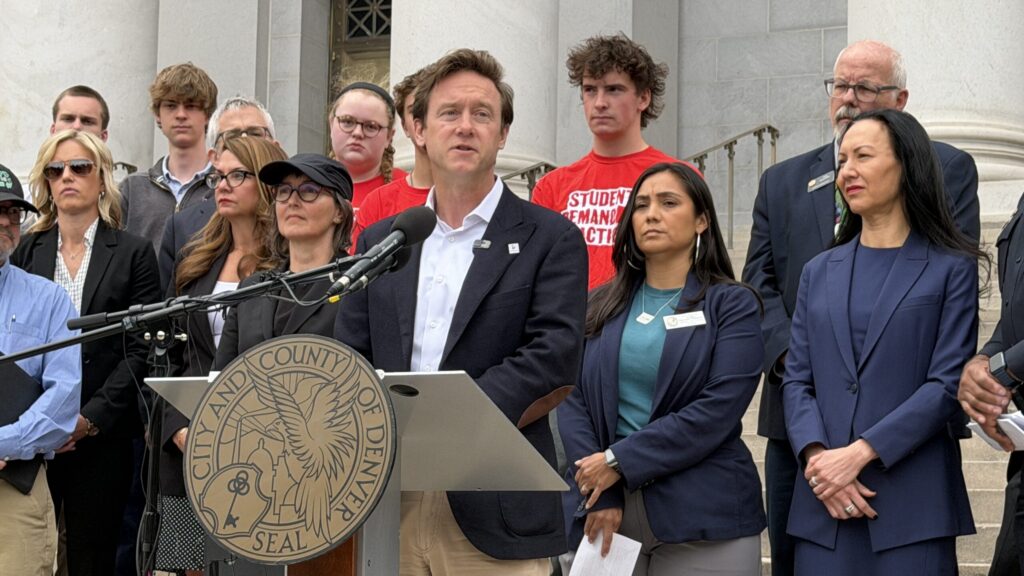
Denver has filed a motion to dismiss a lawsuit brought by the Trump administration challenging the city’s ban on “assault-style” weapons and magazines exceeding a 15-round capacity. The U.S. Department of Justice filed a suit in federal court in May,...
Denver City Council committee looks to ease affordable housing metrics
Deborah Grigsby
deborah.smith@denvergazette.com
Updated 6 days ago
Denver’s Department of Housing Stability is asking the city to rewrite some of the key performance metrics in the city’s agreement with the Denver Housing Authority to deliver affordable housing. HOST is asking the city to amend parts of a...
PREV
PREVIOUS

Lake Mead hits historic low water level as Colorado River struggles | OUT WEST ROUNDUP
NEVADA Lake Mead hits new low BOULDER CITY — Lake Mead, the largest reservoir in the United States, has plummeted to its lowest water level since it was filled some 90 years ago, another sign of the crisis plaguing the Colorado River system. Water levels at the reservoir, which straddles the Arizona-Nevada border outside Las […]
1 killed in flash flooding in Beulah: Pueblo County Sheriff's Office
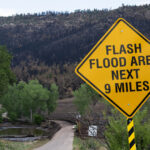
One person was killed in Beulah on Sunday after floodwaters swept him downstream, according to a news release from the Pueblo County Sheriff’s Office. The male victim, whose name was not released, was standing near Colorado 78 and Central Avenue when he was caught up in a strong, fast-moving flood current, officials said. Beulah fire […]