Three districts that will answer key Colorado political questions | Paula Noonan
Colorado’s legislature used to be a place where neither party was dominant. Dozens of seats were competitive and House and Senate majorities switched regularly. From 2010 to 2020, the House was predominantly Democratic with one two-year assembly under Republicans. The Senate had two assemblies from 2015 to 2018 under Republicans.
John Hickenlooper was governor and state Senate President John Morse from El Paso County and Sen. Angela Giron from Pueblo were recalled because of their votes on Second Amendment bills. Some courage there. But during this decade, Colorado moved from purple to blue. By 2018, Democrats won both chambers along with all statewide elected positions. That has held since then.
What remains of political party competition resides in just a couple of places. El Paso County and Pueblo County have one close race each, showing how these communities, GOP bastion and Dem bastions, are changing. The quintessential competitive districts containing long-standing points of conflict between Democrats and Republicans reside along the north Front Range: House Districts 19, 50 and 51 in Longmont, Greeley and Loveland.
These formerly agricultural areas have grown rapidly in population with farms turning into suburban homes feeding workplaces in Denver, Boulder, Greeley and Fort Collins. Deep under that land, stuck in Cretaceous-era sedimentary rocks, mostly sandstone, are the carbon-based energy sources of crude oil and natural gas.
This territory represents the Wattenberg-Niobrara oil-and-gas range. The area also funnels decreasing water to agriculture, oil-and-gas fracking, cities and Nebraska. The deleterious effects of energy drilling used to be generally accepted. Now, local populations are resisting as the Front Range’s ozone levels go higher and risks from unplugged orphan wells and oil-and-gas drilling leaks threaten health.
There’s the heat and fire smoke as a result of all that carbon energy development. There are problems with school funding and resource allocation between public and charter schools along with possible Polis-supported voucher depletions. Severance taxes for county and school funding add financial dependencies for county operations and public school resources.
House District 19 is smack-dab in the middle of these issues. The district sits in one of the most controversial portions of the state’s oil-and-gas industry. Erie residents are upset about SM Energy’s Draco project permitted by the state’s Energy and Carbon Management Commission. They worry about health effects from drilling operations.
Mineral rights are also at stake as Erie owns rights in the Draco drilling area. Town leaders negotiated a deal with SM Energy to bring mineral rights revenue to the municipality but residents now object. Some citizens assert the town is getting ripped off. Dan Woog is the current Republican House representative. Jillaire McMillan is his opponent in a rematch. He won his seat by 110 votes in 2024. The two have yet to publicly confront the Erie debates.
Woog strongly supports oil-and-gas drilling. He advocated in 2020 for county control of oil-and-gas drilling decisions rather than for local municipal control. This position affects Erie’s position in the hierarchy of drilling permit decision-making. McMillan, the rematch opponent, generally prioritizes the environment as related to climate change. But she’s also concerned about oil-and-gas workers and their jobs. She’s attempting a difficult balancing maneuver. These controversies set up a defining straddle for both candidates.

Though the Erie drilling and mineral rights conflict is paramount now, water, air quality and affordable housing concern both HD19 candidates. Woog, following the GOP standard, would preserve current water-right policies. McMillan offers water conservation in agriculture as one of her key objectives. Woog is a strong advocate for TABOR. McMillan wants a stable funding source for school finance.
House Districts 50 and 51 share many of the same issues as House District 19, but with different emphasis. House District 50, pitting Republican incumbent Ryan Gonzalez against former City Councilman Tommy Butler, sits in Greeley, the middle of an agriculture-growing, city oil-and-gas-development, water-resources geography. Critical problems are housing affordability, water accessibility, roads and transportation, land development and taxes. Gonzalez squeaked out a 500-plus vote victory in 2024.
House District 51 in Loveland is an open seat. Republican Amy Parks was close friends with Hugh McKean, the well-liked House minority leader who died in office. She’s competing against Jacki Marsh, the former mayor of Loveland, the principal locality in the district. No surprise, but housing, cost of living, water allocations, roads and transportation, land development, school finance and taxes are critical concerns.
These districts share similar attractions and challenges. The two incumbents won their offices by a hair’s breadth. The seats are at the intersection of every political argument in Colorado. Each issue demands a choice. Will we continue oil-and-gas development for jobs and revenue, or will we stop drilling to prevent degradation of health and the environment? Will water rights continue as they are or will they have to change as resources decline? Will we be able to balance water use for agriculture with water use for cities? Will we budge on taxes to support public schools and transportation or continue TABOR and cut taxes?
The outcomes of the contests in these three districts may finally answer these questions.
Paula Noonan owns CapitolCommons.ai, the state’s premier legislature-tracking platform.

‘Ticked off’: Third-party US Senate candidate in Colorado launches $1.3 million TV ad campaign
Ernest Luning
ernest.luning@coloradopolitics.com
Updated 8 hours ago
Bob Chew, the Forward Party nominee for U.S. Senate in Colorado, sends household objects flying in a TV ad set to run statewide through September, backed by $1.3 million across multiple platforms, his campaign told Colorado Politics. Meant to demonstrate...

Colorado shifts vaccine authority to state as Trump administration revises childhood framework
Marissa Ventrelli
marissa.ventrelli@coloradopolitics.com
Updated 7 hours ago
As the Trump administration rolls out a revised childhood vaccine framework, Colorado’s law allowing the state to set its own immunization schedule has now taken effect. Issued Monday, President Donald Trump’s executive order separates childhood and adolescent vaccines into three...

Colorado NRA chapter seeks injunction against new gun‑training requirement
Marissa Ventrelli
marissa.ventrelli@coloradopolitics.com
Updated 7 hours ago
The Colorado chapter of the National Rifle Association is seeking an injunction to stop the state from enforcing a new law that took effect earlier this month. The new law requires anyone buying or selling certain firearms to first complete...

Hunting is a privilege, not a constitutional right | PODIUM
Colorado Politics
colorado-politics@coloradopolitics.com
Updated 6 hours ago
By Roland Halpern Colorado voters may soon be asked to place hunting and fishing in the state constitution. Proposition 302 would establish the right to hunt, fish and take wildlife using “traditional methods,” while declaring hunting and fishing are the...

DEA’s Miguel Chino describes Colorado’s place on the ‘fentanyl pill superhighway’ | The OpEdge Podcast
Tony Olivero
tony.olivero@gazette.com
Updated 1 day ago
Miguel Chino, Acting Special Agent in Charge of the Drug Enforcement Administration’s Rocky Mountain Field Division, joins The OpEdge to paint the picture of Colorado’s place on America’s “fentanyl pill superhighways.” Chino updates Gazette and Colorado Politics Deputy Opinion Editor...

Colorado students push AI task force as schools navigate new tech era
Marissa Ventrelli
marissa.ventrelli@coloradopolitics.com
Updated 1 day ago
A group of students is urging lawmakers to establish a task force on artificial intelligence in education to advise districts on how to ensure that pupils and educators use the technology effectively without becoming overly reliant on it. The students...

A right to buy a product? | Hal Bidlack
Hal Bidlack
hal-bidlack@coloradopolitics.com
Updated 2 days ago
A recent story in Colorado Politics caught my eye, as I learned of a “citizen initiative” that has qualified for the November ballot. It seems supporters of Initiative 177 have collected enough signatures, 146,165 legitimate ones out of a total...

Fourteen years after Aurora — we can’t afford to go backward | GUEST COLUMN
Colorado Politics
colorado-politics@coloradopolitics.com
Updated 2 days ago
By John Hickenlooper and Gabby Giffords Two Saturdays ago, a gunman shot and killed three people and wounded several others in Twin Falls, Idaho. This latest deadly shooting comes only days after we remembered the lives we lost 14 years...

U.S. Rep. Lauren Boebert’s son arrested, faces charges of sexual exploitation of minor
Matt Kyle
matt.kyle@denvergazette.com
Updated 2 days ago
U.S. Rep. Lauren Boebert’s son Tyler Jay Boebert has been arrested and accused of recording and sharing a video depicting himself having intercourse with a minor, according to court records. The case originated in Garfield County in Western Colorado and...
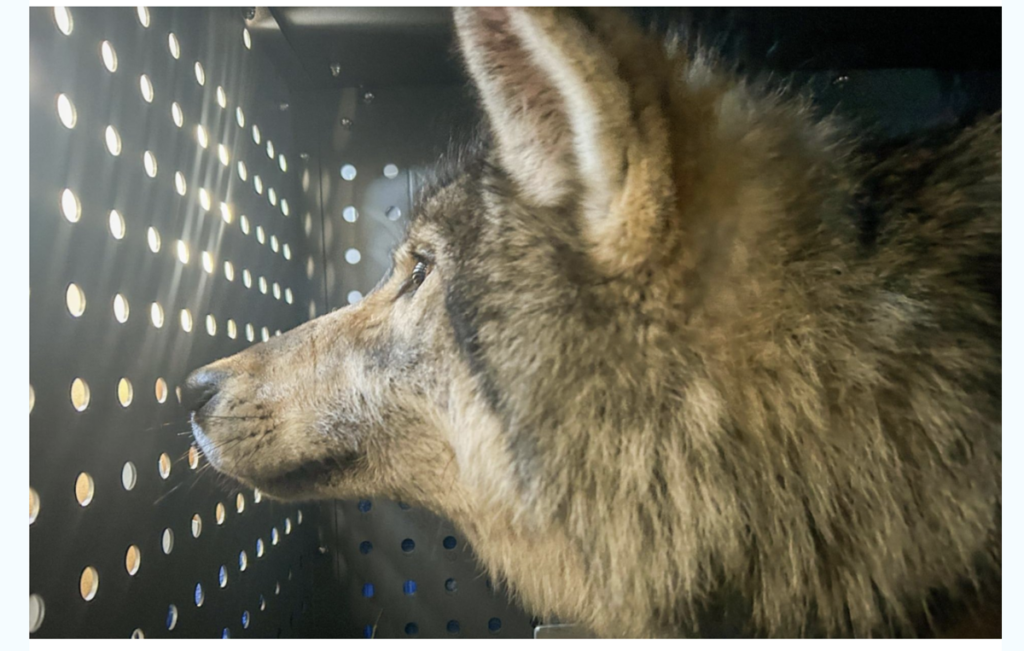
Hunter shot Colorado wolf after mistaking it for a coyote, wildlife office says
Marianne Goodland
marianne.goodland@coloradopolitics.com
Updated 1 day ago
Colorado Parks and Wildlife said Monday that a female wolf from British Columbia that died in January was shot by a hunter who mistook her for a coyote. The wolf, identified as 2504‑BC, was one of 17 wolves relocated since...