Hunting is a privilege, not a constitutional right | PODIUM

By Roland Halpern
Colorado voters may soon be asked to place hunting and fishing in the state constitution. Proposition 302 would establish the right to hunt, fish and take wildlife using “traditional methods,” while declaring hunting and fishing are the state’s preferred means of managing wildlife.
But though hunting and fishing are an important management tool, wildlife management is a much broader system. For example, Colorado Parks & Wildlife restores wild animal populations, protects habitat, erects fences to protect animals and humans, treats disease, relocates nuisance or endangered animals, controls invasive species and regulates human behavior. These methods could all become secondary to a superseding constitutional right.
Hunting is already legal in Colorado. It is a long-standing activity enjoyed by both residents and visitors. Carefully regulated hunting and fishing can and do play a role in wildlife management. But none of that means hunting or fishing should become a constitutional right. It should remain a privilege exercised under rules protecting wildlife, public safety and the interests of all Coloradans.
Hunters and anglers represent only a small portion of Coloradans who use and value public lands. Others hike, mountain bike, bird-watch, canoe, camp, climb, ski, photograph our wildlife or simply enjoy open space. We do not claim each of these activities should be elevated into a constitutional right. Public lands belong to everyone, and the Colorado Constitution should not give one group of users — or one recreational activity — superior legal status over all others.
This distinction is recognized elsewhere. Colorado has far more drivers than hunters or anglers combined. Driving is essential for work and family life, yet it is a privilege, not a constitutional right. Drivers must obtain licenses, obey traffic laws and accept suspension or revocation when they endanger others. Colorado’s Division of Motor Vehicles itself repeatedly refers to driving as a “privilege” that can be withdrawn.
Similarly, for some Coloradans hunting or fishing are essential. Hunting involves the taking of wildlife held in trust for the public and that is why under current law hunters and anglers must obtain licenses, follow seasons and bag limits, use authorized hunting and fishing methods and comply with wildlife regulations. If these conditions are violated a hunter’s or angler’s privileges could be revoked. These safeguards are not attacks on hunters or anglers. They are the foundation of responsible hunting and fishing.
Perhaps more problematic is the narrow method of how wildlife would be controlled. Proposition 302 would instill the protection of vague and undefined “traditional methods.”
So, what does “traditional” mean and who decides if a method is traditional or not?
The term sounds reassuring until one examines history. For some Indigenous peoples living in what is now Colorado, traditional hunting involved driving bison over a cliff, causing them to fall to their deaths. It was a traditional communal survival practice suited to a very different time.
No one is suggesting reviving “buffalo jumps,” but the example exposes the danger of constitutionalizing an undefined historical concept. Traditions change. Some people might call hunting with hounds, baiting, leg-hold traps, snares or muzzleloaders “traditional.” Others might argue it includes high-powered rifles, advanced optics, laser range-finders and sights, electronic calls, thermal imaging, trail cameras and drones — technologies that themselves didn’t exist decades ago but could become “traditional” over time. Undefined it could be argued any method is “traditional.”
A constitutional amendment should not leave courts, agencies and lawmakers guessing which methods receive special protections and which do not, especially not when it is Colorado taxpayers who will foot the bill for lengthy litigation and legal challenges that are certain to follow if Prop 302 becomes law.
Any constitution, including Colorado’s, should safeguard fundamental liberties such as speech, religion, due process and democratic participation. It should not become a catalog of favored recreational activities or wildlife-management techniques.
Voting no on Proposition 302 is not a vote against hunting or fishing. Far from it. Hunting and fishing can remain legal, respected and scientifically regulated without becoming a constitutional entitlement.
A license should grant the privilege to hunt. The Colorado Constitution should not guarantee it.
Roland Halpern is executive director of Colorado Voters for Animals, a nonpartisan volunteer organization that advocates for sensible animal welfare and protection laws.


DEA’s Miguel Chino describes Colorado’s place on the ‘fentanyl pill superhighway’ | The OpEdge Podcast
Tony Olivero
tony.olivero@gazette.com
Updated 19 hours ago
Miguel Chino, Acting Special Agent in Charge of the Drug Enforcement Administration’s Rocky Mountain Field Division, joins The OpEdge to paint the picture of Colorado’s place on America’s “fentanyl pill superhighways.” Chino updates Gazette and Colorado Politics Deputy Opinion Editor...

Colorado students push AI task force as schools navigate new tech era
Marissa Ventrelli
marissa.ventrelli@coloradopolitics.com
Updated 14 hours ago
A group of students is urging lawmakers to establish a task force on artificial intelligence in education to advise districts on how to ensure that pupils and educators use the technology effectively without becoming overly reliant on it. The students...

A right to buy a product? | Hal Bidlack
Hal Bidlack
hal-bidlack@coloradopolitics.com
Updated 1 day ago
A recent story in Colorado Politics caught my eye, as I learned of a “citizen initiative” that has qualified for the November ballot. It seems supporters of Initiative 177 have collected enough signatures, 146,165 legitimate ones out of a total...
Fourteen years after Aurora — we can’t afford to go backward | GUEST COLUMN
Colorado Politics
colorado-politics@coloradopolitics.com
Updated 1 day ago
By John Hickenlooper and Gabby Giffords Two Saturdays ago, a gunman shot and killed three people and wounded several others in Twin Falls, Idaho. This latest deadly shooting comes only days after we remembered the lives we lost 14 years...

U.S. Rep. Lauren Boebert’s son arrested, faces charges of sexual exploitation of minor
Matt Kyle
matt.kyle@denvergazette.com
Updated 2 days ago
U.S. Rep. Lauren Boebert’s son Tyler Jay Boebert has been arrested and accused of recording and sharing a video depicting himself having intercourse with a minor, according to court records. The case originated in Garfield County in Western Colorado and...
Hunter shot Colorado wolf after mistaking it for a coyote, wildlife office says
Marianne Goodland
marianne.goodland@coloradopolitics.com
Updated 18 hours ago
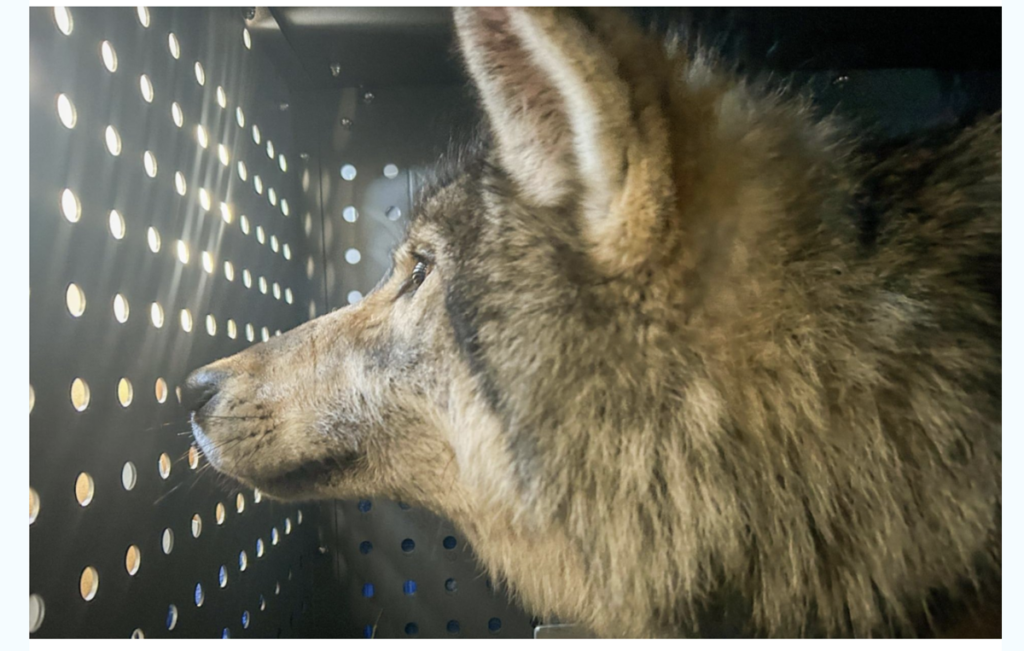
Colorado Parks and Wildlife said Monday that a female wolf from British Columbia that died in January was shot by a hunter who mistook her for a coyote. The wolf, identified as 2504‑BC, was one of 17 wolves relocated since...

A daring and fearless rescuer — is afraid of a debate | Dick Wadhams
Dick Wadhams
dick-wadhams@coloradopolitics.com
Updated 4 days ago
Victor Marx, the Republican nominee for governor who says he can exorcize demons and who claimed he has fearlessly rescued 45,000 women and children during 150 “high-risk” missions around the world, appears to be intimidated by the notion of debating...

Colorado’s ballot-initiative process again a battleground for deep pockets, special interests — not the people | Miller Hudson
Miller Hudson
miller-hudson@coloradopolitics.com
Updated 2 days ago
The Oxford English Dictionary defines a constitution as, “The set of fundamental principles according to which a state is constituted and governed, a body of rules prescribing the major elements of the structure and activities of any organization.” Somewhere in...

Democratic group aims Spanish-language TV ad at Gabe Evans in Colorado’s battleground 8th CD
Ernest Luning
ernest.luning@coloradopolitics.com
Updated 19 hours ago
A national group tied to House Democratic leadership launched a six-figure Spanish-language TV ad in Colorado this week targeting Republican U.S. Rep. Gabe Evans and the GOP’s signature budget legislation. The 30-second spot is part of $15 million in new...

Colorado’s troubled guardianship office pursues ‘cultural reset’
Marianne Goodland
marianne.goodland@coloradopolitics.com
Updated 2 days ago
Colorado’s guardianship program, long criticized for mismanagement and high staff attrition, is undergoing a “cultural reset,” as its new director works to repair partnerships and prepare for a major expansion under recent legislation. Created by lawmakers in 2017, the Office...