

Colorado’s ballot-initiative process again a battleground for deep pockets, special interests — not the people | Miller Hudson
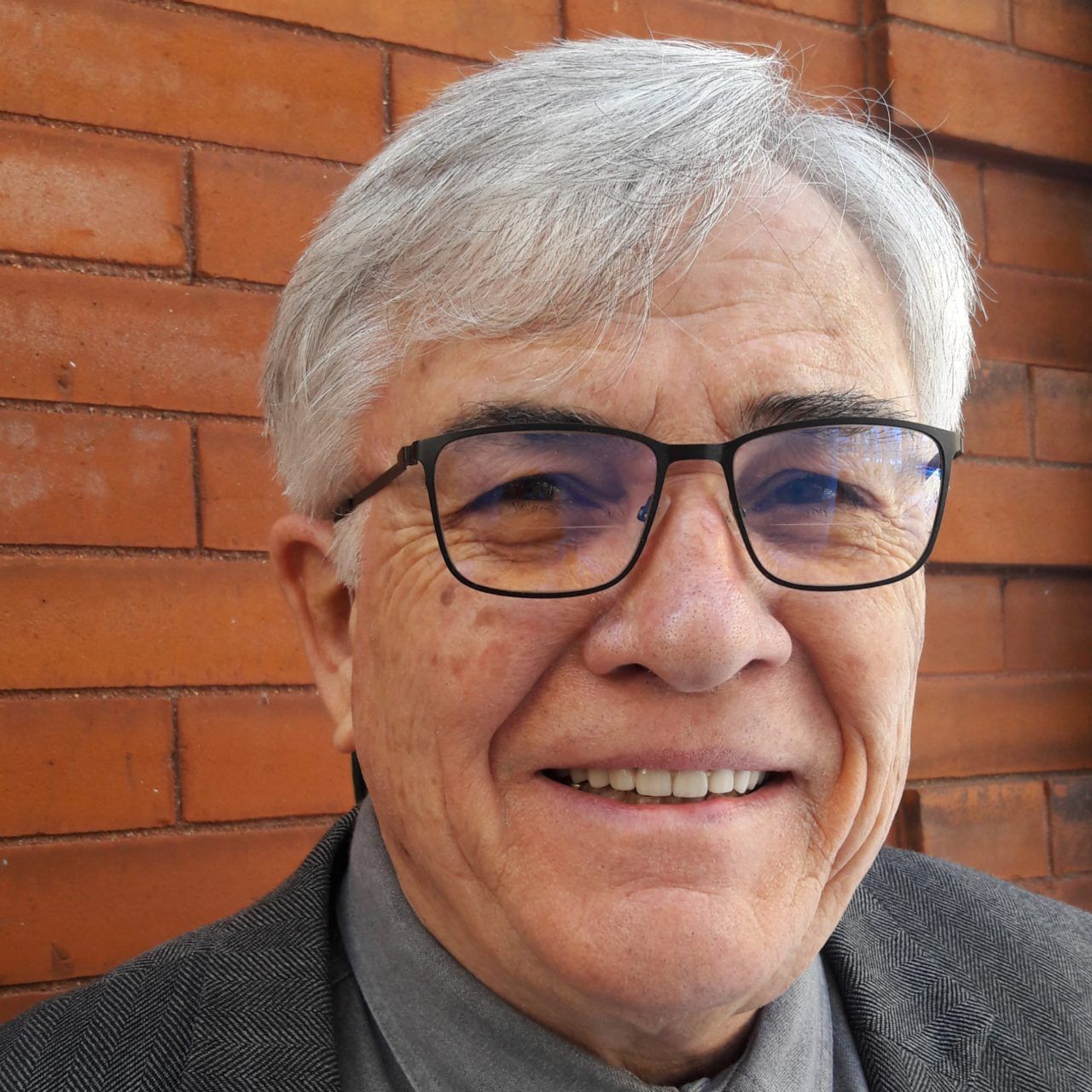
The Oxford English Dictionary defines a constitution as, “The set of fundamental principles according to which a state is constituted and governed, a body of rules prescribing the major elements of the structure and activities of any organization.” Somewhere in Colorado’s governing history this notion of confining a constitution to basic precepts and then leaving the minutiae of legal management to legislation was either ignored or abandoned. Residents find themselves burdened with the longest constitution in the nation, spelling out everything from animal trapping rules to miscellaneous authorizations for special-purpose agencies as well as instructions for executing their responsibilities. Soon, perhaps, we may be bestowed with a constitutional right to natural gas appliances. There is modest justification for such specificity in the case of circumstances unlikely to be altered by environmental, social or economic changes. There should be, however, precious few of these.
The initiative process was envisioned as a grassroots exercise of democracy. Colorado voters this year will be confronted with a passel of proposed constitutional amendments. The most significant of these are intimately entwined with fiscal policies that have been deformed by the precedence of 1992’s TABOR amendment. Its abiding influence is further shaped by the citizen-initiative process, together with legislative referendum authority, both intended to nourish citizen participation when writing Colorado laws. Only 13 states extend this opportunity to its citizens, primarily provisions included in constitutional rewrites occurring during the Progressive era of the early 1900s. It was presumed elected legislators in thrall to “malefactors (donors) of great wealth” would periodically fail to enact the wishes of their voters. The initiative process provides a mechanism for constituents to do the right thing. When in doubt, the legislature can forward referenda to voters for their approval or not. Together with California, we frequently consider the longest ballots in the country.
I have been involved in taking two such initiatives to the ballot. First, in 1980, instituting an elected governing board to replace political appointees at the Regional Transportation District (RTD). And next, a 2001 effort to use $200 million from a billion-dollar TABOR surplus to construct and test a MAGLEV high-speed monorail technology that could serve the Interstate 70 mountain corridor at Pueblo’s federal rail test facility. The first won handily, although it was largely repealed this past session for a return to political control. The latter was defeated in the wake of the Sept. 11, 2001 airborne terrorist attacks which demonstrated the vulnerability of transportation systems, although it carried all of the corridor counties.
In 1980, the law required petitioners be exclusively volunteers. Without widespread popular support, successfully enlisting, deploying and collecting sufficient signatures to reach the ballot was nearly impossible for private interests or rent-seeking economic forces. Following several unsuccessful attempts to open grocery stores for the expanded sale of beer and wine, a lawsuit requested permission to compensate circulators and eventually secured court approval. This opened the door for special interests and, inevitably, political zealots to buy their way onto the ballot. Attempted legislative reforms to the initiative process, requiring statewide collection of signatures in all 35 state Senate districts, only aggravated the challenge for genuine citizen initiatives. Several Colorado Senate districts are larger than the state of Delaware and thinly populated. Obtaining sufficient signatures there is a demanding and fatiguing task — far easier when circulators are paid to do this work. As a consequence, based on the spurious claim Front Range voters were ramming proposals through without the consideration of rural concerns, the entire process has been largely co-opted by dark money political action committees and corporate interest.
The door has remained open, however, to a hybrid campaign of predominantly volunteer petitioners, supplemented with paid circulators. It was through this opening the Bell Policy Center and the Colorado Fiscal Institute, joined by several dozen other nonprofit organizations, collected and wheeled nearly 160,000 signatures into the Secretary of State’s Office last week, petitioning for a graduated state income tax. Nearly 80% of their signatures were collected by volunteers, who always produce a higher proportion of “good signatures” than do paid circulators. It’s highly likely a statistical sample will qualify their proposal for the ballot. If not, there could be a protracted legal challenge to its adequacy. It was the third week of October in 2001 before the monorail test was certified. Our attorney was Scott Gessler, then partnered with longtime Democratic election lawyer Rick Daily.
Three additional fiscal questions have already qualified for the 2026 ballot. Setting aside my objection that none of these, nor TABOR itself, should be memorialized in Colorado’s constitution, they include: (1) the Legislature’s Proposition, referendum NN, which would raise the TABOR spending cap by $4.6 billion to be directed to K-12 schools; (2) a 4.4% permanent cap on the state income tax, an initiative funded by the Koch brothers’ Advance Colorado; and (3) an earmarking of auto-related sales and fuel taxes exclusively for road construction and maintenance.
Evaluating these in reverse order, the road expenditure proposal, which is likely to prove viscerally attractive, would fence off a significant portion of General Fund revenues, thereby reducing funds available for other state services. The permanent cap on state income tax at its current 4.4% rate is something of a “rock, paper, scissors” challenge to the graduated income tax proposal. If it receives more votes, the “soak the rich” plan will fail, forcing its proponents to spend money to defeat the tax cap. The legislature considered a similar short circuiting of this year’s road funding proposal but backed away when supporters charged them with attempting to torpedo the will of the people. Proposition NN stands on its own, although it is actually a “fix” or “work around” TABOR spending limitations.
If we’ve learned anything since 1992, as General Fund revenues have shrunk from 70% of state funding to 30%, while fees and an assortment of clever fiscal devices beyond TABOR’s reach have grown from nearly zero to 60% plus, it’s evident constitutional constraints can be evaded with clever lawyering — the public be damned. Most government dollars are fungible, whatever assurances are offered to the contrary. Earmarking dollars may work in the short run, but rarely over the long haul. A graduated income tax will generate additional dollars, even in the long run, but watch for the loophole posse that thunders into the legislature in its wake. Don’t expect all $4.6 billion delivered by NN to make it to Colorado’s classrooms.
Of course, if you worry the deep state is plotting to come for your gas stove, a constitutional amendment just might protect you — at least until we run short of natural gas or its price spikes prohibitively. At some point in the not-too-distant future, it would pay to see whether we can’t return the initiative process to the people it was intended to help — you and me. Circulators are receiving $2 per signature in 2026. That means nearly half-a-million dollars just to get to the ballot — trivial expenditure for billionaires, something more for reform-minded citizens.
Miller Hudson is a public affairs consultant and a former Colorado legislator.


DEA’s Miguel Chino describes Colorado’s place on the ‘fentanyl pill superhighway’ | The OpEdge Podcast
Tony Olivero
tony.olivero@gazette.com
Updated 45 minutes ago
Miguel Chino, Acting Special Agent in Charge of the Drug Enforcement Administration’s Rocky Mountain Field Division, joins The OpEdge to paint the picture of Colorado’s place on America’s “fentanyl pill superhighways.” Chino updates Gazette and Colorado Politics Deputy Opinion Editor...

Colorado students push AI task force as schools navigate new tech era
Marissa Ventrelli
marissa.ventrelli@coloradopolitics.com
Updated 4 hours ago
A group of students is urging lawmakers to establish a task force on artificial intelligence in education to advise districts on how to ensure that students and educators use the technology effectively without becoming overly reliant on it. The students...
A right to buy a product? | Hal Bidlack
Hal Bidlack
hal-bidlack@coloradopolitics.com
Updated 17 hours ago
A recent story in Colorado Politics caught my eye, as I learned of a “citizen initiative” that has qualified for the November ballot. It seems supporters of Initiative 177 have collected enough signatures, 146,165 legitimate ones out of a total...

Fourteen years after Aurora — we can’t afford to go backward | GUEST COLUMN
Colorado Politics
colorado-politics@coloradopolitics.com
Updated 17 hours ago
By John Hickenlooper and Gabby Giffords Two Saturdays ago, a gunman shot and killed three people and wounded several others in Twin Falls, Idaho. This latest deadly shooting comes only days after we remembered the lives we lost 14 years...
U.S. Rep. Lauren Boebert’s son arrested, faces charges of sexual exploitation of minor
Matt Kyle
matt.kyle@denvergazette.com
Updated 21 hours ago
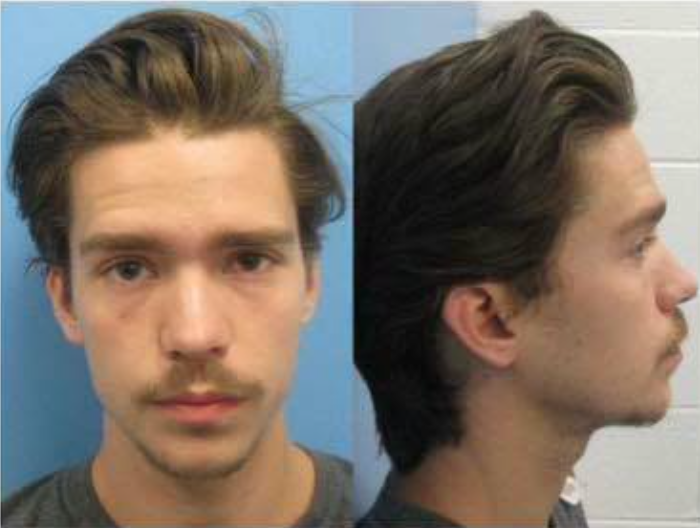
U.S. Rep. Lauren Boebert’s son Tyler Jay Boebert has been arrested and accused of recording and sharing a video depicting himself having intercourse with a minor, according to court records. The case originated in Garfield County in Western Colorado and...

Hunter shot Colorado wolf after mistaking it for a coyote, wildlife office says
Marianne Goodland
marianne.goodland@coloradopolitics.com
Updated 23 hours ago
Colorado Parks and Wildlife said Monday that a female wolf from British Columbia that died in January was shot by a hunter who mistook her for a coyote. The wolf, identified as 2504‑BC, was one of 17 wolves relocated since...

A daring and fearless rescuer — is afraid of a debate | Dick Wadhams
Dick Wadhams
dick-wadhams@coloradopolitics.com
Updated 3 days ago
Victor Marx, the Republican nominee for governor who says he can exorcize demons and who claimed he has fearlessly rescued 45,000 women and children during 150 “high-risk” missions around the world, appears to be intimidated by the notion of debating...

Democratic group aims Spanish-language TV ad at Gabe Evans in Colorado’s battleground 8th CD
Ernest Luning
ernest.luning@coloradopolitics.com
Updated 29 minutes ago
A national group tied to House Democratic leadership launched a six-figure Spanish-language TV ad in Colorado this week targeting Republican U.S. Rep. Gabe Evans and the GOP’s signature budget legislation. The 30-second spot is part of $15 million in new...

Colorado’s troubled guardianship office pursues ‘cultural reset’
Marianne Goodland
marianne.goodland@coloradopolitics.com
Updated 20 hours ago
Colorado’s guardianship program, long criticized for mismanagement and high staff attrition, is undergoing a “cultural reset,” as its new director works to repair partnerships and prepare for a major expansion under recent legislation. Created by lawmakers in 2017, the Office...

Colorado Democrats, your time is coming | Jon Caldara
Jon Caldara
jon-caldara@coloradopolitics.com
Updated 3 days ago
Hey, Colorado Democrats! All the fun you’ve had watching Republican dysfunction in Colorado for the last 20 years was just a preview of what is about to happen to you. The Colorado Republican Party no longer exists as a competitive...
PREV
PREVIOUS

Proposed EPA changes could save truckers billions | Rachel Gabel
Agriculture is in distress across nearly every segment across much of the nation, and certainly to a more dire degree in the western United States. If it were not a historic drought, some pressures could be eased. Others can be eased through common sense and a rollback of regulations. And, perhaps, the passage of a […]

A daring and fearless rescuer — is afraid of a debate | Dick Wadhams
Victor Marx, the Republican nominee for governor who says he can exorcize demons and who claimed he has fearlessly rescued 45,000 women and children during 150 “high-risk” missions around the world, appears to be intimidated by the notion of debating his Democratic opponent. Colorado has a long history of major-party candidates engaging in general election […]