

Divided 10th Circuit lets Colorado enforce interest rate cap on out-of-state banks

The Denver-based federal appeals court ruled on Monday that Colorado may use a decades-old provision of federal law to require out-of-state banks to abide by Colorado’s maximum interest rates when they lend to in-state residents.
A three-judge panel of the U.S. Court of Appeals for the 10th Circuit overturned a trial judge’s injunction blocking Colorado from enforcing its 2023 legislation against members of three finance industry groups. The 2-1 decision, which is the first of its kind, could trigger consequences for how banks operate and how states regulate predatory lending.
“We acknowledge that this decision may cause some immediate uncertainty,” wrote Judge Gregory A. Phillips in the Nov. 10 majority opinion. However, he stressed the only question the panel answered was whether a specific federal law authorized Colorado’s interest rate policy, and not whether constitutional or other statutory provisions blocked the state’s legislative choice.
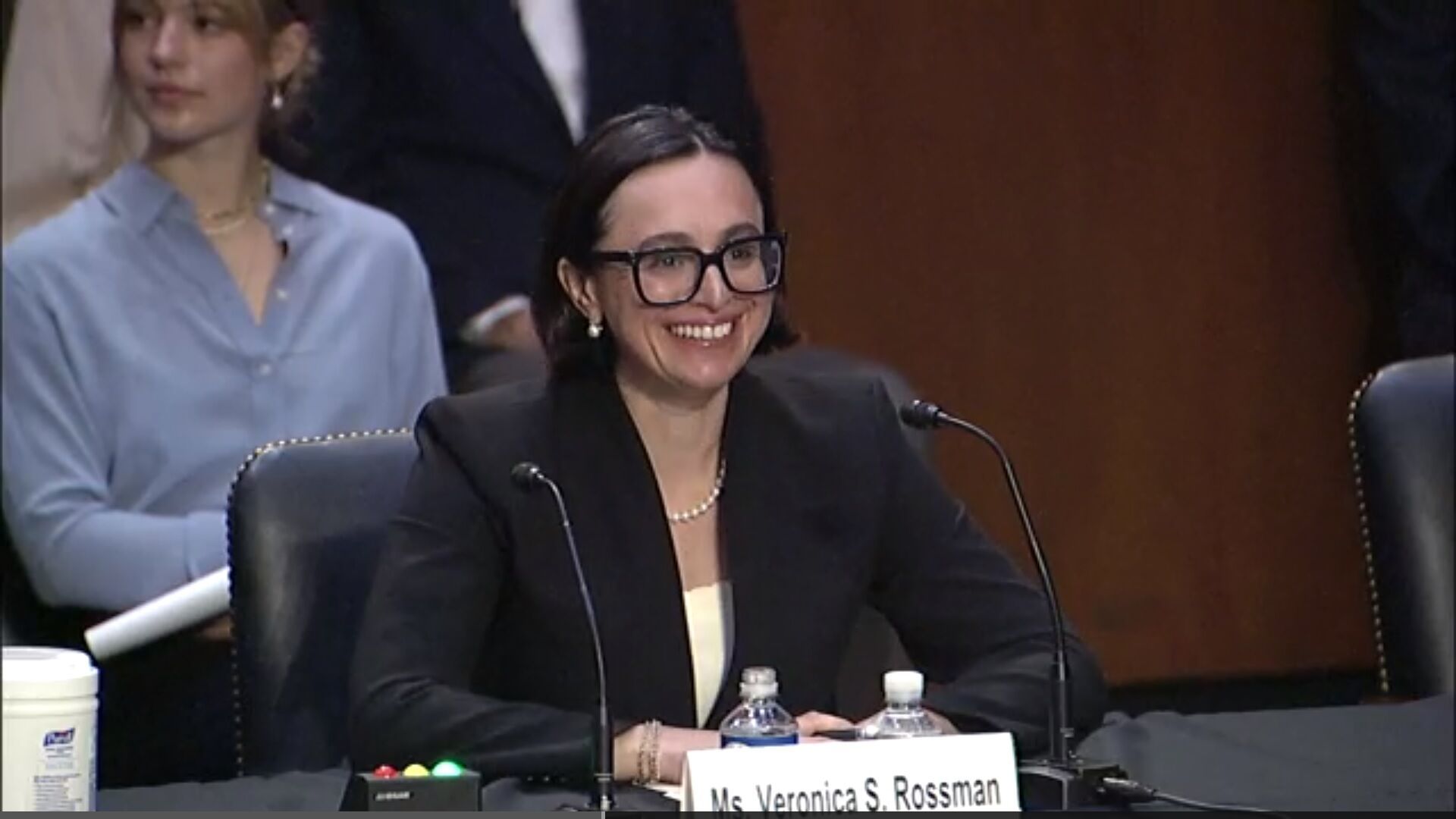
Judge Veronica S. Rossman, writing in dissent, believed the majority incorrectly interpreted the law and caused a “practical problem.” Now, the relevant interest rate for a loan is either the one in the borrower’s state or the one in the lender’s home state, with the potential for conflict.
“I struggle to see how this patchwork approach — which abides a level of disuniformity Congress never intended — will be administrable in our world of interstate, online banking,” she wrote.
The basic legal question for the 10th Circuit — Where is a loan “made?” — fit within a broader, more complex history of banking regulations stretching back more than four decades.
Amid rampant inflation in 1980, Congress passed a provision known as Section 521, allowing state-chartered banks to lend at interest rates up to their own state’s cap or slightly above the federal rate, whichever was higher. The purpose was to ensure state-chartered banks in states with low interest rate ceilings could still afford to lend money and compete with nationally chartered banks.
However, a second provision, Section 525, granted states the power to opt-out and ensure state-chartered banks charged interest rates in line with their state’s law. The opt-out applies to loans “made in” the state.
In 2023, Colorado lawmakers chose to opt-out through House Bill 1229. The state joined Iowa and Puerto Rico as the only other jurisdictions in the opt-out category. The bill’s sponsors explained the goal was to prevent out-of-state banks from “hopping around” Colorado’s consumer lending laws by charging higher interest rates for financial products than Colorado law allows for its institutions.
The National Association of Industrial Bankers, a trade group based in Utah, sued Colorado in conjunction with other industry associations over HB 1229. The groups sought to avoid letting Colorado apply its own ceilings on interest rates, which are somewhat lower than those elsewhere, to banks chartered by other states that lend to Colorado consumers.
In June 2024, U.S. District Court Judge Daniel D. Domenico issued a preliminary injunction barring Colorado from applying its caps to the plaintiffs when they made loans from outside of Colorado to Colorado residents.

Although Domenico acknowledged Congress could have used clearer language, he rejected the state’s argument that loans “made in” a state referred to either the bank’s state or the borrower’s state. Instead, the language referred to the location of the bank.
“In plain parlance, it is the lender who makes a loan; nobody thinks of themselves as ‘making a loan’ when they borrow money from a family member or put a charge on a credit card,” he wrote.
Colorado’s appeal to the 10th Circuit attracted significant attention from outside organizations.
Democratic attorneys general defended the ability of their states to regulate predatory loans to their residents, no matter where the lender is located. Republican attorneys general countered that laws like Colorado’s would create an incentive for state-chartered banks to obtain a federal charter and evade state caps.
The Federal Deposit Insurance Corporation initially supported the state’s reading of federal law, until the Trump administration withdrew the agency’s brief one month after taking office.
“The banks’ interpretation robs the state of one of its oldest police powers, creating a race to the bottom where banks will move to states with effectively no interest rate caps so they can charge vulnerable Coloradans triple-digit interest rates,” Senior Assistant Attorney General Brian Urankar told the 10th Circuit panel during oral arguments in March.
National Association of Industrial Bankers v. Weiser
Decided: November 10, 2025
Jurisdiction: U.S. District Court for Colorado
Ruling: 2-1
Judges: Gregory A. Phillips (author)
Richard E.N. Federico
Veronica S. Rossman (dissent)
Ultimately, the majority agreed loans “made in” a state refers to the state where either the borrower or the lender is located. Therefore, Colorado was within its rights to cap interest rates imposed by out-of-state institutions on Colorado consumers.
“Congress could have focused on the lender through language such as ‘loans made by state banks in such State’ or, even better, ‘loans originated by state banks in such State’,” wrote Phillips for himself and Judge Richard E.N. Federico.
He added that no state would ever opt-out of the federal authorization to charge higher interest rates if that state could only regulate interest charged by locally charted banks, with no ability to stop out-of-state banks from charging residents much more.
Rossman wrote in dissent that the federal law at issue was focused on “regulating banks, not protecting borrowers.” She noted that interstate lending by state-chartered banks was minimal at the time Congress enacted the opt-out provision. Therefore, the logical reading was that loans are “made in” the state where the bank is located.
“The majority authorizes the scope of Colorado’s opt out, but federal law does not,” Rossman wrote. “The majority opinion seems to recognize the confusion that awaits.”
The case is National Association of Industrial Bankers et al. v. Weiser et al.


A new day? Colorado’s troubled guardianship office pursues ‘cultural reset’
Marianne Goodland
marianne.goodland@coloradopolitics.com
Updated 3 days ago
Colorado’s guardianship program, long criticized for mismanagement and high staff attrition, is undergoing a “cultural reset,” as its new director works to repair partnerships and prepare for a major expansion under recent legislation. Created by lawmakers in 2017, the Office...
Local party leaders, incoming judge among members of judicial performance commission that violated law
Michael Karlik
michael.karlik@coloradopolitics.com
Updated 17 hours ago
A local Democratic leader and 2024 presidential elector. A legislative aide and leader in the Young Republicans. An incoming county court judge freshly appointed by the governor. They are among the eight members of the northeastern Colorado judicial performance commission...
Judge dismisses lawsuit seeking records from Colorado Democratic group
Marianne Goodland
marianne.goodland@coloradopolitics.com
Updated 2 days ago
A lawsuit seeking to obtain records from Democratic lawmakers affiliated with a caucus has been thrown out by a Denver District Court judge. On July 17, Judge Ericka Englert dismissed the April lawsuit filed by progressive activist Derrick Blanton, who...
Colorado Springs mother Deborah Nicholls’ murder conviction overturned
Nick Smith
nick-smith@coloradopolitics.com
Updated 2 days ago
A Colorado Springs mother convicted in 2008 of murdering her three children in a house fire might get a new trial after a judge ruled that prosecutors withheld key evidence that could have impacted the jury’s verdict. Deborah Nicholls, whose...
Colorado court overturns illegal $7,000 restitution order
Michael Karlik
michael.karlik@coloradopolitics.com
Updated 1 day ago
Colorado’s second-highest court overturned a Weld County defendant’s obligation to pay more than $7,000 in crime victim restitution on Thursday because a trial judge failed to issue a legally compliant restitution order at the time of sentencing. In Colorado, as...
Appeals court rejects former DougCo commissioner’s legal fee claim
Nicholas Fogleman
nicholas.fogleman@denvergazette.com
Updated 2 days ago
The Colorado Court of Appeals rejected a former Douglas County commissioner’s bid for reimbursement of attorney fees she incurred while responding to multiple investigations into her conduct. The dispute stemmed from a 2019 anonymous letter sent to county officials alleging...
Appeals court orders second look at Denver Water’s immunity for cyclist’s injury
Michael Karlik
michael.karlik@coloradopolitics.com
Updated 2 days ago
Colorado’s second-highest court ordered another look at a bicyclist’s negligence lawsuit against Denver Water on Thursday, concluding that a trial judge needed to evaluate the utility’s potential immunity using the state Supreme Court’s new guidance. Joseph A. “Joey” Scott alleged...
Labels, duration not definitive proof of ‘intimate relationship,’ Colorado court rules in domestic violence case
Michael Karlik
michael.karlik@coloradopolitics.com
Updated 2 days ago
Colorado’s second-highest court clarified on Thursday that the length of a couple’s relationship and the labels they attach to it are not conclusive evidence of whether it is an “intimate relationship” that can give rise to a domestic violence prosecution....

Colorado AG urges Supreme Court to let Boulder climate lawsuit proceed
Marissa Ventrelli
marissa.ventrelli@coloradopolitics.com
Updated 3 days ago
Colorado Attorney General Phil Weiser has filed a court brief with the U.S. Supreme Court in a lawsuit brought by Boulder city officials seeking to hold oil companies liable for their environmental impact. The case began in 2018, when the...
10th Circuit says landowner cannot sue ex-Routt County judge for statements in decision
Michael Karlik
michael.karlik@coloradopolitics.com
Updated 4 days ago
A Routt County landowner cannot sue a former judge for his allegedly inaccurate statements in a case where the landowner was not a party, the Denver-based federal appeals court decided on Wednesday. Anne Fitzsimmons, who lives in Germany, owns a...
PREV
PREVIOUS

Colorado Supreme Court suspends rules for 'Indian child' welfare cases
The Colorado Supreme Court suspended its rules last week that govern how judges handle custody cases when an “Indian child” is involved. The court’s move came after the legislature enacted extensive changes this year, partially in response to Supreme Court decisions that afforded a lower degree of protection to children and families with tribal, or […]

Colorado congressman backs bills to help veterans
Colorado Congressman Jason Crow, D-Aurora, is working with Republicans on a slate of bills to help address tough issues facing veterans, such as high rates of ALS and suicide. The bills were expected to be introduced this week as the United States marks Veterans Day. They’re expected to target specific gaps in care and education […]