

Colorado’s rulers save democracy from the voters | Jon Caldara

Another week, another column about Colorado’s ruling class treating democracy like a state trooper treats the speed limit. It’s for other people.
I swear, I want to write about literally anything else — aliens, sports, lab-grown meat, Bigfoot opening a vape shop in Pueblo.
But Colorado’s legislature has never been more abusive to the citizenry or hypocritical.
To save time, I won’t rehash the endless “No Kings,” “Trump is destroying democracy,” “our sacred duty is protecting democracy, so be happy you have us” self-promotion constantly ejaculated by Colorado’s ruling class.
But, for the sake of argument, let’s pretend every word of it is true. Let’s assume President Donald Trump wakes every morning and convenes a joint special-forces meeting to steal democracy in Colorado.
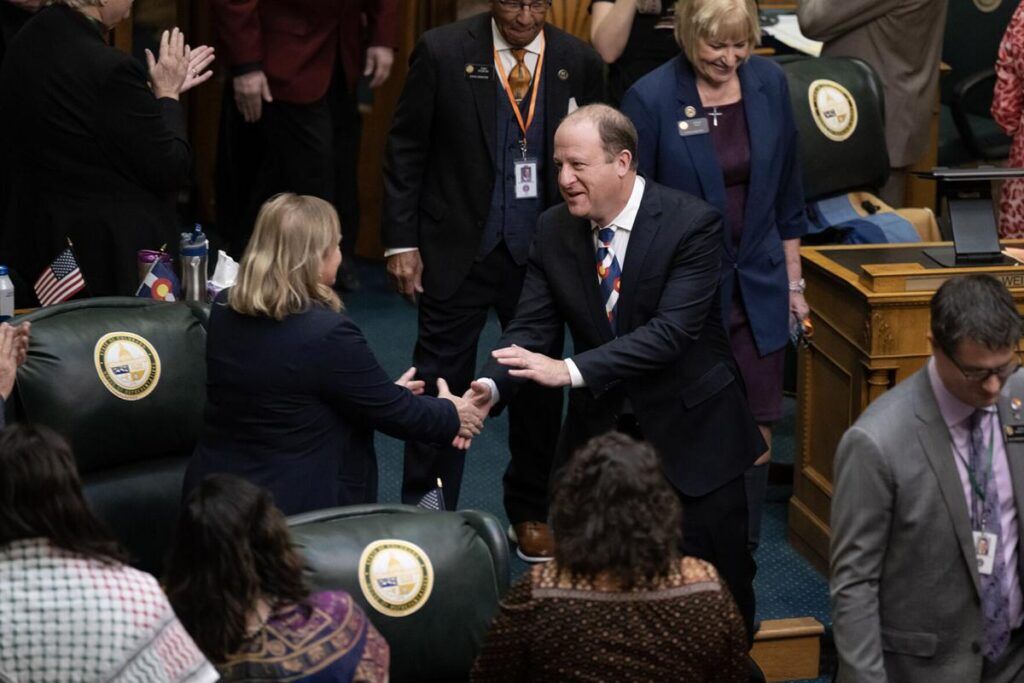
If democracy is truly hanging by a thread, then surely Colorado’s supermajority is heroically defending it. I mean, they say that’s their job one, next to banning ketchup packets (Senate Bill 146, seriously).
Which leaves me confused.
Because from my tiny little “just-a-citizen” brain perspective, they seem to spend an awful lot of time removing voters’ power, hiding meetings, dodging taxpayer consent and nullifying ballot initiatives.
Maybe I’m missing the advanced theory of democracy taught only in elite government seminars and overpriced Aspen retreats.
Take Senate Bill 150. It strips away two-thirds of RTD’s publicly elected board seats and replaces them with appointees.
Silly me. I thought democracy involved electing people.
But apparently true democracy is when insiders choose insiders to protect the public from the dangerous unpredictability of… the public.
Then there’s House Bill 1326, which exempts the all-powerful Public Utilities Commission from open meetings laws.
Again, I’m sure there’s a sophisticated democracy-enhancing explanation for this.
Perhaps democracy works best when the public cannot actually watch government decisions being made. Sort of a “trust us you peasants” model of self-government.
House Bill 1418 puts a “fee” on games young people play online.
Now, if it walks like a tax, quacks like a tax and drains your wallet like a tax, a normal person might call it a tax. But by labeling it a “fee,” lawmakers can dodge asking voters for permission.
Which is convenient. Because asking permission from citizens can really slow down democracy.
Even more amazing, this fee appears large enough that under existing law it should require voter approval anyway. Yet lawmakers are still trying to skip the vote.
Apparently democracy is strongest when elections are treated as optional.
Then there’s Senate Bill 135, which takes your TABOR refunds. At least this one goes to the ballot. But the ballot language will say the money goes to education.
In reality, only a small fraction actually does.
Maybe I’m old fashioned, but using misleading ballot language to convince voters to surrender their money feels less like defending democracy and more like a used car salesman turning back the odometer on a lemon.
Now comes the cherry on top, House Bill 1430, filed in the final chaotic moments of the session. Its purpose is beautifully simple: invalidate a citizen initiative that might appear on the ballot this fall. Kill what voters might vote for before they vote on it.
I always believed democracy meant if voters approve something at the ballot box, government respects the outcome. Isn’t that what the anger against Trump and Tina Peters is all about?
Here’s the backstory: Colorado used to dedicate sales tax revenue from automobile parts and accessories to roads. Which honestly seems reasonable, given roads are where cars generally go (Man, if I could still get away with a drunk driving joke, this would be a perfect spot).
But the legislature ended that sensible funding stream. We don’t really do road funding anymore. I don’t need to convince you of that. Instead, we currently do incentives for front-end alignment shops.
Now there’s a potential citizen initiative that might restore that road-funding mechanism. Maybe it makes the ballot. Maybe voters approve it. Maybe they don’t.
That’s how democracy is supposed to work.
But HB-1430 essentially says, “That’s cute. Your vote still won’t matter.”
If voters approve returning the road funding, with 1430 lawmakers will reduce road funding by the exact same amount.
Thankfully, Colorado is governed by people who understand democracy far better than voters do.
Thank God Colorado’s one-party rulers are here to save democracy from the voters.
Jon Caldara is president of the Independence Institute in Denver and hosts “The Devil’s Advocate with Jon Caldara” on Colorado Public Television Channel 12. His column appears Sundays in Colorado Politics.


A daring and fearless rescuer — is afraid of a debate | Dick Wadhams
Dick Wadhams
dick-wadhams@coloradopolitics.com
Updated 2 days ago
Victor Marx, the Republican nominee for governor who says he can exorcize demons and who claimed he has fearlessly rescued 45,000 women and children during 150 “high-risk” missions around the world, appears to be intimidated by the notion of debating...

A new day? Colorado’s troubled guardianship office pursues ‘cultural reset’
Marianne Goodland
marianne.goodland@coloradopolitics.com
Updated 4 days ago
Colorado’s guardianship program, long criticized for mismanagement and high staff attrition, is undergoing a “cultural reset,” as its new director works to repair partnerships and prepare for a major expansion under recent legislation. Created by lawmakers in 2017, the Office...
Colorado Democrats, your time is coming | Jon Caldara
Jon Caldara
jon-caldara@coloradopolitics.com
Updated 2 days ago
Hey, Colorado Democrats! All the fun you’ve had watching Republican dysfunction in Colorado for the last 20 years was just a preview of what is about to happen to you. The Colorado Republican Party no longer exists as a competitive...

Democratic group aims Spanish-language TV ad at Gabe Evans in Colorado’s battleground 8th CD
Ernest Luning
ernest.luning@coloradopolitics.com
Updated 2 days ago
A national group tied to House Democratic leadership launched a six-figure Spanish-language TV ad in Colorado this week targeting Republican U.S. Rep. Gabe Evans and the GOP’s signature budget legislation. The 30-second spot is part of $15 million in new...
Judge dismisses lawsuit seeking records from Colorado Democratic group
Marianne Goodland
marianne.goodland@coloradopolitics.com
Updated 2 days ago
A lawsuit seeking to obtain records from Democratic lawmakers affiliated with a caucus has been thrown out by a Denver District Court judge. On July 17, Judge Ericka Englert dismissed the April lawsuit filed by progressive activist Derrick Blanton, who...
Colorado must continue finding common ground on wildfire policy | GUEST COLUMN
Colorado Politics
colorado-politics@coloradopolitics.com
Updated 3 days ago
By John Herrick Colorado has never lacked for opinions about wildfire policy. We debate forest management, climate change, prescribed burns, land use, air quality and budgets. Those debates are familiar territory, but a new discussion is beginning to happen around...

Proposition NN is the best investment for Colorado’s students and schools | GUEST COLUMN
Colorado Politics
colorado-politics@coloradopolitics.com
Updated 3 days ago
By Justin Ogden Colorado families know what it means to make difficult budget decisions. Inflation has driven up the cost of groceries, housing, utilities and just about everything else. Families like mine work hard to stretch every dollar while still...

Right-to-natural-gas proposal in Colorado qualifies for ballot
Marissa Ventrelli
marissa.ventrelli@coloradopolitics.com
Updated 3 days ago
A citizen initiative that seeks to enshrine the right to natural gas has qualified for the November ballot, Colorado’s election office confirmed on Thursday. Petitions containing signatures for Initiative No. 177 were turned in to the Secretary of State’s Office for review...
Former VP Mike Pence joining Colorado Christian University faculty
Marissa Ventrelli
marissa.ventrelli@coloradopolitics.com
Updated 3 days ago
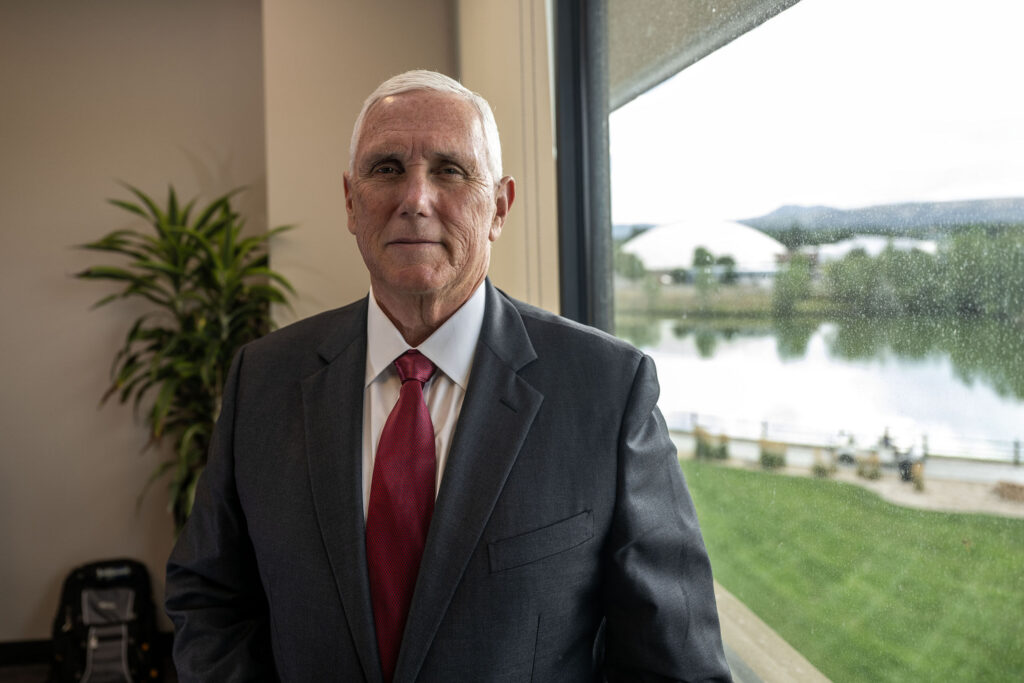
Former Vice President Mike Pence has been hired as a visiting faculty member at Colorado Christian University, the Lakewood-based private evangelical university announced Tuesday. Pence will be on campus about once a month during the 2026-2027 school year to give...
Were the primaries a preview for consequential general election? | Paula Noonan
Paula Noonan
paula-noonan@coloradopolitics.com
Updated 4 days ago
Colorado’s political future will go the way of this election. Historically, the state has not had both chambers controlled by a supermajority. This election may change that. The primaries suggest how the general election may play out. Democrats had solid...
PREV
PREVIOUS
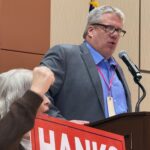
Ron Hanks, Scott Bottoms sue to stop Colorado’s unaffiliated voters from participating in June primary
Three Republican candidates in Colorado filed a lawsuit in Denver District Court this week seeking to prevent unaffiliated voters from participating in next month’s primary, arguing that the state’s semi-open primary system violates their constitutional rights by forcing Republicans to let outsiders help choose the party’s nominees. Ron Hanks, Scott Bottoms and David Willson are […]

Trends and challenges in higher education | Tom Cronin
Americans are both proud and critical of our higher-education system. More American universities are highly ranked than those in other countries. More international students come here than to any other country. And basic research at U.S. universities has earned more patents and Nobel Prizes than elsewhere. Yet trust in colleges and universities has dramatically declined. Costs have dramatically increased and more parents are […]