

Oral arguments, caseloads and bad lawyering: Appellate judges and justices provide peek behind judicial curtain
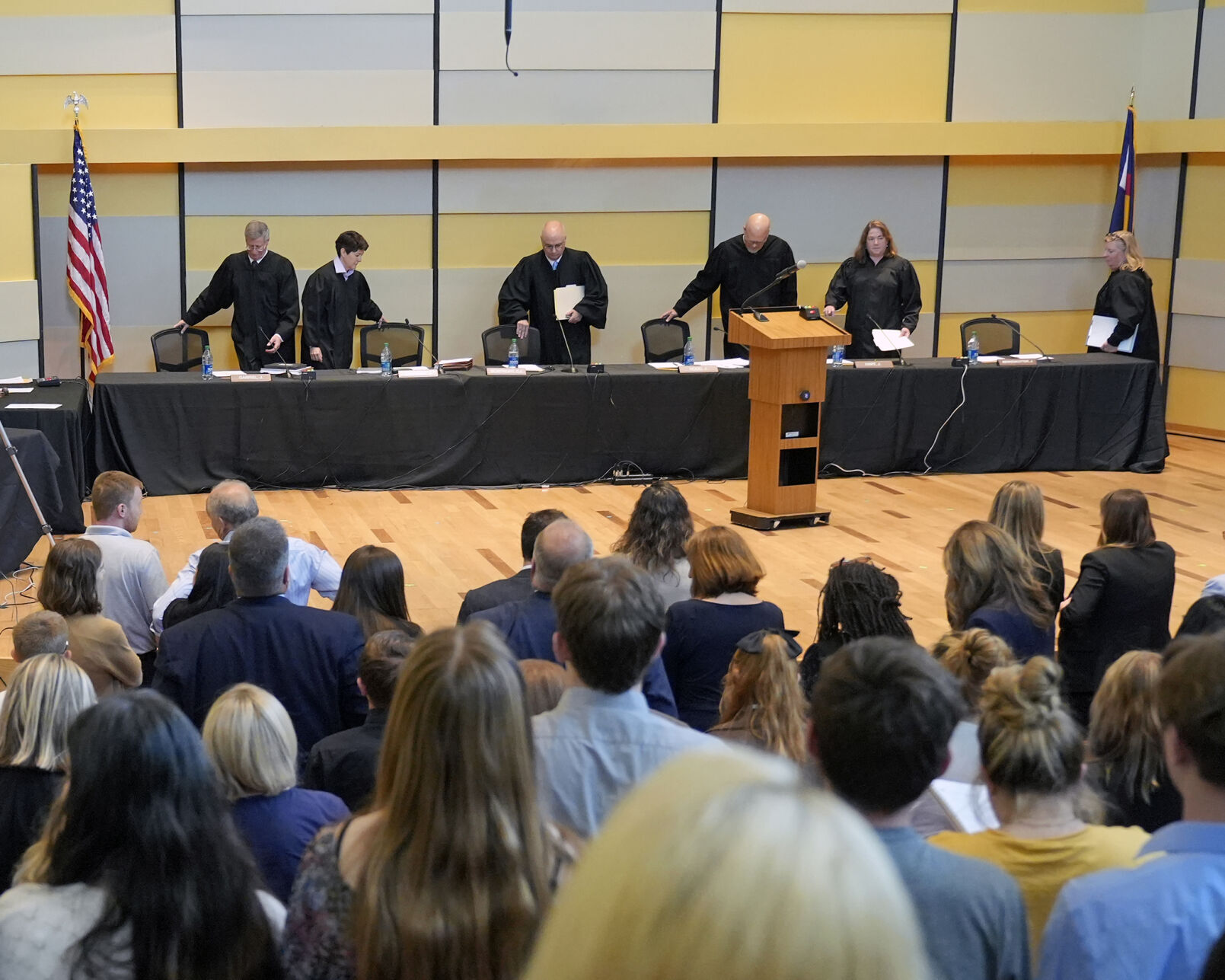
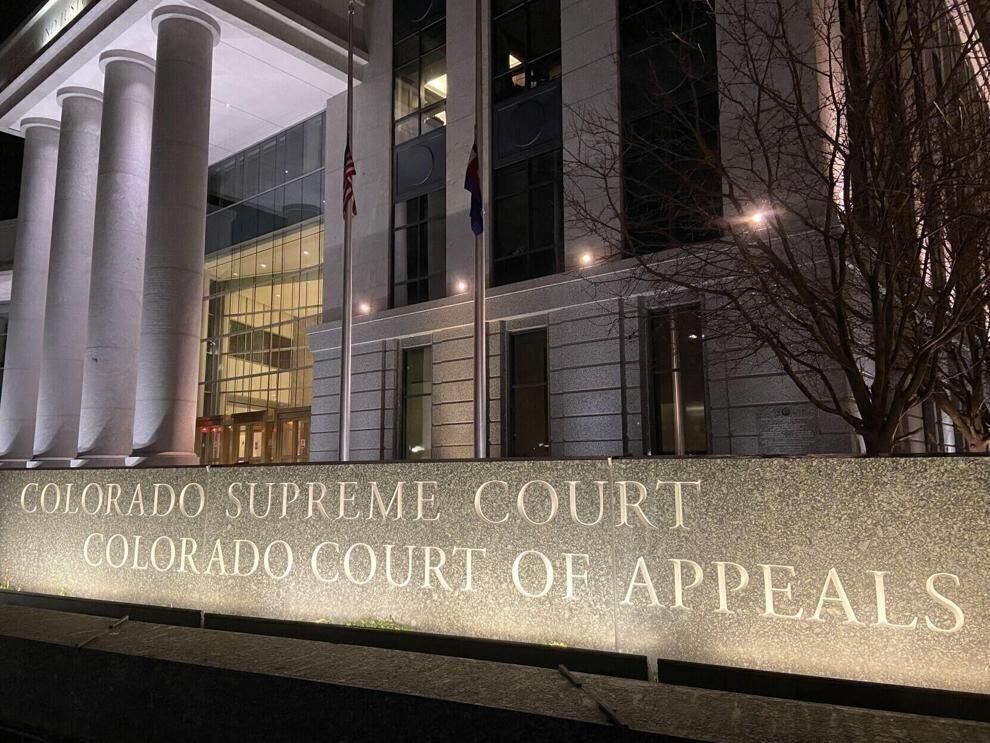
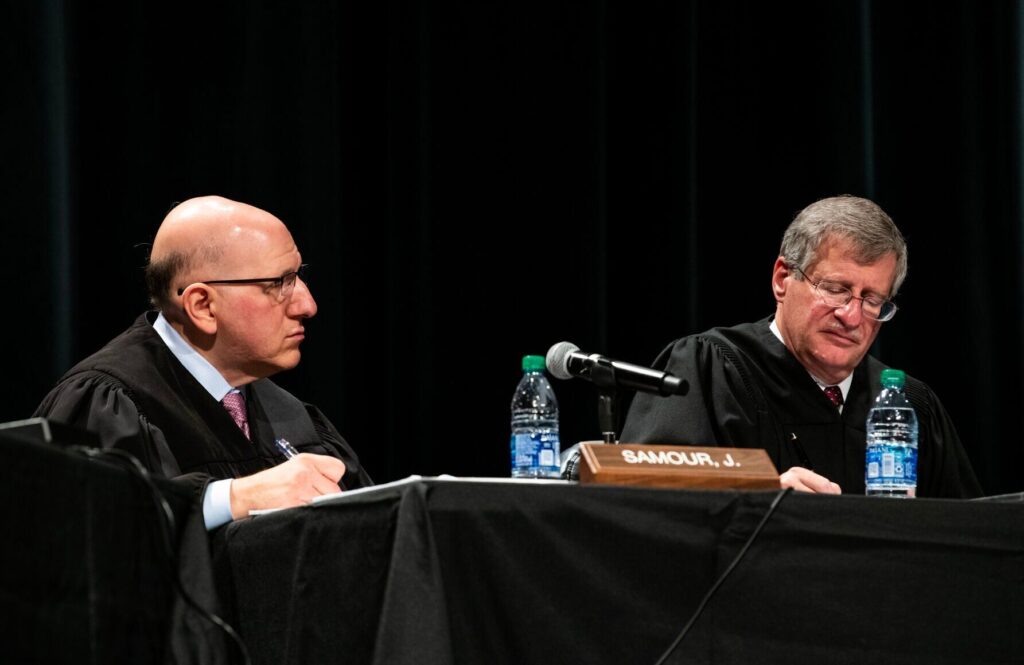
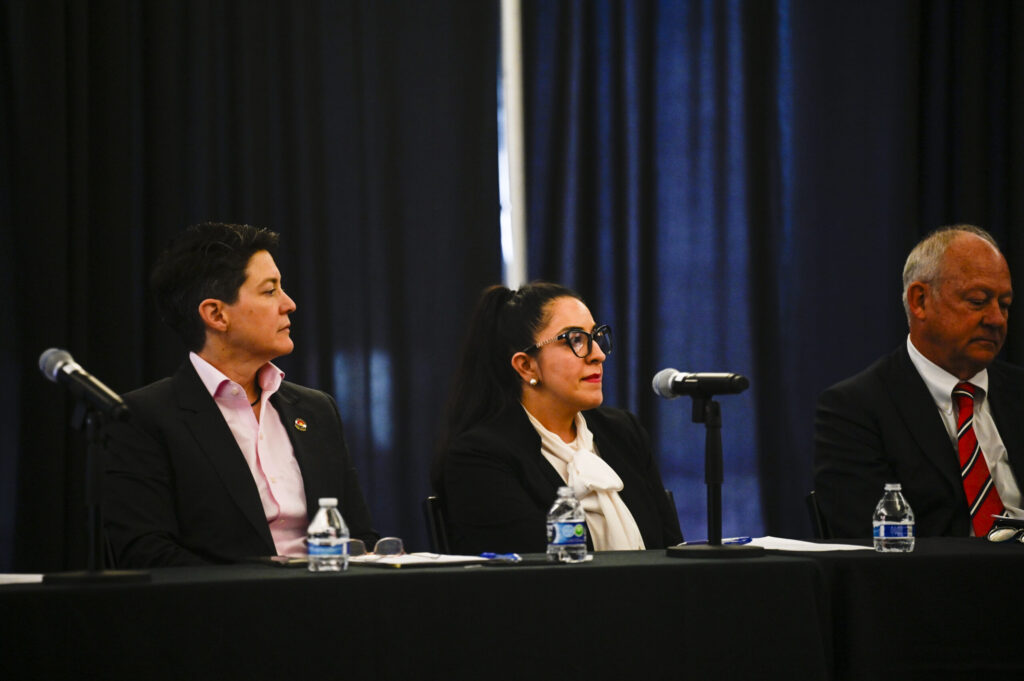
Nearly all members of the Colorado Supreme Court and half of the judges on the Court of Appeals convened with attorneys on Friday to give a behind-the-scenes tour of the inner workings of the judiciary, and to voice concern about the escalating number of issues they are being asked to decide in appeals.
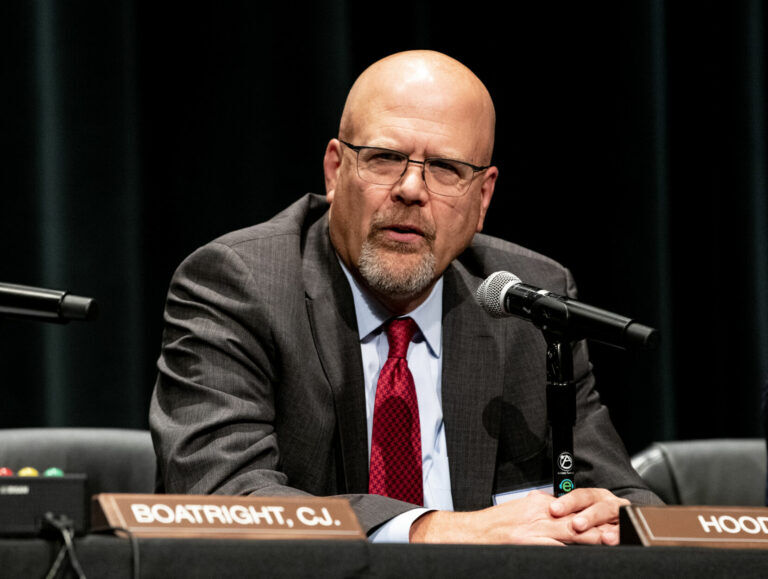
The topics at the 2023 Appellate Practice Update ranged from judicial performance reviews and management training for judges, to the question of whether oral arguments affect the outcome of cases. Chief Justice Brian D. Boatright also disclosed that his term leading the state’s highest court will come to an end in June 2024.
When Boatright ascended to the judiciary’s top post in 2021, the Supreme Court adopted a rotational system for choosing the chief justice, with Justice Monica M. Márquez next in line for the seat but with no definite end date on Boatright’s term. Boatright indicated Márquez and future chief justices will have a much longer ramp-up period than he did to become head of the judicial branch.
“My onboarding process was, I sat across the table from Chief Justice (Nathan) Coats and he said, ‘What would you like to know?’ And a month later I was chief,” said Boatright.
Several themes emerged from the Appellate Practice Update, held at the Ralph L. Carr Colorado Judicial Center in downtown Denver. Attendees learned the Supreme Court is operating more efficiently than in the past, while the Court of Appeals is laboring under a backlog of cases and a large contingent of new judges. Members of both courts agreed oral arguments are worthwhile and play an important role in deciding cases, but warned that lawyers are bogging down appeals with arguments that have little chance of success.
Appellate judges also cautioned attorneys that a small, but surprising number of people appear before the court unable to answer basic, expected questions about their case.
“You should know what you’re asking us to do,” said Justice Richard L. Gabriel.
The chiefs speak
Boatright explained the Supreme Court is more efficient in issuing decisions due to a change in the justices’ voting process. Historically, after oral arguments, there was not much discussion about cases. Instead, the justices would vote and the chief would assign the majority opinion to someone.
Recently, however, “we’ve gone back and said, ‘Do you want to talk about this first?’ And we’ve had a free-ranging conversation,” Boatright said, adding that the ultimate author of the majority opinion has a better sense of the justices’ positions and how to keep the majority together.
“The conversations up front, I think, have improved our efficiency, improved our communication. I see that as our tradition going forward,” he continued.
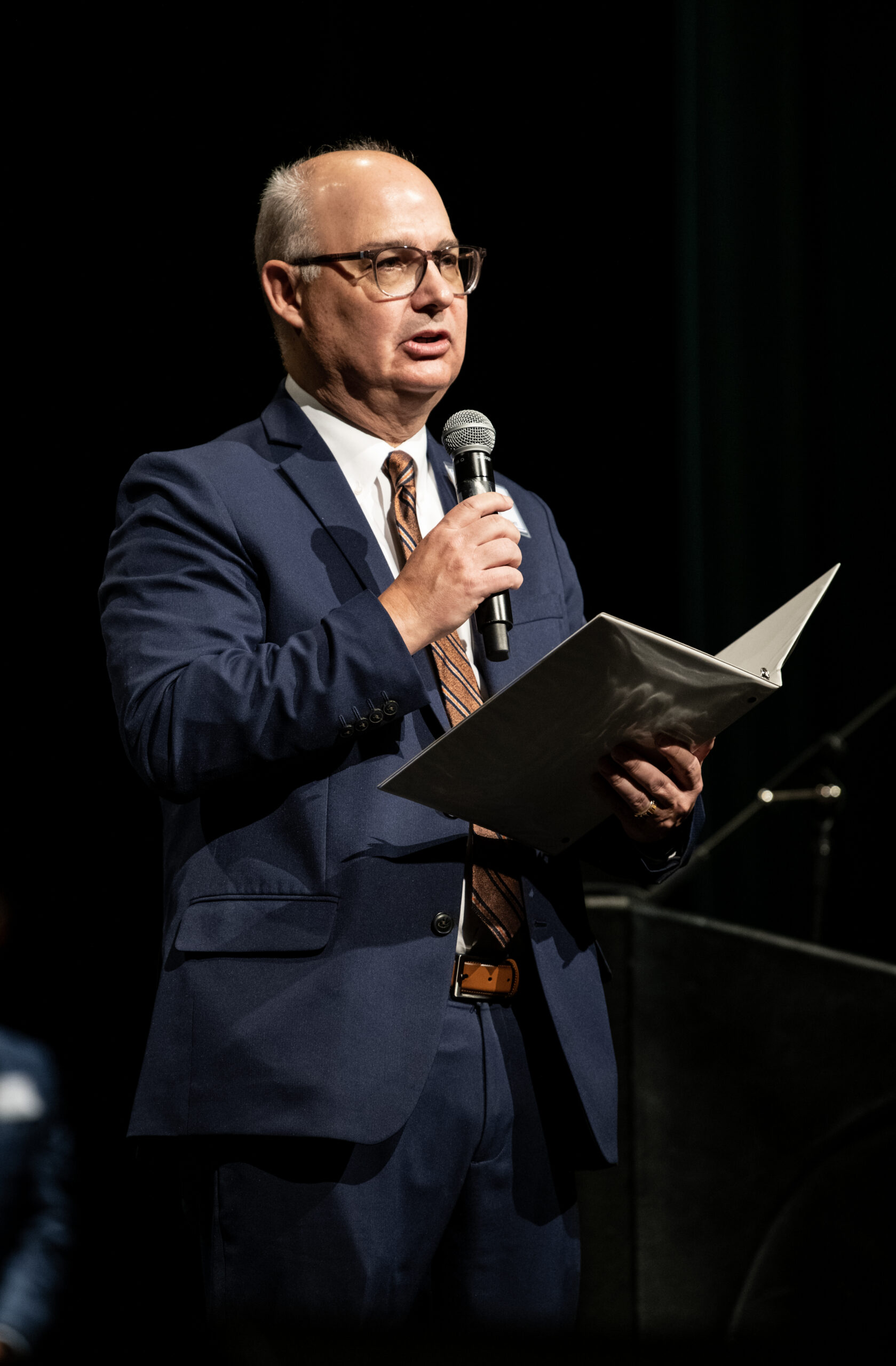
At the same time, Boatright cautioned that the Supreme Court is issuing a relatively low number of overall decisions, due to a decrease in cases heard during the COVID-19 pandemic.
The chief justice previewed an effort to reclassify certain positions in the Judicial Department, and to approach the legislature next year with a proposal for increasing salaries. Currently, Boatright said the judiciary is losing clerks to municipalities and district attorney offices, and some trial judges have gone so far as to set up food pantries for low-paid employees.
He briefly spoke of recent investigations into judicial and administrative misconduct, and was most concerned about the finding that 20% of Judicial Department employees disclosed they would not feel comfortable reporting unethical behavior. Boatright indicated that Márquez will be in charge of improving workplace culture before she is scheduled to begin as chief justice.
“I’m not here to say mission accomplished by any means, but I am saying we’re moving in the right direction,” Boatright said.
Chief Judge Gilbert M. Román of the Court of Appeals also spoke about the challenges facing his court – specifically a seven-month backlog in cases and the fact that half of the 22-member court has been in office for five years or fewer. Román said the appellate judges are undergoing training in management skills and recently completed a four-week study to track the use of their time, the results of which are still being processed.
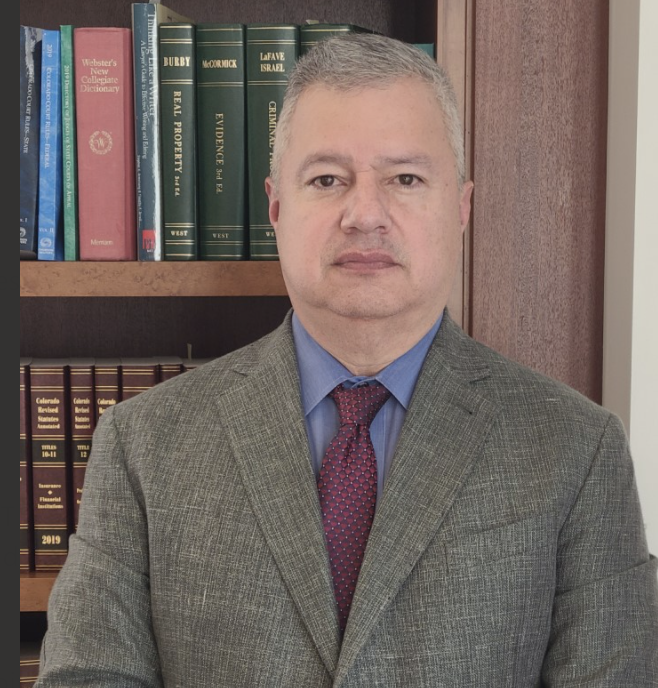
Román also described the problem of Court of Appeals judges, who appear on the statewide ballot every eight years for retention, not receiving robust enough responses from attorneys evaluating their performance.
“What we learned from attorneys,” said Román, is “there is a fear or an apprehension about filling out the surveys and the comments that go with the surveys because there is a fear they will be discovered, particularly with their comments. So those are related: We can’t get the stats up if people are concerned about filling them out.”
How cases are heard
Gabriel and Justice Carlos A. Samour Jr. described their own workflows when considering cases, which begin when the Supreme Court’s members decide to hear an appeal by granting a petition for a writ of certiorari – or a “cert petition.” The justices have a week to vote on each of the more than 1,000 cert petitions that arrive at the court throughout the year, and they deny review more than 90% of the time.
Both men said they prepare for oral arguments more than a week ahead of time. While the entire court does not meet beforehand to discuss the cases, there may be informal conversations between members.
“I might go into Justice Gabriel’s chambers and ask, ‘Hey, what are you thinking about this issue?’ Or he might come into my chambers and ask about a criminal question,” said Samour. “Sometimes it’s through email and sometimes it’s two or three of us.”
“No one tries to lobby on our court,” added Gabriel.

Following oral arguments, the chief justice always assigns the majority opinion to a member based on the justices’ caseloads, comments made during oral arguments and the court’s own discussions, and the ability of an individual justice to hold at least four votes together in a majority.
A common complaint among the justices and appellate judges was the increasing number of legal issues being presented in appeals – many of which lack merit. The issue is more acute with the Court of Appeals, which has substantially less discretion over its caseload.
“Our workload is heavier because we have more issues to address,” said Judge Jerry N. Jones. He added that attorneys raise legal arguments that have “zero – I repeat, zero – chance of persuading anybody. There is far too much of that these days, in my opinion.”
“If you’re raising a bunch of stuff that’s really not that great of an issue, you lose your credibility on what might be your best ones,” added Judge Christina F. Gomez.
The upsides and downsides of oral argument
The justices and appellate judges agreed that oral arguments are generally beneficial, not because they necessarily change votes but because they provide greater nuance to complex legal issues that, in the end, may make the courts’ opinions better.
Justice Maria E. Berkenkotter, the newest member of the Supreme Court who votes first during the justices’ deliberations, recalled one case in which “not one, not two, but three of my colleagues, when it was their turn to speak, said, ‘I came into oral argument thinking A and I now think B.’ Ask for oral argument and when you have oral argument, take advantage of it.”
She added the Supreme Court is not looking at individual cases solely with an eye towards who should win and who should lose.
“Quite frankly, we’re thinking through a much broader lens about what the consequence of this rule is,” said Berkenkotter.

In contrast with the Supreme Court, members of the Court of Appeals acknowledged that prior to oral arguments in front of three-judge panels, one panel member will prepare a “predisposition memorandum” with a tentative case outcome.
Judge Timothy J. Schutz acknowledged the “significant investment” of one judge’s time in researching and drafting the memorandum may make it harder to persuade an appellate panel than the Supreme Court.
“We keep an open mind,” he said, “but I think it’s important to realize there is this opinion that’s out there that centers things.”
Extraordinary intervention
Both the Supreme Court and Court of Appeals have mechanisms to hear interlocutory appeals, which are filed in the middle of a case rather than the typical practice of appealing after the proceedings in the trial court have concluded.
Boatright said the Supreme Court receives, on average, one interlocutory appeal each business day in a Rule 21 petition, as they are known. Each justice, except the chief, is in rotation to receive and investigate those requests for sometimes-urgent intervention.
“You get one and you turn to it because you don’t know what the issue is or the time-sensitive nature of what it is,” he said. “It could be a deposition starting in two hours.”
Boatright said in the last year, the Supreme Court granted 8% of Rule 21 petitions, higher than the 4% historical average.
The key factor, Boatright elaborated, is not only showing that a trial judge made an error, but that the appealing party will suffer a harm that cannot be fixed during the traditional appeals process. Last week, for example, the Supreme Court heard an interlocutory appeal challenging the constitutionality of a search warrant used to identify the suspects who allegedly set a deadly house fire in Denver.
Judge Terry Fox added the Court of Appeals addresses interlocutory appeals with similar urgency.
“We drop everything to pay attention to it,” she said.
Beware of bad behavior
Finally, the justices and judges warned lawyers about frequent missteps they see attorneys make. Not being prepared at oral arguments, refusing to acknowledge obvious facts, and repeatedly asking for last-minute extensions made the list of discouraged behavior.
“Emotional facts, to my knowledge, have never created legal error. So don’t try to sway me that your client is the sympathetic one,” said Judge Ted C. Tow III. “I know that sounds heartless, but it can’t matter if I’m doing my job.”
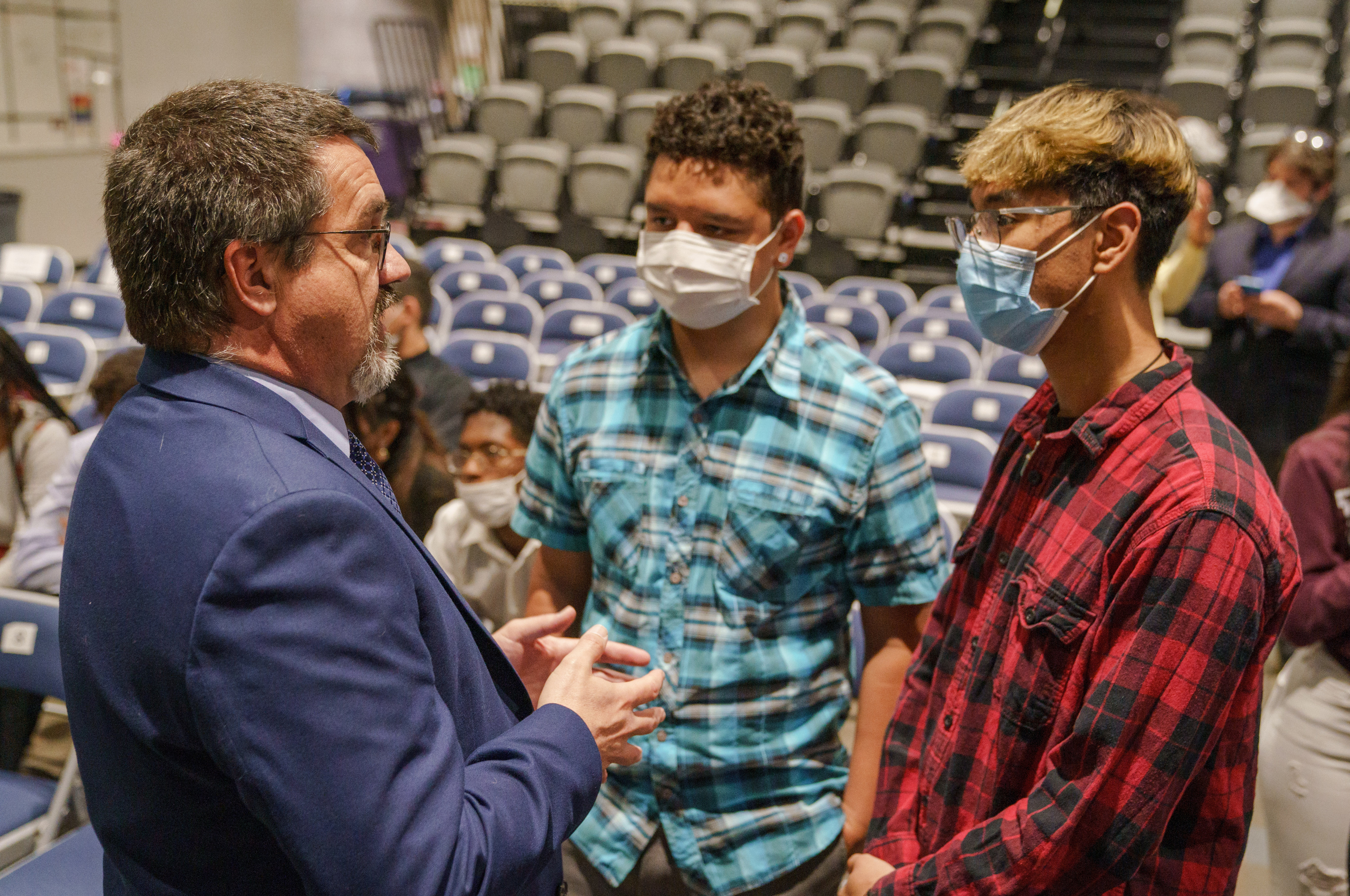
Lawyers who make misrepresentations to the court are also problematic, and judges have occasionally alerted regulators to potential attorney misconduct.
“We’ve seen lawyers who quote parts of a statute and they leave out the word that changes the meaning entirely,” said Judge David H. Yun. “They’re acting like these are the terms of what the statute says. But it’s not accurate. You’ll lose a lot of credibility.”
The Colorado Bar Association’s Litigation Section, and its appellate practice subsection, sponsored the event.


Colorado justices confirm leaving-the-scene prosecutions require no proof of driver’s knowledge
Michael Karlik
michael.karlik@coloradopolitics.com
Updated 6 hours ago
The Colorado Supreme Court confirmed on Tuesday that its 20-year-old decision involving drivers who leave the scene of an accident remains good law and prosecutors do not have to prove that such defendants knew they were involved in an accident....

Judge blocks Colorado’s proposed ban on using SNAP benefits for soda
Marissa Ventrelli
marissa.ventrelli@coloradopolitics.com
Updated 10 hours ago
A federal judge has temporarily blocked Colorado and several other states from enforcing a proposed “Healthy Choice Waiver” that would have barred Supplemental Nutrition Assistance Program (SNAP) recipients from using their benefits to buy soda and other sugary drinks. Under...
Boulder police overreached in interrogating suspect, Colorado Supreme Court finds
Michael Karlik
michael.karlik@coloradopolitics.com
Updated 10 hours ago
Two Boulder detectives violated a man’s constitutional rights by interrogating him at his home using a court order that solely authorized the collection of his DNA evidence, the Colorado Supreme Court concluded on Tuesday. The ruling curtailed the ability of...
Property owners may access evidence before eminent domain decisions, Colorado justices conclude
Michael Karlik
michael.karlik@coloradopolitics.com
Updated 10 hours ago
The Colorado Supreme Court ruled on Tuesday that a Douglas County judge incorrectly believed he lacked the authority to allow a property owner to pursue evidence challenging a government entity’s legal right to take its property through eminent domain. In...
Missy Woods accepts plea deal, avoids trial on 102 felony counts
Jenny Deam
jenny.deam@gazette.com
Updated 11 hours ago
The former top Colorado Bureau of Investigation forensic scientist accused of altering and deleting DNA evidence in scores of criminal cases across the state for years pleaded guilty to four criminal counts Tuesday in Jefferson County. Yvonne “Missy” Woods, 65,...

10th Circuit grants Boulder-Weld district’s fire chief immunity for firing union leader
Michael Karlik
michael.karlik@coloradopolitics.com
Updated 1 day ago
The Denver-based federal appeals court decided on Monday that the chief of a fire protection district spanning Boulder and Weld counties could not be held liable for terminating a union leader through the process outlined in the collective bargaining agreement....

State Supreme Court oral arguments, 10th Circuit nominee recuses from cases | COURT CRAWL
Michael Karlik
michael.karlik@coloradopolitics.com
Updated 1 day ago
Welcome to Court Crawl, Colorado Politics’ roundup of news from the third branch of government. The state Supreme Court will hear its last set of oral arguments this week before breaking for the summer, and the nominee for a vacancy...

Appeals court adopts federal standard for jail deaths under Colorado law
Michael Karlik
michael.karlik@coloradopolitics.com
Updated 1 day ago
Colorado’s second-highest court decided last month that the standard used by federal courts for assessing whether government officials may be liable for constitutional violations upon the death of a jail detainee also applies to claims made under the Colorado Constitution....
Trump’s 10th Circuit nominee recuses from cases against federal government without explanation
Michael Karlik
michael.karlik@coloradopolitics.com
Updated 3 days ago
President Donald Trump’s nominee to fill a vacancy on the Denver-based federal appeals court recused himself without a clear explanation from nine cases against the executive branch while he was undergoing vetting by the White House this spring. U.S. District...
Adams County murder conviction reversed due to faulty jury instruction
Michael Karlik
michael.karlik@coloradopolitics.com
Updated 3 days ago
Colorado’s second-highest court overturned an Adams County defendant’s murder conviction last month because the instruction provided to the jury about a trespasser’s right to use self-defense did not accurately reflect Colorado law. A person is justified in using force to...
PREV
PREVIOUS

Kwame Spearman announces candidacy for Denver school board
Kwame Spearman made it official Monday. He’s running – after a failed Denver mayoral bid -for the at-large seat on the Denver Public Schools Board of Education. Early last month, Spearman stepped down as CEO of the Tattered Cover to explore a run for school board in November. The board has two at-large seats. The […]

RTD launches real-time arrivals in Next Ride interactive voice response system
Finding out when your bus is going to arrive at your preferred stop is easier now that RTD has launched its improved Next Ride IVR, an interactive voice response system. Customers can call the agency’s customer care number, 303-299-6000 to find out when any fixed-route bus or train is expected to arrive at a specific […]