

Colorado primary for governor: Meet the Democratic and Republican candidates

Colorado’s race for governor is wide open this year, with Gov. Jared Polis term‑limited and unable to seek reelection. Five candidates are competing for a spot on the November ballot, setting up one of the most closely watched primaries in recent cycles.
For Republicans, three contenders are aiming to break the Democratic hold on the governor’s office: state Sen. Barbara Kirkmeyer, state Rep. Scott Bottoms, and ministry leader Victor Marx.
Democrats will see a high‑profile matchup of their own, with Attorney General Phil Weiser, also term‑limited in his current role, facing U.S. Sen. Michael Bennet for the party’s nomination.
Colorado’s 3 Republican gubernatorial candidates face off in heated primary debate
Republicans Kirkmeyer, Bottoms say they won’t back Marx if he wins Colorado’s gubernatorial primary
Republicans Scott Bottoms, Victor Marx win spots in Colorado gubernatorial primary at party assembly
Republican candidates
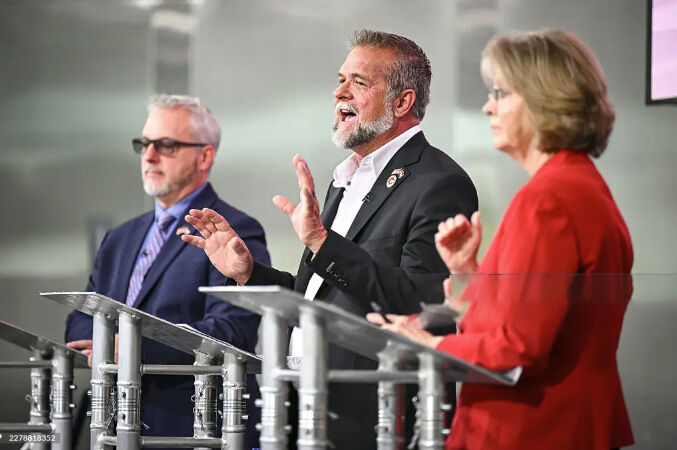
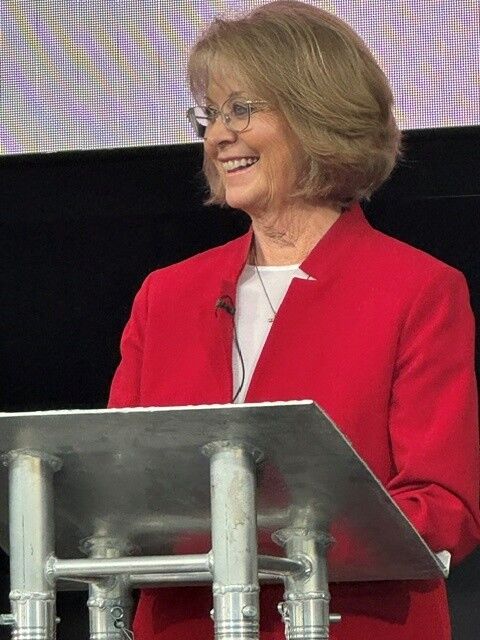
Barbara Kirkmeyer
Barbara Kirkmeyer presents herself as a lifelong Coloradan with deep roots in agriculture, local government, and state budgeting. A fourth‑generation resident who grew up on a north Jeffco farm, she cites her experience as a dairy farmer, small‑business owner, and former acting executive director of the Department of Local Affairs under Gov. Bill Owens as the foundation of her public‑service career.
Kirkmeyer emphasized a record of conservative policymaking in the state legislature. She said she has passed more bills than any other Republican lawmaker in recent years and highlighted her work on transportation and budgeting, including securing funding for the expansion of I‑25 north. She also pointed to her role in opposing Proposition HH and her efforts to keep Weld County debt‑free during her time as a county commissioner.
Her campaign centers on affordability, public safety, government spending, education outcomes, and infrastructure, according to her campaign. She has argued that Colorado’s challenges stem from years of one‑party control and frequently says “decline is a choice,” calling for a shift in Colorado’s politica direction.
Kirkmeyer has often contrasted her approach with that of fellow GOP candidates Scott Bottoms and Victor Marx, describing herself as the “adult in the room.”
As a member of the Joint Budget Committee, she has made fiscal stability a central theme, especially after lawmakers struggled to close a projected $1.2 billion shortfall for the 2026–27 budget, her campaign said. She regularly contends that the Democratic‑led legislature has a spending problem that must be addressed.
During a June 2 debate, Kirkmeyer argued that “Democrats have made a complete mess of this state” and said she has “a plan to whip our budget into shape within six months.”
Barb Kirkmeyer, Republican candidate for Colorado governor
Colorado Republicans Gabe Evans, Bill Owens endorse Barb Kirkmeyer’s gubernatorial campaign
Republican state lawmaker Barb Kirkmeyer set to launch campaign for Colorado governor
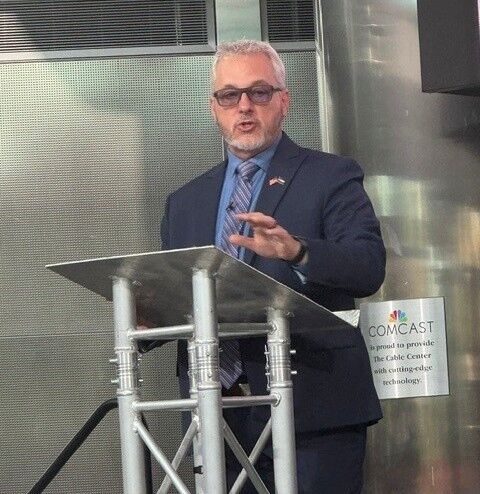
Scott Bottoms
Rep. Scott Bottoms launched his campaign for governor last year, pledging to be an “uncompromising conservative,” a message consistent with his tenure as the state representative for House District 15 in eastern Colorado Springs and El Paso County.
Bottoms secured the top line on the Republican primary ballot after winning 45% of delegate support at the Colorado GOP State Assembly in March.
Bottoms frames his campaign around what he calls a “child safety crisis,” advocating for stronger parental authority, a ban on transgender surgeries for minors, and reforms to state law enforcement agencies.
His platform also includes eliminating property taxes, cutting regulations, and advancing the Colorado Energy Freedom Act, which he argues would reduce energy and housing costs.
Bottoms has frequently argued that Colorado has become unaffordable and fiscally unstable under Democratic control, pointing to the state’s growing budget deficit as evidence that change is needed.
During a June 2 debate in Denver, he said Democrats have “pretty much destroyed everything in our state” and pledged to govern strictly by the Constitution, citing the Second Amendment and the Taxpayer’s Bill of Rights as guiding principles.
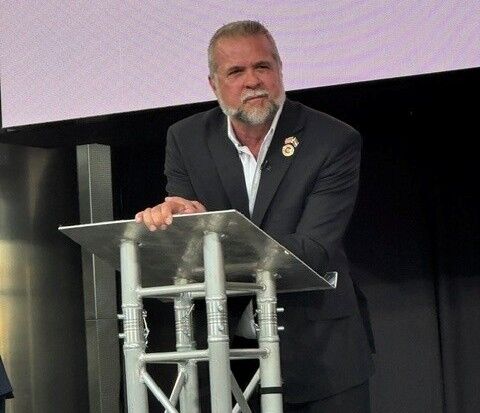
Victor Marx
Victor Marx, a newcomer to politics, entered the Republican primary last year, gaining attention through fundraising, visibility, and an outsider message.
He frames his life story around hardship, resilience, and faith, describing a childhood marked by severe abuse and instability before finding structure and purpose in the U.S. Marine Corps.
Marx later founded All Things Possible Ministries, where, he said, he has led more than 150 missions in conflict zones to help victims of terrorism, trafficking, and violence.
In his run for governor, Marx has argued that Colorado is facing rising crime, declining public safety, and increasing living costs. He said he is running to restore “safety, strength, and moral clarity,” presenting his candidacy as an extension of his mission‑driven work abroad, now focused on issues at home.
Positioning himself as “not a politician,” Marx told voters during a June 2 debate that he is instead a “leader” and a strong “negotiator,” qualities he says Colorado needs in its next governor to address the problems driving residents out of the state.
GOP rivals have criticized Victor Marx throughout the campaign, with both Barbara Kirkmeyer and Scott Bottoms calling him a “fraud” and a “con‑man” and saying they would not support him if he wins the Republican nomination on June 30.
During the June 2 debate, Marx dismissed their characterization as “mean” and said he would support either of them if they became the nominee.
Victor Marx, Republican candidate for Colorado governor
Democratic candidates
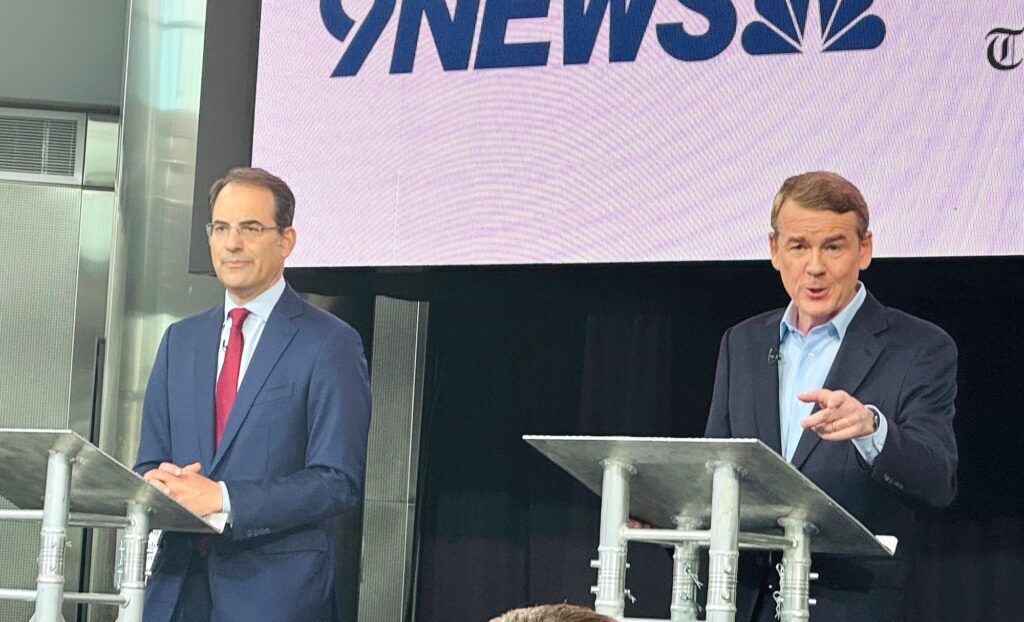
The race for the Democratic nomination could be tightening as the primary approaches, according to a recent poll released by Fighting for Colorado, an independent expenditure committee that supports Weiser.
The survey, conducted June 1-2 by Democratic firm Public Policy Polling, showed Bennet leading Weiser, 36%-30%, among likely primary voters, — just outside the poll’s 4.4% margin of error — with 34% undecided. The new poll portrays a closer race than a survey released in February by a pollster hired by Bennet’s supporters, who found the three-term senator with a 27-point lead.
More coverage below:
Democrats Phil Weiser, Michael Bennet bank millions ahead of Colorado’s gubernatorial race

Michael Bennet
U.S. Sen. Michael Bennet entered the governor’s race in April 2025, saying he was motivated by what he viewed as Colorado’s urgent challenges — especially what he has repeatedly called the state’s “cost‑of‑living crisis.”
Bennet, who has served in the Senate since 2009, cast his run as a shift from federal to state leadership, arguing that the most pressing fights over affordability, housing and infrastructure are happening at the state level. He has made affordability the central theme of his campaign, saying he wants Colorado to remain a place where working‑ and middle‑class families can build stable lives.
Bennet’s entry set up a high‑profile primary against Attorney General Phil Weiser, and the two have frequently clashed on the debate stage.
During a June 4 debate, Weiser argued that Bennet should have stayed in the Senate, which would have allowed Weiser to run for governor without giving up his own post and, in his view, would have positioned them to work together on state issues.
When pressed on the fact that, if elected governor, he would likely choose his Senate successor, Bennet said he had not considered who that might be.
Several members of Colorado’s congressional delegation who could themselves be contenders for the open Senate seat — including Reps. Jason Crow, Brittany Pettersen, and Joe Neguse — have appeared in recent ads endorsing Bennet over Weiser.
As the race has unfolded, both campaigns have frequently invoked the Trump administration. During the June 4 debate, the moderator described the primary as a contest over who could blame Donald Trump for more problems and asked the candidates to identify issues facing Colorado that aren’t tied to Trump. Bennet rejected the premise, saying he hears about many concerns unrelated to national politics.
“Most of what we’re talking about is the cost‑of‑living crisis that Colorado is having,” Bennet said, adding that he believes economic pressures facing families help explain Trump’s political rise. “No, I don’t think he’s caused every single problem for Colorado or America. I think he is a symptom of the economic challenges that too many Americans and too many Coloradans are facing.”
U.S. Sen. Michael Bennet: ‘It’s right to suspend’ wolf program in Colorado
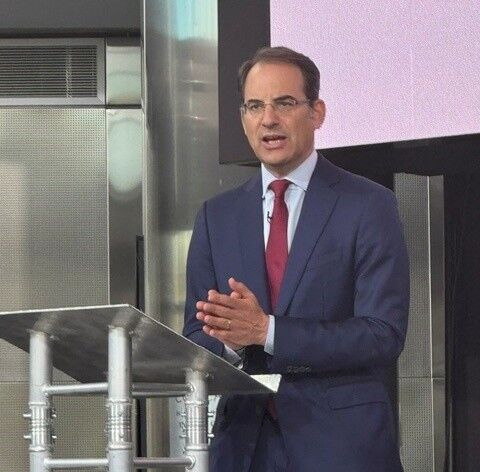
Phil Weiser
Phil Weiser is running for governor after eight years as Colorado’s attorney general, presenting himself as an experienced statewide leader focused on affordability, consumer protection and defending state interests.
On the campaign trail, he has highlighted his work taking on opioid manufacturers, social‑media companies and corporations accused of fraud, as well as his record challenging the Trump administration on issues ranging from SNAP benefits to voter‑roll data requests.
Over the past year, Weiser has drawn attention for suing the Trump administration, joining more than 65 lawsuits targeting federal policies and executive actions.
On the campaign trail, Weiser has emphasized that his expertise is rooted in state‑level problem‑solving, saying he has represented every state agency, led an office of more than 700 employees and managed a $150 million budget. He points to accomplishments, such as fighting a proposed mega‑grocery merger, protecting water resources, and defending federal funding and food assistance for hundreds of thousands of Coloradans.
Like Bennet, Weiser has made affordability the centerpiece of his campaign.
Weiser has argued that while Bennet largely describes the state’s problems, he offers detailed plans to address them. During the June 4 debate, Weiser urged voters to compare the specificity of his proposals on gun‑violence prevention, social‑media regulation, and youth mental‑health support.
He also highlighted his plans to expand mentoring programs — noting that 40% of Colorado children currently have no mentors — and to build a “Colorado Corps” to encourage service in teaching, nursing, firefighting, counseling, and other fields.
“We must do more for our kids. Our kids deserve better. That’s my agenda,” Weiser said.
Q&A with Colorado Attorney General Phil Weiser | Democrat is running to be ‘the people’s governor’
Phil Weiser wins top spot in Colorado’s Democratic gubernatorial primary at party’s state assembly
Phil Weiser, Democratic candidate for Colorado governor
Using AI analysis, campaign finance complaints lodged against Jena Griswold, Phil Weiser
Voter information
- June 12 – Deadline for initial mail ballots to be sent to active voters for the 2026 Primary Election.
- June 22 – Deadline to register to vote and still be mailed a ballot. After this date, residents must register and then vote in person.
- June 22 – The minimum number of required voter centers must be open.
- June 22 – Last suggested day to return ballots by mail.
- June 23 – The minimum number of required drop boxes must be open. From this date on, voters should return their ballots to a voter center or drop box, or vote in person.
- June 30 – Election Day. Voters must submit their ballot or be in line to vote by 7 p.m. for their ballot to be counted.
- June 30 – Ballots cast by military and overseas voters must be sent no later than 7 p.m. on Election Day.
- July 8 – Deadline for ballots cast by military and overseas voters to be received by their county clerk.
- July 8 – Deadline for voters to cure a signature discrepancy or missing signature, if notified by the county clerk.
Ernest Luning contributed to this report.

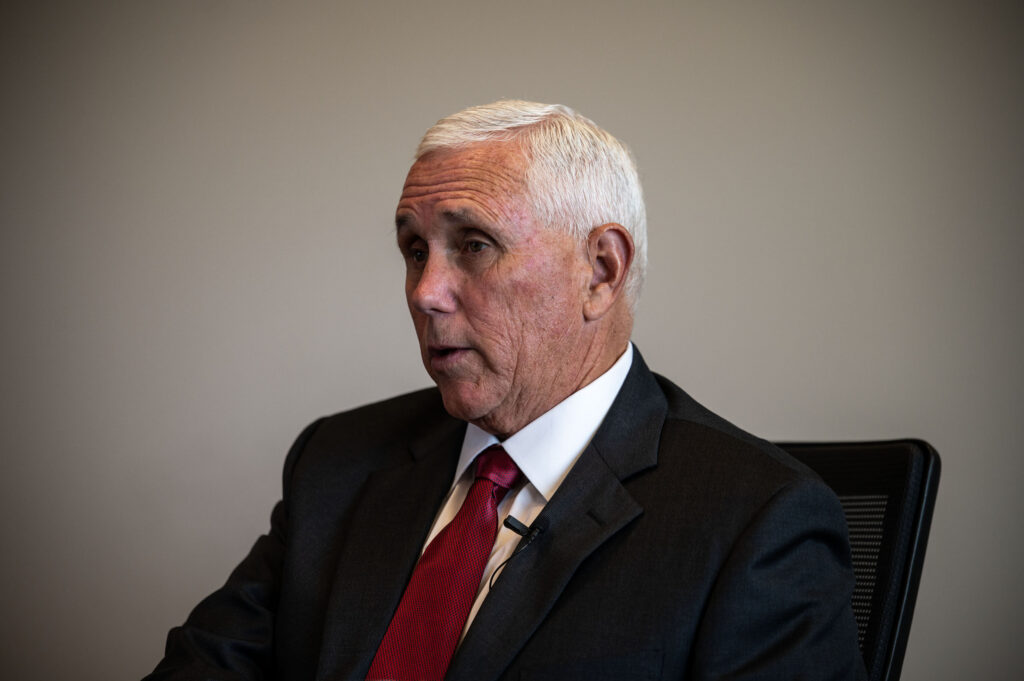
Q&A with Mike Pence | Former vice president says GOP’s populist turn from conservatism isn’t permanent
Ernest Luning
ernest.luning@coloradopolitics.com
Updated 12 hours ago
Former Vice President Mike Pence says he’s concerned that the Republican Party has taken a populist turn away from bedrock conservative principles during President Donald Trump’s second term, but he believes the party will return to its roots when Trump...

New federal plan sets short-term rules for Colorado River management
Marianne Goodland
marianne.goodland@coloradopolitics.com
Updated 11 hours ago
Interior Department’s plan spares Colorado from mandatory cuts for now After years of stalled negotiations among the seven states that rely on the Colorado River, the federal government on Friday released its own plan for managing the drought-strained system. Calling...

Colorado is spared mandatory cuts under federal Colorado River proposal
The Associated Press
the-associated-press@coloradopolitics.com
Updated 17 hours ago
California, Arizona and Nevada to take less water under plan While Colorado has been spared from mandatory reductions, Arizona, California and Nevada would take less water from the Colorado River under a proposal announced Friday by the federal government to...
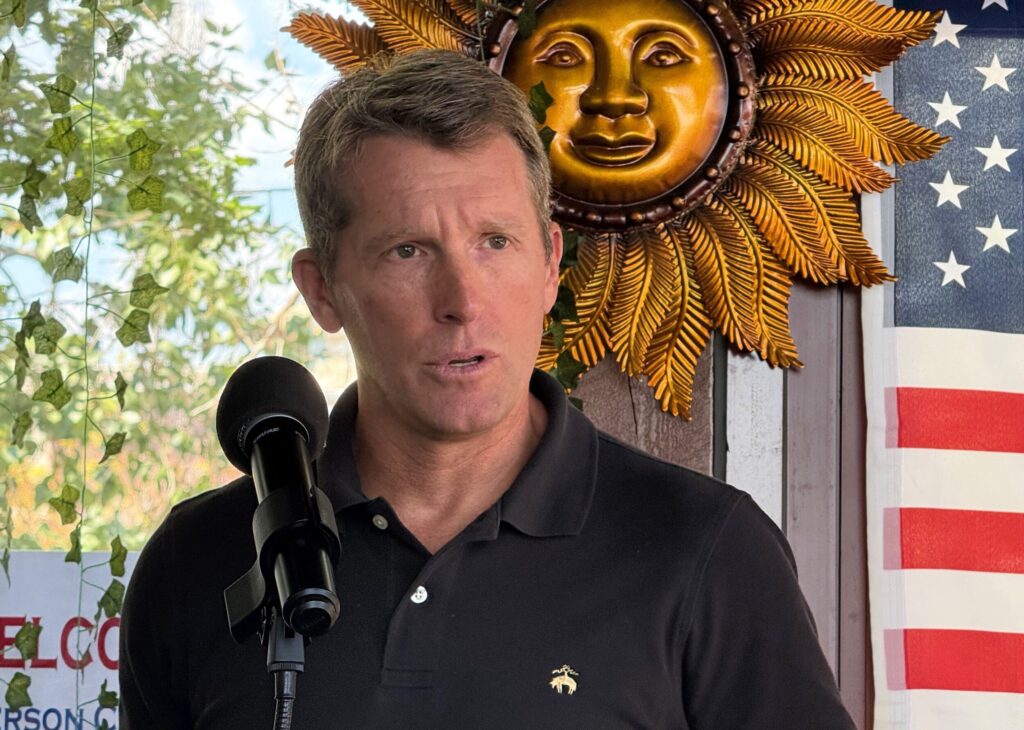
Republican Victor Marx taps George Markert as his lieutenant governor pick in Colorado’s gubernatorial race
Ernest Luning
ernest.luning@coloradopolitics.com
Updated 9 hours ago
Colorado Republican gubernatorial nominee Victor Marx named George Markert, a retired Marine colonel, as his running mate for lieutenant governor Friday morning, saying the former U.S. Senate candidate will bring “exceptional character, proven leadership and a lifetime of serving others”...

Boulder County coroner IDs body found over 50 years ago
Matt Kyle
matt.kyle@denvergazette.com
Updated 17 hours ago
After nearly 55 years, a body found in Boulder County has been identified. The Boulder County Coroner’s office on Thursday announced it has identified a set of remains found in Bluebell Canyon in August 1971 as Douglas Sumner, 22. The...
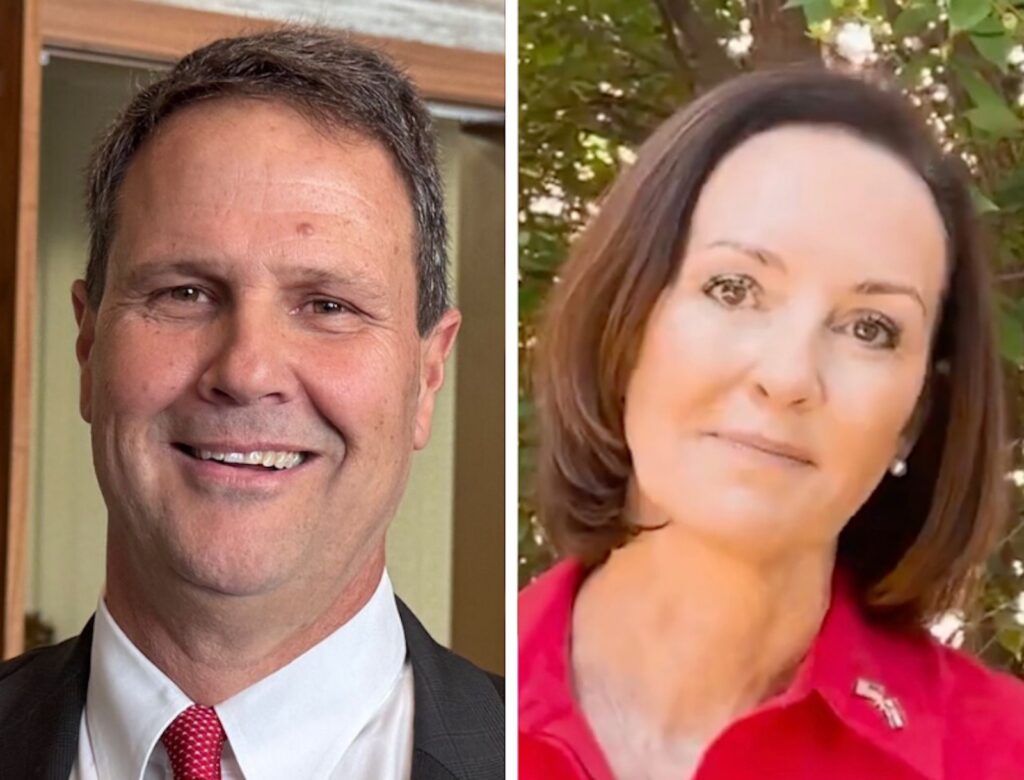
Democrat Jessica Killin’s internal poll shows dead heat with U.S. Rep. Jeff Crank in Colorado’s 5th CD
Ernest Luning
ernest.luning@coloradopolitics.com
Updated 1 day ago
Jessica Killin, the Democratic nominee in Colorado’s 5th Congressional District, is in a statistical tie with Republican U.S. Rep. Jeff Crank, according to an internal poll released this week by Killin’s campaign. The poll of likely general election voters, conducted...

Federal biotech commission examines Colorado’s role in critical minerals production
Scott Weiser
scott.weiser@gazette.com
Updated 17 hours ago
China’s dominance over critical mineral supplies has left U.S. manufacturers vulnerable. Colorado’s biotech and research community is working to ease that dependence. Leaders from the National Security Commission on Emerging Biotechnology met last week at the Colorado School of Mines...

Douglas County schools to consolidate administrative offices into $29M headquarters to cut costs
Nicholas Fogleman
nicholas.fogleman@denvergazette.com
Updated 17 hours ago
The Douglas County School Board is moving forward with a $29 million plan to consolidate district administrative operations into a new headquarters. It’s part of an effort to reduce annual costs as the district faces ongoing budget pressures. In June,...

Veo scooter clutter, sidewalk riders frustrate Denverites
Deborah Grigsby
deborah.smith@denvergazette.com
Updated 17 hours ago
Denver resident Mike Miller was on a downtown sidewalk recently when a Veo scooter rider traveling at full speed passed him as the scooter blasted a “do not ride on sidewalks” warning. In a letter to Veo Policy and Partnerships...
Jeffco taxpayers could be on the hook for a possible child sex assault settlement
Matt Kyle
matt.kyle@denvergazette.com
Updated 17 hours ago
Taxpayers may end up on the hook for a child sexual assault settlement, possibly worth up to $15 million, after Jeffco Public Schools failed to notify its insurance company in a timely manner about the case. The incident stems from...
PREV
PREVIOUS

Colorado Attorney General Democratic primary: Meet the candidates
One of the most closely watched contests on the June primary ballot is the four‑way Democratic race for Colorado attorney general. With Attorney General Phil Weiser term‑limited and running for governor, attention has shifted to the candidates vying to replace him and the qualifications they bring to the state’s top legal office. Running for attorney […]

Arapahoe County commissioner incumbents run for re-election
Two progressive Arapahoe County commissioners are running for re-election in the June 30 primary against a Cherry Creek School District board director and nonprofit leader. The incumbents are District Four Commissioner Leslie Summey and District Two Commissioner Jessica Campbell. Campbell is running against Democrat Angela Garland. There is one Republican candidate, Carl Schuldies, who is […]