

Divided appeals court says COVID-19 did not cause ‘direct physical loss’ to senior care facilities
Colorado’s second-highest court ruled on Wednesday that the COVID-19 pandemic and related public health orders did not cause a “direct physical loss” to the property of various assisted living facilities to the point of triggering insurance coverage.
By 2-1, a three-judge Court of Appeals panel relied on the reasoning of recent federal court opinions and a related Colorado Supreme Court decision that all concluded the novel coronavirus itself did not cause physical damage to property or render it uninhabitable.
“Having reached this conclusion, however, we caution that our analysis does not mean that COVID-19 can never be found to cause a direct physical loss,” wrote Judge Timothy J. Schutz in the June 18 majority opinion. But in the case before the court, the plaintiffs’ properties “remained habitable, even though the day-to-day facility operations were significantly impacted.”
Judge Craig R. Welling disagreed, believing Spectrum Retirement Communities, LLC had alleged the danger posed by COVID-19 reached the point of affecting the use of its assisted living facilities’ physical areas.


“I acknowledge that this is a close case that poses serious difficulties in drawing clear lines. This is because the insured property is only partially uninhabitable, not completely so,” he wrote. Still, “Spectrum adequately alleged that sufficient portions of its facilities were rendered ‘uninhabitable and highly dangerous’ by COVID-19.”
The lawsuit over Spectrum’s insurance claim implicated four other Colorado cases providing a roadmap for when an airborne hazard affects physical property.
In 1968, more than 50 years before the COVID-19 pandemic, the state Supreme Court decided Western Fire Insurance Company v. First Presbyterian Church. The Littleton Fire Department closed a church building because gasoline infiltrated the soil around it. The leak contaminated the interior of the church, “making the use of the building dangerous.”
At the time, the Supreme Court acknowledged that the inability to use the church might not qualify as a “direct physical loss” on its own. However, the saturation of gasoline into the church had rendered the entire building uninhabitable, meaning the property insurance company could be held liable for a claim.
Then in early 2023, the U.S. Court of Appeals for the 10th Circuit addressed whether an insurer was liable for a restaurant’s “accidental physical loss or accidental physical damage” due to the novel coronavirus. The court concluded Western Fire did not apply to such a scenario, as the loss “must be physical, not simply stem from something physical.”
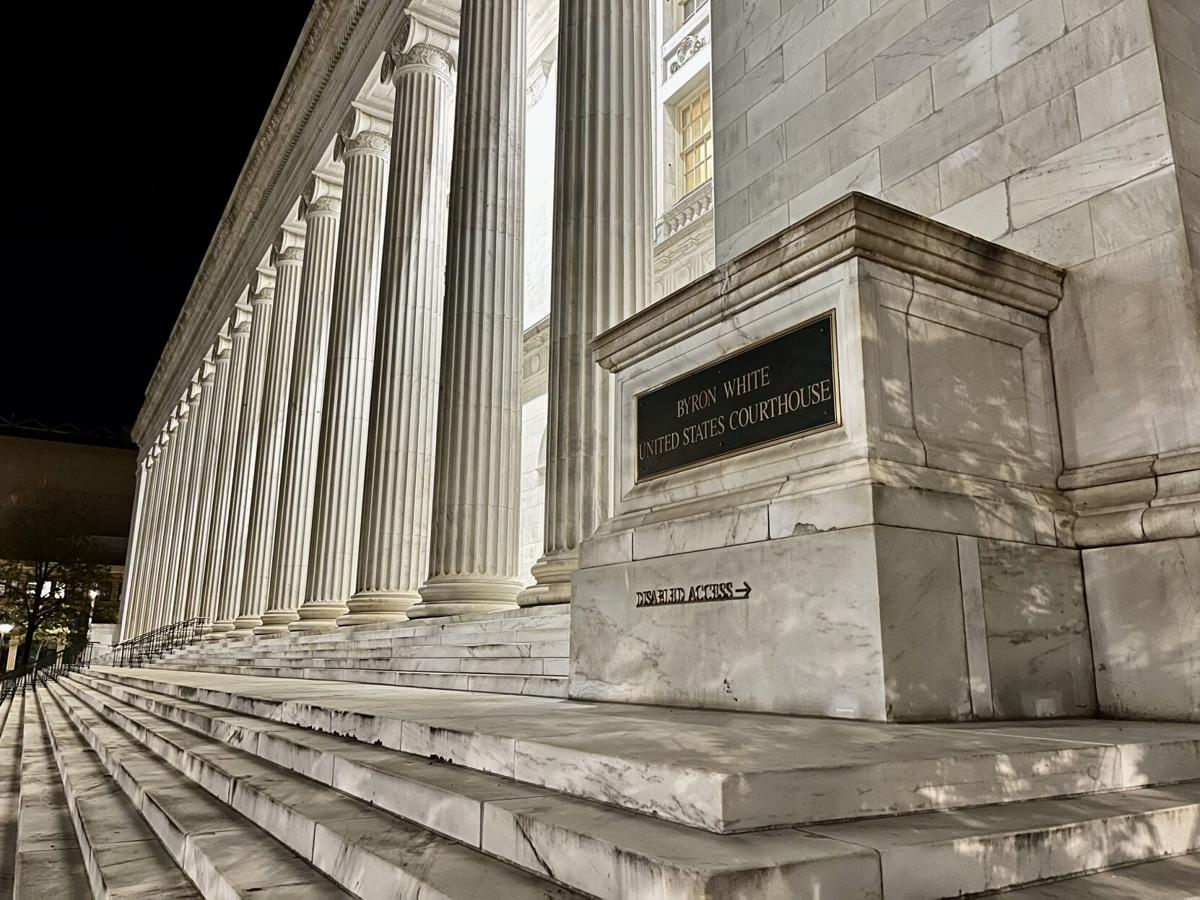
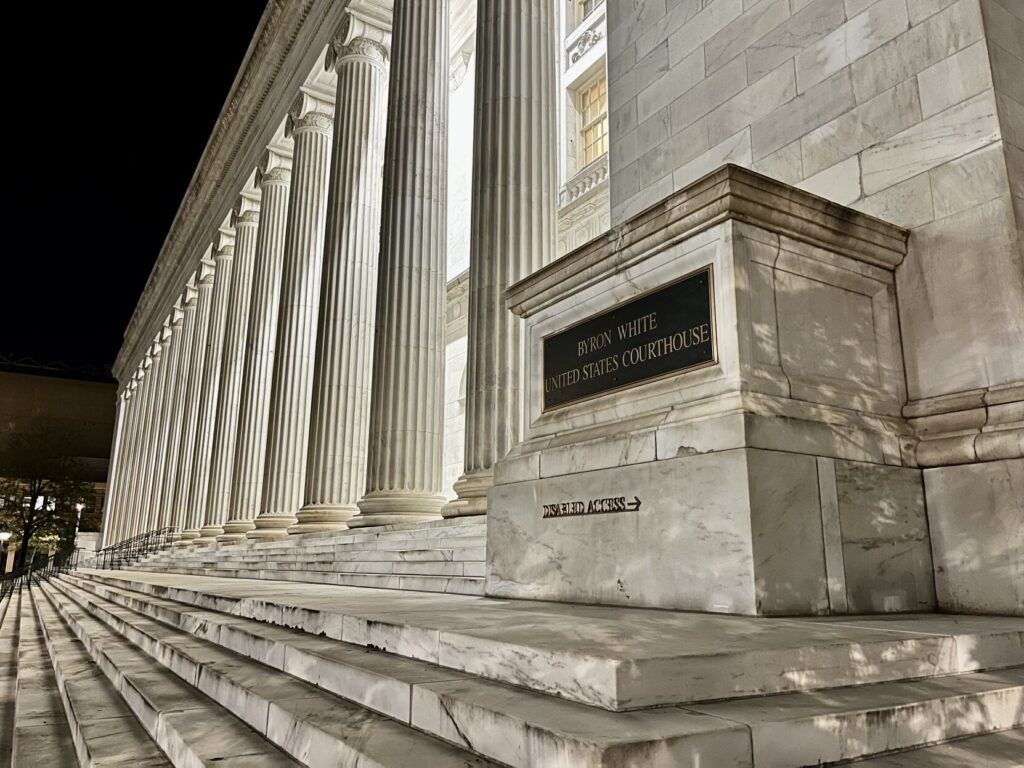
The Byron White U.S. Courthouse in Denver, which is home to the U.S. Court of Appeals for the 10th Circuit.
Michael Karlik michael.karlik@coloradopolitics.com
Later that year, the 10th Circuit reached a similar conclusion in the lawsuit of a casino seeking insurance coverage. It relied upon a recent Colorado Supreme Court decision addressing whether COVID-19 affected property use.
“COVID-19 may have infected people who were on the property. But COVID-19 did not infect the property itself,” wrote Chief Justice Monica M. Márquez.
Spectrum, which is based in Denver and operates 43 assisted living facilities across the country, filed suit against Continental Casualty Company for denying its insurance claim. Spectrum had paid over $3 million for a policy covering “direct physical loss or damage” to its property, and it detailed how public health orders forced it to close, limit access to or alter certain physical spaces within its facilities at a financial loss to the company.
In July 2022, Denver District Court Judge Marie Avery Moses permitted Spectrum’s claims to proceed. At that time, she only had the Western Fire decision as guidance, and similarly found the contamination by airborne particles could trigger a property loss.
“Dining rooms and other common areas had to be shut down, residents were required to stay in their rooms, and guests and new potential residents were not allowed inside,” Moses wrote. “Accordingly, under the physical contamination theory, COVID-19 plausibly amounted to physical loss or damage to Spectrum’s covered properties.”
However, after the 10th Circuit and Supreme Court issued their own decisions bearing on the effect of the novel coronavirus on property, District Court Judge Martin F. Egelhoff, who took over the case from Moses, conceded the claims were not viable after all.
“Indeed, the recent cases demonstrate that the rule announced in Western Fire is inapplicable,” he wrote, “because the plaintiffs did not — and cannot — plead that COVID-19 built up to the point of making its property uninhabitable and unsafe and unusable for any and all purposes whatsoever.”
Spectrum turned to the Court of Appeals and insisted Western Fire remained the appropriate case to follow. But the appellate panel appeared hesitant to liken the presence of the novel coronavirus to an overwhelming gas leak.
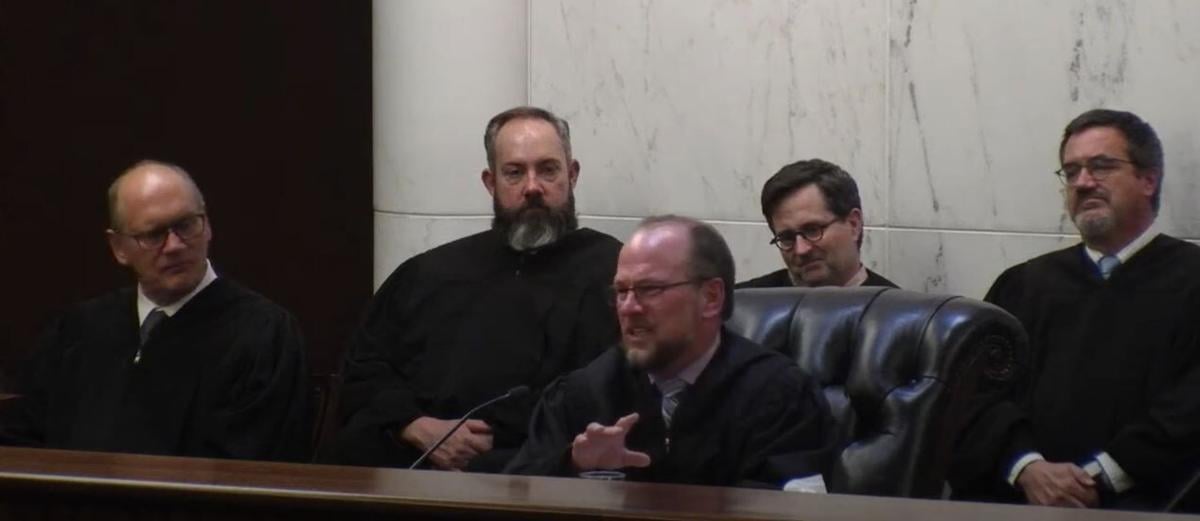
Judge Timothy J. Schutz speaks during his formal swearing-in ceremony to the Court of Appeals on Aug. 19, 2022. Behind him, from left to right, are Judges David Furman, W. Eric Kuhn, Craig R. Welling and Ted C. Tow III.

“The complaint doesn’t allege uninhabitability. The word, I think, doesn’t appear,” observed Welling during oral arguments. “And clearly these facilities continue to be inhabited.”
“If there was one COVID order and it said you can’t use the dining room for some period of time,” wondered Schutz, “that would be rendering the property uninhabitable? Even though those who are the intended residents — the elderly, the disabled — continued to occupy the property and pay for the service.”
Ultimately, the panel’s majority agreed with the more recently decided cases that found COVID-19 could not be categorically said to affect property and render it unusable.
“Spectrum acknowledges that every sneeze or cough that requires some cleaning of property does not equate to a direct physical loss,” wrote Schutz for himself and Judge W. Eric Kuhn. “But Spectrum identifies no objective line that a court can draw to say what degree of limitation on the day-to-day operations should be deemed such an impairment that it results in direct physical loss. Should it be 5% of the facility, 25%, 50%?”
Welling, in dissent, acknowledged the difficulty of drawing a line, but he believed Spectrum had sufficiently alleged it deserved coverage for its COVID-19 losses.
However, the panel revived Spectrum’s claim that another provision of its insurance policy about communicable diseases supplied an alternative basis for coverage. The appeals court returned the lawsuit to Egelhoff for further proceedings.
The case is Spectrum Retirement Communities, LLC v. Continental Casualty Company.
Colorado Politics Must-Reads:


10th Circuit partially revives lawsuit over 2020 Denver protest injuries
Michael Karlik
michael.karlik@coloradopolitics.com
Updated 2 days ago
The Colorado-based federal appeals court revived a man’s claims against Denver on Friday after concluding a trial judge resolved the case in the city’s favor without analyzing two of the three instances of alleged excessive force and other constitutional violations....

Federal judges find Colorado immigration judge violated several orders
Michael Karlik
michael.karlik@coloradopolitics.com
Updated 20 hours ago
Multiple federal judges in Colorado have freed people from immigration custody after determining that one immigration judge violated their directives for properly conducting bond hearings. For nearly a year, Colorado’s U.S. District Court has faced a flood of habeas corpus petitions...
Misconduct complaints from ex-Colorado judicial discipline director dismissed against federal judges
Michael Karlik
michael.karlik@coloradopolitics.com
Updated 3 days ago
The administrative body for the Denver-based federal appeals court upheld a finding last week that misconduct complaints against Colorado’s chief federal trial judge and the chief appeals judge warranted dismissal and appeared to be a “litigation tactic” by the complaining...

First-ever Red Rocks naturalization ceremony draws most diverse group of new citizens
Michael Karlik
michael.karlik@coloradopolitics.com
Updated 18 hours ago
Colorado’s federal trial court held its first-ever naturalization ceremony for nearly 300 new citizens on Thursday at Red Rocks Park and Amphitheatre. “We’re doing it to commemorate the 250th anniversary of the Declaration of Independence and the United States. Red...
Jeffco taxpayers could be on the hook for a possible child sex assault settlement
Matt Kyle
matt.kyle@denvergazette.com
Updated 2 days ago
Taxpayers may end up on the hook for a child sexual assault settlement, possibly worth up to $15 million, after Jeffco Public Schools failed to notify its insurance company in a timely manner about the case. The incident stems from...
10th Circuit finds no fair housing violation by Littleton landlord for worker’s alleged rape of tenant
Michael Karlik
michael.karlik@coloradopolitics.com
Updated 20 hours ago
The Denver-based federal appeals court concluded on Monday that Littleton’s housing authority could not be held liable for a maintenance worker’s alleged rape of a tenant, as the worker’s employment did not provide any special access to the victim. A...

Jeffco Public Schools sues Trump administration to protect funding after alleged transgender policies violation
Matt Kyle
matt.kyle@denvergazette.com
Updated 3 days ago
In the wake of several threats by the Trump administration to revoke federal funding, Jeffco Public Schools filed a lawsuit against the Department of Education seeking to protect that badly needed money. Jeffco has been under investigation by the DOE’s...
Denver detox center did not violate man’s rights with 10-hour hold, 10th Circuit says
Michael Karlik
michael.karlik@coloradopolitics.com
Updated 5 days ago
The Colorado-based federal appeals court concluded on Tuesday that Denver’s detoxification facility did not violate a man’s rights by holding him against his will for 10 hours until his blood alcohol content was projected to reach zero. Unusually, Brian Garrett’s...

Federal judge clarifies ex-GOP treasurer candidate’s burden to prove defamation claims
Michael Karlik
michael.karlik@coloradopolitics.com
Updated 5 days ago
A federal judge clarified last week that businessman and former Republican statewide candidate Brian Watson will need to surmount a higher hurdle in proving his claim that a party guest’s alleged description of him as a “criminal” amounted to defamation....
Colorado board permits state to appeal injunction against arthritis drug price cap
Marissa Ventrelli
marissa.ventrelli@coloradopolitics.com
Updated 5 days ago
A Colorado board voted Friday to allow the Attorney General’s Office to fight an injunction against a price cap on a drug that treats arthritis. A U.S. district court judge had granted the company Amgen a preliminary injunction, temporarily blocking...