

Flesh-eating cattle parasite spreads beyond Texas as new screwworm cases found | OUT WEST ROUNDUP
NEW MEXICO
Screwworm spreads beyond Texas
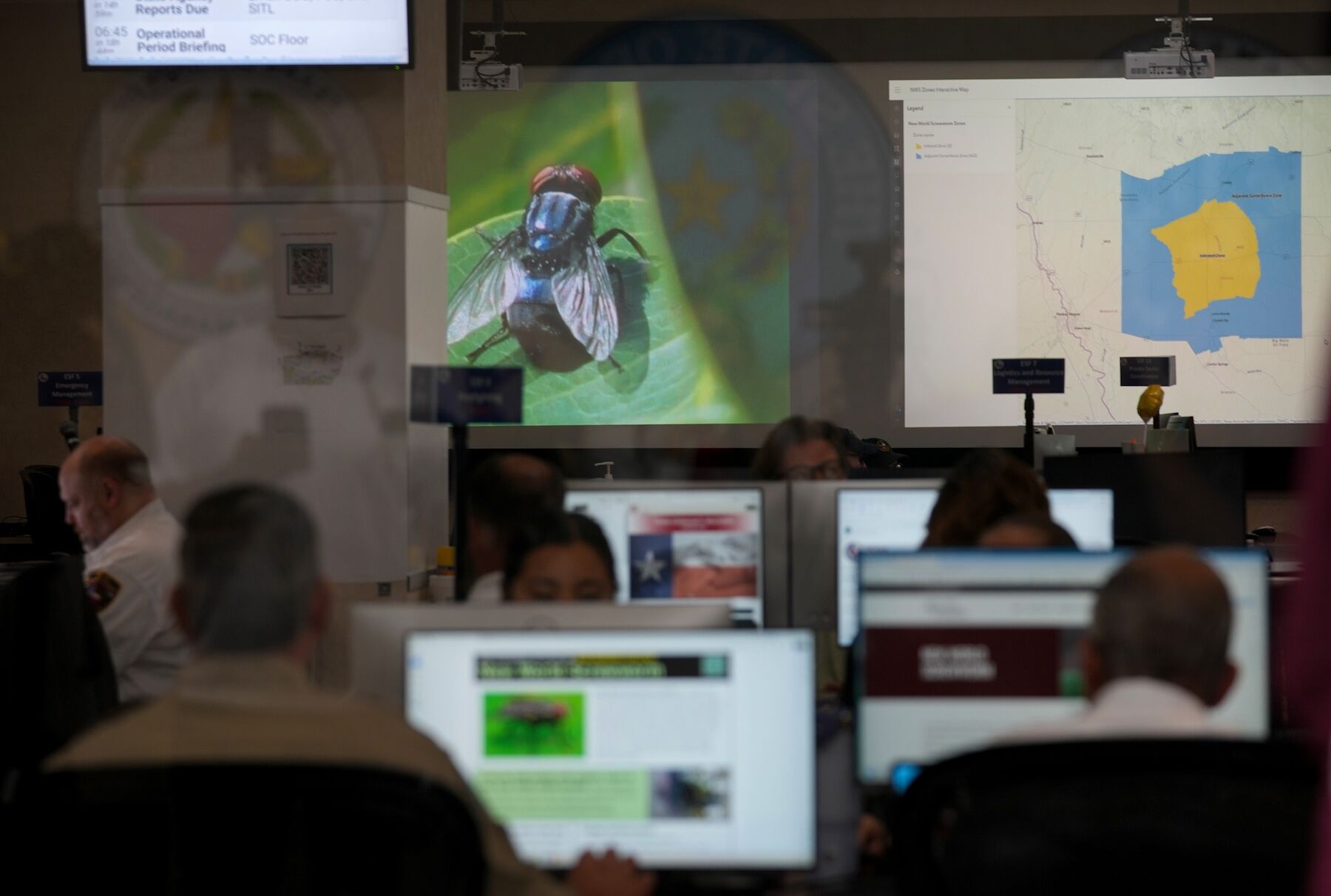
Three more cases of the New World screwworm have been confirmed, including one found in a dog in New Mexico, outside the main cluster in Texas, demonstrating the difficulty of stopping a resurgent pest that could devastate the nation’s cattle industry, the U.S. Department of Agriculture announced on June 8.
The screwworm is actually a fly larva that eats living flesh instead of dead material. The flies lay their eggs in open wounds of animals like cattle, but wildlife, pets and occasionally even humans can be infested. The government has a program to breed sterile male flies and drop swarms of them from planes to mate with wild females, which kept screwworm contained at the southern end of Panama for decades.
So far, there are five confirmed cases: three calves and a goat in Texas and a dog from neighboring Lea County, New Mexico. The small dog, which the USDA initially reported as a Texas case, lives in New Mexico and was reclassified as the first in that state.
The dog had not traveled to Mexico or Texas, so authorities were investigating around the property where the pet lived..
The first two screwworm cases were discovered a week earlier n calves a few miles apart in south Texas. A case was announced on June 8 in a calf in La Salle County, southwest of San Antonio, and in a goat in Gillespie County, west of Austin.
In each case, officials have set up a 12-mile quarantine zone to try to slow the parasite’s advance.
The USDA and the U.S. cattle industry have been racing to prevent an outbreak since screwworm was detected in Mexico late in 2024. The USDA has been dropping sterile flies in south Texas since February and is working to both increase sterile fly production in plants outside the U.S. and build a $750 million fly factory in Texas.
So far, screwworm’s reappearance hasn’t greatly affected beef prices, which are already near record levels because there are fewer cows in the United States. Although the parasite attacks live cattle, it does not infest meat or fruit.
WYOMING
Candidate wants to move BLM
CHEYENNE — Reid Rasner, a Casper-based businessman and Republican candidate for Wyoming’s lone seat in the U.S. House of Representatives, has pledged that, if elected, he hopes to prioritize the relocation of the national headquarters of the Bureau of Land Management to Cheyenne.
Rasner said he believes the current centralized model in Washington, D.C. is out of touch with the realities of the West.
The proposal follows a previous attempt by the federal government to locate BLM headquarters in Grand Junction in 2020, in a move that was reversed after a year.
Rasner projects the relocation will create 500 federal jobs in Wyoming and would return $1 billion annually to Wyoming.
Rasner cited Cheyenne’s growing infrastructure and its proximity to regional partners as the reason for choosing Cheyenne over other locations within the state.
BLM’s move to Grand Junction on Colorado’s Western Slope drew criticism due to the city’s isolation. After the announcement, 87% of D.C.-based employees left the BLM, according to numbers released by the Biden administration.
Rasner said he believes that a move to Wyoming, however, would be different.
“We look back on that and we look at what Colorado is … Wyoming is completely different,” Rasner said. “We’re a great conservative red state. We align with the administration and keeping it right here in Wyoming is something Wyoming can manage, Wyoming can do.”
Data center moratorium nixed
CHEYENNE — City Council members voted down a proposed ordinance that would have imposed a temporary 12-month moratorium on data center development within city limits after a marathon meeting that ended after midnight on May 27.
The ordinance would have imposed a moratorium on “the establishment, construction or conversion of any buildings or structures for use as a data center, including any change of use to a data center.”
The proposed ordinance wouldn’t have applied to data centers already in operation, currently under construction, or to the repair or replacement of existing data centers.
It also called for city staff to study the impact of data centers on the environment, power grid, electricity rates, water usage, and any other factors related to the health, safety and welfare of residents.
Public comment was nearly a 50-50 split between those who supported the moratorium and those who were against it.
Many who spoke against the moratorium were labor union workers who currently work in data center construction or have in the past. Others said they supported technological advancement.
Opponents said council members need to have a moratorium in place to gather answers to questions community members have about data centers.
The proposed ordinance died on second reading in a 8-1 vote, with its sponsor the only vote in favor.
UTAH
DHS sued to block detention plan
Salt Lake City and its county have filed a lawsuit seeking to block the Department of Homeland Security’s plan to open a giant warehouse in the city that would be used to detain up to 10,000 immigrants.
The lawsuit, filed June 8 in federal court, is the latest brought by local officials around the country who were not consulted before DHS purchased industrial warehouses that it planned to convert into regional immigrant processing and detention centers.
The lawsuit targets the most expensive property purchased by DHS for the initiative: $145.4 million for a 833,000-square-foot warehouse that is roughly the size of 15 football fields. The March purchase, from a real estate development group partially owned by Deutsche Bank, cost nearly 50% more than the property’s 2025 assessed market value, records show.
“This kind of facility has no place in Salt Lake City, not only due to its inhumane nature but also because of our limited water supply, the increased strain on public utilities systems, and the potentially drastic public health and safety impacts it would have on our residents,” Salt Lake City Mayor Erin Mendenhall said in a statement.
Like others filed around the country, the lawsuit in Utah alleges DHS violated federal law by failing to conduct required environmental reviews or get input from state and local officials before the purchase.


Immigration reporting measure fuels debate over Colorado’s role with ICE
Marissa Ventrelli
marissa.ventrelli@coloradopolitics.com
Updated 7 hours ago
A coalition of advocacy groups and several district attorneys rallied outside the Colorado Capitol on Thursday to oppose a ballot measure that, if approved by voters in November, would require state and local law enforcement to cooperate with federal immigration...

Colorado Politics Calendar Sept. 14-20
Rachael Wright, Special to Colorado Politics
rachael.wright@coloradopolitics.com
Updated 3 days ago
CoPo’s weekly political calendar will help you find political and public-policy events throughout Colorado. It includes candidate and issue campaign events, public policy meetings, court hearings, state and local party conventions, assemblies, debates, rallies, parades, speaking engagements, traveling dignitary appearances,...
The African roots of three Colorado leaders | SONDERMANN
Eric Sondermann
eric-sondermann@coloradopolitics.com
Updated 3 days ago
Colorado’s political transformation is measured in many ways. A once reliably red state (with asterisks) became purple and is now a rather deep blue. For better or worse, probably the latter, power is ever more consolidated along the Front Range...
Federal judge green-lights civil trial against ex-Fort Collins DUI officer
Michael Karlik
michael.karlik@coloradopolitics.com
Updated 1 day ago
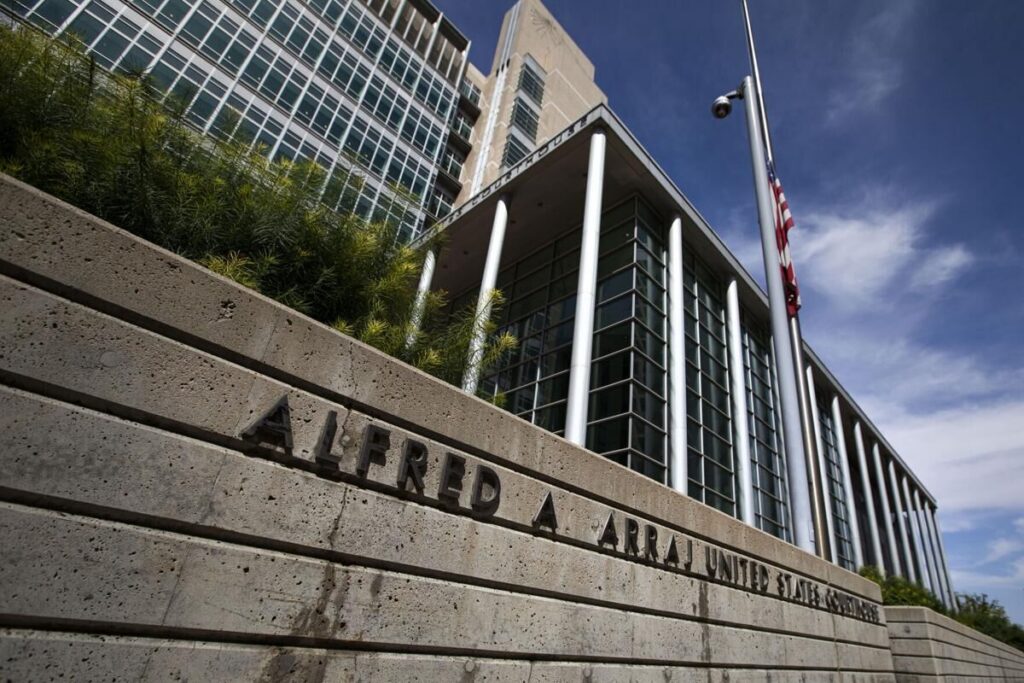
A federal judge ruled on Thursday that Fort Collins’ former “DUI officer” will face a civil trial for allegedly investigating a motorist for impaired driving without any reasonable suspicion to do so. In recent years, several people arrested by Officer...

Denver police reopen 13 sex assault cases after retesting Missy Woods’ CBI work
Jenny Deam
jenny.deam@gazette.com
Updated 1 day ago
Thirteen previously closed Denver sexual assault cases have been reopened after the city’s crime lab retested DNA evidence once analyzed by former Colorado Bureau of Investigation forensic analyst Yvonne Woods. A police spokesperson told The Denver Gazette the once-closed cases...

Ballot measure aims to shift Colorado sporting goods tax revenue to land, water and wildfire projects
Marissa Ventrelli
marissa.ventrelli@coloradopolitics.com
Updated 7 hours ago
Colorado voters this November will decide whether to direct a share of sales tax revenue from sporting goods — including bicycles and skiing equipment — toward land and water conservation, wildfire prevention and expanding outdoor recreation. Supporters say the measure...

Colorado Supreme Court suspends Mesa County judge pending misconduct investigation
Michael Karlik
michael.karlik@coloradopolitics.com
Updated 9 hours ago
The Colorado Supreme Court suspended Mesa County Court Judge Michael J. Grattan on Thursday amid a misconduct investigation. The court’s Sept. 10 order gave Grattan 21 days to explain why his paid suspension should not continue through the end of...

Trump honors the fallen of the 9/11 terrorist attacks during Pentagon speech
Mabinty Quarshie
mabinty-quarshie@coloradopolitics.com
Updated 1 day ago
President Donald Trump and first lady Melania Trump honored the roughly 3,000 Americans killed during the Sept. 11, 2001, terrorist attacks during a ceremony at the Pentagon. The event marking the 25th anniversary of the deadliest attack on American soil...
Colorado Supreme Court changes course, dismisses case about special district bonds
Michael Karlik
michael.karlik@coloradopolitics.com
Updated 9 hours ago
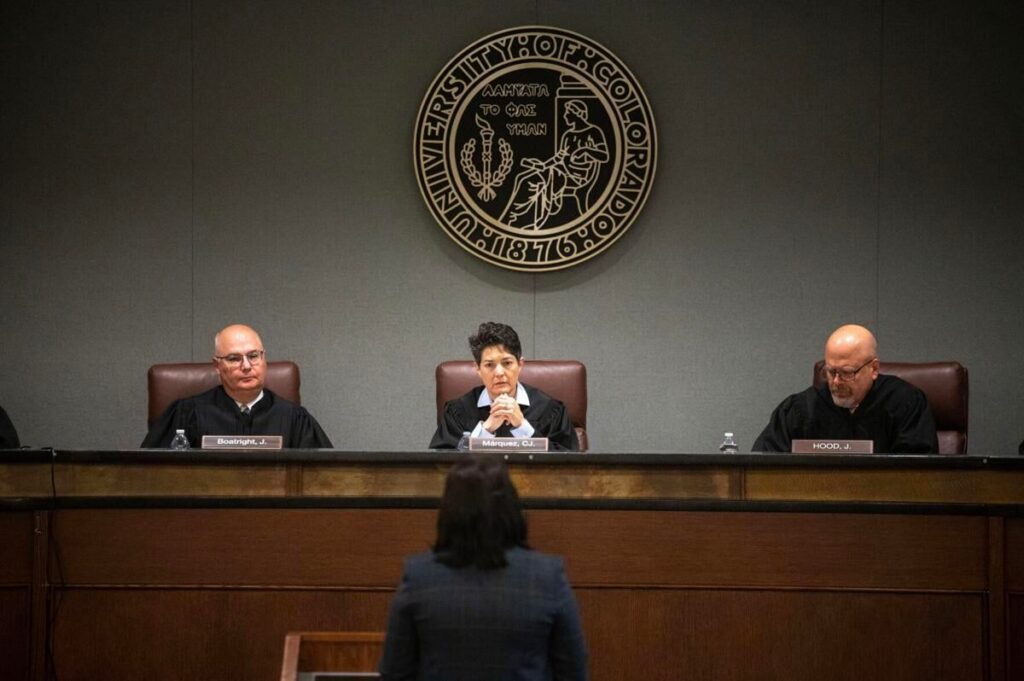
The Colorado Supreme Court declined on Friday to decide a dispute between a large-scale Commerce City development and the various districts financing it, after initially showing interest in the ongoing case. Colorado has roughly 2,800 special districts, which are local...

Colorado leaders express outrage and pain following 9/11 attacks | A LOOK BACK
Rachael Wright, Special to Colorado Politics
rachael.wright@coloradopolitics.com
Updated 2 days ago
Twenty-Five Years Ago This Week: “Responding to the 9/11 terrorist attacks, Colorado Gov. Bill Owens told reporters in a statement, “I join all Coloradans in expressing outrage and horror at the senseless terrorist bombings in New York and Washington D.C....
PREV
PREVIOUS

Jeffco Public Schools: Boys on girls' sports rosters were mascots, not athletes
Jeffco Public Schools this week said the boys the Trump administration claimed to have found on girls’ sports rosters were trainers, mascots and managers, not student-athletes. The U.S. Department of Education’s Office of Civil Rights announced in March that a months-long investigation into alleged Title IX violations committed by Jeffco found that 61 boys were […]

Denver City Council eyes lobbying regulations, restriction
Topping the agenda for the Denver City Council’s Monday’s regular meeting is a proposal that, if adopted, would amend the Denver Revised Municipal Code to increase regulation of lobbyists. This will be the second reading for Council Bill 26-0686. High-profile lobbying activity around flavored tobacco, surveillance, and other policy areas prompted concerns from the sponsors […]