

Appeals court orders new trial after jury instruction ‘drastically misdescribed’ offense
Colorado’s second-highest court on Wednesday ordered a new trial for a man convicted of failing to register as a sex offender, concluding the jury instruction did not correctly describe what was required to find him guilty.
El Paso County jurors convicted Clyde Douglas Phillips in 2023 of failing to register as a sex offender and he received a 2.5-year prison sentence. Colorado law contains a variety of conditions under which a person with a sex offense conviction can be guilty for failing to register. Phillips’ jury was instructed to find him guilty if he was “adjudicated for an offense, the underlying factual basis of which included felony unlawful sexual behavior.”
But having a prior conviction alone is not the standard for guilt, determined a three-judge Court of Appeals panel.
“The jury instruction didn’t accurately inform the jury of the law because it omitted — or at the very least, it drastically misdescribed — an element of the offense,” wrote Judge Katharine E. Lum in the June 18 opinion. “For the jury to convict Phillips of failing to register as a sex offender, it needed to find that he was required to register as a sex offender.”
Prosecutors alleged Phillips did not register as a sex offender within five days of his birthday in 2022. Phillips represented himself at trial and did not cross-examine witnesses, testify or provide any of his own evidence.
The district attorney’s office presented the jury with:
• A document labeled “criminal justice information” indicating a 1989 conviction in Illinois for aggravated sexual assault
• A 2021 “Notice to Register as a Sex Offender” form from the Colorado Springs Police Department with a signature from a Clyde Phillips
• A detective’s testimony that she spoke with Phillips and told him he would have to register
• The detective’s further testimony that she determined the Illinois conviction required Phillips to register in Colorado
• A completed sex offender registration form containing identifying characteristics for Phillips
On appeal, Phillips argued there were several holes in the prosecution’s case. Specifically, jurors did not hear evidence of what Illinois law Phillips was convicted under, there was not proof beyond a reasonable doubt that Phillips was the same person convicted of the Illinois offense and no witness had firsthand knowledge that Phillips was the one who signed the “Notice to Register” document.
Prior to oral arguments, the Court of Appeals panel posed a question to both sides: Assuming Phillips did have a 1989 sex offense conviction out of Illinois, what law required him to register in Colorado three decades later?
“We still don’t know what statute he allegedly violated,” said public defender Meredith K. Rose.
The Colorado Attorney General’s Office responded that it believed Phillips was obligated under the law mandating registration if an out-of-state offense would require registration in that state. However, Senior Assistant Attorney General Brittany Limes Zehner acknowledged the evidence did not indicate which specific Illinois law Phillips’ 1989 conviction fell under.
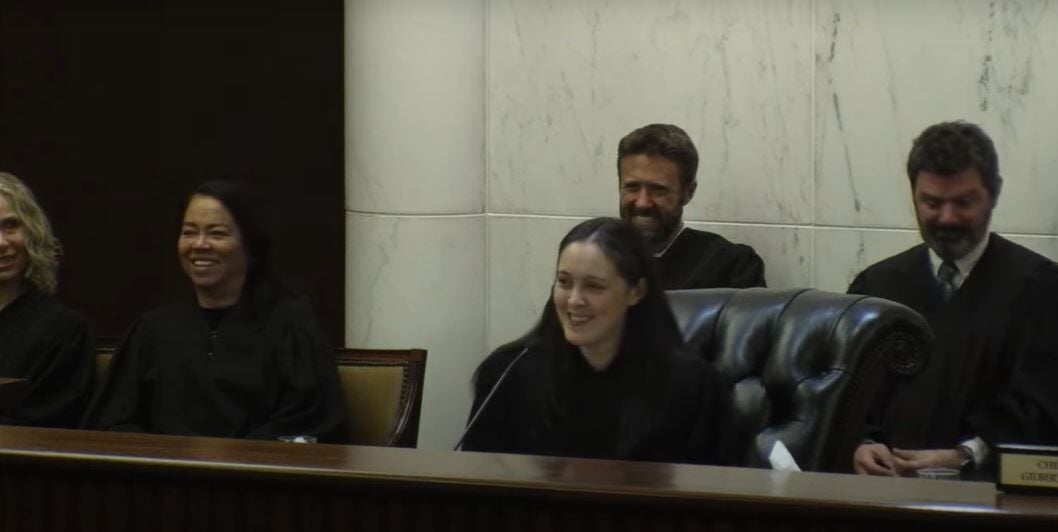
Judge Katharine E. Lum speaks at her ceremonial swearing-in to the Court of Appeals on April 28, 2023. From left to right are Judges Elizabeth L. Harris, Terry Fox, Karl L. Schock and Matthew D. Grove.

Lum said she was worried about relying on the signed “Notice to Register” document as proof Phillips knew about and disregarded his obligation to register.
“If that’s sort of sufficient by itself, that gives me a little bit of heartburn because it seems like the (prosecution) would be saying that there’s sufficient proof of your requirements to register because we said so,” she said. “Because the government said you’re required to register. It’s a little concerning.”
Ultimately, the panel agreed that the evidence could support a verdict finding Phillips had a prior conviction and knew he was required to register in Colorado as a sex offender.
However, Lum explained, the instructions neglected to actually ask jurors to find Phillips was required to register in Colorado.
The template jury instruction directs jurors to decide if someone was required to register as a sex offender. Instead, District Court Judge David Shakes appeared to give an instruction based on one legal provision requiring someone to register if their conviction involves “unlawful sexual behavior.”
Problematically, the law is applicable to convictions “on and after July 1, 1994” and “in the state of Colorado.” Neither of those conditions appeared in the jury instruction.
The appellate panel concluded the mistake cast doubt on the verdict because had jurors been asked to find whether Phillips was required to register, it was unclear they would have answered in the affirmative. The panel ordered a new trial, while offering no opinion about whether Phillips was, in fact, obligated to register.
The case is People v. Phillips.
Colorado Politics Must-Reads:


Judicial performance evaluations released, Montezuma County judge disciplined | COURT CRAWL
Michael Karlik
michael.karlik@coloradopolitics.com
Updated 11 hours ago
Welcome to Court Crawl, Colorado Politics’ roundup of news from the third branch of government. Colorado’s citizen-led judicial performance commissions released their voter narratives for the judges standing for retention in November, plus a disciplinary panel imposed consequences on a...
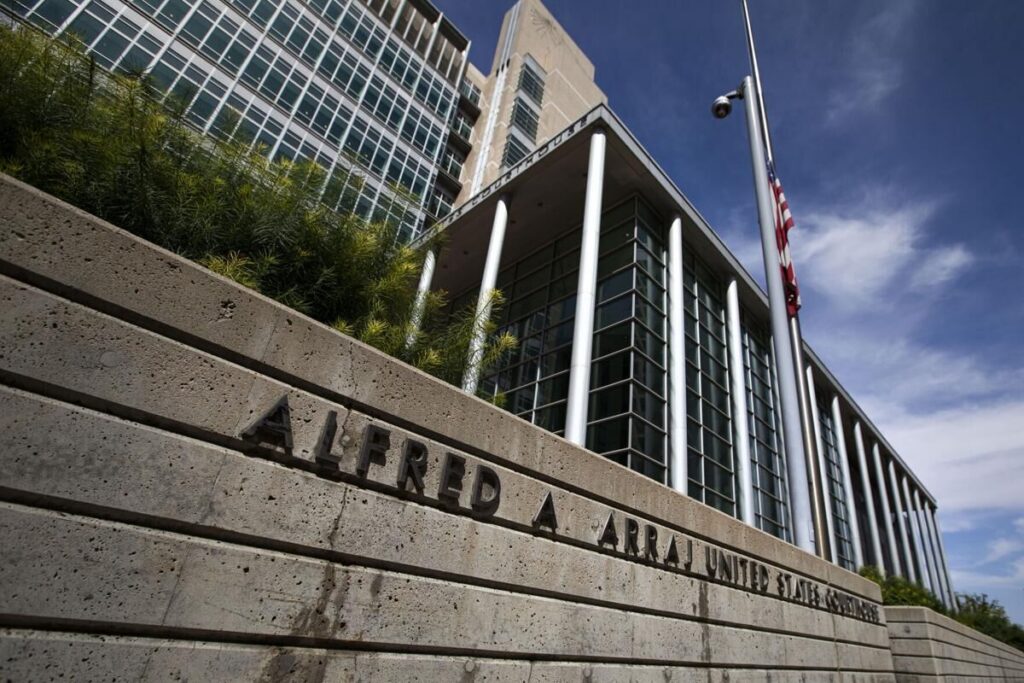
Federal judge holds off on dismissing formerly bankrupt medical contractor from Jeffco jail death lawsuit
Michael Karlik
michael.karlik@coloradopolitics.com
Updated 13 hours ago
A federal judge declined on Monday to dismiss the formerly bankrupt medical contractor from a lawsuit over a detainee’s death in Jefferson County jail, but indicated she would do so if the plaintiffs’ attorneys go through the process to ensure...
Federal judge green-lights excessive force, retaliation claims for trial against Fort Collins officers
Michael Karlik
michael.karlik@coloradopolitics.com
Updated 2 days ago
A federal judge green-lit a jury trial last week against multiple Fort Collins police officers on claims that they used excessive force on one man who was standing unarmed in his underwear, and retaliated against another man for exercising his...

10th Circuit revives wage violation lawsuit against Papa John’s operator
Michael Karlik
michael.karlik@coloradopolitics.com
Updated 3 days ago
The Denver-based federal appeals court on Tuesday reinstated a former Papa John’s delivery driver’s lawsuit alleging violations of federal and state wage law. Steve Mighell worked for one month at a Denver Papa John’s location in summer 2023. He alleged...
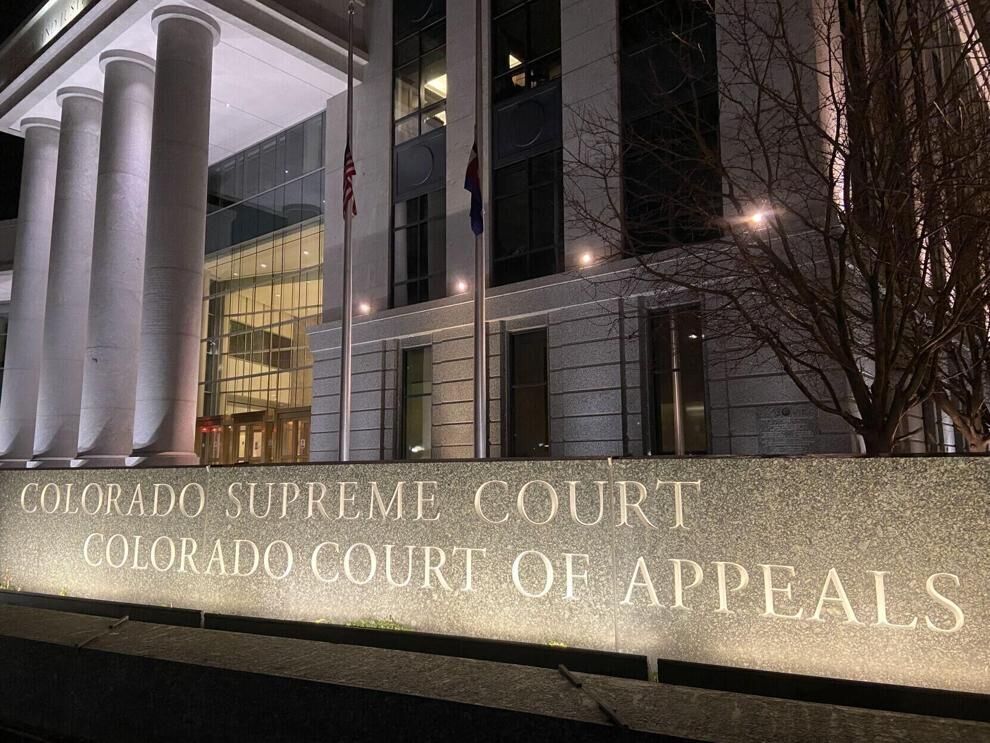
Colorado appeals judge’s delays in releasing opinions noted by performance commission
Michael Karlik
michael.karlik@coloradopolitics.com
Updated 2 days ago
The citizen-led performance commission that provides guidance to voters about whether to retain members of Colorado’s second-highest court raised concerns by judges and attorneys that Judge Elizabeth L. Harris sometimes struggles with releasing opinions promptly. Harris, who joined the Court...

Colorado judge explores sanctions against DOJ, ICE for rearresting man 4 days after release on bond
Michael Karlik
michael.karlik@coloradopolitics.com
Updated 4 days ago
A federal judge in Colorado is considering sanctions against the government after immigration agents rearrested a man four days after an immigration judge found him suitable for release on bond. On July 28, U.S. Magistrate Judge N. Reid Neureiter ordered...
Divided disciplinary panel censures Montezuma County judge after agreement reached
Michael Karlik
michael.karlik@coloradopolitics.com
Updated 3 days ago
A disciplinary panel formally imposed a public censure, suspension, and further training on Montezuma County Court Judge Ian J. MacLaren on Tuesday by a 2-1 vote. Under constitutional Amendment H, which voters adopted in November 2024, MacLaren was set to...
Colorado’s Western Slope magistrate judges describe unique role in federal judiciary
Michael Karlik
michael.karlik@coloradopolitics.com
Updated 5 days ago
Two of Colorado’s federal judges stationed on the Western Slope spoke to lawyers on Wednesday about their unique roles, the ways their workloads differ, and the need for more criminal defense lawyers to take cases outside the Front Range. “Here...

Denver sues Philip Morris, other tobacco companies over cigarette butt litter
Deborah Grigsby
deborah.smith@denvergazette.com
Updated 4 days ago
Denver is demanding that some of the biggest tobacco companies in the world pay for the cleanup of discarded cigarette butts on its streets, following a similar campaign that cities in other states have pursued. Denver’s lawsuit, filed this week...
Federal judge rules that request for bond hearing not necessary to challenge immigration detention
Michael Karlik
michael.karlik@coloradopolitics.com
Updated 3 days ago
A federal judge in Colorado ruled last week that it is not mandatory for a person to seek a bond hearing with an immigration judge before they challenge the lawfulness of their detention in federal court. For the past year,...