

Divided appeals court reverses conviction after judge declined to define ‘bludgeon’
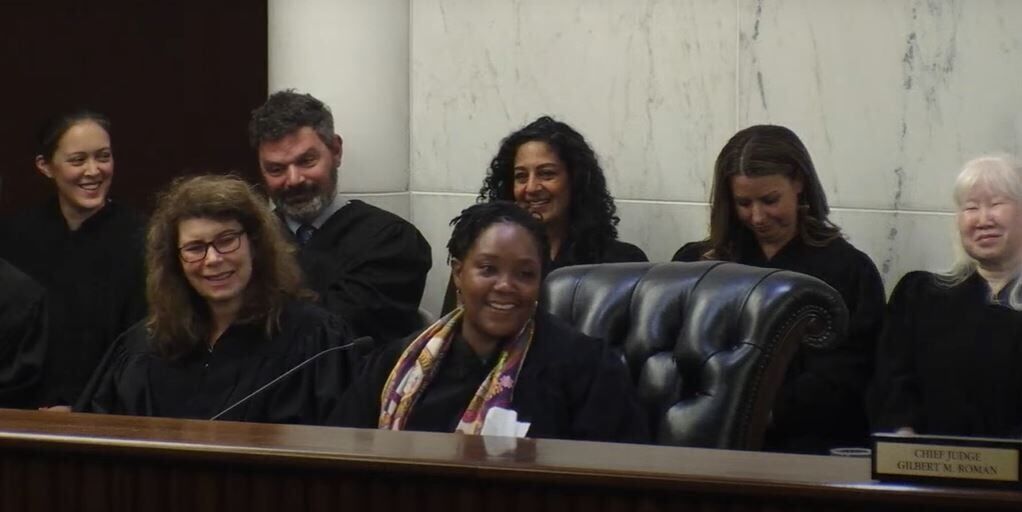
Colorado’s second-highest court reversed a Jefferson County defendant’s felony menacing conviction on Thursday, concluding that the trial judge’s failure to define “bludgeon” for jurors may have affected the outcome.
A three-judge Court of Appeals panel divided in unusual ways in the case of Michael Casey Simms. Two judges believed the definition of “reasonable doubt” that jurors received was constitutional, while one judge would have ordered a new trial due to problematic wording in the definition. A different pairing of two judges agreed that the lack of definition for “bludgeon” was problematic, but the third judge believed jurors had all the information they needed about the word’s meaning.
Finally, all three judges agreed the order for Simms to pay crime victim restitution was flawed.
Case: People v. Simms
Decided: June 18, 2026
Jurisdiction: Jefferson County
Ruling: 2-1
Judges: Pax L. Moultrie (author)
Steve Bernard (partial dissent)
Daniel M. Taubman (partial dissent)
Prosecutors charged Simms with numerous domestic violence-related offenses for his attacks on the victim. Simms testified at trial and admitted to committing misdemeanor assault. Jurors convicted him on two counts of misdemeanor assault, one count of felony menacing, and acquitted him of the other charges. Simms received a two-year prison sentence and an order to pay nearly $9,500 in restitution.
Menacing rises from a misdemeanor to a felony if the person uses a “firearm, knife, or bludgeon.” The prosecution’s theory at trial was that Simms menaced the victim with a pocketknife, which he denied having. Although “knife” is defined in law, “bludgeon” is not.
During deliberations, jurors wrote a note asking: “Can a fist be considered a bludgeon?”
The defense argued in favor of telling the jury that hands cannot be considered a bludgeon. Instead, Norma Sierra, a retired judge assigned to the trial, told jurors they had received “all pertinent definitions.”
“Words which are not defined are to be given their plain and ordinary meaning,” she continued.
On appeal, Simms argued that Sierra should have informed jurors whether the law treats fists as a bludgeon — and answered the question in the negative.
By 2-1, the appellate panel agreed.
Judge Pax L. Moultrie, writing for herself and Judge Daniel M. Taubman in the June 18 opinion, noted that Sierra had an obligation to clarify the issue for the jury. Some definitions of “bludgeon” suggest that it is an inanimate object and not a body part, but other definitions could potentially encompass fists, Moultrie observed.
But “construing ‘bludgeon’ to include a fist is inconsistent with the statutory scheme,” she continued. “While we don’t doubt that a person’s fists can cause serious bodily injury, we conclude that fists are meaningfully different from types of weapons listed in the statute.”
Moultrie added that if jurors had believed the victim’s testimony that Simms menaced her with a knife, it likely would not have inquired about bludgeons.
Therefore, “the jury’s question casts sufficient doubt about whether it convicted Simms based on his use of a pocketknife or based on his use of his fists, which, as discussed above, is not permitted under the statute.”
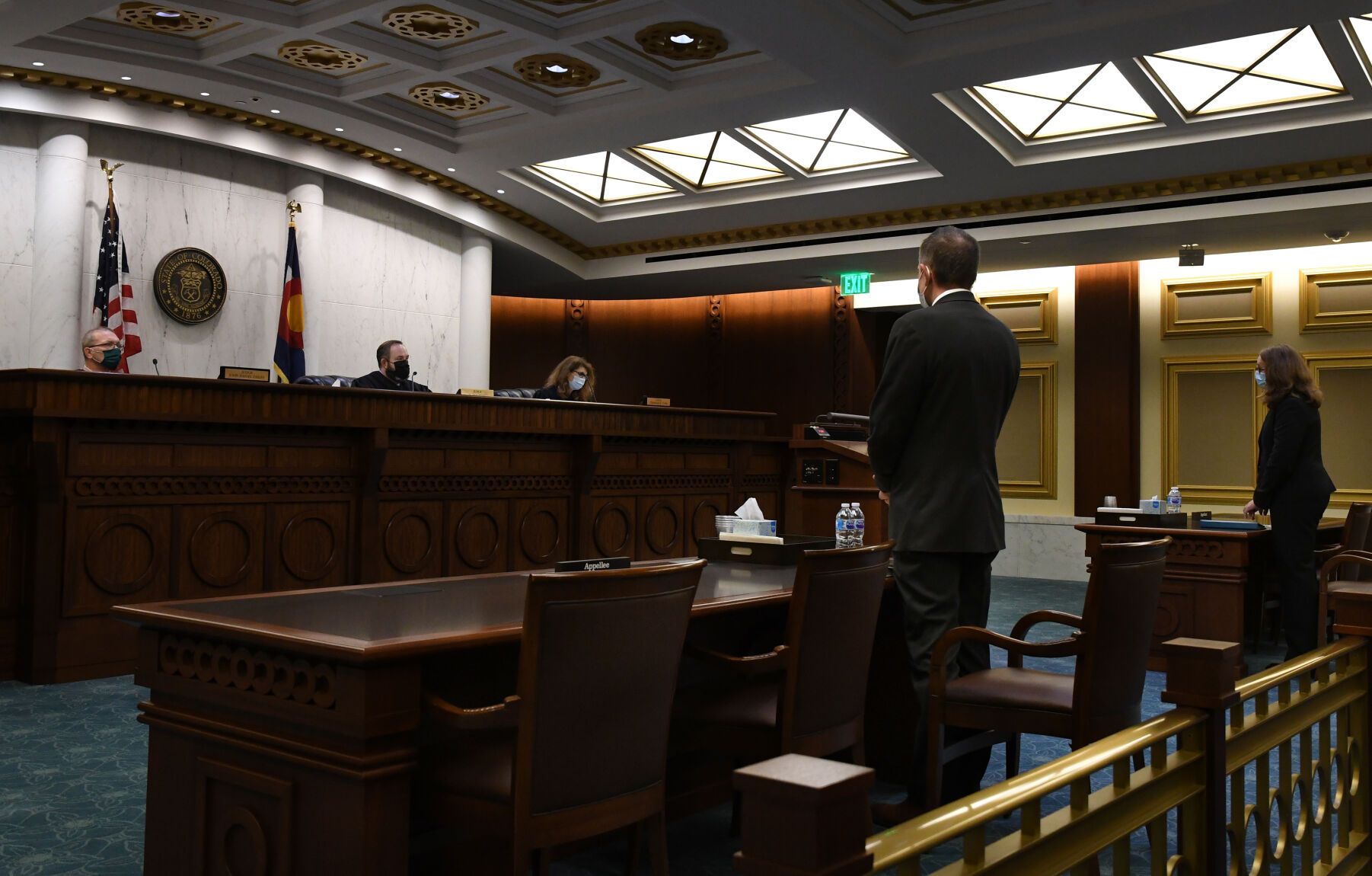
Judge Steve Bernard dissented. He quoted numerous dictionary definitions of “bludgeon,” all of which made clear that fists are not included. Bernard believed that Sierra’s instruction that jurors consider the “plain and ordinary meaning” of the word had clearly signaled that fists would not be a bludgeon.
“It was appropriate for the court to instruct the jury that any undefined terms were to be given their plain and ordinary meanings because, when looking at the word ‘bludgeon,’ the plain and ordinary meaning of ‘bludgeon’ does not include a fist,” he wrote.
Moultrie countered in the majority opinion that jurors obtain instructions from judges, not from dictionaries.
Simms also argued that jurors received an unconstitutional definition of reasonable doubt. Numerous defendants have challenged the template language provided to jurors that a small group of judges revised in late 2022 to alter the longstanding explanation of reasonable doubt. Multiple Court of Appeals panels have upheld the new language as constitutional, and the Colorado Supreme Court is currently weighing the legality of the wording.
By 2-1, Moultrie and Bernard agreed with the decisions to date that have blessed the template language. Taubman dissented, reiterating concerns he raised in a February opinion about a key phrase in the instruction. He urged the Supreme Court to strike the disputed language.
Finally, all three panel members agreed that Simms’ obligation to pay crime victim restitution could not stand. The prosecution’s restitution request lacked detail about the medical expenses it was intended to cover, and Sierra did not make specific findings about how Simms’ conduct led to the requested amount.
The panel instructed that any future restitution order must “hold the prosecution to its burden of proving” a connection between Simms’ conduct and the covered expenses.
The case is People v. Simms.


10th Circuit partially revives lawsuit over 2020 Denver protest injuries
Michael Karlik
michael.karlik@coloradopolitics.com
Updated 10 hours ago
The Colorado-based federal appeals court revived a man’s claims against Denver on Friday after concluding a trial judge resolved the case in the city’s favor without analyzing two of the three instances of alleged excessive force and other constitutional violations....

Federal judges find Colorado immigration judge violated several orders
Michael Karlik
michael.karlik@coloradopolitics.com
Updated 1 day ago
Multiple federal judges in Colorado have freed people from immigration custody after determining that one immigration judge violated their directives for properly conducting bond hearings. For nearly a year, Colorado’s U.S. District Court has faced a flood of habeas corpus petitions...

Misconduct complaints from ex-Colorado judicial discipline director dismissed against federal judges
Michael Karlik
michael.karlik@coloradopolitics.com
Updated 3 days ago
The administrative body for the Denver-based federal appeals court upheld a finding last week that misconduct complaints against Colorado’s chief federal trial judge and the chief appeals judge warranted dismissal and appeared to be a “litigation tactic” by the complaining...

First-ever Red Rocks naturalization ceremony draws most diverse group of new citizens
Michael Karlik
michael.karlik@coloradopolitics.com
Updated 1 day ago
Colorado’s federal trial court held its first-ever naturalization ceremony for nearly 300 new citizens on Thursday at Red Rocks Park and Amphitheatre. “We’re doing it to commemorate the 250th anniversary of the Declaration of Independence and the United States. Red...

Jeffco taxpayers could be on the hook for a possible child sex assault settlement
Matt Kyle
matt.kyle@denvergazette.com
Updated 3 days ago
Taxpayers may end up on the hook for a child sexual assault settlement, possibly worth up to $15 million, after Jeffco Public Schools failed to notify its insurance company in a timely manner about the case. The incident stems from...
10th Circuit finds no fair housing violation by Littleton landlord for worker’s alleged rape of tenant
Michael Karlik
michael.karlik@coloradopolitics.com
Updated 1 day ago
The Denver-based federal appeals court concluded on Monday that Littleton’s housing authority could not be held liable for a maintenance worker’s alleged rape of a tenant, as the worker’s employment did not provide any special access to the victim. A...

Jeffco Public Schools sues Trump administration to protect funding after alleged transgender policies violation
Matt Kyle
matt.kyle@denvergazette.com
Updated 4 days ago
In the wake of several threats by the Trump administration to revoke federal funding, Jeffco Public Schools filed a lawsuit against the Department of Education seeking to protect that badly needed money. Jeffco has been under investigation by the DOE’s...
Denver detox center did not violate man’s rights with 10-hour hold, 10th Circuit says
Michael Karlik
michael.karlik@coloradopolitics.com
Updated 5 days ago
The Colorado-based federal appeals court concluded on Tuesday that Denver’s detoxification facility did not violate a man’s rights by holding him against his will for 10 hours until his blood alcohol content was projected to reach zero. Unusually, Brian Garrett’s...

Federal judge clarifies ex-GOP treasurer candidate’s burden to prove defamation claims
Michael Karlik
michael.karlik@coloradopolitics.com
Updated 5 days ago
A federal judge clarified last week that businessman and former Republican statewide candidate Brian Watson will need to surmount a higher hurdle in proving his claim that a party guest’s alleged description of him as a “criminal” amounted to defamation....
Colorado board permits state to appeal injunction against arthritis drug price cap
Marissa Ventrelli
marissa.ventrelli@coloradopolitics.com
Updated 6 days ago
A Colorado board voted Friday to allow the Attorney General’s Office to fight an injunction against a price cap on a drug that treats arthritis. A U.S. district court judge had granted the company Amgen a preliminary injunction, temporarily blocking...
PREV
PREVIOUS

10th Circuit dismisses Tina Peters' challenge to confinement as moot
The Denver-based federal appeals court granted the state’s unopposed request on Wednesday to dismiss former Mesa County clerk Tina Peters’ challenge to her confinement as moot. Although Peters received a commutation of her prison sentence last month from Gov. Jared Polis and has since left prison, her federal proceedings addressed whether Peters could be freed […]

July 1 brings new Colorado rules on gun ammo, wildfire-risk scoring, wildlife enforcement
Colorado will usher in a new set of laws on July 1 that affect everything from ammunition sales to insurance transparency and wildlife trafficking enforcement. Here is a look at some of the state’s new laws: Ammunition sales House Bill 25-1133 raises the minimum age to purchase ammunition from 18 to 21 years old. The […]