

Colorado Supreme Court appears OK with revised ‘reasonable doubt’ instruction
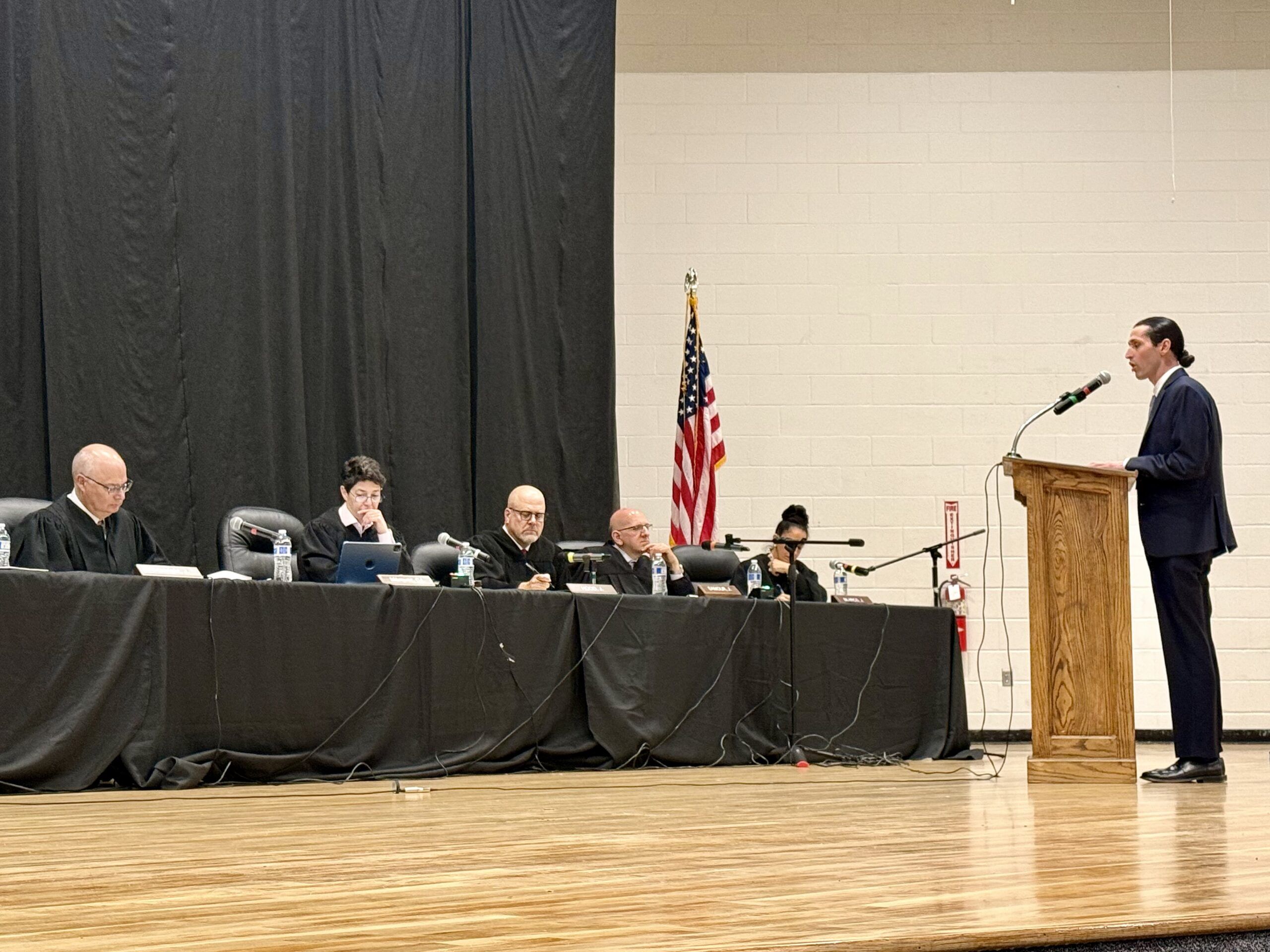
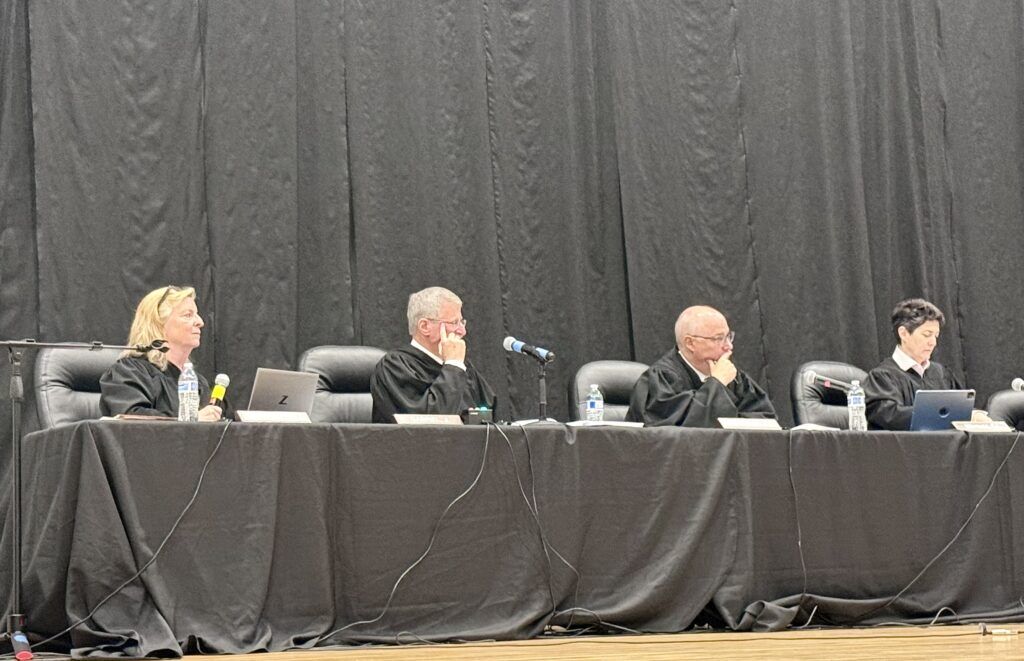
The Colorado Supreme Court appeared largely comfortable on Thursday with the recently revised definition of “reasonable doubt” that is now part of the template jury instructions for criminal cases.
To date, multiple Court of Appeals decisions have endorsed the constitutionality of the new phrasing, which resembles the instruction given in Colorado’s federal trial court. U.S. Supreme Court Justice Ruth Bader Ginsburg characterized the wording in 1994 as a “clear, straightforward, and accurate” definition of reasonable doubt for jurors.
In evaluating the revised language, the state Supreme Court chose to review the case of Alexis Teran Sanchez, who Adams County jurors found guilty of three hit-and-run-related offenses. On appeal, he argued the new reasonable doubt instruction violated his rights to due process and a fair trial.
However, his lawyers employed an unusual method of challenging the language. In significant part, they relied on a study that they funded through the University of Denver’s Department of Psychology. The simulated jury verdicts suggested that the current language may slightly increase conviction rates over the previous instruction.
During oral arguments, Justice Richard L. Gabriel said it gave him “a little bit of heartburn” that Teran Sanchez’s lawyers commissioned the study in connection with their case.
“I don’t mean to impugn the integrity of these professors at all, or your firm,” he said. “I suppose what I’m more concerned about was the fairness of that to the district attorney. We see this study for the first time” on appeal.
Justice Susan Blanco also noted that the study participants were seemingly given a definition of reasonable doubt, but without the full battery of instructions that criminal jurors receive in a real trial.
“You’re studying this one instruction by itself and there is no context for how does that translate to the courtroom and what’s going on in an actual trial,” she said.
Prior to 2023, Colorado’s template jury instructions for criminal cases contained a longstanding explanation of reasonable doubt: A doubt based upon reason and common sense, which was not vague or speculative, that would “cause reasonable people to hesitate to act in matters of importance to themselves.”
Then, in January 2023, the judicial branch announced that a small group of judges had voted to change the language of the model instruction. The committee included two members of the Supreme Court — Justice Carlos A. Samour Jr., who chairs the panel, and Blanco, who was then a Larimer County trial judge. The vote was not unanimous, although the committee did not disclose who voted to revise. Both Samour and Blanco are participating in Teran Sanchez’s appeal.
The instruction now advises jurors to vote to convict if they are “firmly convinced of the defendant’s guilt.” The prosecution has not proven guilt, the instruction continues, “if you think there is a real possibility that the defendant is not guilty.”
Defense attorneys were concerned the change lessened the prosecution’s burden to prove a defendant guilty. Although the state’s Court of Appeals issued multiple decisions upholding the new wording as constitutional, two appellate judges have recently suggested that the “real possibility” phrasing unconstitutionally assumes the defendant’s guilt, among other problems.
To the Supreme Court, Teran Sanchez’s attorneys leaned on the DU study they arranged, which featured 896 U.S. citizen participants recruited online. The participants read about a crime and received five variations of the reasonable doubt instruction. Those included the version from Teran Sanchez’s trial, the old instruction, and two versions that the U.S. or state supreme courts have found unconstitutional.
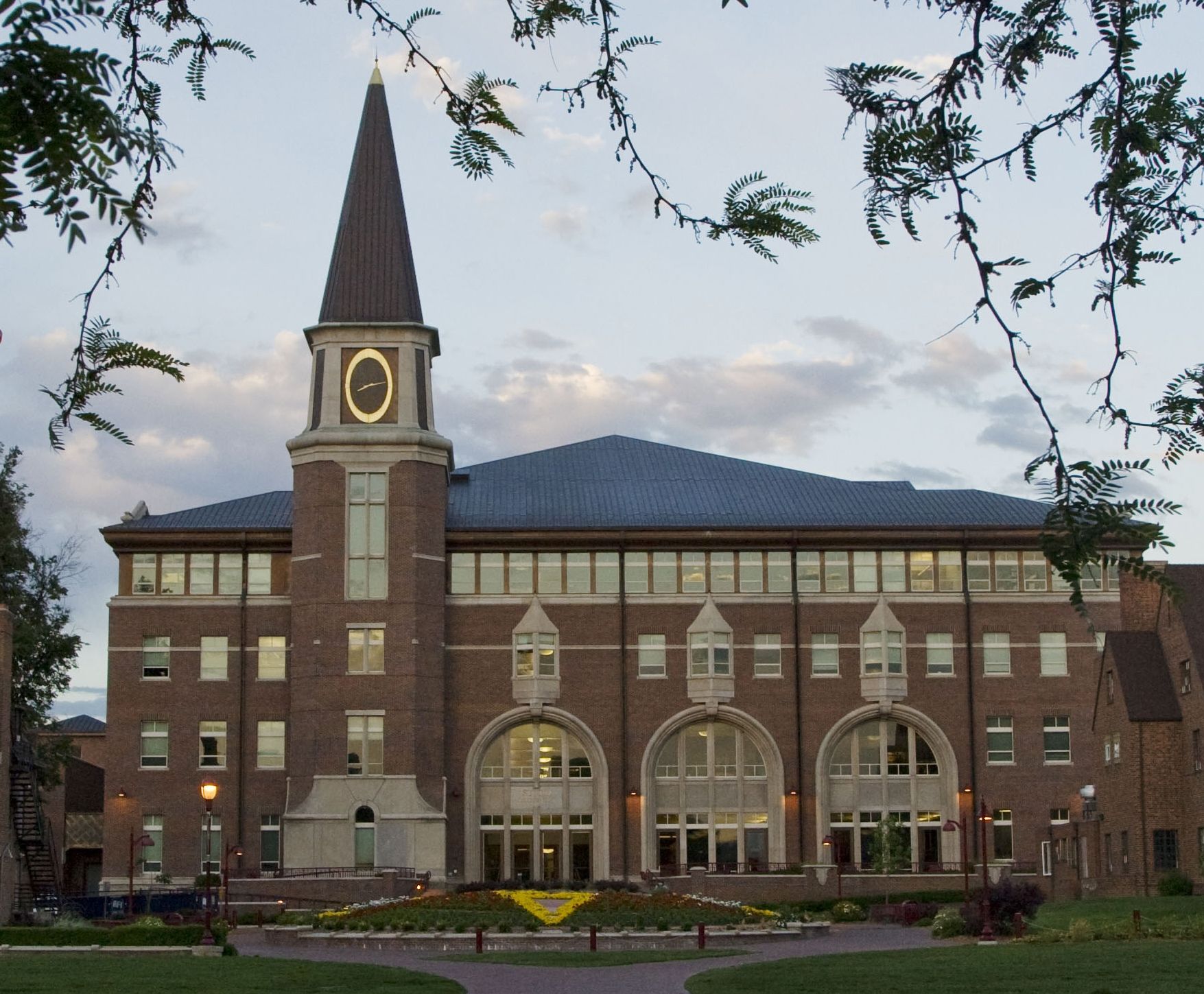
The authors, Assistant Prof. E. Paige Lloyd and research consultant Abigail J. Langeberg, found that participants were slightly more likely to convict using the new language compared to the old, and more likely to convict than with the two unconstitutional instructions. However, not all of the results were statistically significant.
“Empirical data is the type of thing this court regularly looks to,” argued NoahLani Litwinsella, an attorney for Teran Sanchez. “The empirical data demonstrate at least a reasonable likelihood that the jury understood it was able to convict on proof of less than reasonable doubt.”
“We’re talking about people sitting at home on the Internet, on their couches, presented with a particular fact pattern,” countered Todd Bluth for the prosecution, and “only one jury instruction. We present one jury instruction, this reasonable doubt instruction, without any of the context. And that is in direct contradiction to the manner in which we evaluate jury instructions in Colorado, which is holistically in context.”
Teran Sanchez’s attorneys also argued the “modern usage” of key phrases in the instruction would lead ordinary jurors to interpret “real possibility” and “firmly convinced” to be less favorable to a defendant’s rights than they are intended to be.
“If we were to look at your approach, how often would we have to go through this exercise?” asked Justice Maria E. Berkenkotter. “Because language, quite frankly, always changes, and it has probably never changed faster than it does now with social media, the Internet.”
The justices asked substantially fewer questions of the prosecution, but Gabriel wondered whether trial judges are using the new instruction in large numbers.
“I have heard some judges say, ‘I’m not quite sure. I know this prior instruction has been definitely approved by the court, so I’m going the safe road there,'” said Bluth, adding that the Court of Appeals’ decisions upholding the new language have encouraged trial judges to switch.
The oral arguments occurred at Holyoke Junior/Senior High School in Phillips County as part of the Supreme Court’s “Courts in the Community” program.
The case is Teran Sanchez v. People.


10th Circuit partially revives lawsuit over 2020 Denver protest injuries
Michael Karlik
michael.karlik@coloradopolitics.com
Updated 12 hours ago
The Colorado-based federal appeals court revived a man’s claims against Denver on Friday after concluding a trial judge resolved the case in the city’s favor without analyzing two of the three instances of alleged excessive force and other constitutional violations....
Federal judges find Colorado immigration judge violated several orders
Michael Karlik
michael.karlik@coloradopolitics.com
Updated 1 day ago
Multiple federal judges in Colorado have freed people from immigration custody after determining that one immigration judge violated their directives for properly conducting bond hearings. For nearly a year, Colorado’s U.S. District Court has faced a flood of habeas corpus petitions...

Misconduct complaints from ex-Colorado judicial discipline director dismissed against federal judges
Michael Karlik
michael.karlik@coloradopolitics.com
Updated 3 days ago
The administrative body for the Denver-based federal appeals court upheld a finding last week that misconduct complaints against Colorado’s chief federal trial judge and the chief appeals judge warranted dismissal and appeared to be a “litigation tactic” by the complaining...

First-ever Red Rocks naturalization ceremony draws most diverse group of new citizens
Michael Karlik
michael.karlik@coloradopolitics.com
Updated 1 day ago
Colorado’s federal trial court held its first-ever naturalization ceremony for nearly 300 new citizens on Thursday at Red Rocks Park and Amphitheatre. “We’re doing it to commemorate the 250th anniversary of the Declaration of Independence and the United States. Red...
Jeffco taxpayers could be on the hook for a possible child sex assault settlement
Matt Kyle
matt.kyle@denvergazette.com
Updated 3 days ago
Taxpayers may end up on the hook for a child sexual assault settlement, possibly worth up to $15 million, after Jeffco Public Schools failed to notify its insurance company in a timely manner about the case. The incident stems from...
10th Circuit finds no fair housing violation by Littleton landlord for worker’s alleged rape of tenant
Michael Karlik
michael.karlik@coloradopolitics.com
Updated 1 day ago
The Denver-based federal appeals court concluded on Monday that Littleton’s housing authority could not be held liable for a maintenance worker’s alleged rape of a tenant, as the worker’s employment did not provide any special access to the victim. A...

Jeffco Public Schools sues Trump administration to protect funding after alleged transgender policies violation
Matt Kyle
matt.kyle@denvergazette.com
Updated 4 days ago
In the wake of several threats by the Trump administration to revoke federal funding, Jeffco Public Schools filed a lawsuit against the Department of Education seeking to protect that badly needed money. Jeffco has been under investigation by the DOE’s...

Denver detox center did not violate man’s rights with 10-hour hold, 10th Circuit says
Michael Karlik
michael.karlik@coloradopolitics.com
Updated 5 days ago
The Colorado-based federal appeals court concluded on Tuesday that Denver’s detoxification facility did not violate a man’s rights by holding him against his will for 10 hours until his blood alcohol content was projected to reach zero. Unusually, Brian Garrett’s...
Federal judge clarifies ex-GOP treasurer candidate’s burden to prove defamation claims
Michael Karlik
michael.karlik@coloradopolitics.com
Updated 5 days ago
A federal judge clarified last week that businessman and former Republican statewide candidate Brian Watson will need to surmount a higher hurdle in proving his claim that a party guest’s alleged description of him as a “criminal” amounted to defamation....
Colorado board permits state to appeal injunction against arthritis drug price cap
Marissa Ventrelli
marissa.ventrelli@coloradopolitics.com
Updated 6 days ago
A Colorado board voted Friday to allow the Attorney General’s Office to fight an injunction against a price cap on a drug that treats arthritis. A U.S. district court judge had granted the company Amgen a preliminary injunction, temporarily blocking...
PREV
PREVIOUS

Ex‑Bronco Montee Ball backs push at Colorado Capitol for stronger concussion protocols
Amid rising worries about the long‑term effects of head injuries in youth sports, a Colorado committee began reviewing legislation that would tighten concussion protocols and expand mental health awareness among coaches. Senate Bill 060 would require youth sports coaches to complete training on the mental health impacts of concussions. It would also require them to […]

Colorado justices skeptical of snowboarder's bid to revive injury lawsuit after signing new waiver
The Colorado Supreme Court seemed to agree on Thursday that a plaintiff is not entitled to continue his snowboarding injury lawsuit because he purchased another pass in the middle of litigation that released all past legal claims. “It says you’re releasing anything which has happened up to now. It seems pretty plain language what it […]