

Colorado justices weigh constitutionality of unique disclosure requirement for ballot measures
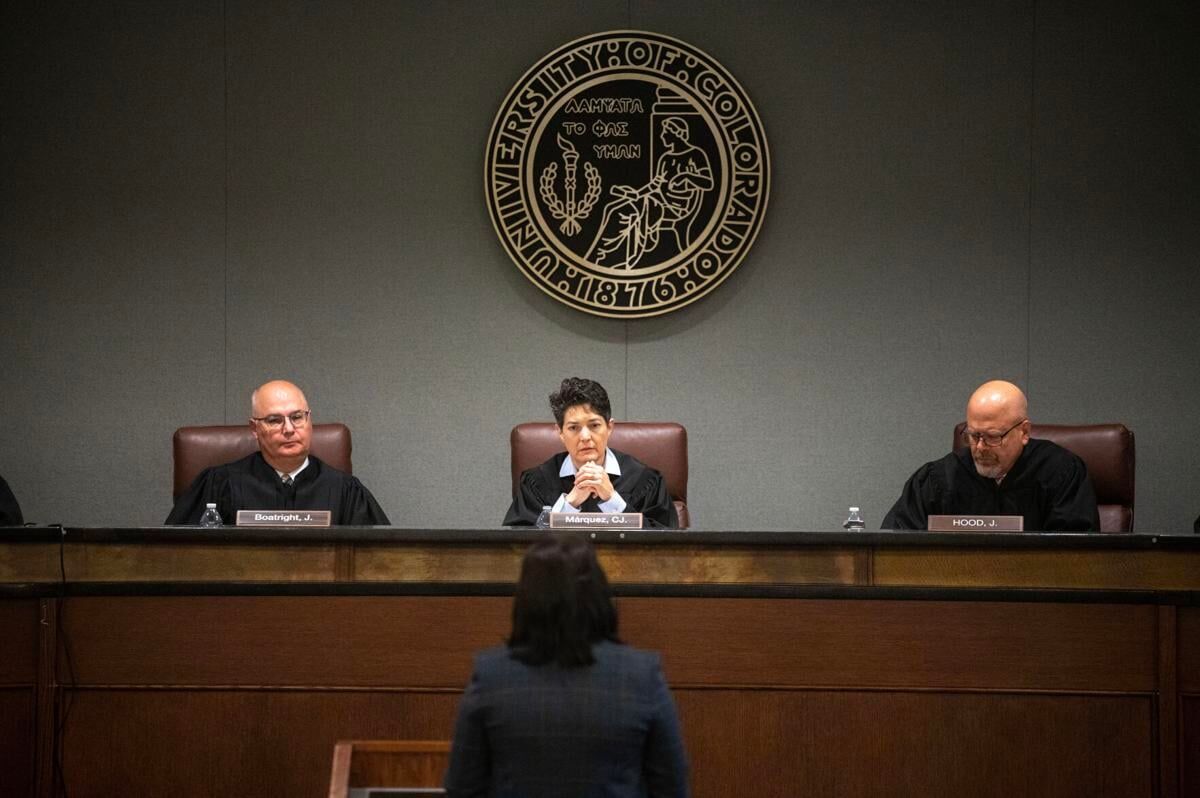
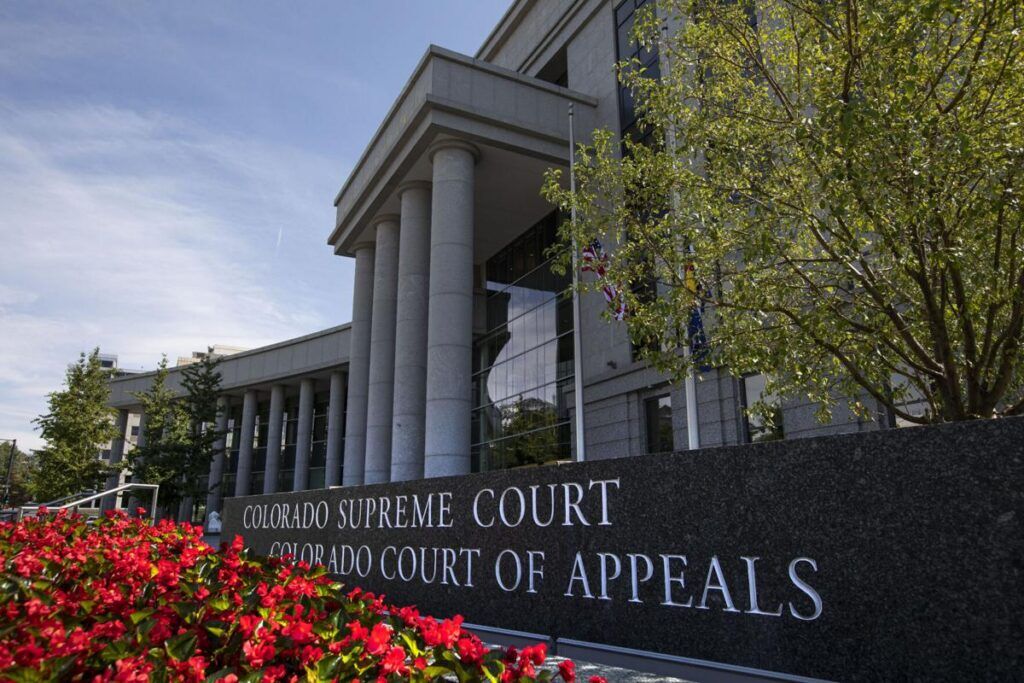
Members of the Colorado Supreme Court considered on Tuesday whether a unique feature of the state’s campaign finance system categorically violates the First Amendment by requiring the disclosure of a ballot measure committee’s legal representative on advertisements.
No on EE — A Bad Deal for Colorado was an issue committee in 2020 that opposed Proposition EE, which created a state nicotine tax and established a minimum price for packs of cigarettes. No on EE was primarily funded by the tobacco company Liggett Vector Brands.
Initially, No on EE spent more than $3 million on communications opposing Prop EE without listing its registered agent, who is the person designated to receive mailings and file campaign finance reports. After a voter filed a complaint, No on EE immediately revised its advertisements to correct the omission.
In challenging the fine for its violation, No on EE succeeded in getting the state’s second-highest court to strike down the disclosure requirement. The Court of Appeals found the mandate to be facially unconstitutional, meaning it impermissibly restricts speech across the board. Specifically, the court’s majority found no “substantial relationship” between the government’s interest in informing the public and the disclosure of a registered agent’s name.
But some justices appeared unconvinced.
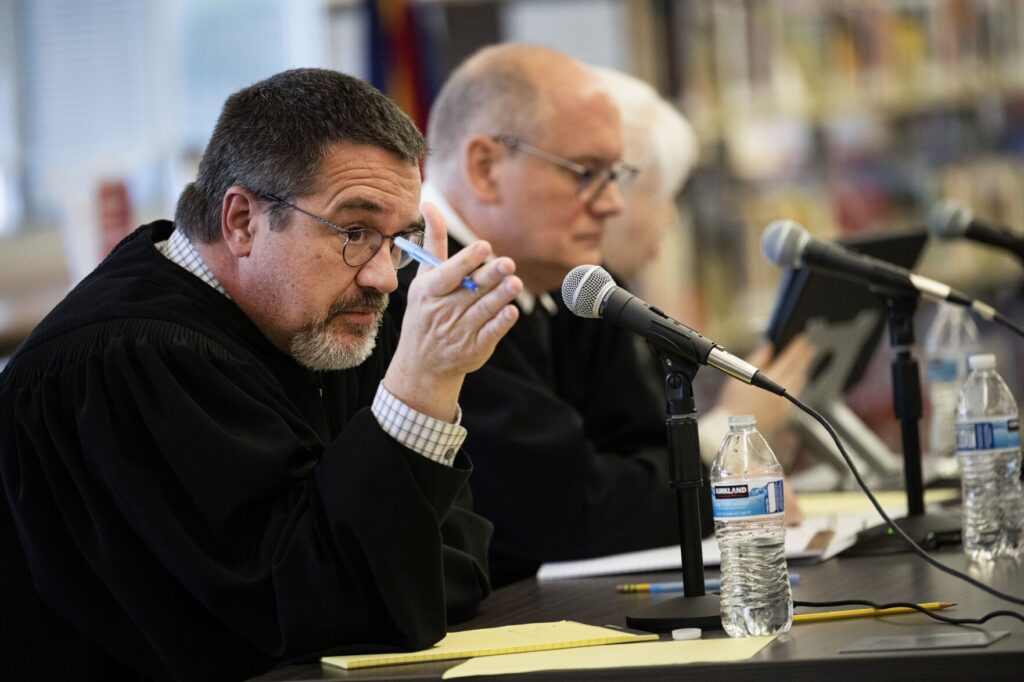
“I would think that any information that identifies who is behind the measure, who is supporting the measure, is valid information for voters to have. Particularly if they’re trying to decide, ‘With this ballot measure, I’m not sure who ultimately benefits,'” said Chief Justice Monica M. Márquez during oral arguments. “But if I understand that the ads that I’m getting bombarded with on television come from the environmental world, people who support environmental causes, maybe that helps me understand what’s at stake and will inform my decision as a voter.”
Justice Susan Blanco observed that the registered agent’s name is already disclosed online for anyone who wants to look it up, and No on EE has not challenged that aspect of Colorado law.
“So, it’s really no different if it’s placed on the advertisement,” she said.
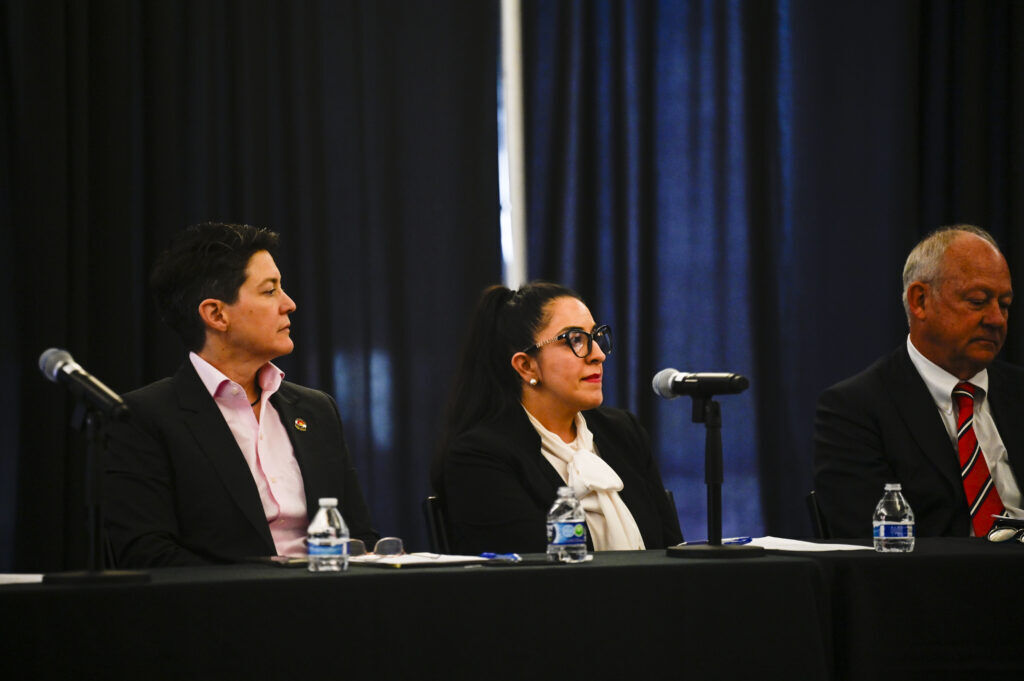
“That’s right,” responded Assistant Solicitor General Peter G. Baumann. “It’s our position here that that burden is extraordinarily minimal because of exactly what your honor notes. Again, we’re talking about four words: ‘Registered agent Patrick McDonald’.”
After No on EE initially failed to disclose McDonald’s name as its registered agent, the deputy secretary of state imposed a $30,000 fine for the group’s violation. No on EE sought judicial review, contending the fine was excessive and the disclosure requirement violated the First Amendment. Denver District Court Judge Marie Avery Moses rejected that argument, believing the disclosure of a registered agent in election ads helps “put a face to the name.”
However, a three-judge Court of Appeals panel disagreed. By 2-1, the majority believed Colorado, as the only state to require the disclosure of registered agents on election communications, had not shown a “substantial” reason to compel advocacy groups to disclose that piece of information.
The registered agent’s identity is not “something a voter would likely take into consideration when determining how to vote on a ballot measure,” wrote Judge Jerry N. Jones for himself and Judge Robert D. Hawthorne.
Judge Timothy J. Schutz dissented, arguing No on EE had not even properly presented the argument that the disclosure requirement was unconstitutional in all contexts. He also believed that adding a human name to a potentially misleading committee title would assist voters.
“Moreover, we can all think of local and national political leaders, social media influencers, pundits, commentators, celebrities, activists, or ordinary citizens whose disclosure as the registered agent of an issue committee would tell voters something of meaning about the associated advertisement,” he wrote.

To the Supreme Court, Baumann argued the Court of Appeals’ majority decided an issue that was not advanced in the trial court and for which there was no opportunity to comprehensively present evidence about the law’s constitutionality in all cases.
“Such challenges are disfavored because they threaten to short-circuit the democratic process by preventing laws from being enforced that embody the will of the people,” he said.
“At its root, this case is about the constitutionality of a requirement that takes time and space from a speaker’s message in order to share a message that the government wants,” responded attorney Owen Yeates, representing No on EE.
Justice Richard L. Gabriel wondered why the disclosure requirement was burdensome to No on EE, given that the committee was able to address the violation relatively quickly.
The state has argued that “voters have a right to somebody’s name associated with an entity,” said Gabriel. “Why is that not an interest that makes some sense?”
“And to take it one step further,” said Justice Maria E. Berkenkotter, “I think the argument is that the identification and disclosure requirement combats misleading or opaque committee names.”
“It’s just four words in an ad,” added Justice William W. Hood III.
Yeates clarified that “professional” registered agents can represent hundreds of ballot measure committees, providing voters with little information about the initiative’s support.
But Baumann countered that most ballot measure committees are formed at the local level, where the registered agent might be well-known in the community. Márquez appeared to agree that the registered agent’s name would be more than a formality in those circumstances.
“If that individual is well-known and publicly associated with a certain type of cause,” she said, “that’s an important clue to the voter about who’s behind whatever initiative, and gives them important information about what the initiative might do or whose interests it might serve.”
The case is Kline et al. v. No on EE — A Bad Deal for Colorado, Issue Committee.


Parenting from prison: Inmates hope to be present in their children’s lives, while physically absent
Marianne Goodland
marianne.goodland@coloradopolitics.com
Updated 8 hours ago
The room was decorated with balloons, the tables sparking bright with colors as the smell of pizza and cake wafted through the air. As did music. This was, after all, a father-daughter dance. Except this was not a typical father-daughter...
Appeals court confirms Colorado judges can compel electronic records from out of state
Michael Karlik
michael.karlik@coloradopolitics.com
Updated 1 day ago
Colorado’s second-highest court clarified on Thursday that judges are empowered to compel out-of-state companies to produce electronic records under state law. El Paso County jurors convicted Mischa Jargowsky on three counts of money laundering and one violation of Colorado’s organized...

10th Circuit upholds finding of no racial discrimination against family at Denver Chili’s
Michael Karlik
michael.karlik@coloradopolitics.com
Updated 3 days ago
The Denver-based federal appeals court agreed on Wednesday that a Black plaintiff failed to show that a Chili’s manager’s request for her family to provide valid payment at the outset of their meal amounted to racial discrimination. Markesha Futrell-Smith filed...
Appeals court reinstates Mesa County defendant’s request for DNA testing under new Colorado law
Michael Karlik
michael.karlik@coloradopolitics.com
Updated 4 days ago
Colorado’s second-highest court revived a Mesa County defendant’s petition for DNA testing in his three-decade-old attempted murder case on Thursday, concluding that a trial judge wrongly interpreted a recent Colorado law in dismissing the request outright. Jurors convicted Billy Joe...
Appeals court reverses Denver juvenile’s conviction due to improper expert testimony
Michael Karlik
michael.karlik@coloradopolitics.com
Updated 2 days ago
Colorado’s second-highest court reversed a juvenile defendant’s conviction for unlawful sexual contact on Thursday after an expert witness’s testimony improperly suggested the child victim was telling the truth. The defendant, identified as S.H-S., was around 16 years old when he...

Judge orders home confinement for Barry Morphew
Dennis Huspeni
dennis.huspeni@gazette.com
Updated 4 days ago
An Alamosa County district judge has ordered home confinement for Barry Morphew, who is accused of murdering his wife. Barry Morphew, 59, faces a first-degree murder charge in the death of his wife, Suzanne Morphew, who disappeared Mother’s Day weekend...
Appeals court says jury does not need to view porn to determine if it’s ‘obscene’
Michael Karlik
michael.karlik@coloradopolitics.com
Updated 2 days ago
Colorado’s second-highest court ruled for the first time on Thursday that a jury does not always need to view pornographic material to determine if it meets the criteria for obscenity. Mesa County jurors found Shayla Ann Simpson guilty of child...
10th Circuit disagrees Sterling officer had no basis to arrest motorist who lacked insurance details
Michael Karlik
michael.karlik@coloradopolitics.com
Updated 5 days ago
The Denver-based federal appeals court disagreed on Tuesday with a trial judge’s decision to bar evidence from a pat-down search from being used against a defendant. Federal prosecutors obtained an indictment of Jorge Sigala-Baray for being a felon in possession of a...

Colorado Springs officers’ tasing, threats prompt federal judge to block use of suspect’s statements
Michael Karlik
michael.karlik@coloradopolitics.com
Updated 5 days ago
A federal judge blocked the government last month from using some of a defendant’s statements as evidence, reasoning that the defendant made them involuntarily as Colorado Springs officers tased him five times and one officer threatened to kill him. Officers...

Appeals court rejects CDOT employee’s discrimination, retaliation claims
Michael Karlik
michael.karlik@coloradopolitics.com
Updated 3 days ago
Colorado’s second-highest court agreed last week that a Colorado Department of Transportation employee had not shown that his employer discriminated and retaliated against him due to his religion and national origin. Ayman Salloum, who described himself as a 70-year-old Muslim...
PREV
PREVIOUS

Colorado marijuana regulators pledge crackdown on intoxicating hemp
Citing potential tax avoidance, ‘serious risk to public safety,’ Marijuana Enforcement Division warns companies about swapping illegal chemically converted hemp for marijuana This article was produced for ProPublica’s Local Reporting Network in partnership with The Denver Gazette. Colorado regulators announced on Monday that they plan to crack down on companies that illegally substitute cheaper and […]

Colorado business leaders, Gov. Jared Polis send warning as companies pack their bags
Is Colorado scaring away corporate expansions and entrepreneurs that had once made the state a magnet for high-tech business growth? That’s the assertion of a letter signed by more than 200 business and technology leaders, addressed to Gov. Jared Polis, Denver Mayor Mike Johnston, Democratic senatorial candidates and other political leaders. Notably, one of the […]