

Divided Colorado Supreme Court finds Denver detective did not violate defendant’s Miranda rights
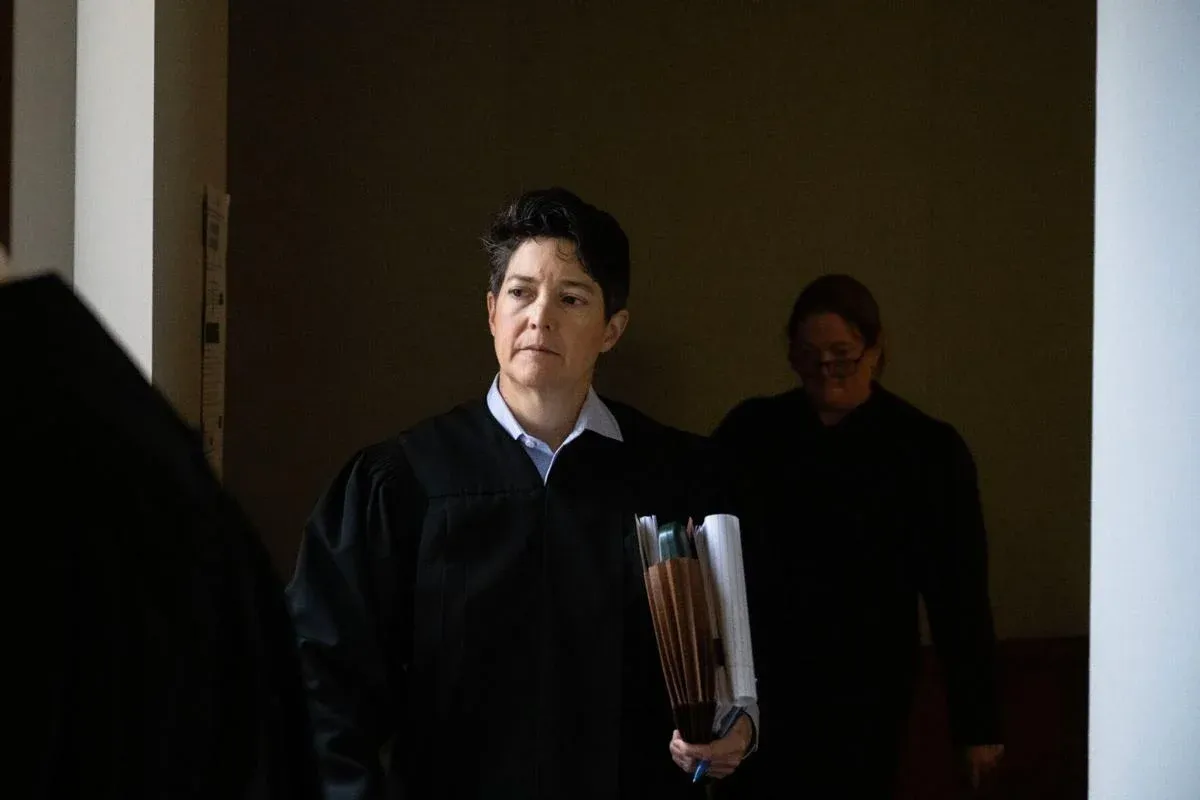
The Colorado Supreme Court determined on Monday that a Denver detective did not improperly resume questioning of a defendant in custody after he invoked his right to counsel.
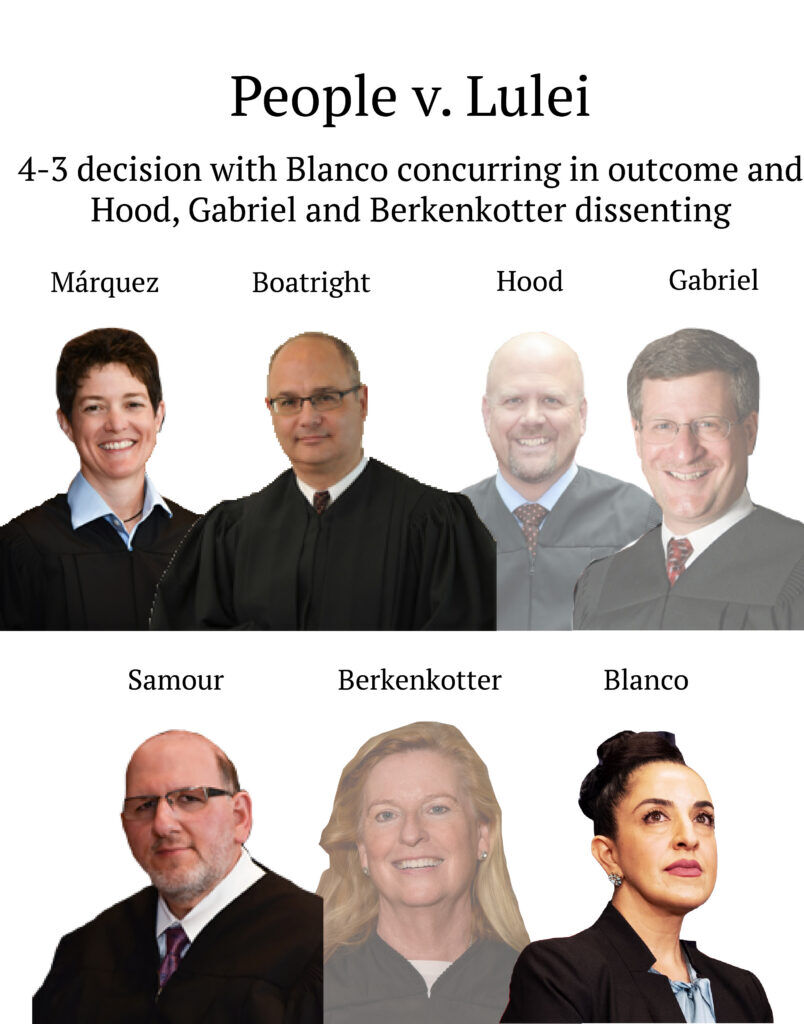
By 4-3, the justices reversed a trial judge’s order that found a violation of Dakotah J. Lulei’s Miranda rights. The Supreme Court’s majority based its decision on the belief that Lulei was not in custody at the time he asked for a lawyer. Consequently, his right to counsel was not triggered under the circumstances.
The justices not only disagreed sharply about that conclusion, but also about the approach the four-member majority took to reach it. In an unusual move, Justice Susan Blanco supported the outcome but declined to join portions of the reasoning, resulting in no majority for certain aspects of the decision.
The three dissenting justices disagreed with the outcome and would have barred prosecutors from using Lulei’s incriminating statements at trial. They also accused the majority of condoning an “ambush” of Lulei by deciding the appeal differently from how the Denver District Attorney’s Office presented it.
‘I tried to talk to you’
Under the landmark U.S. Supreme Court decision Miranda v. Arizona, law enforcement must inform suspects of their rights to remain silent and to consult with an attorney before interrogating them in custody. A failure to give a Miranda warning means the prosecution may not be able to use the defendant’s statements as evidence at trial.
Further, police generally may not re-initiate an interrogation once the suspect has invoked his rights.
Denver police responded in September 2024 to a motel room where one man was deceased and the other man, Lulei, said the two were hanging out and smoking marijuana. After an autopsy showed severe internal trauma on the deceased, Detective Adam Bolton decided to bring in Lulei for questioning.
As captured on video, Bolton said he had “a couple follow-up questions” and gave Lulei a written advisement of his Miranda rights. After reading the advisement, Lulei said, “Oh, so I am allowed to have a lawyer present for this?”
“Absolutely,” responded Bolton.
“Oh, hell yeah. Let’s reschedule this when I have a lawyer present,” said Lulei.
Lulei got up to leave, but Bolton asked him to wait briefly so officers “can get you transported.” Bolton then stepped out, conferred with another detective and a prosecutor, and they decided to arrest Lulei. Bolton and an officer reentered the room to handcuff Lulei.
“What’s going on now?” asked Lulei.
“I tried to talk to you, get your side of the story. Right now, you’re gonna be arrested,” responded Bolton. “For murder.”
“Oh, no, dude. No. Like, let’s talk this out,” responded Lulei.
“You had your chance, and you asked for a lawyer. We can’t do that now,” said a second detective.
Lulei then demanded to talk. He and Bolton discussed the case for two hours, during which Lulei disclosed he had fought with and struck the deceased.
The defense sought to exclude Lulei’s statements from trial, arguing the detectives failed to “scrupulously honor” Lulei’s invocation of his right to counsel by ceasing the interrogation.
District Court Judge Eric M. Johnson believed the detectives did not coerce Lulei into making a statement and Lulei “wanted to talk his way out of this” after his arrest. He also felt Bolton was not “intentionally trying to be tricky or anything.”
However, Johnson found it problematic that Bolton answered Lulei’s question about what was going on by not simply saying Lulei was being arrested for murder.
“The answer was, ‘I tried to talk to you to get your side of the story, now you’re going to be arrested.’ ‘OK, I’ll talk,'” said Johnson. “I think that’s the police reinitiating” the interrogation.
He barred the prosecution from using Lulei’s statements.
An ‘ambush?’
The DA’s office appealed Johnson’s decision, arguing solely that Bolton had not re-initiated his interrogation after Lulei asked for a lawyer. But during oral arguments in October, a new argument crept in — that Lulei was not in custody in the first place and had no Miranda rights to invoke.
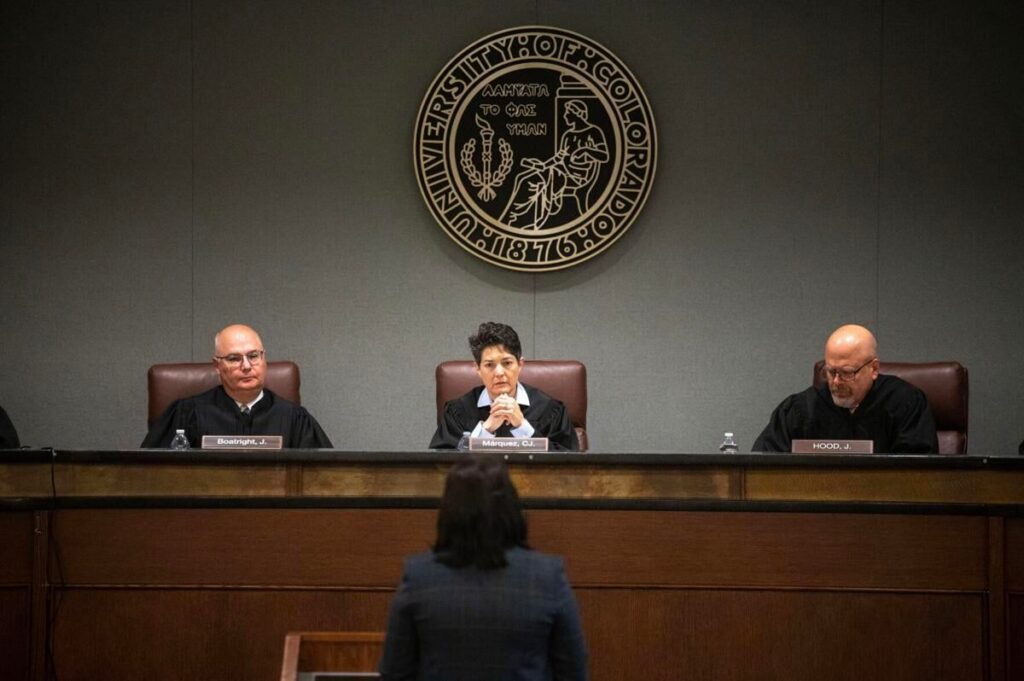
“Why do we even care about invocation?” wondered Chief Justice Monica M. Márquez.
Justice Richard L. Gabriel noted the prosecution had not argued Lulei’s lack of custody was grounds for overturning Johnson’s order.
The court can decide on “alternate grounds,” replied Márquez.
“Even if (the DA) didn’t raise it at all and (the defense) never had a chance to respond to it?” retorted Gabriel.
Although public defender Robert Swestka conceded at oral arguments that Lulei was not in custody when he first asked for a lawyer, Swestka also asked the Supreme Court to accept further written arguments about the custody issue. The court granted the request, and Swestka argued that the totality of the circumstances suggested Lulei was in custody after all. Notably, Bolton gave Lulei a Miranda warning, demonstrating the seriousness of the interrogation.
The Supreme Court’s majority disagreed.
“The Fifth Amendment right to counsel is not triggered merely because the police attempted to give a Miranda advisement,” wrote Márquez in the March 30 decision, “because a Miranda advisement, without more, does not create the context of custodial interrogation.”
She also explained why the majority was deciding the appeal based on an issue that the prosecution raised for the first time at oral arguments. Although the “party presentation principle” stands for the notion that the parties to a case are the ones who get to frame what the issues are for courts to adjudicate, Márquez wrote that the principle is “not ironclad.”
“Importantly, the party presentation principle does not constrain a court’s fundamental obligation to ascertain controlling law,” she wrote, and “we are not obligated to ignore the district court’s erroneous legal premise that a Miranda advisement outside of a custodial interrogation triggers protections.”
Gabriel, writing in dissent, argued Márquez’s opinion rewarded the district attorney’s office on an issue it initially did not argue.
“To my knowledge, we have never previously concluded that a party that has waived or abandoned an argument can resurrect it by reversing course and presenting the waived or abandoned contention at oral argument,” wrote Gabriel for himself and Justices William W. Hood III and Maria E. Berkenkotter. “To allow a party to do so subverts the orderly appellate process established by our case law and appellate rules and invites appellate advocacy by ambush.”
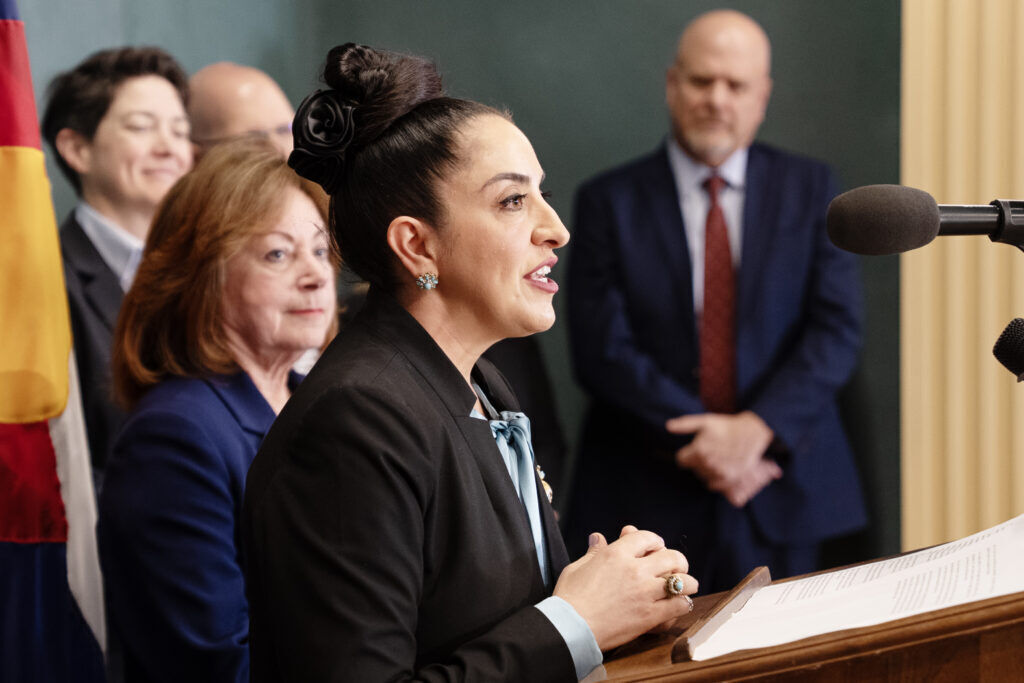
Blanco, in her first authored opinion since joining the court in early March, sided with the majority — but not entirely with its reasoning. She agreed that the prosecution did not raise Lulei’s lack of custody as grounds to reverse Johnson’s order.
Blanco declined to endorse Márquez’s statement that the court could wade into a non-presented issue because it has a “fundamental obligation” to get the law correct. Instead, she believed that the discussion during oral arguments, plus the additional briefing afterward, just “barely” put the custody issue in front of the court.
Otherwise, Blanco agreed with Gabriel’s warnings more broadly.
“There is a dire cost to everyone when courts deviate from these principles, which are only worthwhile if they are actively maintained,” she wrote.
The case is People v. Lulei.

Colorado legislature overrules 2 state Supreme Court decisions about child neglect, visitation
Michael Karlik
michael.karlik@coloradopolitics.com
Updated 2 hours ago
Colorado lawmakers have overruled a recent pair of state Supreme Court decisions, adopting the dissenting justices’ points of view in cases involving grandparent visitation rights and the ability of children to oppose a county’s decision to withdraw a neglect case....
Colorado federal judge speaks about judicial innovation, leadership
Michael Karlik
michael.karlik@coloradopolitics.com
Updated 14 hours ago
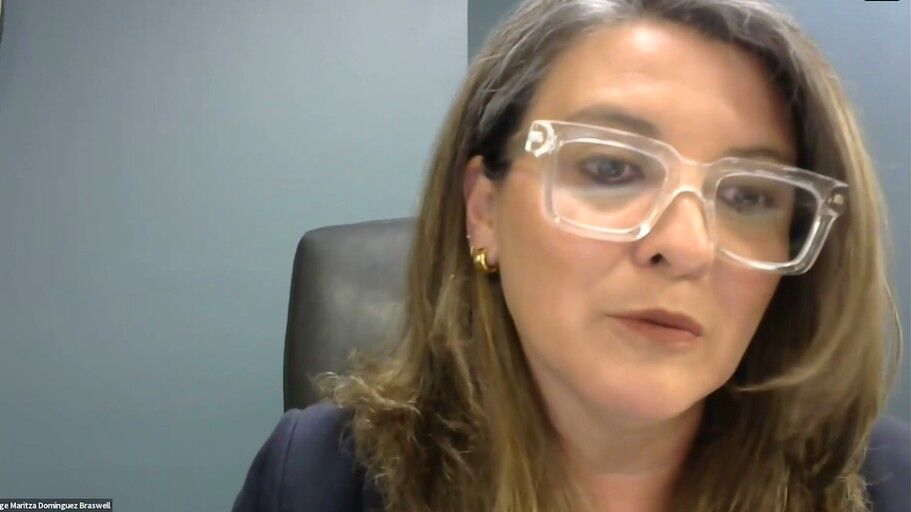
U.S. Magistrate Judge Maritza Dominguez Braswell spoke on a virtual panel of judges last week about innovation and leadership in the judiciary, touching on her experiences before and during her time on the bench. “When I was at the (attorney...
Appeals court revives disability discrimination claim against Colorado attorney regulators
Michael Karlik
michael.karlik@coloradopolitics.com
Updated 23 hours ago
Colorado’s second-highest court reinstated a lawyer’s discrimination claim earlier this month against Colorado’s attorney regulation office, based upon its alleged failure to accommodate his disability during the bar exam. Michael Ozborn, a University of Denver law graduate, sued the Office...
10th Circuit upholds child sex convictions of Fort Carson resident over evidence objections
Michael Karlik
michael.karlik@coloradopolitics.com
Updated 1 day ago
The Denver-based federal appeals court upheld the convictions of a Fort Carson resident on Tuesday, concluding that the prosecution did not violate the rules governing the disclosure of evidence. Mitchel Crow stood trial on seven counts of sexual abuse of...
Appeals court overturns convictions after judge improperly accepted facts as undisputed
Michael Karlik
michael.karlik@coloradopolitics.com
Updated 2 days ago
Colorado’s second-highest court reversed a defendant’s convictions and 12-year prison sentence earlier this month after an El Paso County judge did not require prosecutors to prove key facts that were subject to dispute after all. Prosecutors charged Noel Lavertt King...
Jeffco murder conviction overturned due to improper evidence
Michael Karlik
michael.karlik@coloradopolitics.com
Updated 3 days ago
Colorado’s second-highest court reversed a defendant’s convictions for murder and aggravated robbery earlier this month, finding that a Jefferson County judge allowed evidence that improperly suggested the man had “bad character” for possessing guns generally. Under the rules for criminal...

Daniel Domenico nominated for 10th Circuit, state Supreme Court hears arguments | COURT CRAWL
Michael Karlik
michael.karlik@coloradopolitics.com
Updated 3 days ago
Welcome to Court Crawl, Colorado Politics’ roundup of news from the third branch of government. Colorado’s chief federal trial judge is the choice for an upcoming vacancy on the Denver-based federal appeals court, plus the state Supreme Court heard oral...
Man who asked mom to lie to parole officer can stand convicted, Colorado Supreme Court decides
Michael Karlik
michael.karlik@coloradopolitics.com
Updated 17 hours ago
Attempting to influence a public servant is a crime that can include a defendant’s use of a third party to convey false information, the Colorado Supreme Court decided on Monday. There was no dispute that Michael Thomas Hupke asked his...

Children’s Colorado must resume care to transgender plaintiffs, state Supreme Court rules by 5-2
Michael Karlik
michael.karlik@coloradopolitics.com
Updated 3 days ago
The Colorado Supreme Court, by a 5-2 vote, ordered Children’s Hospital Colorado on Monday to resume providing certain medical services to a group of transgender plaintiffs, which it had ceased in the face of funding threats from the federal government...
Development fees not limited to brand new construction, Colorado court rules
Michael Karlik
michael.karlik@coloradopolitics.com
Updated 2 days ago
Colorado’s second-highest court ruled last month that local governments’ ability to impose fees on “new development” is not limited solely to construction projects that occur on empty land. Under state law, local governments that issue development permits are empowered to...
PREV
PREVIOUS

Colorado Gov. Polis signs social media warrant bill after last year's veto
Colorado law enforcement will soon have faster access to digital evidence after Gov. Jared Polis signed a pared‑down bill requiring social media companies to acknowledge and respond to search warrants on a tight timeline, a shift from a broader proposal he vetoed last year. Senate Bill 011 also require social media platforms to establish a […]

Colorado auto thefts drop 56% from 2021 levels
Colorado once ranked as the worst state in the nation for motor vehicle thefts per capita in 2021. The state has since seen a dramatic improvement, with auto thefts dropping 56% from 2021 levels. The state reported 16,291 motor vehicle thefts in 2025 — a 34% decline from the previous year, according to the released […]