

Colorado justices consider whether Denver police failed to respect suspect’s right to counsel
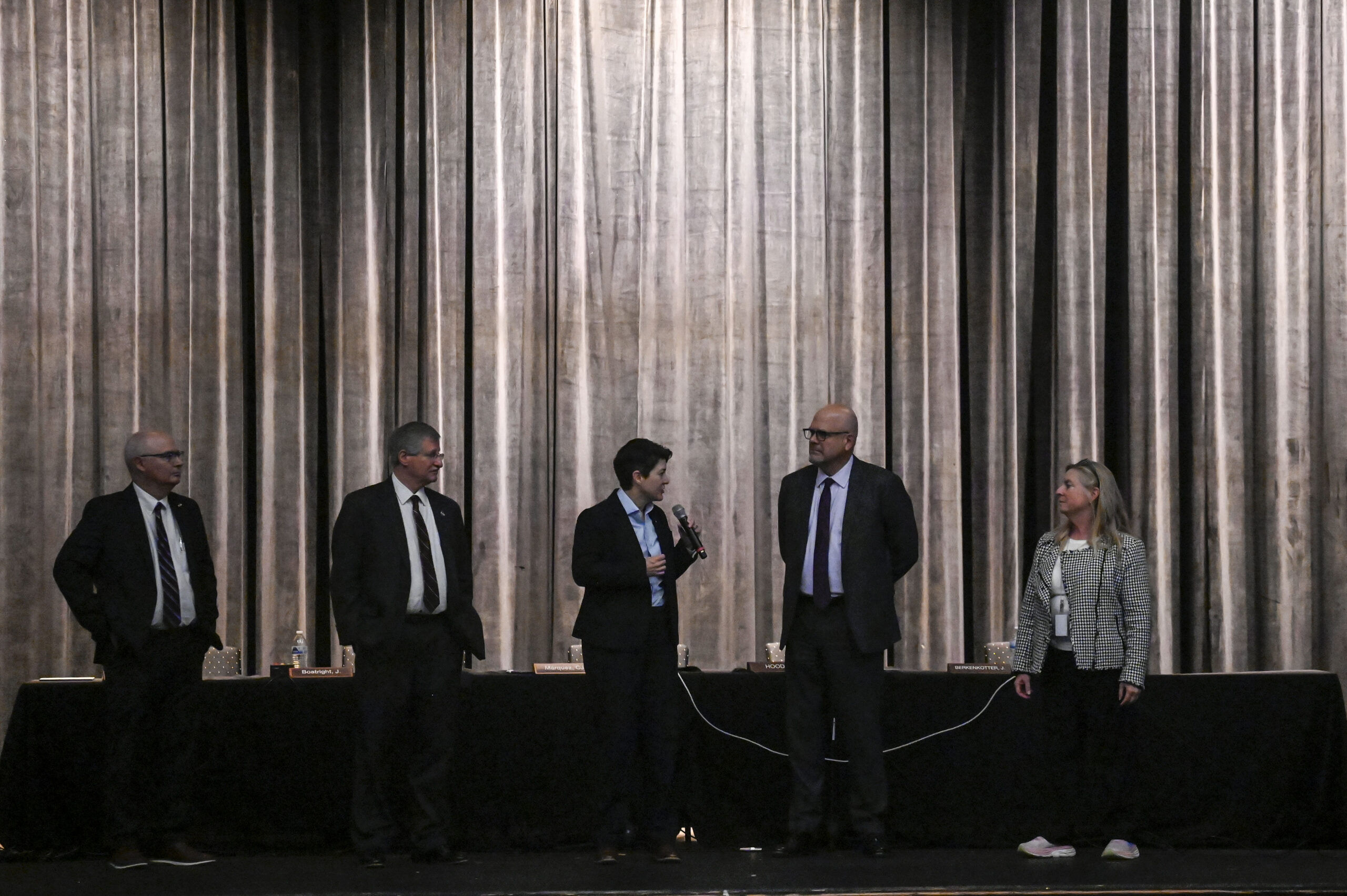
Members of the Colorado Supreme Court considered on Thursday whether Denver detectives improperly restarted their interrogation of a murder suspect who had clearly invoked his constitutional right to an attorney.
The district attorney’s office characterized the circumstances as “peculiar.” When police initially brought in Dakotah Lulei for questioning, he was not under arrest. After receiving a Miranda warning, he indicated he wished to speak to an attorney. Then, detectives placed him under arrest.
When Lulei asked why he was suddenly in custody, one detective explained he “tried to talk to you, get your side of the story.” Lulei immediately asked to talk.
A trial judge determined the detective’s explanation disregarded Lulei’s rights by effectively reinitiating the interrogation. That prompted the prosecution to appeal directly to the Supreme Court.
“When you say, ‘You had your chance, you didn’t say anything and now we’re arresting you for murder,'” said Justice Richard L. Gabriel during oral arguments, “I’m struggling with how that’s not a problem.”
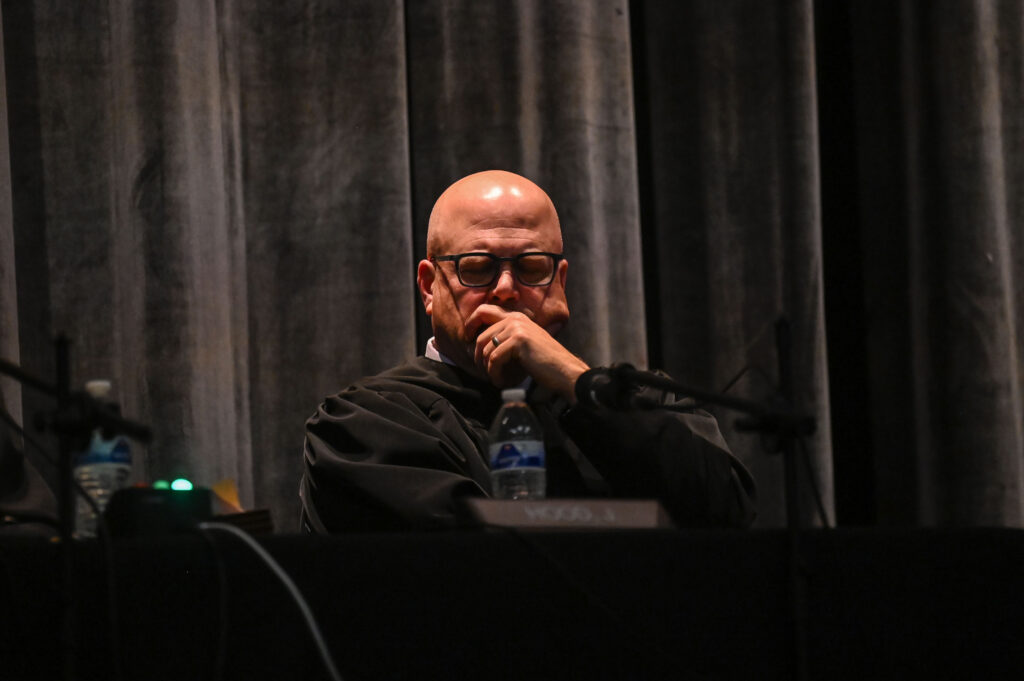
“Help me understand why he’s not baiting (Lulei) in some way,” added Justice William W. Hood III. “Arguably, it seems (Lulei is) being punished for the invocation” of his right to counsel.
Police responded in September 2024 to a motel room where one man was deceased and the other man, Lulei, said the two were hanging out and smoking marijuana. After an autopsy showed severe internal trauma on the deceased, Detective Adam Bolton decided to bring in Lulei to obtain a statement.
As captured on video, Bolton said he had “a couple follow-up questions” and gave Lulei a Miranda advisement of his rights to silence and to consult with an attorney. After reading the advisement, Lulei said, “Oh, so I am allowed to have a lawyer present for this?”
“Absolutely,” responded Bolton.
“Oh, hell yeah. Let’s reschedule this when I have a lawyer present,” said Lulei.
Lulei got up to leave but Bolton asked him to wait briefly so officers “can get you transported.” Bolton then stepped out, conferred with another detective and a prosecutor, and they decided to arrest Lulei. Bolton and an officer reentered the room to handcuff Lulei.
“What’s going on now?” asked Lulei.
“I tried to talk to you, get your side of the story. Right now, you’re gonna be arrested,” responded Bolton. “For murder.”
“Oh, no, dude. No. Like, let’s talk this out,” responded Lulei.
“You had your chance, and you asked for a lawyer. We can’t do that now,” said a second detective.
Lulei then demanded to talk. He and Bolton discussed the case for two hours, during which Lulei disclosed he had fought with and struck the deceased.
The defense sought to exclude Lulei’s statements from trial, arguing the detectives failed to “scrupulously honor” Lulei’s invocation of his right to counsel by ceasing the interrogation. Lulei’s attorney noted during a May hearing that the sequence of events suggested Lulei was not under arrest until he asked for a lawyer.
“They’re arresting him with nothing, nothing additional. And it was that action within minutes that prompted his desire to speak,” said public defender Robert Halpern.
District Court Judge Eric M. Johnson believed the detectives did not coerce Lulei into making a statement and Lulei “wanted to talk his way out of this” after his arrest. He also felt Bolton was not “intentionally trying to be tricky or anything.”
But ultimately, Johnson found it problematic that Bolton answered Lulei’s question about what was going on by not simply saying Lulei was being arrested for murder.
“The answer was, ‘I tried to talk to you to get your side of the story, now you’re going to be arrested.’ ‘OK, I’ll talk,'” said Johnson. “I think that’s the police reinitiating” the interrogation.
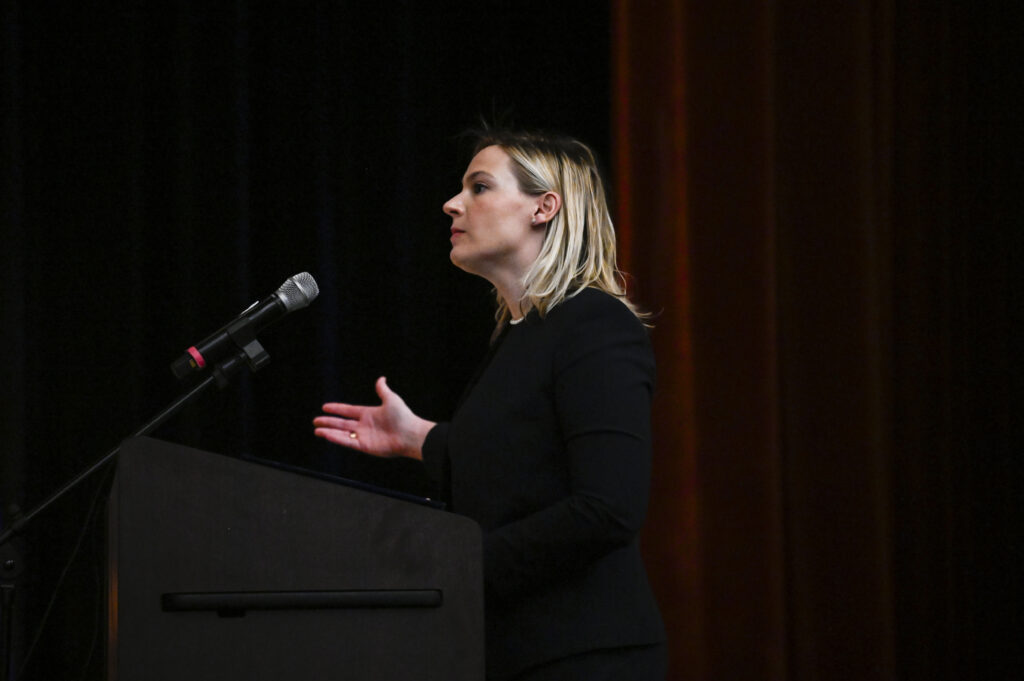
The DA’s office appealed Johnson’s decision. Deputy District Attorney Anya Havriliak argued to the Supreme Court that Bolton was simply trying to “explain the situation to Mr. Lulei” after he got upset at being arrested.
“We wouldn’t be here if the police officer said, ‘You’re under arrest.’ ‘For what?’ ‘For murder.’ I don’t see how that would be any problem,” said Gabriel.
“What I heard the trial court saying, essentially, is it perceived that as kind of a psychological gamesmanship,” added Hood.
Havriliak argued that Bolton’s tactics did not amount to wearing down Lulei’s will, as Lulei wanted to talk.
“Once he was in cuffs he did. I think that’s the problem,” interjected Chief Justice Monica M. Márquez. “It was clear moments earlier he was heading out the door.”
Public defender Robert Swestka told the court it is “inherently coercive” for police to suggest someone is being arrested for invoking their rights to counsel or to silence.
At one point, a skirmish developed between Márquez and Gabriel after Márquez pointed out Miranda advisements are required for someone who is interrogated in custody. When Lulei initially invoked his right to an attorney, he was not in custody.
“Why do we even care about invocation?” she wondered.
Gabriel noted Havriliak had not argued Lulei’s lack of custody was grounds for overturning Johnson’s order.
The court can decide on “alternate grounds,” responded Márquez.
“Even if (the DA) didn’t raise it at all and (the defense) never had a chance to respond to it?” retorted Gabriel.
The arguments took place at East High School in Denver as part of the long-running “Courts in the Community” program. During a question-and-answer session afterward, one student asked about Gabriel’s problem with focusing on the previously undisputed custody issue.
“Generally, courts of appeal need to consider what’s before them,” said Havriliak.
Another student asked why Bolton gave Lulei a Miranda warning in the first place if he was not in custody. Havriliak responded that he wanted to “be protective.” Swestka added that he believed Lulei still had the constitutional right to silence at that point.
Justices Melissa Hart and Carlos A. Samour Jr. did not attend the arguments, although Márquez said they intend to participate in the decision. A spokesperson for the judicial department said both were absent for personal reasons. Samour’s clerks, who served as bailiffs for the proceedings, were all wearing masks, suggesting illness was a factor.
The case is People v. Lulei.

Misconduct complaints from ex-Colorado judicial discipline director dismissed against federal judges
Michael Karlik
michael.karlik@coloradopolitics.com
Updated 13 hours ago
The administrative body for the Denver-based federal appeals court upheld a finding last week that misconduct complaints against Colorado’s chief federal trial judge and the chief appeals judge warranted dismissal and appeared to be a “litigation tactic” by the complaining...
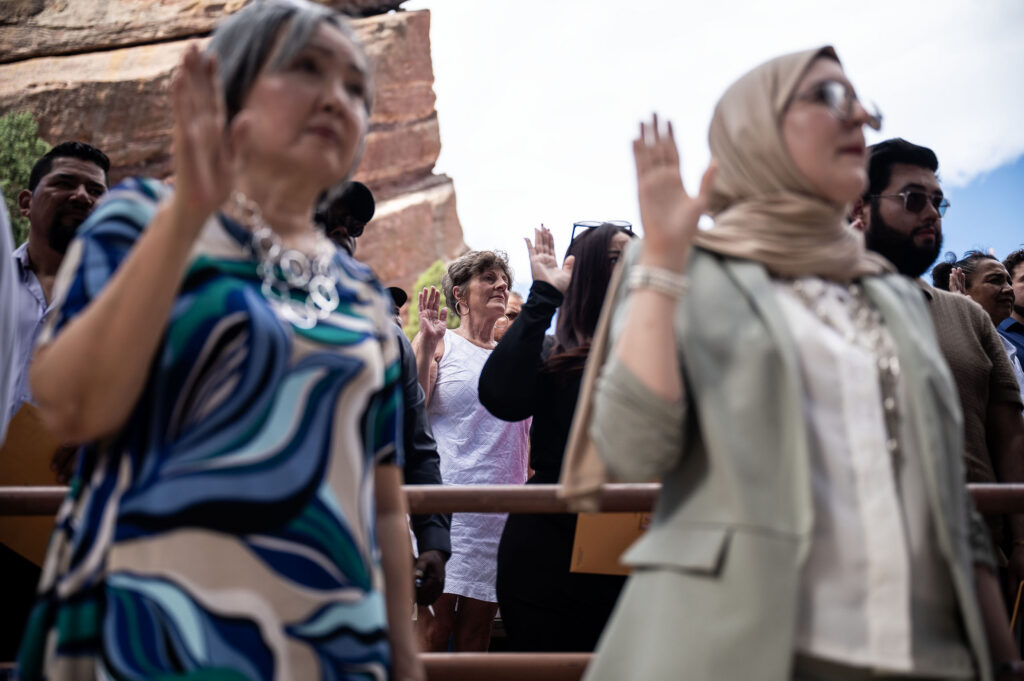
First-ever Red Rocks naturalization ceremony draws most diverse group of new citizens
Michael Karlik
michael.karlik@coloradopolitics.com
Updated 16 hours ago
Colorado’s federal trial court held its first-ever naturalization ceremony for nearly 300 new citizens on Thursday at Red Rocks Park and Amphitheater. “We’re doing it to commemorate the 250th anniversary of the Declaration of Independence and the United States. Red...
10th Circuit finds no fair housing violation by Littleton landlord for worker’s alleged rape of tenant
Michael Karlik
michael.karlik@coloradopolitics.com
Updated 2 days ago
The Denver-based federal appeals court concluded on Monday that Littleton’s housing authority could not be held liable for a maintenance worker’s alleged rape of a tenant, as the worker’s employment did not provide any special access to the victim. A...

Jeffco Public Schools sues Trump administration to protect funding after alleged transgender policies violation
Matt Kyle
matt.kyle@denvergazette.com
Updated 1 day ago
In the wake of several threats by the Trump administration to revoke federal funding, Jeffco Public Schools filed a lawsuit against the Department of Education seeking to protect that badly needed money. Jeffco has been under investigation by the DOE’s...

Denver detox center did not violate man’s rights with 10-hour hold, 10th Circuit says
Michael Karlik
michael.karlik@coloradopolitics.com
Updated 3 days ago
The Colorado-based federal appeals court concluded on Tuesday that Denver’s detoxification facility did not violate a man’s rights by holding him against his will for 10 hours until his blood alcohol content was projected to reach zero. Unusually, Brian Garrett’s...
Federal judge clarifies ex-GOP treasurer candidate’s burden to prove defamation claims
Michael Karlik
michael.karlik@coloradopolitics.com
Updated 3 days ago
A federal judge clarified last week that businessman and former Republican statewide candidate Brian Watson will need to surmount a higher hurdle in proving his claim that a party guest’s alleged description of him as a “criminal” amounted to defamation....
Colorado board permits state to appeal injunction against arthritis drug price cap
Marissa Ventrelli
marissa.ventrelli@coloradopolitics.com
Updated 3 days ago
A Colorado board voted Friday to allow the Attorney General’s Office to fight an injunction against a price cap on a drug that treats arthritis. A U.S. district court judge had granted the company Amgen a preliminary injunction, temporarily blocking...
Federal judge rejects constitutional claims, ‘expressions of hatred’ by Club Q defendant
Michael Karlik
michael.karlik@coloradopolitics.com
Updated 4 days ago
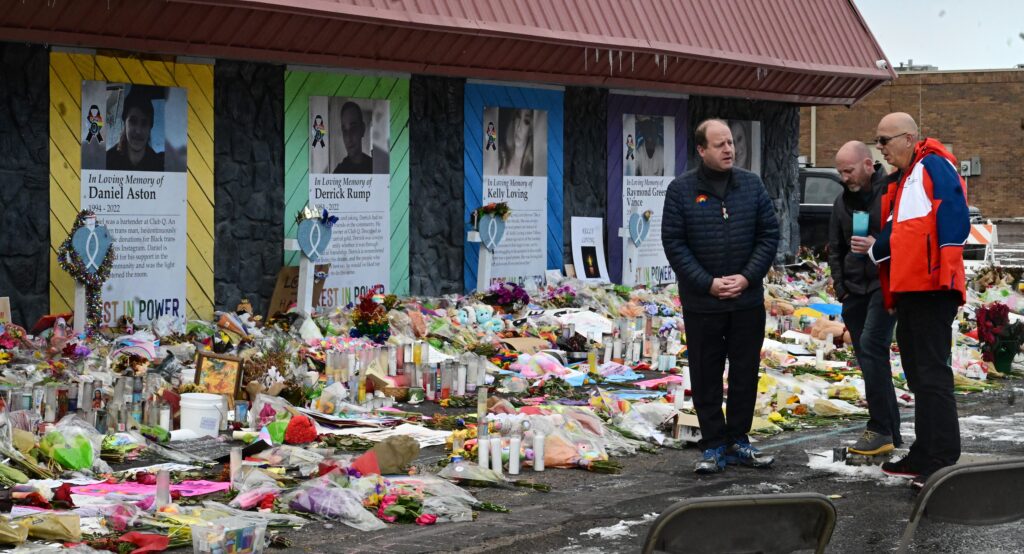
A federal judge rejected a defendant’s claims that he received constitutionally ineffective assistance of counsel while facing federal hate crime and firearms charges for murdering five people at a Colorado Springs LGBTQ nightclub in 2022. Anderson Lee Aldrich is serving...

Divided 10th Circuit upholds Colorado congestion fee on car rentals
Michael Karlik
michael.karlik@coloradopolitics.com
Updated 3 days ago
The Denver-based federal appeals court concluded on Monday that a 2024 “congestion impact fee” that lawmakers imposed on short-term vehicle rentals did not conflict with a federal prohibition on certain airport-related charges. Beginning in the 1970s, Congress began limiting the...
10th Circuit dismisses woman’s lawsuit following 10-year attempt to undo restraining order
Michael Karlik
michael.karlik@coloradopolitics.com
Updated 7 days ago
The Denver-based federal appeals court rejected a woman’s challenge on Friday to a restraining order imposed on her more than a decade ago, finding that she cannot credibly claim she will be prosecuted for violating the restraining order through her...
PREV
PREVIOUS

US Fish and Wildlife Services tells Colorado: No more wolves from Canada, Alaska
Efforts by Colorado Parks and Wildlife to bring in more wolves from Canada later this year may have hit a snag after the U.S. Fish & Wildlife Service told the state it may not do so. In an Oct. 10 letter, Brian Nesvik, director of USFWS, told Gov. Jared Polis and Jeff Davis, director of […]

Jason Crow lays out foreign policy rooted in 'working-class interests,’ homegrown values | TRAIL MIX
U.S. Rep. Jason Crow, the Aurora Democrat who represents Colorado’s 6th Congressional District, last week called for Congress to reassert its role in steering a revamped foreign policy that lives up to American values, rejects corruption at home and abroad, and draws on a broader range of talent to rejuvenate a system he warned has […]