

Appeals court says jury not obligated to apply discounts to determine value of stolen merch
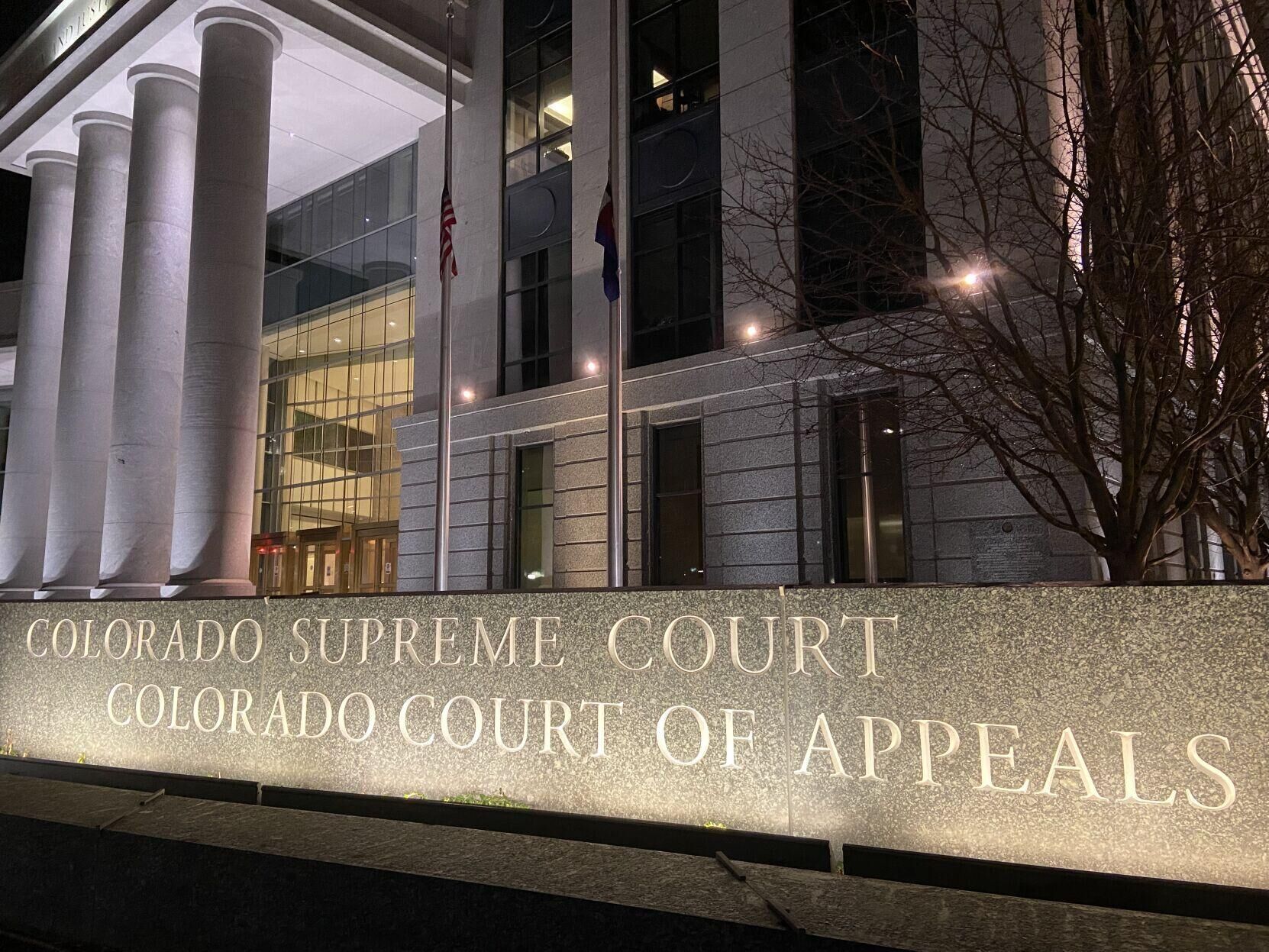
Colorado’s second-highest court concluded on Thursday that it was up to a Douglas County jury to determine the value of stolen merchandise at a defendant’s theft trial, after both sides presented different estimates of the items’ value.
Under state law, a theft offense hinges on the market value of the stolen goods. Anything below $2,000 is a misdemeanor, while anything above that threshold is a felony.
Byron A. Bolden did not dispute that he walked out of a Kohl’s store without paying for merchandise. But he maintained he was not a felon.
Jurors at Bolden’s trial heard two different values for what he stole:
- $2,095, which Kohl’s loss prevention manager reached using the normal, non-discounted price of the items
- $1,856, which the defense calculated based on Kohl’s list of sale prices for the day of the crime
Jurors convicted Bolden of a felony.
Responding to Bolden’s appeal of his conviction, the prosecution noted that Colorado law describes an item’s “retail value” as evidence of its worth.
“Because neither statute nor case law address discounted prices at retail stores in relation to theft, the trial court was within its discretion in submitting the question of value, as a factual question, to the jury,” wrote Assistant Attorney General Cata A. Cuneo. “Defendant has not identified any case law directly on point when it comes to retail merchandise that happened to be on a temporary promotional price discount when it was stolen.”
Cuneo argued that Kohl’s sale prices can fluctuate on any given day and that none of the security footage showed discount labels or sales tags on the stolen items. Further, discounts are benefits to “paying customers,” and Bolden was not a paying customer.
Under the defense’s theory, someone “who happened to steal from a store during a promotional sale could receive a misdemeanor while another offender, who stole the same item from the same store the day before or day after, would receive a felony for the same crime simply because the store did not have that item on a price discount that day, or even at that exact time on the same day,” wrote Cuneo.
Bolden countered that the question revolved around the market value of the stolen items at the time of the offense.
“Here, the evidence was uncontested at trial that the price a willing customer would pay at the cash register for the items” was $1,856, wrote attorney Jeffrey C. Parsons. “The fact that value changes over time — both up and down — is precisely the reason why Colorado law pegs the value to the time and place of the theft.”
Case: People v. Bolden
Decided: March 19, 2026
Jurisdiction: Douglas County
Ruling: 3-0
Judges: Elizabeth L. Harris (author)
Stephanie Dunn
Pax L. Moultrie
A three-judge Court of Appeals panel agreed with the government that Bolden’s jury was entitled to accept the higher value of the stolen merchandise.
“Accordingly, we conclude that while the discounted sale price is evidence of value, it does not establish value as a matter of law,” wrote Judge Elizabeth L. Harris in the March 19 opinion. “Bolden has not pointed us to any case, and we have not found one, supporting his position that the temporarily discounted price on the day of the theft is, as a matter of law, the value of a stolen item.”
She noted that, during their deliberations, jurors asked whether they could consider the “wholesale price of items taken.”
“If anything, the question suggests that the jury understood that it had to determine the fair market value of the items and that, in determining value, it was not bound by the prosecution’s evidence of regular retail price,” Harris added.
The case is People v. Bolden.

Federal judge green-lights excessive force, retaliation claims for trial against Fort Collins officers
Michael Karlik
michael.karlik@coloradopolitics.com
Updated 1 day ago
A federal judge green-lit a jury trial last week against multiple Fort Collins police officers on claims that they used excessive force on one man who was standing unarmed in his underwear, and retaliated against another man for exercising his...

10th Circuit revives wage violation lawsuit against Papa John’s operator
Michael Karlik
michael.karlik@coloradopolitics.com
Updated 2 days ago
The Denver-based federal appeals court on Tuesday reinstated a former Papa John’s delivery driver’s lawsuit alleging violations of federal and state wage law. Steve Mighell worked for one month at a Denver Papa John’s location in summer 2023. He alleged...
Colorado appeals judge’s delays in releasing opinions noted by performance commission
Michael Karlik
michael.karlik@coloradopolitics.com
Updated 1 day ago
The citizen-led performance commission that provides guidance to voters about whether to retain members of Colorado’s second-highest court raised concerns by judges and attorneys that Judge Elizabeth L. Harris sometimes struggles with releasing opinions promptly. Harris, who joined the Court...

Colorado judge explores sanctions against DOJ, ICE for rearresting man 4 days after release on bond
Michael Karlik
michael.karlik@coloradopolitics.com
Updated 3 days ago
A federal judge in Colorado is considering sanctions against the government after immigration agents rearrested a man four days after an immigration judge found him suitable for release on bond. On July 28, U.S. Magistrate Judge N. Reid Neureiter ordered...

Divided disciplinary panel censures Montezuma County judge after agreement reached
Michael Karlik
michael.karlik@coloradopolitics.com
Updated 2 days ago
A disciplinary panel formally imposed a public censure, suspension, and further training on Montezuma County Court Judge Ian J. MacLaren on Tuesday by a 2-1 vote. Under constitutional Amendment H, which voters adopted in November 2024, MacLaren was set to...
Colorado’s Western Slope magistrate judges describe unique role in federal judiciary
Michael Karlik
michael.karlik@coloradopolitics.com
Updated 4 days ago
Two of Colorado’s federal judges stationed on the Western Slope spoke to lawyers on Wednesday about their unique roles, the ways their workloads differ, and the need for more criminal defense lawyers to take cases outside the Front Range. “Here...

Denver sues Philip Morris, other tobacco companies over cigarette butt litter
Deborah Grigsby
deborah.smith@denvergazette.com
Updated 3 days ago
Denver is demanding that some of the biggest tobacco companies in the world pay for the cleanup of discarded cigarette butts on its streets, following a similar campaign that cities in other states have pursued. Denver’s lawsuit, filed this week...

Federal judge rules that request for bond hearing not necessary to challenge immigration detention
Michael Karlik
michael.karlik@coloradopolitics.com
Updated 2 days ago
A federal judge in Colorado ruled last week that it is not mandatory for a person to seek a bond hearing with an immigration judge before they challenge the lawfulness of their detention in federal court. For the past year,...

Boulder Valley School District introduces new policies following antisemitism lawsuit
Marissa Ventrelli
marissa.ventrelli@coloradopolitics.com
Updated 3 days ago
The chief of Boulder Valley School unveiled new policies for the 2026-2027 school year following a lawsuit filed on behalf of a student alleging antisemitic harassment. In June, the Anti-Defamation League filed a federal civil rights complaint against the school...

Colorado NRA chapter seeks injunction against new gun‑training requirement
Marissa Ventrelli
marissa.ventrelli@coloradopolitics.com
Updated 4 days ago
The Colorado chapter of the National Rifle Association is seeking an injunction to stop the state from enforcing a new law that took effect earlier this month. The new law requires anyone buying or selling certain firearms to first complete...
PREV
PREVIOUS

Trump switches endorsement back to Jeff Hurd, says Hope Scheppelman is ending run in Colorado’s 3rd CD
In a surprise twist, President Donald Trump on Friday said he is again endorsing Republican U.S. Rep. Jeff Hurd after pulling his support from the Grand Junction Republican last month and instead backing his primary challenger in Colorado’s 3rd Congressional District. In a post on his Truth Social platform, Trump said that Hope Scheppelman, the […]

Federal judge advances lawsuit seeking overtime compensation for Aurora firefighter trainees
A federal judge gave preliminary approval earlier this month to a class of Aurora firefighter trainees who may sue the city over allegations that they were denied overtime pay in violation of federal law. Joseph Elias, who attended Aurora’s fire academy between July-August 2023, filed suit last year alleging the city is violating the Fair […]