

Which Colorado candidate for governor will commit to the ‘public’ in public education? | Paula Noonan
The General Assembly finished its work with a flurry, not a whimper. The Joint Budget Committee (JBC) managed to outplay Gov. Jared Polis with its final amendments to the School Finance Act.
Polis is all in on “innovation” with public school money, even if innovation includes jiu-jitsu lessons for private school students. He didn’t want legislation to stop flim-flam related to Education Re-Envisioned BOCES’ (ERBOCES) distribution of state tax money to unvetted “education” providers. ERBOCES pushed out more than $110 million for “enrichment” programs for about 8,000 home-schooled and private-school students across the state. Providers included micro schools comprising as few as two families’ children. Other instances involved lacrosse trainers and skiing lessons.
The JBC cleverly placed an amendment to BOCES’ scope of action in the School Finance Act (SFA), which Polis doesn’t dare veto. This bill-length amendment will do the job of taming ERBOCES’ enrichment program racket. BOCES may no longer serve students outside their authorizing districts. BOCES may no longer underwrite “contract” schools that get around state statute for how schools using public money operate. State Rep. Emily Sirota of the JBC made a forceful case for this amendment to prevent exploitation of loopholes in state statute.
State Rep. Ken DeGraaf of El Paso County objected to the BOCES amendment. He claimed in debate providing state funds to home-schooled and private-school students is a beneficial use. He asserted the BOCES amendment would eliminate “innovation.” He noted horseback riding lessons for private school students paid with public funds may be considered innovative. Then he asserted the amendment was socialism. Who knew?
Gov. Polis, in alignment with DeGraaf, did manage to stop a draft bill to put “guardrails” on his opt-in to President Donald Trump’s Education Choice for Children Act (ECCA). ECCA allows taxpayers to receive up to $1,700 in tax credits when they donate funds to Scholarship Granting Organizations offering scholarships to students for various educational purposes, including paying tuition for private-school education. The bill would have prohibited discrimination in the distribution of funds based on state and federal anti-discrimination laws.
As an alum of La Jolla Country Day School in the San Diego area, it’s easy to see why Polis finds offering public money for private-school scholarships attractive. He got that private-school education, thus all kids should. He doesn’t want to go for a tax increase to fund it, but he is willing to use a tax credit.
The governor justifies his position by asserting the tax credits are not tax dollars per se, and thus are not subject to anti-discrimination laws. Of course that’s the kind of thinking that allowed ERBOCES to pitch $110 million in public dollars out a window. In any case, Colorado governors should always support anti-discrimination laws when public dollars are used. Discrimination based on race, ethnicity, gender, religion, or disability is pernicious and, until recently, generally unlawful.
Gov. Polis is term limited. After his June veto date, he won’t be in the legislation business. Voters will want to know how candidates for governor and state Senate and state House of Representatives stand on these issues.
School finance represents almost one-quarter of the state budget. The state pitches in $5 billion plus, and local property taxes cover the remaining $5 billion, plus or minus. The state is losing school-aged population. Schools are funded on a per-student basis. Every child who receives an ECCA scholarship for private school in order to leave a public school depletes that public school of about $13,000. This trim threatens the principle of publicly funded public education as a public good and public necessity.
If scholarships can be issued in a discrimination environment, it’s easy to predict the most expensive-to-educate public school children will no doubt not be on the receiving end of the money.
Candidates from both parties need to publicly state their commitment to public schools or using public money to finance private education. This discussion should extend to the role of charter schools in the public school arena, especially when the charters do not or cannot educate children from discrimination-protected classes.
Governor candidate U.S. Sen. Michael Bennet was educated at St Albans, a prominent private school in the D.C. area. Governor candidate state Attorney General Phil Weiser was educated in a public school in New York state. Bennet, as superintendent of Denver Public Schools, launched its pro-charter options. Weiser’s office provided guidance to the Colorado Department of Education and no doubt to the JBC on BOCES statute and ERBOCES’ uses of state law. Weiser has spent his Attorney General career cracking down on fiscal and discrimination bad actors.
The question for voters on the Democratic primary side is clear: Which candidate will commit to the public in public education with full funding and support of school districts, their neighborhood and community schools, and their students? Which candidate most values choice through tax credits and/or public dollars for expansion of the charter school system, especially through the Charter School Institute? Which candidate will fulfill Colorado’s constitutional requirement for a “thorough and uniform system of free education throughout the state”?
Paula Noonan owns Colorado Capitol Watch, the state’s premier legislature tracking platform.

Ain’t Polis’ Peters commutation a pity? | Hal Bidlack
Hal Bidlack
hal-bidlack@coloradopolitics.com
Updated 4 hours ago
I am hoping that, yet again, my long-suffering and very forgiving editor will pardon my rambling thoughts today, as there are too many open tabs on my computer that deal with issues I want to talk about (Ed: pretty used...
Colorado House Democrats’ caucus finances under scrutiny as ethics case against leader advances
Marianne Goodland
marianne.goodland@coloradopolitics.com
Updated 9 hours ago
Democratic lawmakers told a legislative ethics panel that a leader’s management of caucus finances left them with unanswered questions, disputed reimbursements and a breakdown in communication that ultimately triggered a formal complaint. The House Ethics Committee is examining a complaint...

Colorado River crisis: Lake Mead, Lake Powell inch closer to ‘dead pool’
Marianne Goodland
marianne.goodland@coloradopolitics.com
Updated 8 hours ago
In the past 10 days, both Lake Mead on the Arizona-Nevada border and Lake Powell roughly 300 miles northeast on the Utah-Arizona line have recorded their lowest water levels since the reservoirs were first filled. Lake Mead, the nation’s largest...

Colorado lieutenant governor candidate Markert says early discipline and key mentors set his course
Marianne Goodland
marianne.goodland@coloradopolitics.com
Updated 16 hours ago
Editor’s note: This is the first installment in a three-part series examining Colorado’s candidates for lieutenant governor. In this piece, Colorado Politics speaks with George Markert, the Republican running mate to gubernatorial candidate Victor Marx. Marx is competing against Democrat...
Colorado, like America, past due for generational change in politics | Miller Hudson
Miller Hudson
miller-hudson@coloradopolitics.com
Updated 2 days ago
I was 27 before I ever voted for president. At 19, in 1964, the Constitution had not yet been amended establishing 18-year-old voting eligibility. In 1968, I was serving overseas with the U.S. Navy at a time when there was...

Farmers and ranchers win on NIETC cancellation | Rachel Gabel
Rachel Gabel
rachel-gabel@coloradopolitics.com
Updated 1 day ago
The Department of Energy rolled into Lamar last week and Office of Electricity Assistant Secretary Katie Jereza stood in her neat, green suit in front of a room filled with farmers, ranchers and landowners. The crowd was filled with straw...
Going after the wrong butts | Jon Caldara
Jon Caldara
jon-caldara@coloradopolitics.com
Updated 4 days ago
Mayor Mike Johnston proclaimed, “It is past time Big Tobacco cleaned up the big mess it’s created.” Yep. Denver is suing tobacco companies for the cigarette butts littering the city. Because Denver’s Big Mess couldn’t possibly be the fault of...
Jeff Crank, Jessica Killin set to face off in 2 debates in Colorado’s 5th Congressional District
Ernest Luning
ernest.luning@coloradopolitics.com
Updated 3 days ago
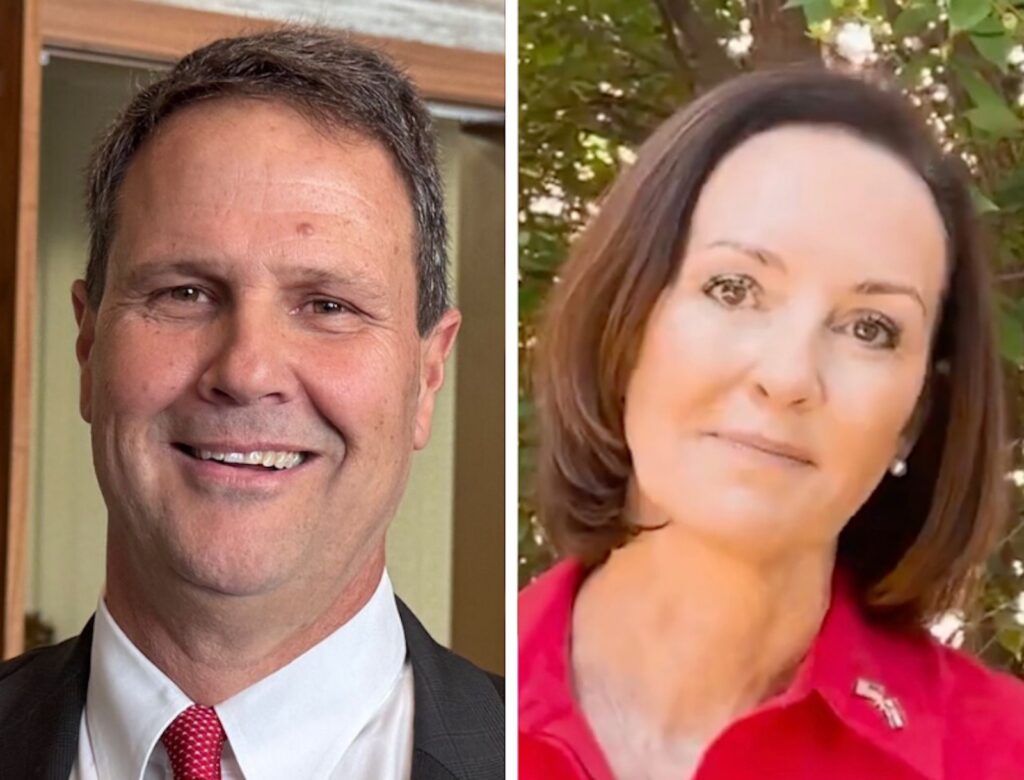
Republican U.S. Rep. Jeff Crank and Jessica Killin, his Democratic challenger, have agreed to debate twice in the weeks leading up to the general election in Colorado’s 5th Congressional District, their campaigns have said. Crank is seeking a second term...
CSI study reviews impacts of Colorado’s mandatory sex‑trafficking sentencing measure
Marissa Ventrelli
marissa.ventrelli@coloradopolitics.com
Updated 9 hours ago
A new report by the think-tank Common Sense Institute examines what could happen if Colorado voters approve Initiative No. 108, which establishes mandatory life sentences for offenders convicted of sexual trafficking of a minor. The measure is backed by Protect...
Three districts that will answer key Colorado political questions | Paula Noonan
Paula Noonan
paula-noonan@coloradopolitics.com
Updated 5 days ago
Colorado’s legislature used to be a place where neither party was dominant. Dozens of seats were competitive and House and Senate majorities switched regularly. From 2010 to 2020, the House was predominantly Democratic with one two-year assembly under Republicans. The...
PREV
PREVIOUS

As the AI age evolves, Colorado must step up to protect our kids | GUEST COLUMN
By Ann O’Leary Artificial intelligence is creating new opportunities for young people to learn, create, explore and build confidence. It is opening new doors for students in Denver, on the eastern plains and on the western slope. But as our kids enter the AI era, we need to put the right guardrails in place to […]

Colorado lawmakers pass bill negating road-funding ballot measure
Colorado lawmakers on Wednesday approved a last‑minute amendment to a bill crafted to counter a ballot measure requiring that public funds collected for “road transportation” go to “road transportation,” setting up a high‑stakes clash over street funding and public services. House Bill 1430 would only go into effect if Initiative No. 175 passes in November. That […]