

Colorado’s health care cuts are painful — what comes next could be worse | PODIUM

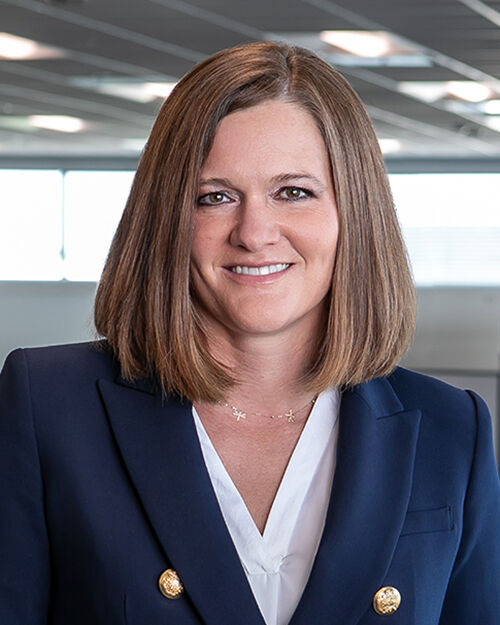
By Ross Brooks and Beverly Razon
Last December, a broad coalition of consumer advocates, safety net providers, hospitals, health plans and physicians statewide published a warning: our state was facing a health care crisis, and fragmented policymaking would make it harder to solve. These members of the Colorado Health Policy Forum called on Gov. Jared Polis, the legislature and stakeholders to work together to build something better.
This session, lawmakers faced one of the most difficult budget environments ever and was forced to make painful choices. To close a roughly $1.5 billion shortfall, the legislature cut Medicaid provider rates by 2%, placed new limits on Medicaid coverage and eliminated funding for programs across departments. Among the cuts was a cap on paid hours for family caregivers of people with intellectual and developmental disabilities, and reductions to services for some of Colorado’s most vulnerable residents. Cover All Coloradans, the program providing medical and behavioral health coverage for children and pregnant women, was capped and restructured, despite enrolling some 21,000 children.

As hard as those decisions were, the 2027 legislative session could make them seem easy by comparison. The legislature has already been warned Colorado faces a third consecutive billion-dollar shortfall in 2027 if nothing changes, and that is before the full force of federal cuts arrive.
H.R. 1, signed into federal law last July, represents the largest cuts to Medicaid since the program began in the 1960s. Federal spending on Medicaid in Colorado is projected to be cut by about 16%, roughly $14 billion, during the next decade. Beginning in 2027, most adult Medicaid members will have to prove they are working, volunteering or in school for at least 80 hours a month, and eligibility will be verified twice a year instead of once.
The Urban Institute estimates these requirements alone could cause approximately 100,000 Coloradans to lose Medicaid coverage, not because they technically lost eligibility, but because of more complex paperwork requirements. For Colorado’s Community Health Centers and behavioral health providers serving patients on thin margins, enrollment losses will mean more uncompensated care, reduced hours and longer waits. From 2021 to 2024, the number of uninsured patients at Colorado’s Community Health Centers rose by 29%, and more cuts will push their numbers higher.
We applaud a meaningful step taken at the close of this session. Sen. Judy Amabile, with the support of her Joint Budget Committee colleagues, secured funding for a working group that will do a deep dive into Colorado’s Medicaid program over the summer, examining how to put the program on a more sustainable footing. This is the kind of grounded, evidence-based examination our coalition called for in December, and we are committed to being full partners in that effort.
But the work cannot stop there. Former Republican U.S. Sen. Ben Sasse, now facing a terminal cancer diagnosis, recently reflected “politics barely matters for what we’re going through right now.” That clarity carries a lesson for our state. Colorado will have a new governor and many new lawmakers in 2027 who will face a health care and budget landscape more daunting than anything their predecessors navigated. They will need well-vetted, practical ideas from a diverse coalition of thinkers to cut through the political noise and do right by patients.
That work is a responsibility our Colorado Health Policy Forum takes seriously. We call for genuine partnership with Colorado’s incoming leadership and the full breadth of the health care community, grounded in shared data, accountable for outcomes and committed to structural solutions.
Colorado’s health care is not a political talking point — it is about people. It is a patient at a Community Health Center receiving affordable care from a team who knows their history. It is a family that can afford to take a sick child to the doctor rather than wait and hope.
The time is now. We stand ready to do that work alongside Colorado’s incoming governor and legislative leaders.
Ross Brooks is president and chief executive of the Colorado Community Health Network, the unified voice for Colorado’s 21 Community Health Centers serving more than 850,000 Coloradans. Beverly Razon is senior vice president of Copic, a mission-driven medical professional liability insurance carrier that was started by the physicians of Colorado. Both are members of the Colorado Health Policy Forum.

Ain’t Polis’ Peters commutation a pity? | Hal Bidlack
Hal Bidlack
hal-bidlack@coloradopolitics.com
Updated 11 hours ago
I am hoping that, yet again, my long-suffering and very forgiving editor will pardon my rambling thoughts today, as there are too many open tabs on my computer that deal with issues I want to talk about (Ed: pretty used...

Colorado House Democrats’ caucus finances under scrutiny as ethics case against leader advances
Marianne Goodland
marianne.goodland@coloradopolitics.com
Updated 16 hours ago
Democratic lawmakers told a legislative ethics panel that a leader’s management of caucus finances left them with unanswered questions, disputed reimbursements and a breakdown in communication that ultimately triggered a formal complaint. The House Ethics Committee is examining a complaint...

Colorado River crisis: Lake Mead, Lake Powell inch closer to ‘dead pool’
Marianne Goodland
marianne.goodland@coloradopolitics.com
Updated 15 hours ago
In the past 10 days, both Lake Mead on the Arizona-Nevada border and Lake Powell roughly 300 miles northeast on the Utah-Arizona line have recorded their lowest water levels since the reservoirs were first filled. Lake Mead, the nation’s largest...

Colorado lieutenant governor candidate Markert says early discipline and key mentors set his course
Marianne Goodland
marianne.goodland@coloradopolitics.com
Updated 22 hours ago
Editor’s note: This is the first installment in a three-part series examining Colorado’s candidates for lieutenant governor. In this piece, Colorado Politics speaks with George Markert, the Republican running mate to gubernatorial candidate Victor Marx. Marx is competing against Democrat...

Colorado, like America, past due for generational change in politics | Miller Hudson
Miller Hudson
miller-hudson@coloradopolitics.com
Updated 2 days ago
I was 27 before I ever voted for president. At 19, in 1964, the Constitution had not yet been amended establishing 18-year-old voting eligibility. In 1968, I was serving overseas with the U.S. Navy at a time when there was...

Farmers and ranchers win on NIETC cancellation | Rachel Gabel
Rachel Gabel
rachel-gabel@coloradopolitics.com
Updated 2 days ago
The Department of Energy rolled into Lamar last week and Office of Electricity Assistant Secretary Katie Jereza stood in her neat, green suit in front of a room filled with farmers, ranchers and landowners. The crowd was filled with straw...

Going after the wrong butts | Jon Caldara
Jon Caldara
jon-caldara@coloradopolitics.com
Updated 5 days ago
Mayor Mike Johnston proclaimed, “It is past time Big Tobacco cleaned up the big mess it’s created.” Yep. Denver is suing tobacco companies for the cigarette butts littering the city. Because Denver’s Big Mess couldn’t possibly be the fault of...

Jeff Crank, Jessica Killin set to face off in 2 debates in Colorado’s 5th Congressional District
Ernest Luning
ernest.luning@coloradopolitics.com
Updated 4 days ago
Republican U.S. Rep. Jeff Crank and Jessica Killin, his Democratic challenger, have agreed to debate twice in the weeks leading up to the general election in Colorado’s 5th Congressional District, their campaigns have said. Crank is seeking a second term...

CSI study reviews impacts of Colorado’s mandatory sex‑trafficking sentencing measure
Marissa Ventrelli
marissa.ventrelli@coloradopolitics.com
Updated 16 hours ago
A new report by the think-tank Common Sense Institute examines what could happen if Colorado voters approve Initiative No. 108, which establishes mandatory life sentences for offenders convicted of sexual trafficking of a minor. The measure is backed by Protect...
Three districts that will answer key Colorado political questions | Paula Noonan
Paula Noonan
paula-noonan@coloradopolitics.com
Updated 6 days ago
Colorado’s legislature used to be a place where neither party was dominant. Dozens of seats were competitive and House and Senate majorities switched regularly. From 2010 to 2020, the House was predominantly Democratic with one two-year assembly under Republicans. The...
PREV
PREVIOUS

Gov. Polis, please veto House Bill 1210 | FEEDBACK
As Gov. Jared Polis reviews House Bill 1210, I hope he will think about families like mine. For people trying to balance work, parenting and rising costs, discounts from delivery apps are an important part of how I take care of my family. Let me explain: for a long time, I didn’t have a car. […]

Bill on firearm barrel sales withdrawn after veto threat from Colorado governor
A bill that would require firearm barrels to be sold in person by a federally licensed firearms dealer was pulled by its sponsors, who said they were all but told that Gov. Jared Polis would veto the measure. Sponsored by Sen. Tom Sullivan, D‑Centennial, and Reps. Kyle Brown, D‑Louisville, and Meg Froelich, D‑Englewood, Senate Bill […]