

Colorado eyes expansion of state inspection authority over immigration detention centers

A proposal to add new inspection requirements for detention centers and increases the civil liability for sharing information with federal immigration authorities passed both chambers of the Colorado Legislature.
The proposal is now headed to Gov. Jared Polis’ desk.
House Bill 1276 expands a current law prohibiting employees of state agencies or political subdivisions from disclosing an individual’s immigration status to federal authorities by extending the civil penalty liability to the employer.
The bill also expands the Colorado Department of Health and Environment’s inspection authority over immigration detention centers by requiring more frequent visits to ensure — backers said — that standards for food safety, water quality, and confinement conditions are met.
It’s among a slew of proposals to come out to come out of the state Capitol, which has embraced so-called “sanctuary laws” that limit or prohibit cooperation with federal authorities on enforcing immigration laws.
Colorado currently has one immigration detention facility in Aurora, but there are several temporary holding facilities across the state.
“We have seen consequences of a system that prioritizes cruelty, profit, and enforcement quotas over human lives,” said Sen. Iman Jodeh, D-Aurora, one of the bill’s sponsors. “At the core of this bill, we are making sure that if our political subdivisions share persons’ identifying information not related to a criminal matter, that both employee and employer can be held responsible.”
The bill’s other sponsors include Reps. Elizabeth Velasco, D-Glenwood Springs, and Lorena Garcia, D-Adams County, and Sen. Weissman, D-Aurora/
While the Senate advanced the bill without debate, House Republicans highlighted the large number of amendments and raised worries about its fiscal note.
Rep. Ryan Gonzalez, R‑Greeley, argued that lawmakers should focus on issues like deteriorating roads, strained health care systems, lagging K‑12 performance, and budget pressures, rather than federal immigration policy.
“I wanted to get to a yes — I really did — but I just couldn’t get there,” he said.
Sponsors have argued that the bill would be budget‑neutral because its costs are supposed to be covered by new fee revenue from immigration‑detention facilities. If that revenue does not materialize, the state could end up paying more than $131,000 in FY 2026‑27 and more than $72,000 in FY 2027‑28.
The measure passed the House on a 42-21 party-line vote last month. It met a similar fate in the Senate on Monday, with 23 Democrats voting in favor and 12 Republicans voting against.
Additionally, it requires the state’s Peace Officers Standards and Training Board to train law enforcement officers on federal immigration law and mandates the Attorney General’s Office to develop policies on the sharing of personally identifying information with federal immigration authorities.
The state’s drug “sanctuary” label comes amid rising tensions between local and federal law enforcement in Colorado, especially after the state attorney general last year filed a lawsuit against a Mesa County sheriff’s department deputy for providing a woman’s personal information to federal officials during a traffic stop.
The woman arrested, a University of Utah student, was born in Brazil, came to the U.S. under a tourist visa when she was 7, and has been living in Utah for 12 years. She overstayed her visa about a decade ago and has a pending asylum case.
Backers of the non-cooperation law have long argued that Colorado’s local police officers should not be commandeered to conduct the work of federal immigration authorities. Others have raised worries about violating due process rights for immigrants living illegally in the country who might be swept up in the Trump administration’s illegal immigration crackdown.
Critics of the “sanctuary” statutes, meanwhile, countered that they are making it more difficult for local law enforcement to work with federal agents to interdict crime, and that, ultimately, negatively affects residents, whether they are in the country illegally or not.
Polis is expected to sign HB 1276 into law.


Denver schools to refinance bonds to create capacity for future borrowing
Nico Brambila
nico.brambila@denvergazette.com
Updated 6 hours ago
Less than two years after voters approved a record $975 million school bond, Denver Public Schools is refinancing older debt — a move district officials say will save taxpayers money while creating capacity for another bond election. The district has...

Parker data center could get $19M tax rebate from Douglas County
Nicholas Fogleman
nicholas.fogleman@denvergazette.com
Updated 12 hours ago
At a time when Denver and Front Range governments are restricting or banning data center development, Douglas County commissioners are poised to approve a $19.3 million tax rebate agreement Tuesday for a new data center under construction in Parker. The...

Denver City Council rejects contract that would have given video maker 8-year deal
Deborah Grigsby
deborah.smith@denvergazette.com
Updated 15 hours ago
Denver’s Office of Human Resources will have to get creative to attract new city employees and place them in “hard-to-fill” jobs after a proposed five-year contract extension, valued at $600,000, failed to gain favor with the Denver City Council. The...

Denver Mayor Mike Johnston files to run for reelection in 2027
Michael Braithwaite
michael.braithwaite@gazette.com
Updated 15 hours ago
Denver Mayor Mike Johnston officially filed his paperwork Monday to run again for Denver’s mayoral office next year. The filing comes weeks after Johnston confirmed to The Denver Gazette that he would seek reelection as he focuses the final year...

U.S. Rep. Lauren Boebert’s son arrested, faces charges of sexual exploitation of minor
Matt Kyle
matt.kyle@denvergazette.com
Updated 1 day ago
U.S. Rep. Lauren Boebert’s son Tyler Jay Boebert has been arrested and accused of recording and sharing a video depicting himself having intercourse with a minor, according to court records. The case originated in Garfield County in Western Colorado and...

Clean and Safe program made nearly 3,000 contacts in first year of downtown Colorado Springs outreach
Brennen Kauffman
brennen-kauffman@coloradopolitics.com
Updated 14 hours ago
The pilot version of the Clean and Safe program in downtown Colorado Springs has hit the one-year mark, marking thousands of contacts with visitors and some intransigent homeless residents. Leaders from the Downtown Partnership presented a progress report to Colorado...
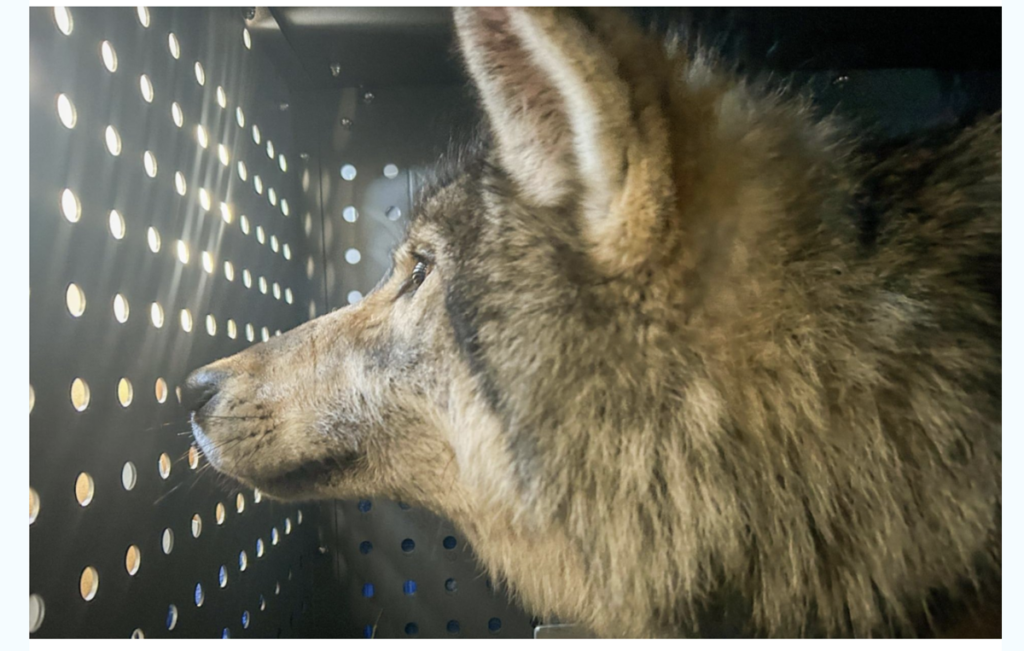
Hunter shot Colorado wolf after mistaking it for a coyote, wildlife office says
Marianne Goodland
marianne.goodland@coloradopolitics.com
Updated 7 hours ago
Colorado Parks and Wildlife said Monday that a female wolf from British Columbia that died in January was shot by a hunter who mistook her for a coyote. The wolf, identified as 2504‑BC, was one of 17 wolves relocated since...
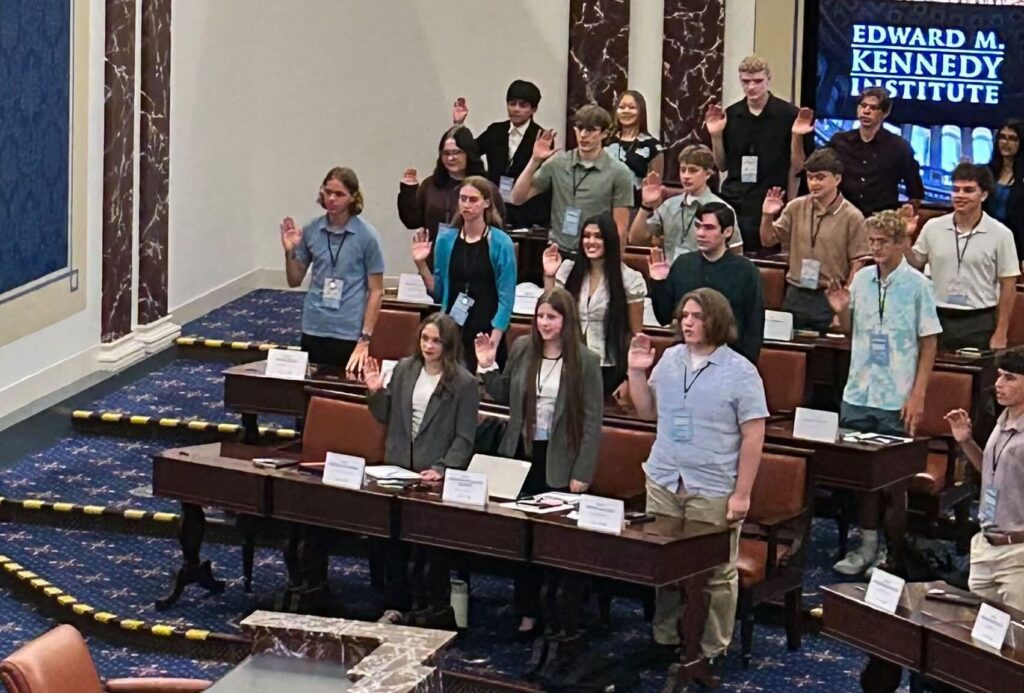
By the students, for the students: Sierra High School represents Colorado in developing national AI framework
Eric Young
eric.young@gazette.com
Updated 1 day ago
To many, the recent, rapid development of generative artificial intelligence and its lack of frameworks and oversight may evoke comparisons to the unrestrained Wild West in the 1800s or the economic potential of the dot-com boom in the early 2000s....

Cripple Creek gold mine is part of Colorado’s past, present and future
O'Dell Isaac
odell.isaac@gazette.com
Updated 9 hours ago
Gold mining has played an integral role in shaping the history of Colorado, going back to before it officially became a state 150 years ago. The Pikes Peak Gold Rush, started in 1858, brought tens of thousands of prospectors to...

Democratic group aims Spanish-language TV ad at Gabe Evans in Colorado’s battleground 8th CD
Ernest Luning
ernest.luning@coloradopolitics.com
Updated 8 hours ago
A national group tied to House Democratic leadership launched a six-figure Spanish-language TV ad in Colorado this week targeting Republican U.S. Rep. Gabe Evans and the GOP’s signature budget legislation. The 30-second spot is part of $15 million in new...
PREV
PREVIOUS

Superintendent Michael Gaal on why schools work better without union contracts | The OpEdge Podcast
In the latest episode of The OpEdge — The Gazette’s new opinion podcast — Colorado Springs District 11 Superintendent Michael Gaal reveals why teachers’ union contracts hold schools back. Gaal tells OpEdge host and investigative columnist Jimmy Sengenberger how ending D-11’s labor contract unleashed flexibility on teacher pay, staffing and accountability, while arguing school choice and […]

Colorado bill on lobbyist registration awaits final decision from the governor
A bipartisan bill requiring more disclosure from legislative liaisons and state agency lobbyists is in limbo, despite broad support in both the Colorado House and Senate as Gov. Jared Polis is reportedly considering a veto. Senate Bill 147, sponsored by Sens. Lisa Cutter, D-Evergreen, and Rod Pelton, R-Cheyenne Wells, and Reps. Dusty Johnson, R-Fort Morgan, […]