

Solar and wind —what a difference a border makes | Hal Bidlack
If you ask most Americans where Colorado and Wyoming are on a map, they will likely be able to find us, somewhere out west. A few might be confused by our roughly similar shapes. Sure, Colorado is actually a 697-sided polygon (a hexahectaenneacontakaiheptagon) due to surveying errors during the 19th century. Wyoming, on the other hand, is a much simpler trapezoidal shape. It too was supposed to be a rectangular state, but as with Colorado, mistakes were made. The northern border is roughly 23 miles shorter than the southern border, so, that makes Wyoming a trapezoid. Not as impressive as a hexahectaenneacontakaiheptagon, but still not a perfect square.
Many years ago, when I was on my first Air Force active-duty assignment as an ICBM launch officer in Cheyenne, Wyoming, the state of Colorado held a contest for a new state motto. The Wyoming governor at the time — a Democrat, if you can believe it — suggested “just south of paradise.” For some reason, that slogan didn’t win.
Since those long-ago days, our states have grown apart, albeit not in shape or sides, but certainly in overall political point of view. Wyoming was, and remains, a deep-red state. In fact, when my late first wife and I registered to vote in Wyoming, the clerk joked we were increasing the number of Democrats in Wyoming by a third. I’m not even sure how much of an exaggeration that was back then. Probably even less so now.
One difference between us and our neighbors to the north was illustrated recently in two different actions taken by our state governments, both reported in Colorado Politics. Here in Colorado, Gov. Jared Polis signed House Bill 26-1007, a new law designed to break down barriers to the installation of solar panels, to include places like multi-family homes and apartments. Now folks will be allowed things like balcony solar arrays and such. The total contribution to our energy needs won’t be massive, but it is a step forward.
Meanwhile, in the state up north, as reported in the Out West Roundup, Wyoming is moving in the opposite direction. As reported in CoPo, Rocky Mountain Power, Wyoming’s largest electrical utility, has changed plans for future solar and wind investments because of the recently passed Trump Big Ugly Bill (he calls it something else), that zeros out, or nearly zeros out, very important tax benefits that helped solar and wind facilities get up and running. Yet somehow, the massive amount of taxpayer dollars that the federal government passes along to the oil and gas companies has not been diminished. Indeed, in addition to direct payments of $10 billion to $52 billion each year, additional breaks (such as drilling on public lands for a pittance) raises the eventual level of support to these companies to about $760 billion annually.
Believe it or not, the Wyoming power people appear to think this Trumpian miasma will last a long time, and they want to get back to coal burning; a fuel Wyoming has in abundance (to be fair, they also have lots of sun and wind. I can personally attest to the wind especially). Oh, and please don’t get me started on the “windmills are ugly” argument. Surely a pumping field of oil derricks with flares burning off “waste” natural gas are far less attractive.
Under this administration, the Wyoming utility giant has delayed (foot dragged?) the closing of coal fired power plants, even as it admits to an eventual significant uptick in greenhouse gas emissions, something that was actually declining in recent years. But don’t worry, remember the day in March we hit 85 degrees? Totally normal. Or more precisely, a new normal.
Remember the late T. Boone Pickens? He was a gas-and-oil tycoon who built Mesa Petroleum into a massive energy giant. In his later years he founded the “Picken’s Plan,” wherein private industry (likely with some governmental tax incentives) would build thousands of wind turbines in what he called the nation’s “wind corridor” or what we usually call the great plains. Such turbines could provide up to 20% of the nation’s electrical needs, and could easily, through transmission lines, deliver that “free-ish” power to anywhere in the nation.
Pickens’ further argued the natural gas, now being used to power electrical plants, could be used as vehicle fuel, eliminating our need for imported oil. Pickens thought the smartest way to start was to put an emphasis on converting fleets of trucks and buses to natural gas (a fairly easy conversion), and we would see significant reductions in greenhouse-gas production, while saving on energy costs. He believed, back in 2008, that with the right commitment, we could be to the point of essential energy independence and dramatically better air quality within 10 years. Let’s see, 10 years since 2008 would be… We could be living in an improved, cleaner, safer world by now, had we embraced the plan. Strait of Hormuz issues? Not so much.
Sigh…
So, while Colorado takes another baby step by letting people put solar panels on their apartment balconies, Wyoming basically zeros out any investments in wind or solar, because Trump? The same CoPo issue of Out West Roundup noted Trump has now, again, withdrawn his nominee for the director of the National Park Service, an agency he has already nearly gutted. During his first term, he never did appoint a director. Now, in his second and final term (read the 22nd Amendment, folks), he has finally tried to nominate someone, a nominee who had no park administration experience, but who did run the parks and recreation division of a major hospitality company. But that person is now out. We’ll see what comes next.
So, a tale of two non-rectangular states: one taking baby steps forward, the other preferring to curse the darkness and move backward. I’m always going to have a warm spot in my heart for Wyoming, but I’m definitely glad I live in Colorado.
Hal Bidlack is a retired professor of political science and a retired Air Force lieutenant colonel who taught more than 17 years at the U.S. Air Force Academy in Colorado Springs.

Who’s spending in Colorado to get your vote?
Marianne Goodland
marianne.goodland@coloradopolitics.com
Updated 2 hours ago
Groups that raise unlimited amounts of money have spent about $20 million in May and June to try and influence Colorado voters’ choices in the upcoming June 30 primaries. By law, these groups cannot coordinate with the candidates they support....
Tina Peters tells supporters to ‘stand up and fight back’ at Castle Rock event
Marissa Ventrelli
marissa.ventrelli@coloradopolitics.com
Updated 4 hours ago
Tina Peters, the former Mesa County clerk recently released from prison, warned supporters that what happened to her could happen to them, too, if they did not “stand up and fight back” at an event at the Douglas County Fairgrounds....
Will one unqualified AG replace another? | George Brauchler
George Brauchler
george-brauchler@gazette.com
Updated 1 day ago
Colorado Democrats are poised to nominate another attorney general candidate with de minimis relevant credentials or experience. Far from disqualifying, Colorado’s recent voting history mirrors that of America in favoring biography over experience, partisanship over policy, and emphasizing what divides...
Pueblo’s mayor keeps stirring the pot | Dennis Maes
Dennis Maes
dennis-maes@coloradopolitics.com
Updated 1 day ago
Pueblo Mayor, Heather Graham, has clearly proven to be a disciple of the Donald Trump school of governance. And, like her mentor, she is experiencing the same catastrophic results. The format is to ignore what the electorate approved and expects...
The perils of Colorado’s unregulated abortions | GUEST COLUMN
Colorado Politics
colorado-politics@coloradopolitics.com
Updated 1 day ago
By Tom Perille How did the movement which grew out of a genuine concern for the health and safety of women become the same movement that undermines women’s health and safety today? Despite good intentions, it was a long route...
Colorado to participate in Great American State Fair in Washington
Marissa Ventrelli
marissa.ventrelli@coloradopolitics.com
Updated 9 hours ago
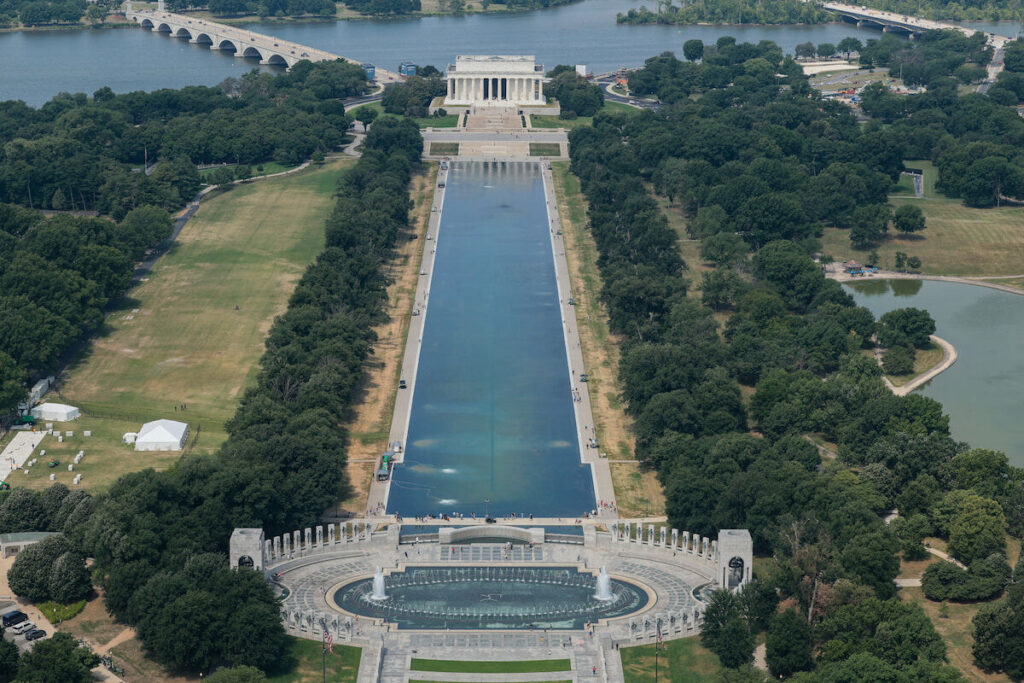
Visitors to Washington, D.C. for the country’s 250th anniversary will have the opportunity to learn about Colorado’s natural beauty and culture during the Great American State Fair, a World’s Fair-style event that opened Thursday at the National Mall. While all...
Phil Weiser leading Michael Bennet in Colorado’s Democratic gubernatorial primary, internal poll finds
Ernest Luning
ernest.luning@coloradopolitics.com
Updated 12 hours ago
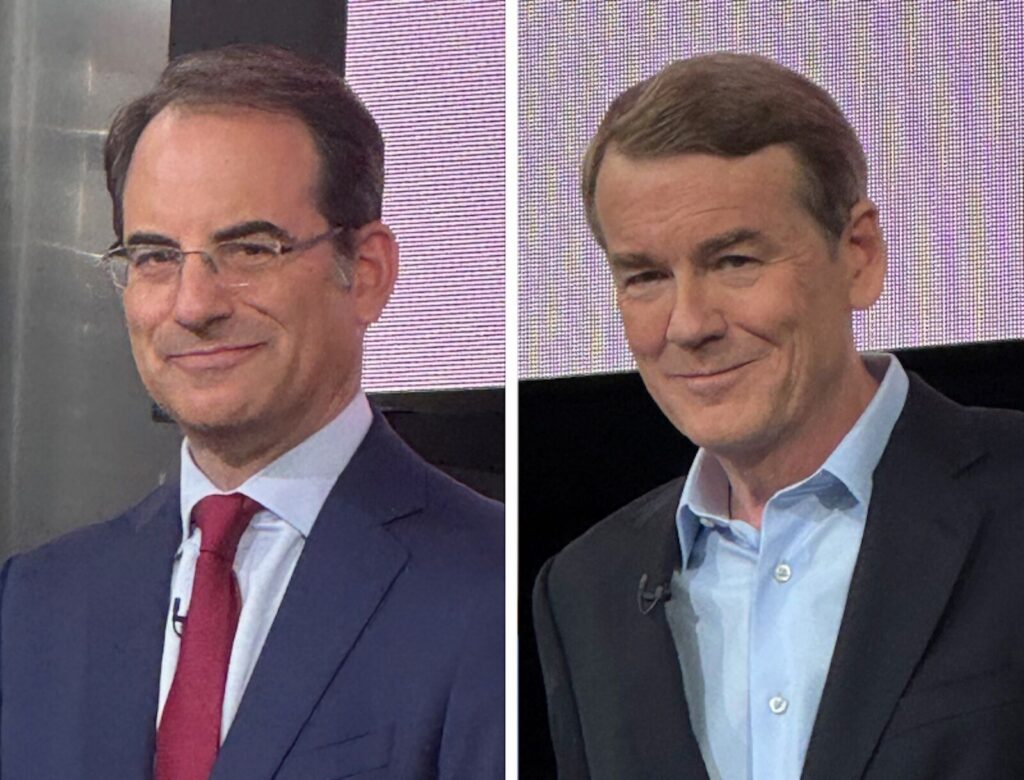
Attorney General Phil Weiser holds a lead over U.S. Sen. Michael Bennet among likely voters less than a week before ballots are due in Colorado’s Democratic gubernatorial primary, according to a new poll released Thursday by a group backing Weiser....
Sans seniors, what does Colorado’s uninterested early turnout say about our disengaged electorate? | Paula Noonan
Paula Noonan
paula-noonan@coloradopolitics.com
Updated 2 days ago
This primary election is poorly attended. Evidence is in the numbers. About 10% of active registered voters are deciding this year’s primaries with seven days to go. If that number triples by June 30, only 30% of voters will decide...
Who gets to decide Colorado’s economic future? | GUEST COLUMN
Colorado Politics
colorado-politics@coloradopolitics.com
Updated 2 days ago
By Sarah Blackhurst Colorado’s prosperity depends on industries that grow our food, build our future and power our homes. But today, these sectors face an invisible threat from 5,000 miles away: the European Union’s Corporate Sustainability Due Diligence Directive (CS3D)....
Colorado’s ‘right to natural gas’ measure submits signatures to qualify for November ballot
Marissa Ventrelli
marissa.ventrelli@coloradopolitics.com
Updated 2 days ago
A natural-gas rights initiative backed by Advance Colorado is likely headed to the November ballot, triggering a parallel campaign by environmental groups seeking to impose new liabilities on oil and gas operators. Petitions for Initiative No. 177 were turned in...
PREV
PREVIOUS
The rural voice missing from the Nexstar debate | GUEST COLUMN
By Donald Valdez As a former state representative for District 62, in the southern part of the state, I spent years fighting to make sure the voices of rural Coloradans were heard in state decision-making. As a lifelong farmer, I know firsthand what comes with living in a rural community — and the unique needs […]
Superintendent Michael Gaal on why schools work better without union contracts | The OpEdge Podcast
In the latest episode of The OpEdge — The Gazette’s new opinion podcast — Colorado Springs District 11 Superintendent Michael Gaal reveals why teachers’ union contracts hold schools back. Gaal tells OpEdge host and investigative columnist Jimmy Sengenberger how ending D-11’s labor contract unleashed flexibility on teacher pay, staffing and accountability, while arguing school choice and […]