

White House withdraws hospitality executive as National Park Service nominee | OUT WEST ROUNDUP
MONTANA
National parks nominee withdrawn
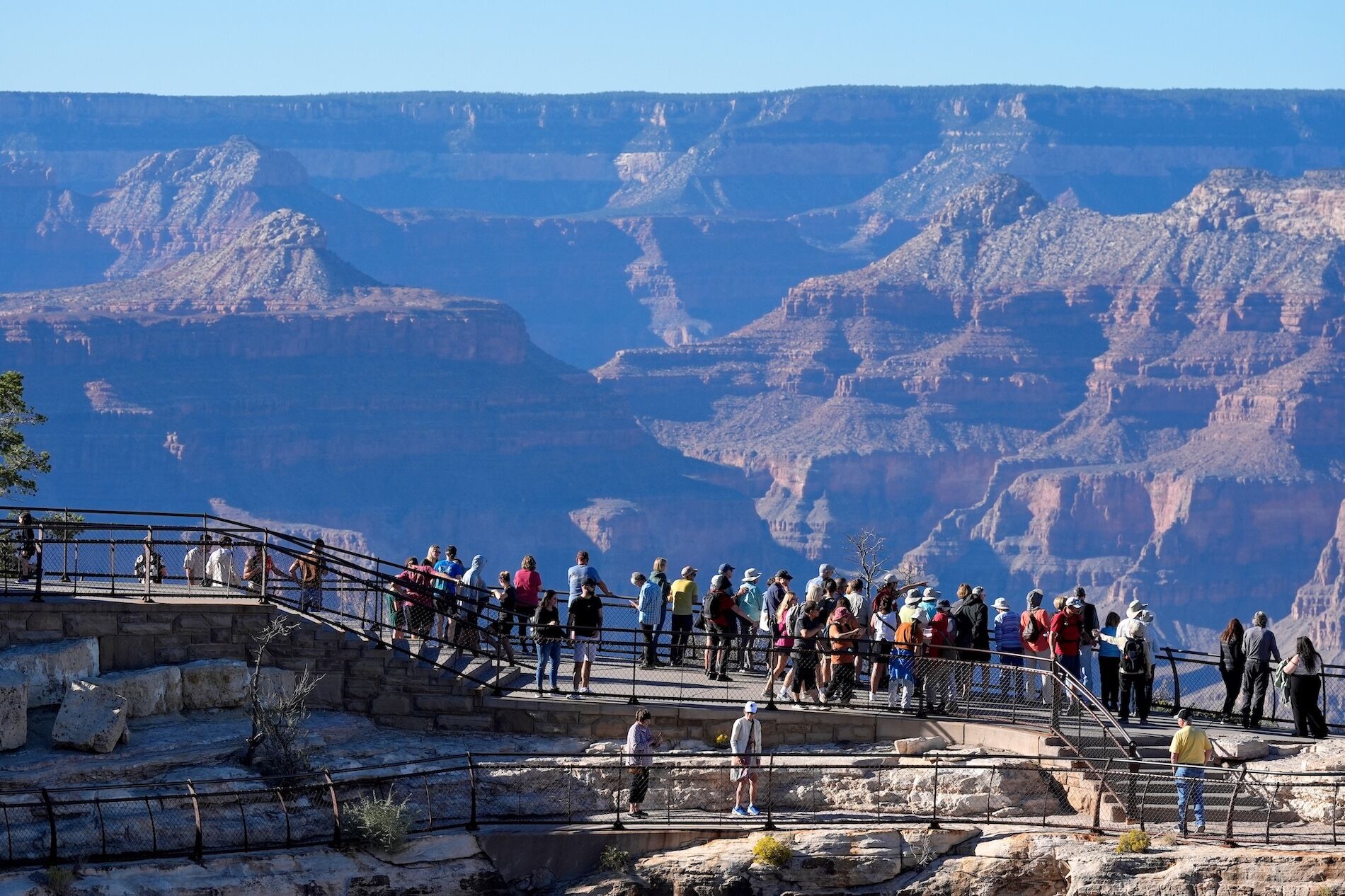
BILLINGS — President Donald Trump is withdrawing his nomination of a hospitality company executive to lead the National Park Service, the White House announced on April 27.
The withdrawal of nominee Scott Socha comes as the park service has been shaken by widespread firings as part of the Trump administration’s pledge to sharply reduce its size.
Socha said in a statement that he was dropping out of consideration for the post for personal reasons.
The park service is currently overseen by an acting director, agency comptroller Jessica Bowron. It did not have a Senate-confirmed director during Trump’s first term, when it was led by a series of acting directors.
Socha is president for parks and resorts at Buffalo, New York-based Delaware North, which has service contracts with numerous parks and describes itself as one of the world’s largest privately owned entertainment and hospitality companies. A White House spokesperson had said when he was nominated in February that Socha was “totally qualified” to execute Trump’s plans for the park system.
But some conservation groups had questioned whether Socha’s private sector work provided the experience he would need to oversee hundreds of national parks and monuments that range from the Statue of Liberty and other cultural sites to remote sites in the Utah desert.
Thousands of employees have been fired or otherwise left the park service since Trump took office.
The Republican administration’s proposed budget for next year would reduce staffing to 9,200 employees. That’s down almost 30% compared to 2025 levels.
The park service’s operating budget would be cut by more than $1 billion, to $2.2 billion, for the 2027 fiscal year that starts in October.
Similar cuts proposed for 2026 were blocked by lawmakers in Congress after park supporters and former employees warned the administration’s proposal would have effectively gutted the agency.
NEBRASKA
Medicaid work requirement added
OMAHA — Nebraska on May 1 was set to become the first state to enforce work, volunteer or education requirements for new Medicaid applicants, eight months before the federally mandated requirements kick in.
Advocates worry that the state is launching so rapidly that key details remain unresolved and some people who are eligible for coverage will lose it.
State officials say they’re prepared, training staff and sending letters, emails and texts to people who could be impacted.
The work requirement is part of a broad tax and policy law that President Donald Trump signed last year. Nebraska Republican Gov. Jim Pillen announced in December that the state would implement it eight months before it was required.
The federal policy won’t apply to all Medicaid beneficiaries, just those who are enrolled under an expansion that most states chose to make to allow more low-income people to get healthcare coverage.
Under the change, many Medicaid participants ages 19 through 64 will have to show that they work or do community service at least 80 hours a month, or are enrolled in school at least half-time. They’ll also have their eligibility reviewed every six months rather than annually, so they could lose coverage faster if their circumstances change.
Exceptions will be made for people who are too medically frail to work or in addiction treatment programs, among others.
People who don’t submit requested information within 30 days of being asked could have their applications denied or lose coverage they already have.
WYOMING
Utility drops wind, solar planning
One of the key driving forces behind the expansion of wind turbines in Wyoming is gutting plans for future renewable energy projects.
Rocky Mountain Power’s parent company, PacifiCorp, updated its long-range planning document in March, shifting its previous upward trajectory for new wind and solar throughout its six-state service region to flatline status.
The electric utility has no plans to add more wind or solar facilities in Wyoming, Utah, Idaho and California from 2027 through 2045.
“Changes in this update are largely driven by the July 4, 2025, repeal of major portions of the Inflation Reduction Act,” the company says. “The repeal was enacted through the (“One Big, Beautiful Bill Act”), which, significantly, phases out or eliminates highly impactful tax benefits, primarily for renewable solar and wind generation resources.”
Rocky Mountain Power is Wyoming’s largest electric utility.
Amid a series of rate hikes in recent years — which amount to about a 20% increase for Wyoming customers since 2020 — Rocky Mountain Power officials have testified that the company’s renewable energy additions were not the culprit, but had kept monthly electric bills from rising at an even higher rate.
But the economic feasibility for wind and solar has changed, according to the utility. Federal tax credits for wind and solar had reduced the cost of wind and solar projects by about 30%, the company says.
The utility giant has delayed some coal power plant retirement dates in recent years, including in Wyoming, and its new long-term planning outlook notes that its greenhouse gas emissions trajectory, which had been falling, will now go up.
Volunteer firefighters target Gen Z
CHEYENNE – Like the rest of the country, volunteers make up the majority of firefighters in Wyoming, and recruiting those volunteers has become more difficult over time, said Laramie County Fire Authority Jason Caughey.
According to the International Association of Fire Chiefs, more than 60% of all fire and EMS departments in the U.S. are staffed by volunteers. In some states, that percentage is over 80%. Of LCFA’s 100 members, 80 are volunteers.
Those volunteers are aging, and the need for younger volunteers has become more obvious in recent years, Caughey said.
Because of this reality, the IAFC announced the launch of a new, national volunteer firefighter recruitment campaign targeting Generation Z and younger millennials who may not have considered firefighting as a means to help their community.
“A Hustle Worth Having,” the national campaign portrays volunteering to be a firefighter as not just an act of service, but as a “fulfilling and energizing side hustle that gives back,” according to a news release.
The campaign is funded through a FEMA Staffing for Adequate Fire and Emergency Response (SAFER) grant. It is intended to give fire stations across the country access to recruiting materials and resources.
Participating departments will have access to storytelling in the media, public service announcements, paid digital marketing and ambassador toolkits that can be customized to their department’s unique needs while carrying the same messaging.

U.S. Senate OKs funding bill to avoid government shutdown
Wire Services
wire-services@coloradopolitics.com
Updated 13 hours ago
Hemp provision became point of contention WASHINGTON • The U.S. Senate in an overnight vote Saturday approved a short-term measure to fund federal agencies into early December and avoid a government shutdown during the middle of campaign season. The late-summer...
The relevance of Watergate more than a half-century later | SONDERMANN
By Eric Sondermann
by-eric-sondermann@coloradopolitics.com
Updated 3 days ago
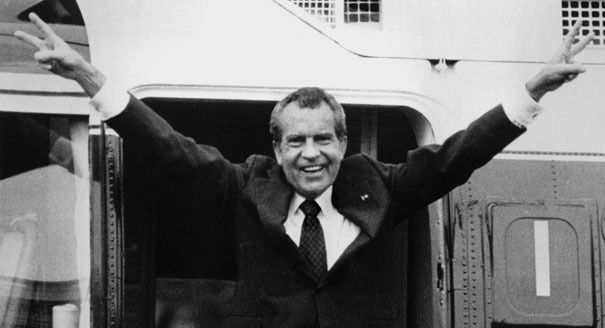
It was the scandal for which all other scandals are now named. In June 1972, a small group of Cuban burglars with high-level connections broke into the headquarters of the Democratic National Committee. Those headquarters were located in the Watergate...

Wirth downplays Social Security disaster talk | A LOOK BACK
Rachael Wright, Special to Colorado Politics
rachael.wright@coloradopolitics.com
Updated 3 days ago
Forty-five years ago this week: “As time goes on,” said Democratic U.S. Rep. Tim Wirth, of the 2nd Congressional District, “we are finding that the safety net, which was proposed earlier this year, has some very large holes in it,”...
Colorado Politics Calendar Aug. 10-16
Rachael Wright, Special to Colorado Politics
rachael.wright@coloradopolitics.com
Updated 3 days ago
CoPo’s weekly political calendar will help you find political and public-policy events throughout Colorado. It includes candidate and issue campaign events, public policy meetings, court hearings, state and local party conventions, assemblies, debates, rallies, parades, speaking engagements, traveling dignitary appearances,...

Democratic group aims Spanish-language TV ad at Gabe Evans in Colorado’s battleground 8th CD
Ernest Luning
ernest.luning@coloradopolitics.com
Updated 1 day ago
A national group tied to House Democratic leadership launched a six-figure Spanish-language TV ad in Colorado this week targeting Republican U.S. Rep. Gabe Evans and the GOP’s signature budget legislation. The 30-second spot is part of $15 million in new...

Colorado School of Mines lands major share in Trump’s $100M mining-education plan
Thelma Grimes
thelma.grimes@coloradopolitics.com
Updated 1 day ago
President Donald Trump on Friday named the Colorado School of Mines among roughly a dozen institutions that will share in a $100 million commitment “to train the next generation of American miners.” Paul Johnson, the university’s president, said he is...
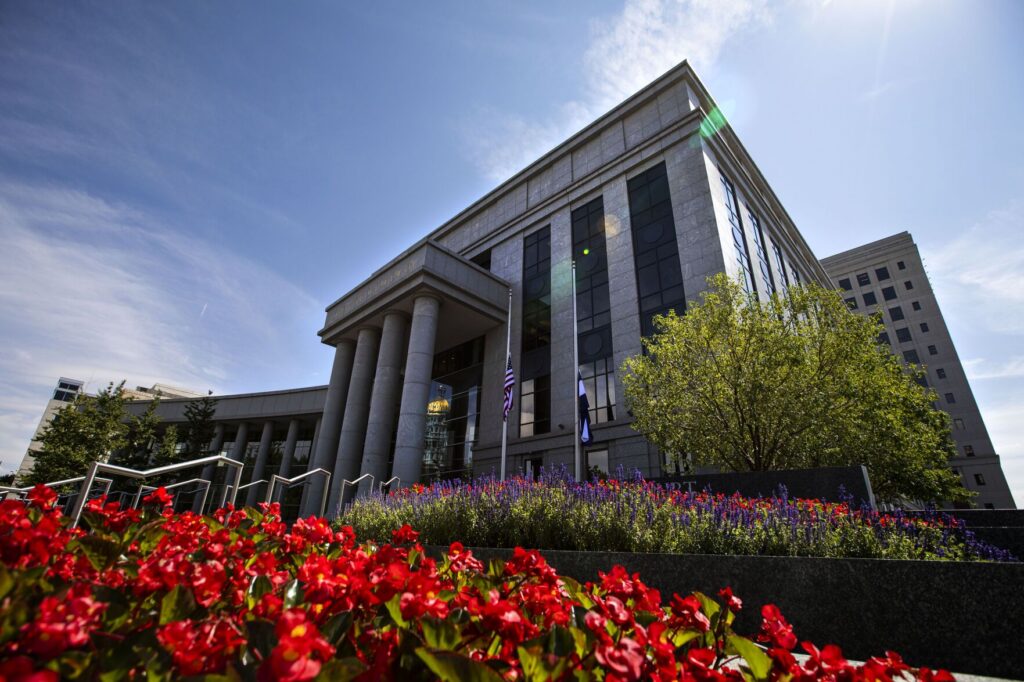
Local party leaders, incoming judge among members of judicial performance commission that violated law
Michael Karlik
michael.karlik@coloradopolitics.com
Updated 8 hours ago
A local Democratic leader and 2024 presidential elector. A legislative aide and leader in the Young Republicans. An incoming county court judge freshly appointed by the governor. They are among the eight members of the northeastern Colorado judicial performance commission...
Judge dismisses lawsuit seeking records from Colorado Democratic group
Marianne Goodland
marianne.goodland@coloradopolitics.com
Updated 1 day ago
A lawsuit seeking to obtain records from Democratic lawmakers affiliated with a caucus has been thrown out by a Denver District Court judge. On July 17, Judge Ericka Englert dismissed the April lawsuit filed by progressive activist Derrick Blanton, who...
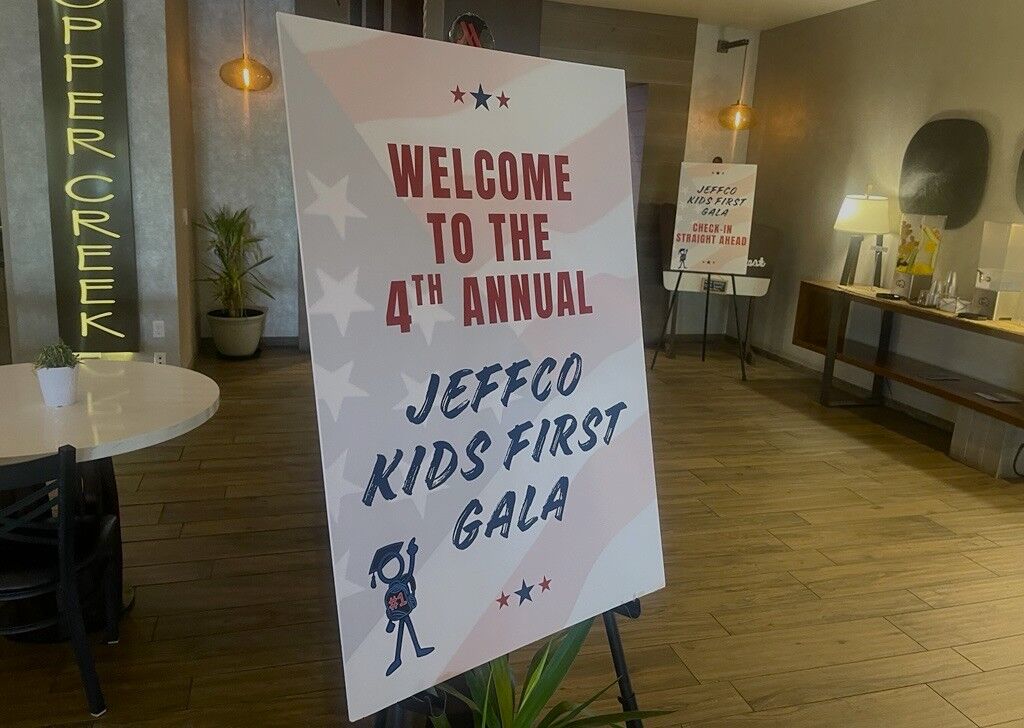
DOJ official decries ‘nonsense’ in Jeffco schools at fundraising gala
Matt Kyle
matt.kyle@denvergazette.com
Updated 14 hours ago
Amid a legal battle between Jeffco Public Schools and the federal government, a Department of Justice official spoke at a fundraising gala and decried “crazy stuff” and “nonsense” in the school district. The gala was for Jeffco Kids First, an...
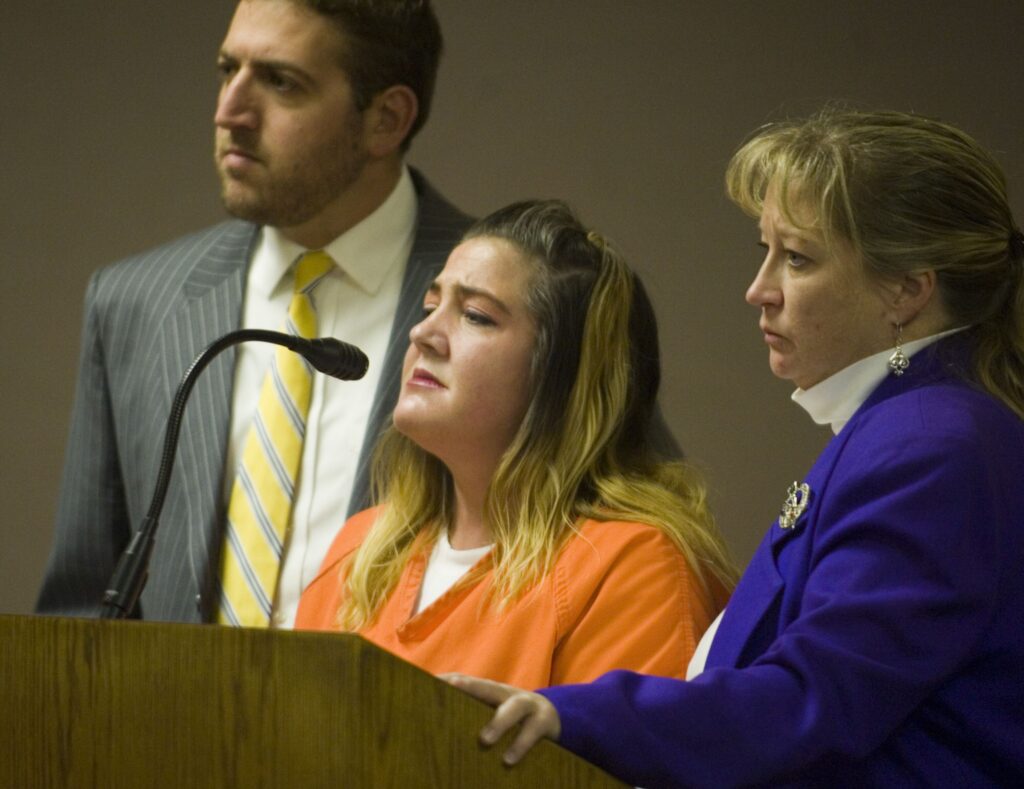
Colorado Springs mother Deborah Nicholls’ murder conviction overturned
Nick Smith
nick-smith@coloradopolitics.com
Updated 2 days ago
A Colorado Springs mother convicted in 2008 of murdering her three children in a house fire might get a new trial after a judge ruled that prosecutors withheld key evidence that could have impacted the jury’s verdict. Deborah Nicholls, whose...
PREV
PREVIOUS

As fuel costs rise further, Coloradans may see impacts beyond the pump
With the price of gas rising with no end in sight, many Coloradans first thought will be about how much more they are spending at the pumps. But rising costs may soon spread to more than just gas, and can have a more all-around impact on your wallet, as spiking diesel prices could lead to […]
Trends and challenges in higher education | Tom Cronin
Americans are both proud and critical of our higher-education system. More American universities are highly ranked than those in other countries. More international students come here than to any other country. And basic research at U.S. universities has earned more patents and Nobel Prizes than elsewhere. Yet trust in colleges and universities has dramatically declined. Costs have dramatically increased and more parents are […]