

The rural voice missing from the Nexstar debate | GUEST COLUMN
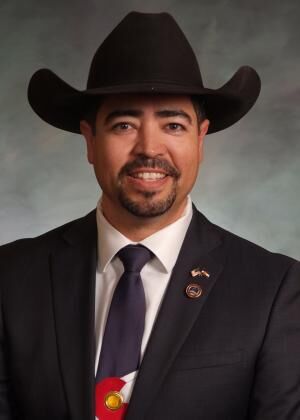
By Donald Valdez
As a former state representative for District 62, in the southern part of the state, I spent years fighting to make sure the voices of rural Coloradans were heard in state decision-making. As a lifelong farmer, I know firsthand what comes with living in a rural community — and the unique needs we face.
That experience shapes how I see a hotly contested debate I believe is leaving an important perspective out of the room entirely: the perspective of rural communities across this country who depend on local broadcast television in ways urban policymakers rarely stop to consider.
Colorado’s Attorney General, joined by seven other state AGs, has filed a lawsuit challenging the proposed acquisition of Tegna Inc. by Nexstar Media Group — a $6.2 billion deal that would combine the two companies into the largest owner of local broadcast television stations in the country. The AGs argue the deal is anti-competitive and an illegal consolidation of media. I have enormous respect for the work of Colorado’s Attorney General Phil Weiser, and I have no doubt the lawsuit is filed in good faith. But on this one, I respectfully disagree and think the effect on rural communities is being critically overlooked.
In August 2025, Nexstar announced its deal with Tegna, with the combined company owning 265 local television stations across 44 states and Washington, D.C. The Federal Communications Commission and the Department of Justice reviewed and approved the merger, with Nexstar agreeing to divest six stations as a condition. The FCC chairman, who has previously called the existing 39% national ownership cap “arcane,” supported the deal as a necessary step to help local media survive in a rapidly changing landscape.
That last part matters enormously — and it’s what I think is getting lost in this debate.
My former district does not sit in a Nexstar or Tegna market; but my experience representing rural communities has given me a unique perspective on how this deal will affect similar regions across the country, where these companies do operate. And in places like small agricultural counties, remote mountain communities and areas where broadband infrastructure is still a work in progress, local broadcast television is not one option among many. It is often the only option when streaming services require reliable internet.
For a family in a community like the ones I represented, folks who tune in to the evening news or check the weather before heading out to the fields, local broadcast TV is free, accessible and essential. It doesn’t require a monthly subscription or a fiber optic line. It works.
That’s why the survival of local broadcasting has to be part of this conversation. The media landscape has been fundamentally transformed by global tech giants and streaming companies with resources that dwarf anything in local broadcasting. Nexstar, as it stands today, generates roughly half the revenue of DIRECTV, one-seventh that of Charter Communications and one-ninth that of Netflix. Even after this acquisition, the combined company would control just 15% of the full-power television stations in the country. This is not the monopolistic consolidation the lawsuit implies, it is a company trying to build enough scale to stay competitive against players that are vastly larger.
When I hear consolidation concerns, I take them seriously. But we have to be honest about what consolidation means in context. Anti-competitive behavior harms consumers by reducing choices and driving up costs. What this deal actually does is give a local broadcasting company the resources to keep the lights on, keep journalists employed and keep communities informed — some of which will have no viable alternative if local broadcast disappears. Blocking this deal doesn’t protect competition, it accelerates the disappearance of local news in exactly the places that need it most.
I understand why this deal generates scrutiny. Any transaction of this scale will naturally face tough questions. But when we strip away the noise, what we’re really debating is whether rural communities across this country will continue to have access to free, local, over-the-air television news. For towns like the ones I served, that’s not an abstract policy question. It’s about whether your neighbors can find out about a wildfire evacuation order, a severe weather warning, or a local election result — without needing a broadband connection they may not have.
I’m asking Colorado’s leaders, as well as courts and leaders across the country, to think carefully about who bears the cost if broadcast television cannot exist. It won’t be the tech giants. It won’t be the streamers. It will be people in rural communities — from southern Colorado to rural Georgia to the Texas Panhandle — who depend on a signal that comes through the air for free. Those voices don’t often make it into debates like this one, but they should.
Donald Valdez is a rancher and former state representative for Colorado’s House District 62.


We must deliver on cost of living | GUEST COLUMN
Colorado Politics
colorado-politics@coloradopolitics.com
Updated 4 hours ago
By Ryan Gonzalez Insurance premiums are on the rise. Property taxes are increasing. Groceries are becoming more expensive. Gas prices are reaching record levels. Housing costs are becoming unsustainable. These are the concerns I hear from people in my district....

Counties warn CPW that new comment limits sideline local governments
Marianne Goodland
marianne.goodland@coloradopolitics.com
Updated 10 hours ago
The September meeting of the Colorado Parks and Wildlife Commission will feature newly revised public‑comment rules — changes introduced by chair Jay Tutchton of Bent County, who announced them without first discussing the revisions publicly with the rest of the...

Controversial two-bag furbearer limit heads to CPW meeting under legal threat
Marianne Goodland
marianne.goodland@coloradopolitics.com
Updated 10 hours ago
Next week’s Colorado Parks and Wildlife Commission meeting in La Junta is likely to open under the cloud of threatened legal action. Safari Club International and the Sportsmen’s Alliance Foundation warned the commission this month that its July vote imposing...

Dan Haley on the role of oil and gas in Colorado’s energy future | The OpEdge Podcast
Tony Olivero
tony.olivero@gazette.com
Updated 13 hours ago
Dan Haley, executive director of Coloradans for Responsible Energy Development, joins The OpEdge to discuss the role of oil and natural gas in Colorado’s energy future amid the state’s aggressive push toward “net zero.” Haley tells host and investigative columnist...

Rural hospitals don’t want special treatment, just a chance to care for locals | PODIUM
Colorado Politics
colorado-politics@coloradopolitics.com
Updated 1 day ago
By Kevin Stansbury As chief executive of Lincoln Health, my responsibility is simple: ensure the people of eastern Colorado have access to high-quality healthcare close to home when they need it most. That mission has never been easy. Rural hospitals...
Colorado lawmaker, House leaders named in workplace-retaliation lawsuit
Marianne Goodland
marianne.goodland@coloradopolitics.com
Updated 2 days ago
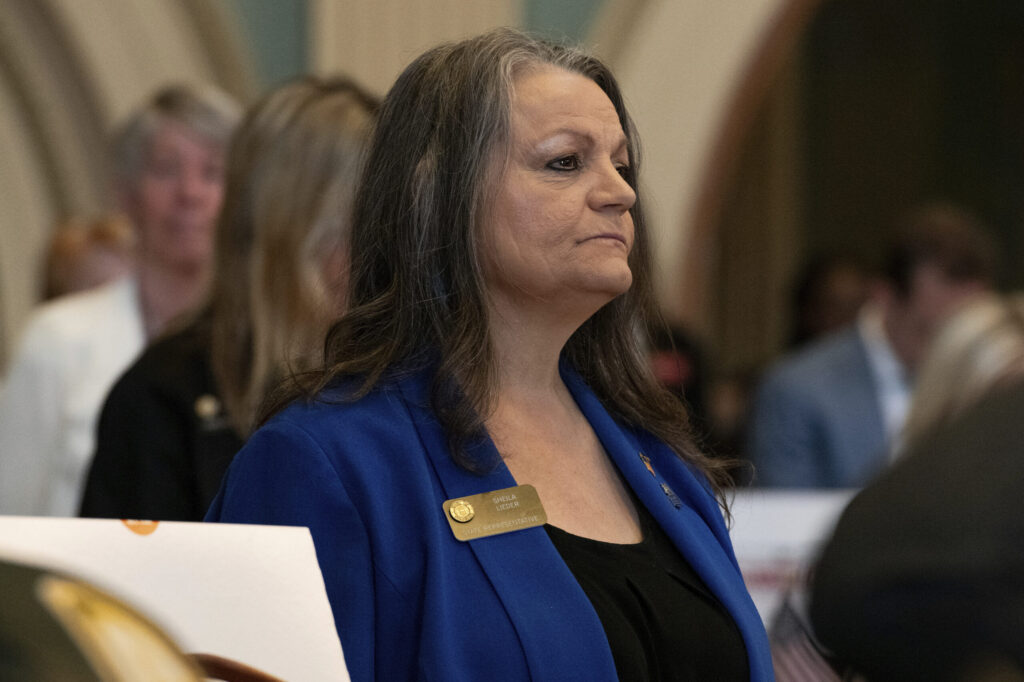
A former legislative aide has filed a lawsuit alleging she was mistreated, illegally directed to perform campaign work and harmed by a House leadership structure she charged was fragmented, politicized and ineffective at protecting employees. The lawsuit, filed by Jennifer...
Blue states should avoid disasters | Hal Bidlack
Hal Bidlack
hal-bidlack@coloradopolitics.com
Updated 2 days ago
Back when I was teaching political science at the U.S. Air Force Academy (and amazingly to me, a week from this column’s publication will mark 20 years since my retirement from active duty. Where the heck did that time go?)...
Right-to-hunt ballot measure’s a cruel, anti-wildlife solution to a nonexistent problem | GUEST COLUMN
Colorado Politics
colorado-politics@coloradopolitics.com
Updated 2 days ago
By Eric Washburn I love to hunt. Every year I try to hunt big game in Colorado and waterfowl in Louisiana. This year, I applied for five Colorado big game licenses — elk, deer, pronghorn, moose and bighorn sheep. I...

Jena Griswold’s record: corruption, incompetence | Dick Wadhams
Dick Wadhams
dick-wadhams@coloradopolitics.com
Updated 5 days ago
There is no statewide elected official going back decades who is as breathtakingly corrupt and incompetent as Secretary of State Jena Griswold, who is now running for attorney general of all things. And compliant ruling Democrats know it. Their silence...

Kiros exudes why Colorado’s political times are a-changin’ at annual Denver Dems gala | Miller Hudson
Miller Hudson
miller-hudson@coloradopolitics.com
Updated 5 days ago
Among Colorado’s few remaining bipartisan rituals are county and state party dinners. I was particularly intrigued by last week’s Denver Democratic Party’s 2026 Annual Gala, a “New Deal for a New Era.” Their glossy program featured an artist’s Technicolor rendering...
PREV
PREVIOUS

Colorado legislature pushes AI rules targeting health care, therapy and chatbots
With just days left in the 2026 legislative session, Colorado lawmakers are rushing a trio of artificial intelligence bills to Gov. Jared Polis, aiming to set rules on artificial intelligence in the areas of health care, therapy and consumer-facing chatbots. As technology advances at breakneck speed, lawmakers have been scrambling to establish regulations, particularly regarding […]
Solar and wind —what a difference a border makes | Hal Bidlack
If you ask most Americans where Colorado and Wyoming are on a map, they will likely be able to find us, somewhere out west. A few might be confused by our roughly similar shapes. Sure, Colorado is actually a 697-sided polygon (a hexahectaenneacontakaiheptagon) due to surveying errors during the 19th century. Wyoming, on the other hand, is a […]